<img height="1" width="1" style="display:none" src="https://www.facebook.com/tr?id=224472428010938&amp;ev=PageView&amp;noscript=1"> November 2025 Photo Diary VIEW THE QUICK AND SIMPLE GALLERY INDEX DISCUSSING OUT CAMERAS AND MORE

NOVEMBER 2025

OCTOBER 2025 PHOTO DIARY THE NOVEMBER PHOTO GALLERIES NEW - CMS GENERATED LEICA Q3 SESSIONS VISIT THE SEPTEMBER 2025 DIARY THE OCTOBER 2025 PHOTO GALLERY LIMERICK 2025 AND EARLIER EXPLORING WATERFORD CITY 2016-2025 THE URBAN CARTOGRAPHER HOME PAGE

CAUTION IS ADVISED

In October 2025, Adobe MAX 2025 saw the launch of a marquee update for Lightroom Classic (version 15.0) and Lightroom Desktop (version 9.0). The flagship feature was a new, AI-powered tool named Assisted Culling.

This feature is critically designated as being in "Early Access"—a public beta status signalling that the tool is incomplete and subject to significant change.

Adobe markets Assisted Culling as a "highly-customisable tool" designed to "save photographers countless hours" by automatically identifying and rejecting low-quality images (e.g., out of focus, closed eyes, misfires).

However, the professional reality is intensely polarised. While initial press coverage expressed excitement, feedback from high-volume professional photographers has been severe. In-depth discussions reveal significant dissatisfaction, with workflow-centric feedback ranging from "terrible and useless" to damning quantitative assessments, such as one user who ran 4,000 images through it and found it "wrongly rejected as many as it wrongly kept—hundreds in each case".

SONY'S BIG 4.0 UPGRADE - LET’S DISCUSS I AM USING ASSISTED CULLING - LET’S DISCUSS ON1 PHOTO RAW 2026 MARKETING HYPE - LET’S DISCUSS WHY USE AN OUTDATED SONY SEL 30MM LENS - LET’S DISCUSS

The Hurdy Gurdy Museum And Two Confused French Tourists

A visit to the Martello Tower brought back memories of the "Hurdy Gurdy" sitting in the kitchen corner. It wasn’t just slang; it was the soundtrack to our childhoods.

THE HURDY GURDY

HOWTH MARTELLO

A recent trip to Howth brought back a flood of memories from decades past. While standing outside the Hurdy Gurdy Museum of Vintage Radio—housed in the historic Martello Tower—I struck up a conversation with a French couple.

The museum happened to be closed, leaving the couple confused by the signage. They asked a question that, on the surface, seemed logical: "Why is a museum about radios named after a medieval string instrument?"

To a French tourist, a Hurdy Gurdy (or vielle à roue) is strictly a musical instrument played by cranking a wheel. But for anyone who grew up in Ireland during the mid-20th century, the answer is obvious. The "Hurdy Gurdy" wasn't just an instrument; it was the catch-all slang for the household radio.

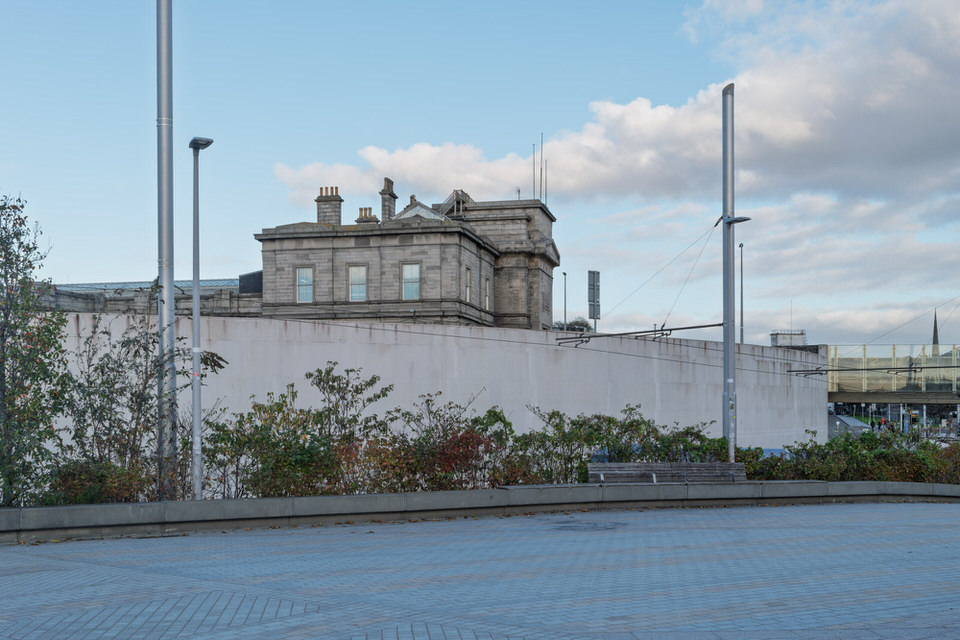
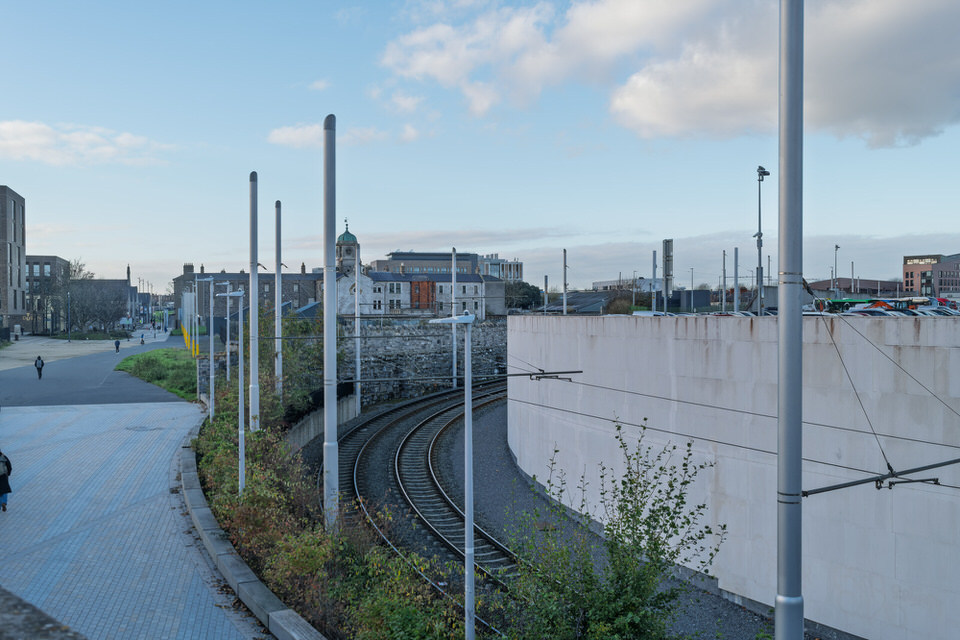
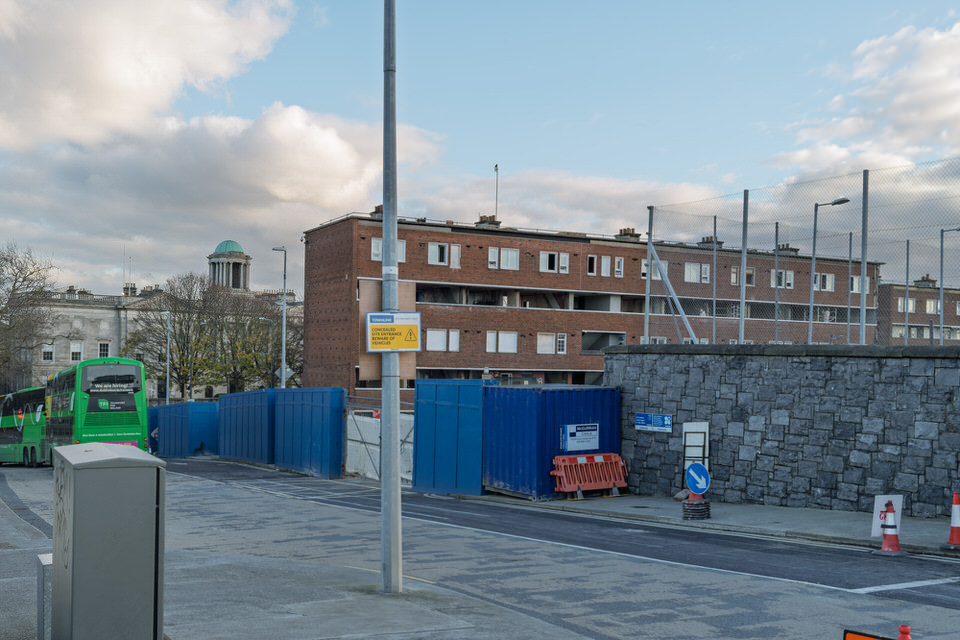
Broadstone is perhaps most famously associated with the former Broadstone Station, which has a rich history as a major railway terminus and subsequently as a tram/bus depot, now transitioning into an academic gateway.

THE HURDY GURDY MMSEUM

An Experimental Presentation - Excuse Some Of The Illustrations Especially The Children Of Lir

Stories_in_the_Statues.mp4

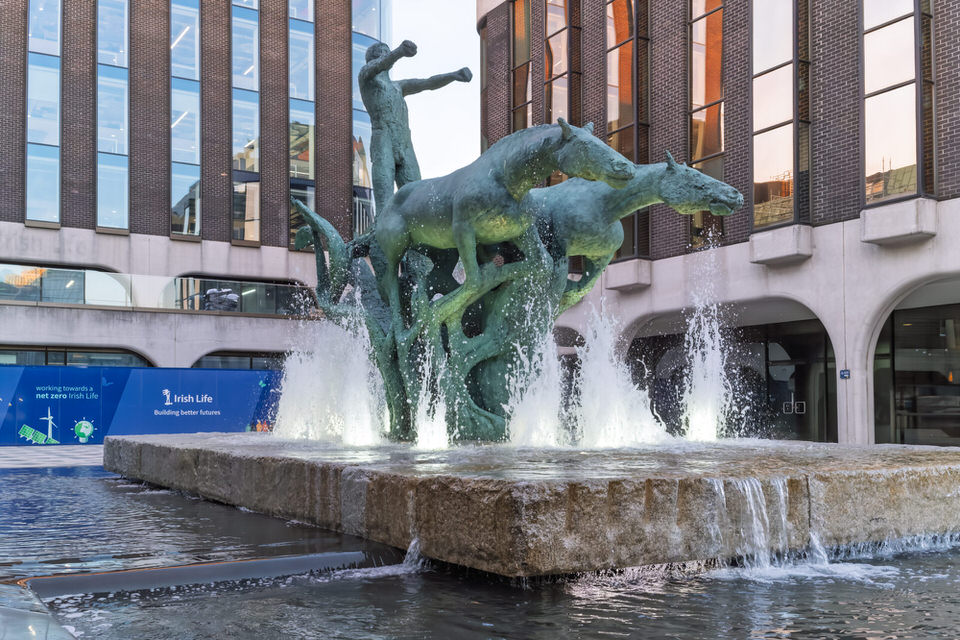
THE CHARIOT OF LIFE BY OISIN KELLY

THE MAD MILKMAN

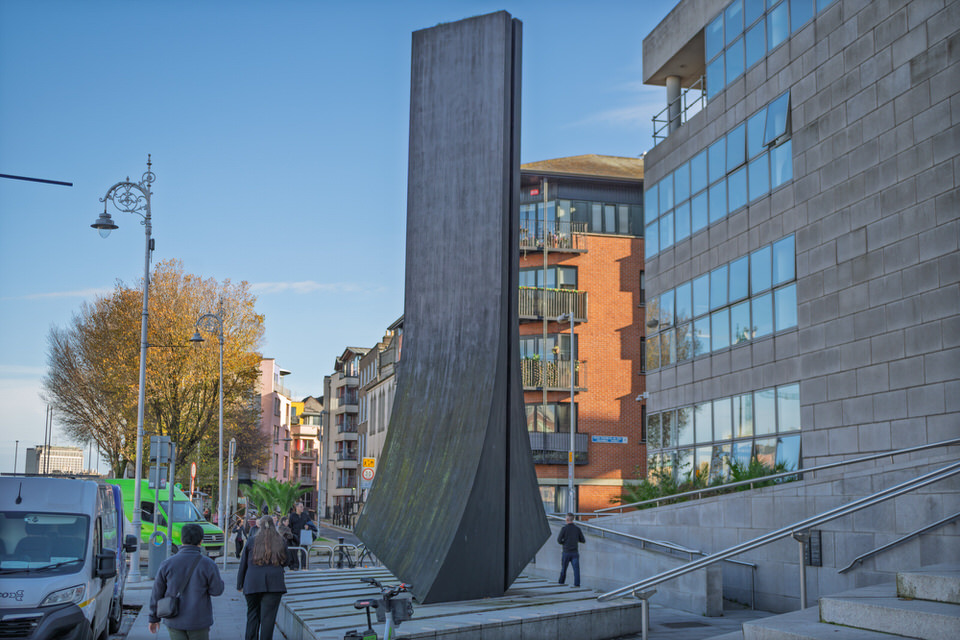
Meet "The Mad Milkman”— officially "The Chariot of Life" by Oisín Kelly. Located at Dublin’s Irish Life Centre, this dynamic 1982 sculpture symbolizes reason mastering emotion. Locals playfully nicknamed it after the city's recently retired horse-drawn milk carts, joking that the frantic charioteer looks just like a milkman losing control of his round!

ABOUT THE ARTIST PHOTO GALLERY

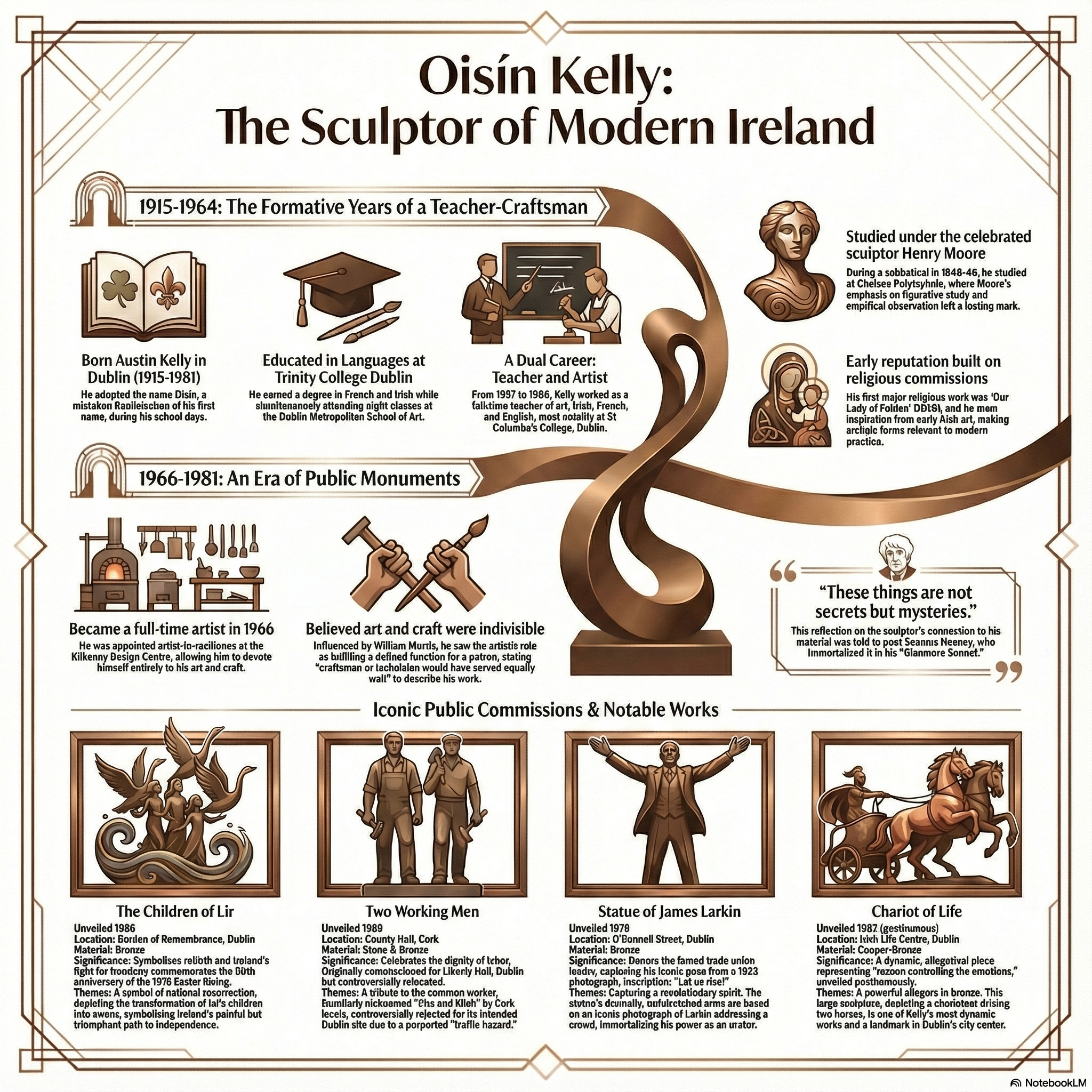
The Mind of a Maker: He Saw Himself as a Craftsman, Not an "Artist


He Called Himself a Technician: Four Surprising Truths About the Man Who Sculpted Modern Ireland

We’ve all done it. We walk through our cities, past the solemn bronze figures and intricate stone monuments that stand as silent witnesses to history, and we rarely stop to consider the hands that shaped them. These public works become part of the urban furniture, their creators anonymous figures overshadowed by the heroes they depict.

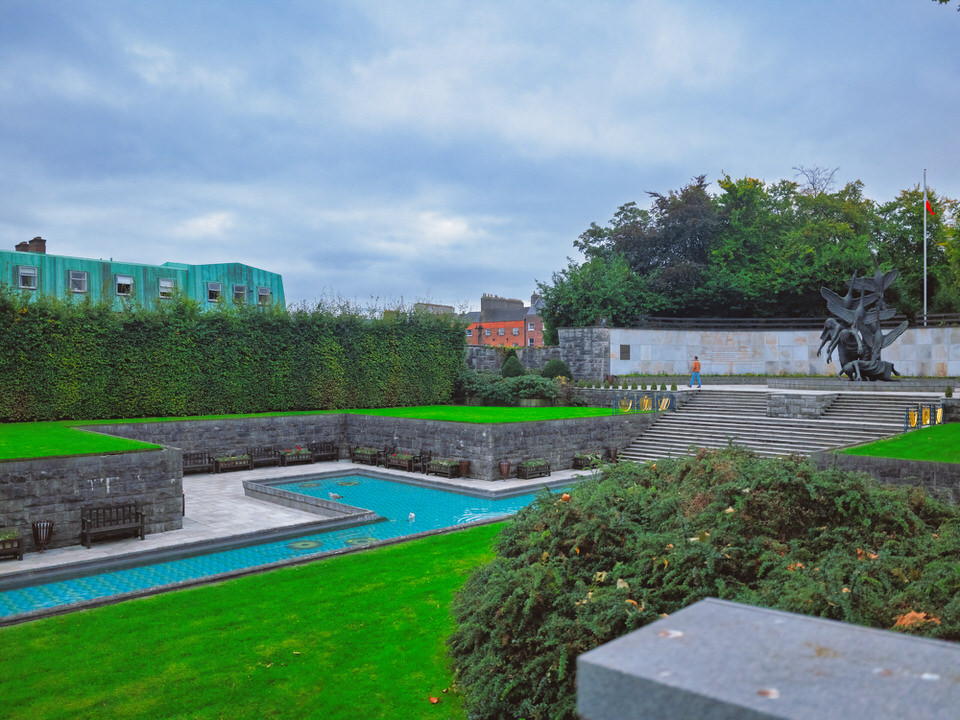
In Ireland, many of our most iconic public sculptures—from the soaring Children of Lir in Dublin's Garden of Remembrance to the defiant statue of James Larkin on O'Connell Street—were crafted by one man: Oisín Kelly. This was a man who rejected the mystique of the visionary "artist" for the practical honesty of a technician; whose masterpieces were shaped not in bohemian isolation, but during two decades as a full-time schoolteacher; and whose most iconic commissions were defined by unexpected controversy and clever diplomacy.

This article reveals four of the most fascinating truths about the life and philosophy of the quiet craftsman who sculpted modern Ireland.

1. The Mind of a Maker: He Saw Himself as a Craftsman, Not an "Artist"

In an age that often celebrates the artist as a solitary genius, Oisín Kelly held a profoundly different view of his role. His philosophy was heavily influenced by the 19th-century Arts and Crafts movement, which championed the idea that there should be no separation between "fine art" and functional craft.

For Kelly, the artist's primary duty was to use their technical skill to fulfill the needs of the patron. He saw an indivisible relationship between art and craft, believing that true creativity was found in the practical execution of a commission, not in abstract self-expression. This was no abstract belief but a lived practice. Early in his dual career as a teacher in Clones, he took carpentry classes, laying the practical foundations for his future work. His philosophy found its ultimate expression when he became the artist-in-residence at the Kilkenny Design Workshops in 1966, where he put these ideals into practice designing textiles, pottery, and metalwork alongside his sculptural work.

He summed up this functionalist and humble approach to his life's work in his own words:

"I used the word ‘artist‚’ but craftsman or technician would have served equally well."

2. The Rejected Masterpiece: A Famous Cork Landmark Was Meant for Dublin

One of Cork's most beloved public sculptures, the bronze figures colloquially known as "Cha and Miah," was never intended for the city. The story of Two Working Men is a curious tale of controversy, relocation, and remarkable irony.

The sculpture was originally commissioned in 1966 to stand outside Liberty Hall in Dublin. At the time, this was not only the headquarters of the SIPTU trade union but also the tallest building in Ireland. The sculpture, depicting two laborers gazing up at their finished work, was meant to be a proud monument to the dignity of Irish labor in the nation's capital.

However, in a surprising turn of events, SIPTU rejected the completed statues. The official reason given was a curious one: that the work "would pose a traffic hazard," a claim some found unconvincing. The architect of Liberty Hall, Desmond Rea O'Kelly, would later call this a "lost opportunity." The rejected piece was subsequently offered to Cork, where it was unveiled in 1969. In a perfect twist of fate, during the years the sculpture was being made, Cork's new County Hall had surpassed Liberty Hall as the tallest building in Ireland. The men gazing up at their work found themselves before an even more imposing structure than originally planned, and were embraced by the public to become an iconic local landmark.

3. The Double Life: He Taught French and Irish for 20 Years Before Becoming a Full-Time Artist

Many of Kelly's most important early commissions were completed not in a dedicated studio, but in the spare moments of a demanding day job. For a significant portion of his career, from 1946 to 1964, Oisín Kelly was a full-time teacher at St Columba's College in Dublin.

His brief was not limited to art; he taught a wide range of subjects, including English, Irish, and French. Throughout these two decades, he relentlessly pursued his artistic development. He attended night classes at the Dublin Metropolitan School of Art and even secured a sabbatical to study for a brief period under the world-renowned English sculptor Henry Moore.

This was not merely a "double life" but a prolonged, disciplined apprenticeship, rooted in the craftsman ethos he championed. To master the physically demanding craft of sculpture and begin securing major religious and public commissions, all while maintaining a full-time teaching career, reveals a man of extraordinary discipline and a quiet determination that defined his character.

4. Myth as Diplomacy: He Used a Pagan Legend to Symbolize the Birth of a Modern Nation

Kelly's most celebrated work is The Children of Lir, the dramatic centerpiece of Dublin's Garden of Remembrance. The garden itself was created for a politically sensitive purpose: opened in 1966, it marked the 50th anniversary of the 1916 Easter Rising and was dedicated to all who had died for the cause of Irish freedom.

The sculpture's symbolism is powerful. The famous legend tells of children transformed into swans for 900 years, and their eventual release from the curse. Kelly used this moment of transformation to represent "rebirth and resurrection," a potent symbol for Ireland's long and often painful struggle for independence.

The choice of a pre-Christian, pagan myth was a masterful act of cultural diplomacy. It allowed the monument to celebrate hard-won freedom in a universal, abstract way, elegantly sidestepping the need to depict the specific historical figures and events of the 1916 Rising, whose legacies remained complex and politically fractured. But this diplomacy was not without its own controversy; the work "drew criticism on the grounds that it was not fitting that a subject from pagan legend... should be the basis of a public monument in a Christian country." This only underscores the skill with which Kelly navigated Ireland's intersecting cultural, political, and religious tensions.

Conclusion: Remembering the Man Behind the Monuments

Oisín Kelly's story challenges our modern idea of what an artist should be. He was not a provocateur but a problem-solver; a teacher who undertook a disciplined apprenticeship and a philosopher who believed art's highest calling was to serve a function. This central paradox—that the man who saw himself as a humble technician was, in fact, the quiet architect of Ireland’s modern visual identity—is his ultimate legacy. Through his technical skill and deep understanding of Irish history and myth, this self-described "technician" gave enduring shape to the public memory of a nation.

The next time you walk past a public statue, what hidden stories of its creator might you be missing?

Broadstone And The Immediate Area


TRANSPORT HUB

BROADSTONE

🚌 Broadstone: History and Modernity

Broadstone is located on the northside of Dublin city centre, near Constitution Hill. Its current form reflects a layered history of transport infrastructure:

1. The Old Station: Dublin Broadstone

The Building: The magnificent stone building, originally known as the Dublin Broadstone terminal, was designed by John Skipton Mulvany and opened in 1850. It served as the city terminus for the Midland Great Western Railway (MGWR).

The Decline: Rail services from Broadstone ceased in 1937 as part of the overall rationalisation of the Irish railway network.

Legacy: The original building is an impressive example of Italianate architecture and is protected (a listed structure).

Broadstone is perhaps most famously associated with the former Broadstone Station, which has a rich history as a major railway terminus and subsequently as a tram/bus depot, now transitioning into an academic gateway.

Extensions For The Fujifilm X100 VI


THE X100 IS A FIXED LENS CAMERA

EXTENSIONS

This is where the Fujifilm X100VI changes the game. Thanks to its new high-resolution 40-megapixel sensor and some remarkably clever software, the "one lens" limitation is no longer a limitation at all. The X100VI offers a surprising number of practical, high-quality solutions that transform it into one of the most versatile compact cameras on the market, unlocking its hidden potential as a multi-lens system in a single body.

THE FUJI BATTERY CHARGER WAS UNUSABLE

We now have a section which examines or equipment in detail

North City Centre Area From Green Street To Chancery Street

A lot to see and do and much more on the way

THE REAL DUBLIN

INNER NORTH CITY

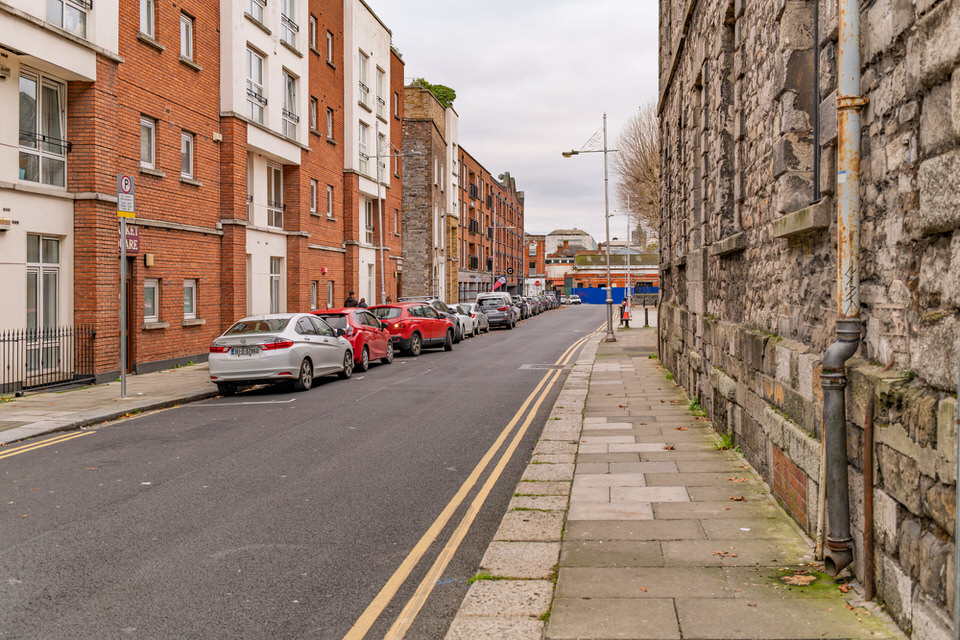
The area of North Central Dublin near the Old Markets, specifically the area encompassing Green Street to Chancery Street, is a designated focus for significant urban regeneration. This area falls under the umbrella of Dublin City Council's plans to transform historically important but often neglected parts of the inner city.

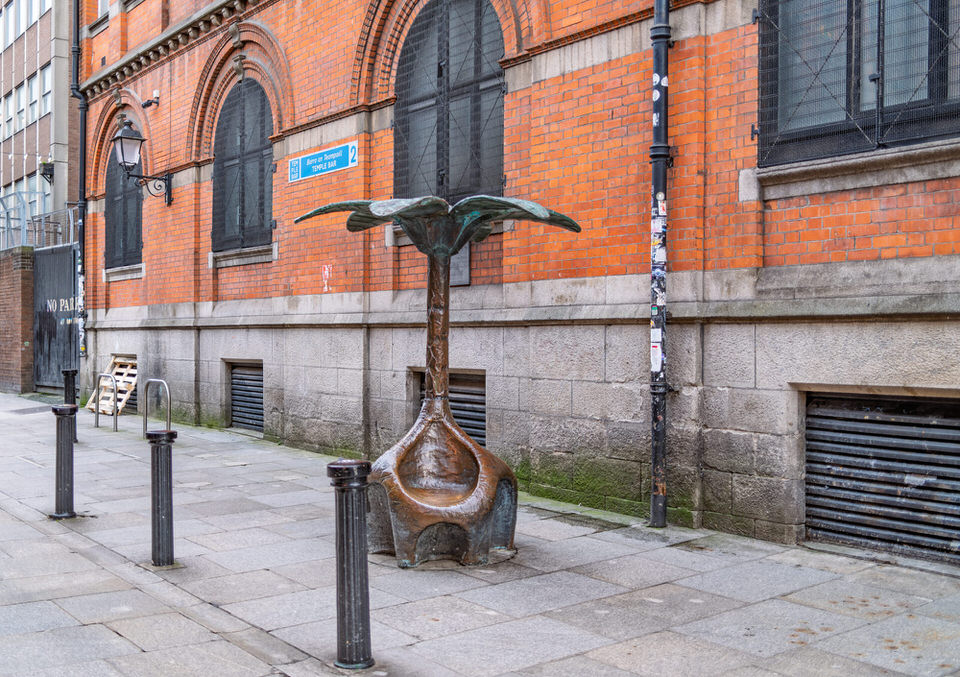
Hidden In Plain Site - A Sculpture By Vincent Browne

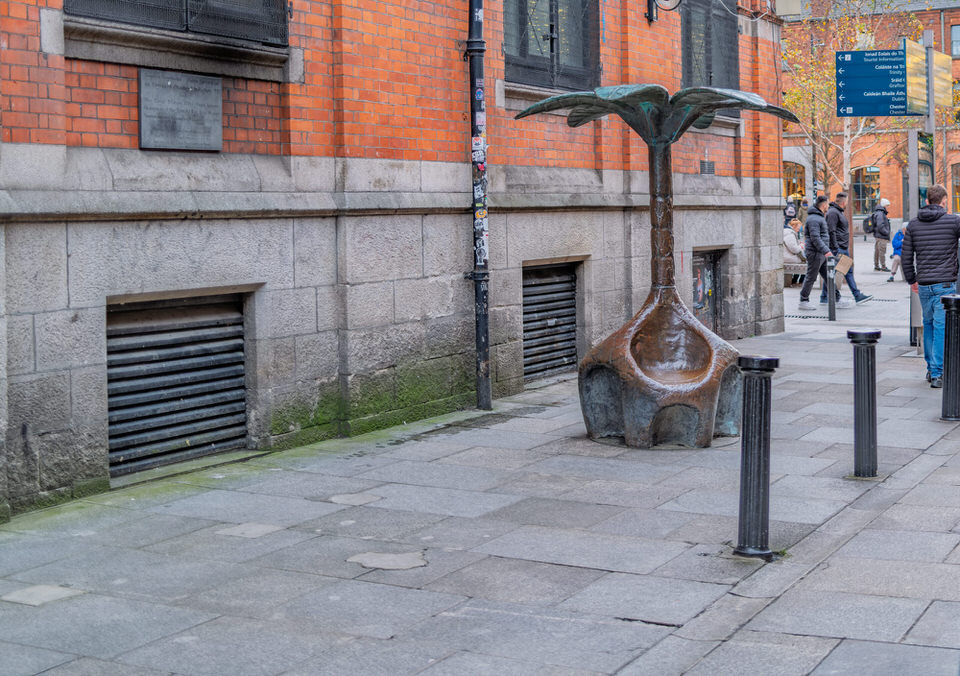
The sculpture is officially known as the "Palm Tree seat and stools" or commonly just the "Statue Palm."

NOT STREET FURNITURE

BY VINCENT BROWNE

Location: It is situated in the heart of the lively Temple Bar cultural quarter, at 17A, Temple Bar, Dublin, D02 RT29.

Artist and Date: It was created by Irish sculptor Vincent Browne and installed in 1992.

Description: It is a striking bronze sculpture that is often referred to as a "seat" because it incorporates stools and benches at its base, inviting passersby to pause and rest.

Significance: The palm tree design is often noted as a symbol of resilience and hope, adding a distinctive and unique artistic touch to the urban landscape of Dublin's most popular entertainment district.

The sculpture is a must-see for visitors and makes for a great photo opportunity as you explore the surrounding area's cobbled streets, traditional pubs, and vibrant atmosphere.

The Movember Cottage At Upper Grangegorman

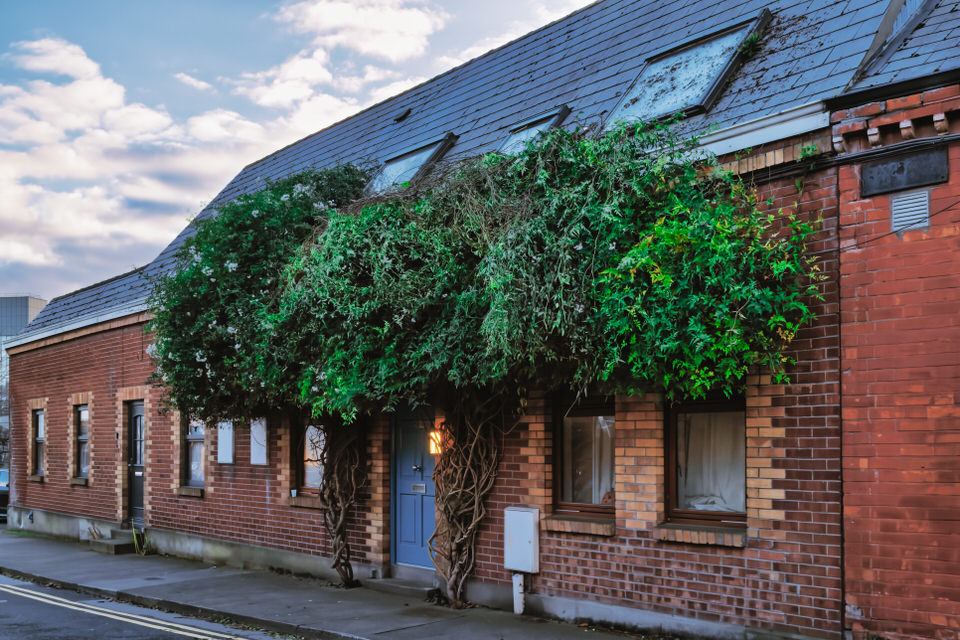
This particular cottage, a lovely example of Dublin's red-brick architecture, has been taken over by a spectacularly ambitious climbing plant. This is no ordinary vine; it has grown perfectly over the two front windows and above the bright blue door, forming a dense, bushy canopy that, from a certain angle, gives the entire facade the unmistakable appearance of a giant, verdant moustache!

UNUSUAL

MOVEMBER

November is here, and with it comes the annual tradition of Movember. It's a month where men around the world embrace the glorious, sometimes questionable, art of the moustache to raise vital awareness and funds for men's health—specifically prostate cancer, testicular cancer, mental health, and suicide prevention.

PHOTO GALLERY ABOUT THE AREA

The Legacy Church and Grave photo catalog site has been rebuilt

This particular cottage, a lovely example of Dublin's red-brick architecture, has been taken over by a spectacularly ambitious climbing plant. This is no ordinary vine; it has grown perfectly over the two front windows and above the bright blue door, forming a dense, bushy canopy that, from a certain angle, gives the entire facade the unmistakable appearance of a giant, verdant moustache!

THE SITE IS NOW MUCH FASTER

RELIGION

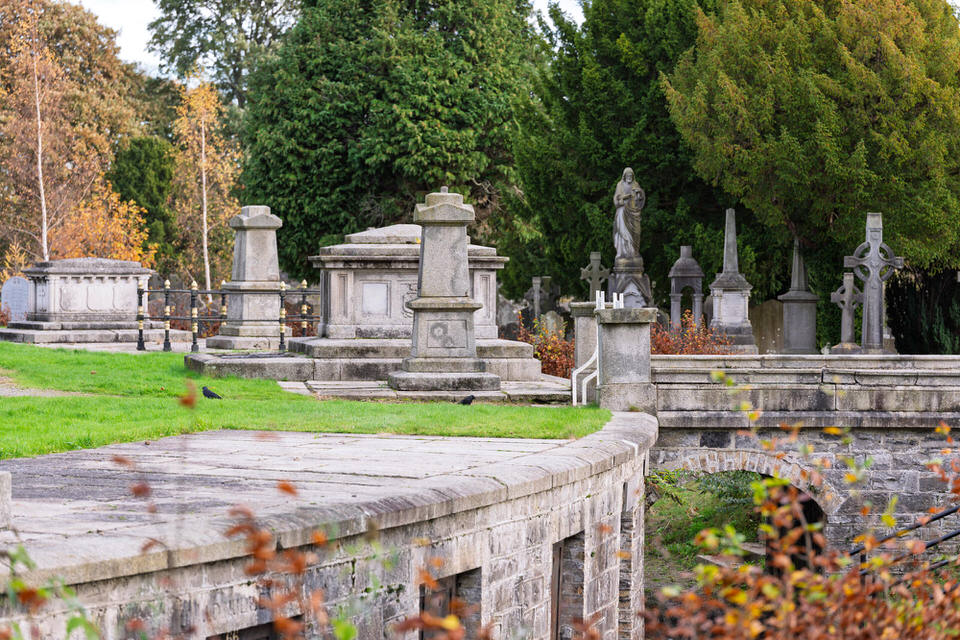
Irish cemeteries are distinct from many others in Europe or North America because they often function as living archaeological sites. Rather than being strictly manicured, modern parks, they are frequently ancient monastic ruins that are still in active use, creating a seamless blend of the medieval and the modern.

Elliots Bakery On Arran Street East

EAST ARRAN STREET

ELLIOTS BAKERY

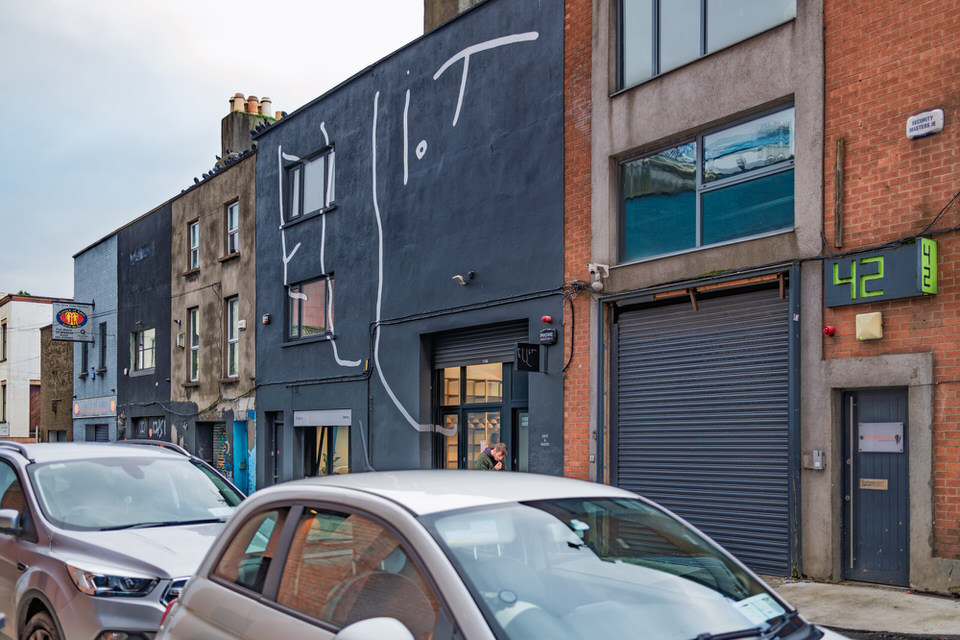
You may think that the branding and logo is weird — it's a deliberate and defining feature of the bakery's unique identity!


The Story Behind the "Graffiti" Logo. The bold, messy, graffiti-like script of "ELLIOT'S" scrawled across the black shopfront is actually a special design feature that directly reflects the name's origin. It's a Child's Handwriting: The wordmark is taken from the actual handwriting of Elliot, the young son of the bakery's founders, Conor Higgins and Amie Costello.

A Balance of Design: The founders wanted to formalise their brand's visual identity, which is why the "messy" script is often applied as a large "supergraphic treatment" on the building's exterior. This design choice creates a balance between "nostalgia and modernity," giving the spot its distinctive, unpretentious, and "unusual" character.

That unusual bakery featured in my photographs is Elliot's, located at 43 Arran Street East in Dublin 7.

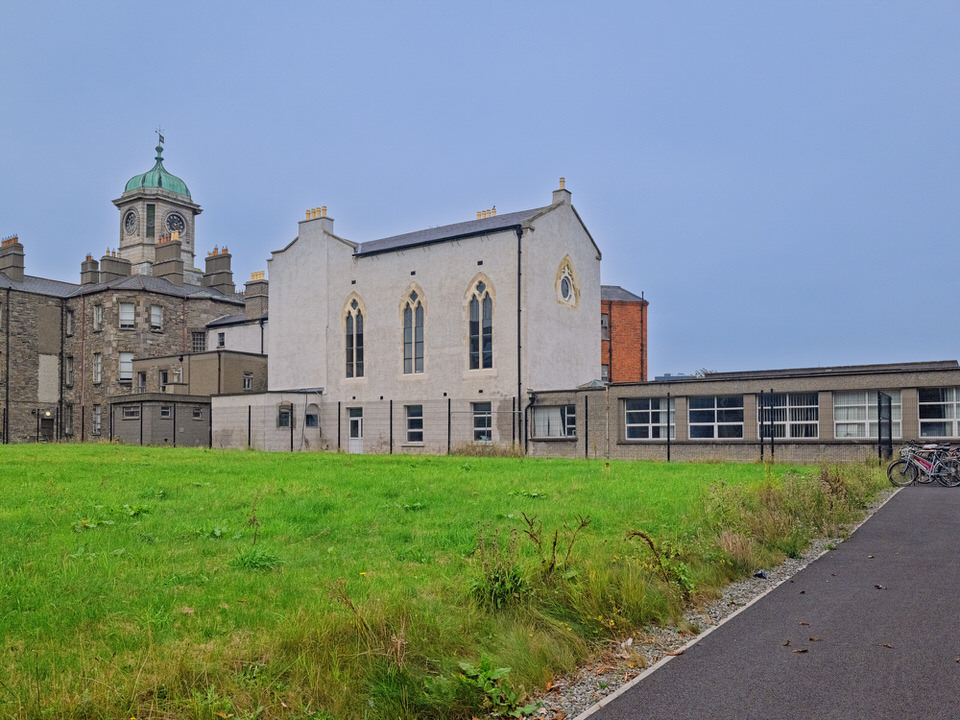
TU University Campus At Grangegorman November 2025

A WALK THROUGH THE CAMPUS

GRANGEGORMAN

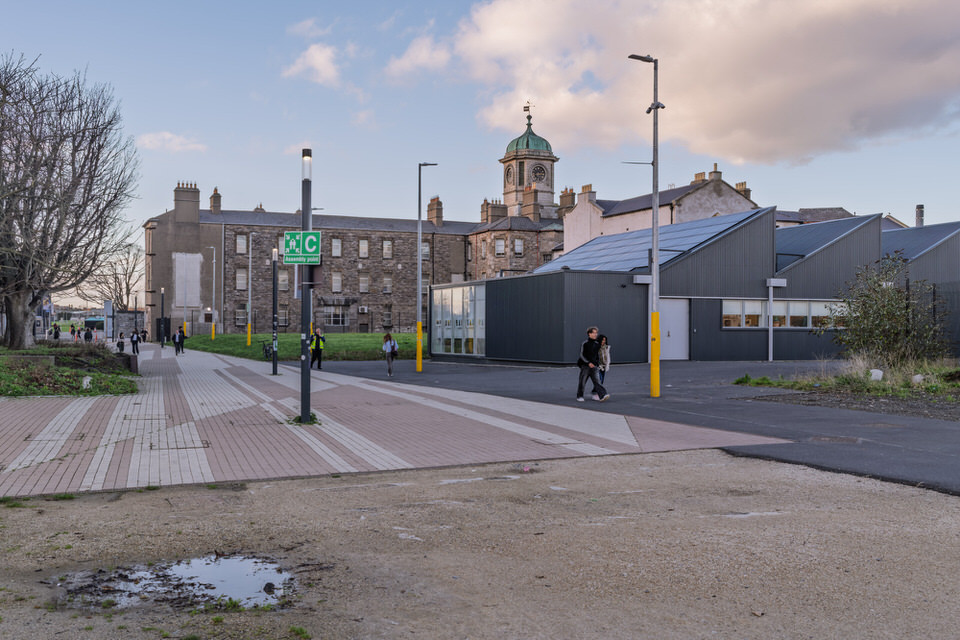
The establishment of the TU Dublin Grangegorman Campus represents a massive urban regeneration project, profoundly impacting the surrounding area. The development has replaced a largely inaccessible institutional site with an open, integrated campus, fundamentally altering the urban landscape and connectivity.

Christmas Is Rapidly Approaching

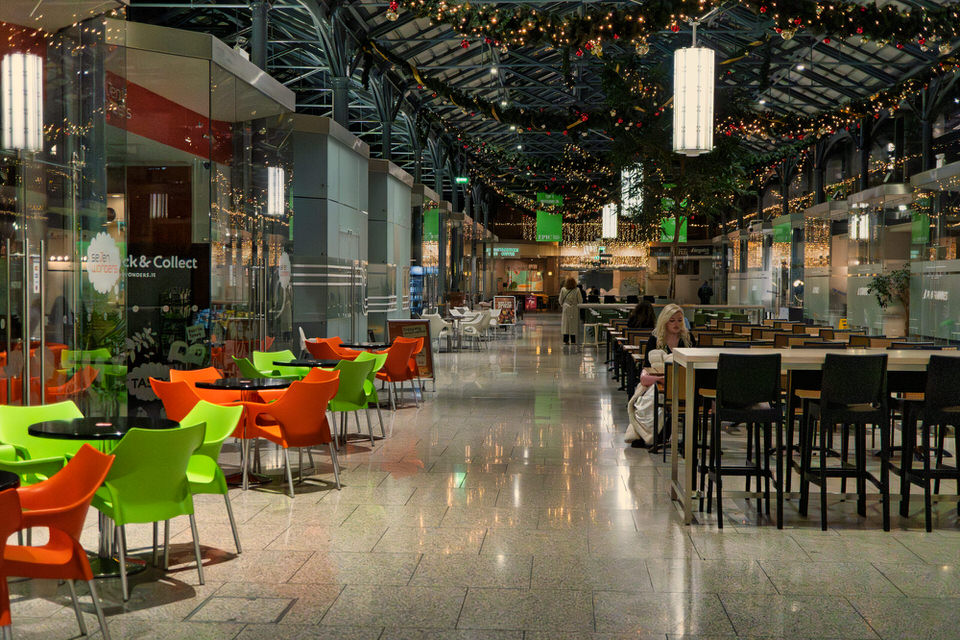
For most of Europe, the period from December 23rd to January 6th sees a significant slowdown, allowing families to focus on celebration, travel, and rest. It’s a shared social contract that prioritises the collective holiday season, making that two-week break a highly anticipated and essential annual tradition.

NIGHT PHOTOGRAPHY

THE CITY CENTRE

For the Irish economy, this period is vital. Households significantly increase their spending, pouring billions into the retail sector. The major cities, particularly Dublin, Cork, and Galway, transform with their grand light switch-ons, marking the official start of the festive rush. It’s an economic behemoth that sustains countless businesses throughout the year.

IMMA Grounds At Night

Formal Gardens: The most prominent feature is the early 17th-century formal walled garden, located below the North Terrace (formerly the Master's Garden). While not a strict historical reconstruction, it is a re-creation in the spirit of a 17th and 18th-century Classical garden, befitting the architecture of the Royal Hospital Kilmainham.

I USED A FUJI X100VI

IMMA KILMAINHAM

The grounds and gardens of the Irish Museum of Modern Art (IMMA) in Dublin are a significant part of the visitor experience, encompassing 48 acres of land surrounding the Royal Hospital Kilmainham, the museum's historic home. The overall site has a rich history, once including ancient burial grounds, a Viking settlement, and a medieval monastery, before the Royal Hospital was founded in 1684.

Pending

Pending

NEW CAMERA

PHOTOGRAPHED USING A FUJI X100VI

Broadstone And The Immediate Area 17 November 2025

TRANSPORT HUB

BROADSTONE

🚌 Broadstone: History and Modernity

Broadstone is located on the northside of Dublin city centre, near Constitution Hill. Its current form reflects a layered history of transport infrastructure:

1. The Old Station: Dublin Broadstone

The Building: The magnificent stone building, originally known as the Dublin Broadstone terminal, was designed by John Skipton Mulvany and opened in 1850. It served as the city terminus for the Midland Great Western Railway (MGWR).

The Decline: Rail services from Broadstone ceased in 1937 as part of the overall rationalisation of the Irish railway network.

Legacy: The original building is an impressive example of Italianate architecture and is protected (a listed structure).

Broadstone is perhaps most famously associated with the former Broadstone Station, which has a rich history as a major railway terminus and subsequently as a tram/bus depot, now transitioning into an academic gateway.

North City Centre Area From Green Street To Chancery Street

A lot to see and do and much more on the way

THE REAL DUBLIN

INNER NORTH CITY

The area of North Central Dublin near the Old Markets, specifically the area encompassing Green Street to Chancery Street, is a designated focus for significant urban regeneration. This area falls under the umbrella of Dublin City Council's plans to transform historically important but often neglected parts of the inner city.

Hidden In Plain Site - A Sculpture By Vincent Browne

The sculpture is officially known as the "Palm Tree seat and stools" or commonly just the "Statue Palm."

NOT STREET FURNITURE

BY VINCENT BROWNE

Location: It is situated in the heart of the lively Temple Bar cultural quarter, at 17A, Temple Bar, Dublin, D02 RT29.

Artist and Date: It was created by Irish sculptor Vincent Browne and installed in 1992.

Description: It is a striking bronze sculpture that is often referred to as a "seat" because it incorporates stools and benches at its base, inviting passersby to pause and rest.

Significance: The palm tree design is often noted as a symbol of resilience and hope, adding a distinctive and unique artistic touch to the urban landscape of Dublin's most popular entertainment district.

The sculpture is a must-see for visitors and makes for a great photo opportunity as you explore the surrounding area's cobbled streets, traditional pubs, and vibrant atmosphere.

The Movember Cottage At Upper Grangegorman

This particular cottage, a lovely example of Dublin's red-brick architecture, has been taken over by a spectacularly ambitious climbing plant. This is no ordinary vine; it has grown perfectly over the two front windows and above the bright blue door, forming a dense, bushy canopy that, from a certain angle, gives the entire facade the unmistakable appearance of a giant, verdant moustache!

UNUSUAL

MOVEMBER

November is here, and with it comes the annual tradition of Movember. It's a month where men around the world embrace the glorious, sometimes questionable, art of the moustache to raise vital awareness and funds for men's health—specifically prostate cancer, testicular cancer, mental health, and suicide prevention.

PHOTO GALLERY ABOUT THE AREA

The Legacy Church and Grave photo catalog site has been rebuilt

This particular cottage, a lovely example of Dublin's red-brick architecture, has been taken over by a spectacularly ambitious climbing plant. This is no ordinary vine; it has grown perfectly over the two front windows and above the bright blue door, forming a dense, bushy canopy that, from a certain angle, gives the entire facade the unmistakable appearance of a giant, verdant moustache!

THE SITE IS NOW MUCH FASTER

RELIGION

Irish cemeteries are distinct from many others in Europe or North America because they often function as living archaeological sites. Rather than being strictly manicured, modern parks, they are frequently ancient monastic ruins that are still in active use, creating a seamless blend of the medieval and the modern.

Elliots Bakery On Arran Street East

EAST ARRAN STREET

ELLIOTS BAKERY

You may think that the branding and logo is weird — it's a deliberate and defining feature of the bakery's unique identity!


The Story Behind the "Graffiti" Logo. The bold, messy, graffiti-like script of "ELLIOT'S" scrawled across the black shopfront is actually a special design feature that directly reflects the name's origin. It's a Child's Handwriting: The wordmark is taken from the actual handwriting of Elliot, the young son of the bakery's founders, Conor Higgins and Amie Costello.

A Balance of Design: The founders wanted to formalise their brand's visual identity, which is why the "messy" script is often applied as a large "supergraphic treatment" on the building's exterior. This design choice creates a balance between "nostalgia and modernity," giving the spot its distinctive, unpretentious, and "unusual" character.

That unusual bakery featured in my photographs is Elliot's, located at 43 Arran Street East in Dublin 7.

TU University Campus At Grangegorman November 2025

A WALK THROUGH THE CAMPUS

GRANGEGORMAN

The establishment of the TU Dublin Grangegorman Campus represents a massive urban regeneration project, profoundly impacting the surrounding area. The development has replaced a largely inaccessible institutional site with an open, integrated campus, fundamentally altering the urban landscape and connectivity.

Christmas Is Rapidly Approaching

For most of Europe, the period from December 23rd to January 6th sees a significant slowdown, allowing families to focus on celebration, travel, and rest. It’s a shared social contract that prioritises the collective holiday season, making that two-week break a highly anticipated and essential annual tradition.

NIGHT PHOTOGRAPHY

THE CITY CENTRE

For the Irish economy, this period is vital. Households significantly increase their spending, pouring billions into the retail sector. The major cities, particularly Dublin, Cork, and Galway, transform with their grand light switch-ons, marking the official start of the festive rush. It’s an economic behemoth that sustains countless businesses throughout the year.

IMMA Grounds At Night

Formal Gardens: The most prominent feature is the early 17th-century formal walled garden, located below the North Terrace (formerly the Master's Garden). While not a strict historical reconstruction, it is a re-creation in the spirit of a 17th and 18th-century Classical garden, befitting the architecture of the Royal Hospital Kilmainham.

I USED A FUJI X100VI

IMMA KILMAINHAM

The grounds and gardens of the Irish Museum of Modern Art (IMMA) in Dublin are a significant part of the visitor experience, encompassing 48 acres of land surrounding the Royal Hospital Kilmainham, the museum's historic home. The overall site has a rich history, once including ancient burial grounds, a Viking settlement, and a medieval monastery, before the Royal Hospital was founded in 1684.

Pending

Pending

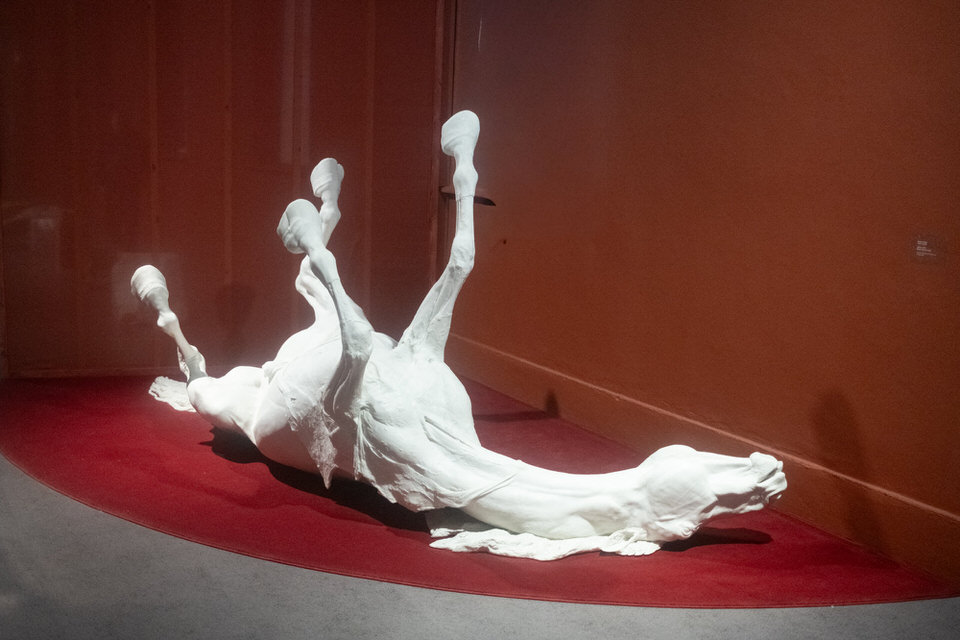
CAPTAIN WAS AN EXPERT AT PLAYING DEAD

STALLION

BY DAPHNE WRIGHT PHOTOGRAPHS

When I was young we had a horse called Captain, a beautiful white stallion who would only allow my mother to ride him. If anyone else approached him carrying a saddle, he had a theatrical routine: he would lie on the ground and play dead. He was completely committed to the performance, and it worked without fail!

I visited the Irish Museum of Modern Art (IMMA) in Dublin today, and this sculpture, Stallion by Irish artist Daphne Wright, immediately caught my attention.

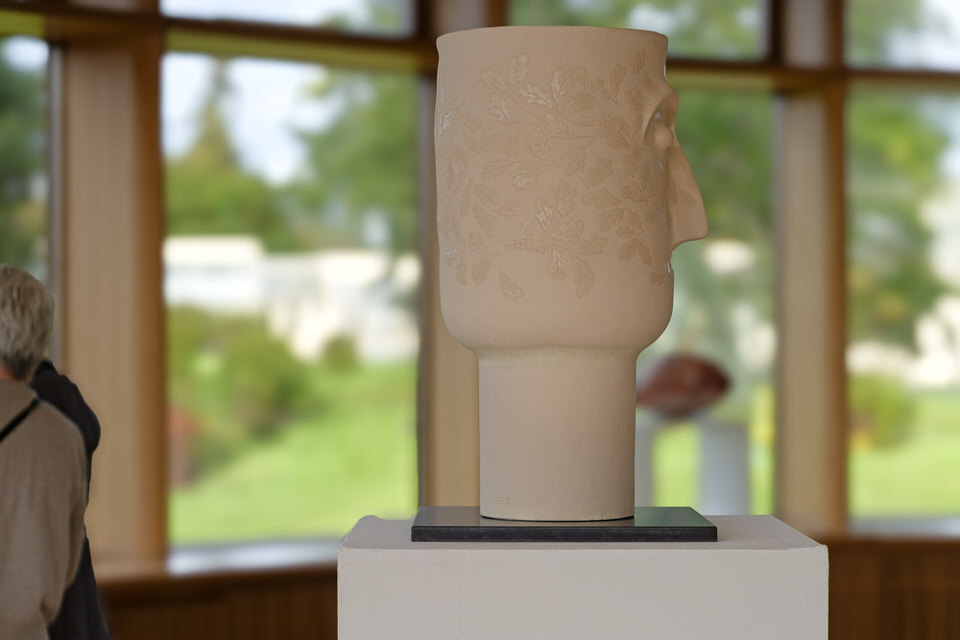
Wright is known for her multi-narrative installations, often utilising surprisingly fragile media such as plaster, tinfoil, or unfired clay. Here, she presents a life-sized horse cast in plaster, lying on its back with its legs in the air—a posture that is simultaneously vulnerable, awkward, and oddly dramatic. The piece profoundly explores themes of fragility and the vulnerability of life.


BY REMCO DE FOUW AND RACHEL JOYNT

THE ECCENTRIC ORBIT

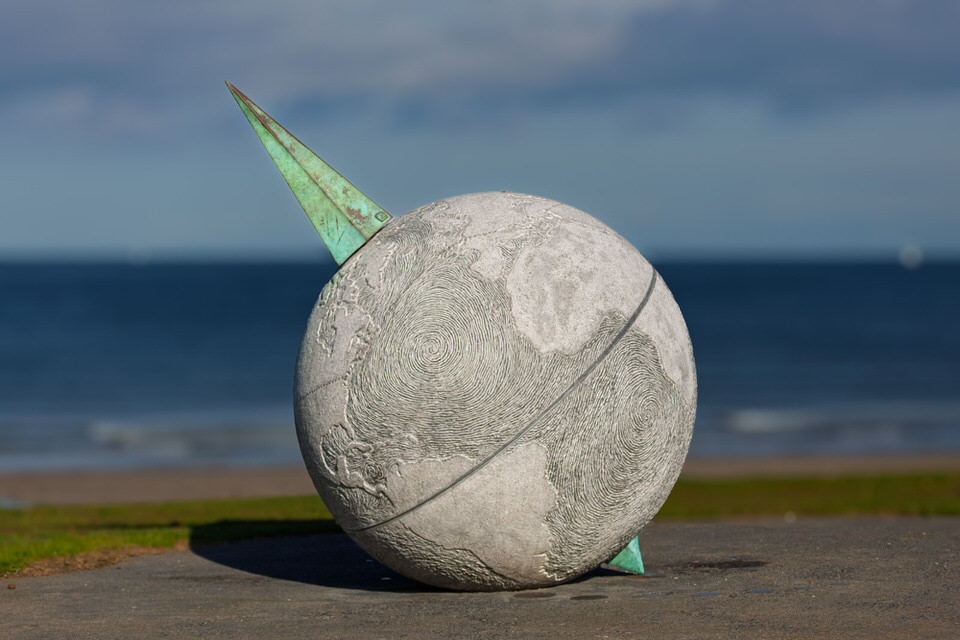
ROBSWALL CASTLE CARRICKHILL MARTELLO TOWER

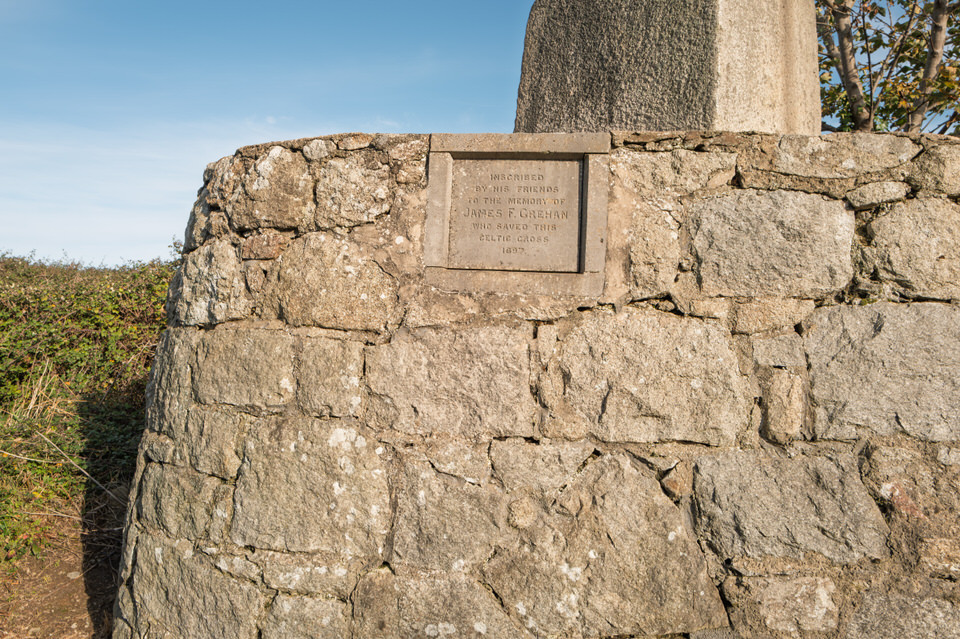
The sculpture primarily commemorates the first successful East-West transatlantic flight from Europe to North America, undertaken by Sir Charles Kingsford-Smith in his plane, the 'Southern Cross,' which took off from the Velvet Strand on June 24, 1930. It also stands as a tribute to other pioneering flights from the beach, including Jim Mollison’s solo crossing in the Heart’s Content.

Design and Artists: It was a collaborative work, designed by artists Remco de Fouw and Rachel Joynt.

Appearance: The monument is a striking, richly textured limestone globe that stands approximately 1.9 metres high.

The globe depicts the continents and ocean topography.

The historic flight path of the Southern Cross is traced across the sphere using bronze studs.

It features a large "compass needle" that aligns the sphere's axis directly towards the North Star, symbolising navigation and pioneering journeys.

Location: The monument, erected in 1999 (or 2002, sources vary), is located on the northern end of Portmarnock Beach near the sea-front, serving as a permanent and highly visible reminder of the area's place in world history.

The sculpture is known locally as the 'Southern Cross' Monument and captures the spirit of ambition and adventure that defined the era of early aviation, when the flat, smooth sands of the Velvet Strand were crucial as a natural runway before the establishment of Dublin Airport in 1940.

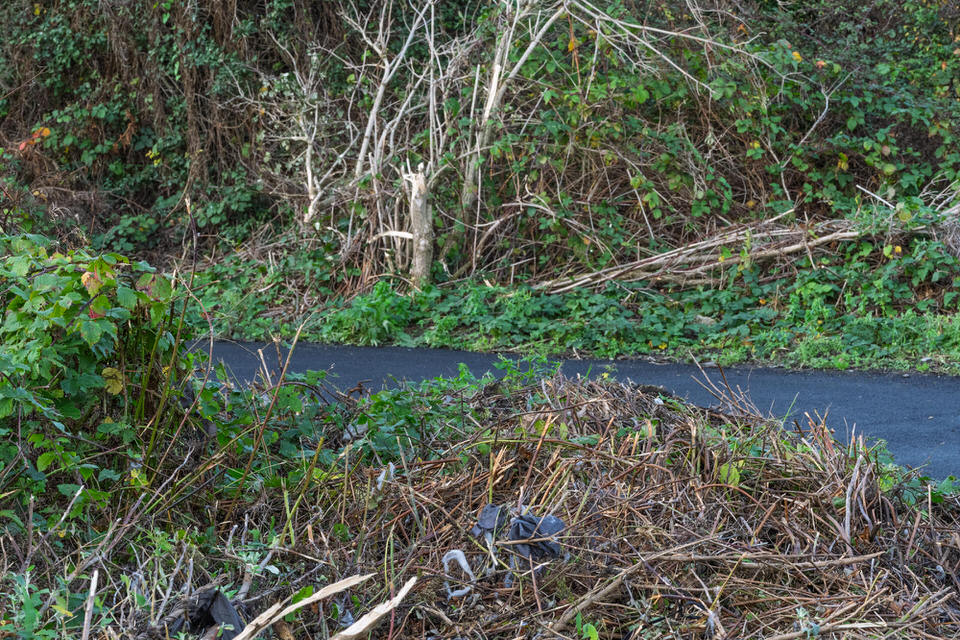
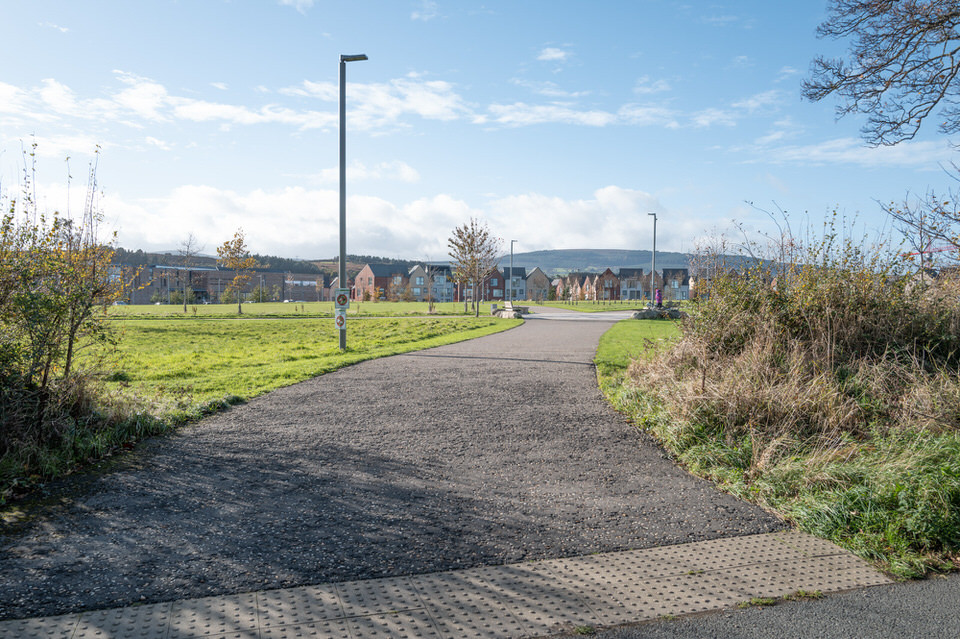
Mount Bernard Park Extension

After years of planning, the extension to Mount Bernard Park in Phibsborough is finally ready! During a recent visit, I was able to walk the entire perimeter of the new section, which lies right beside the Luas tram track. All major work appears completed, with the freshly laid tarmac pathway offering a fantastic new route. The only thing missing is signage.

Photographs ...

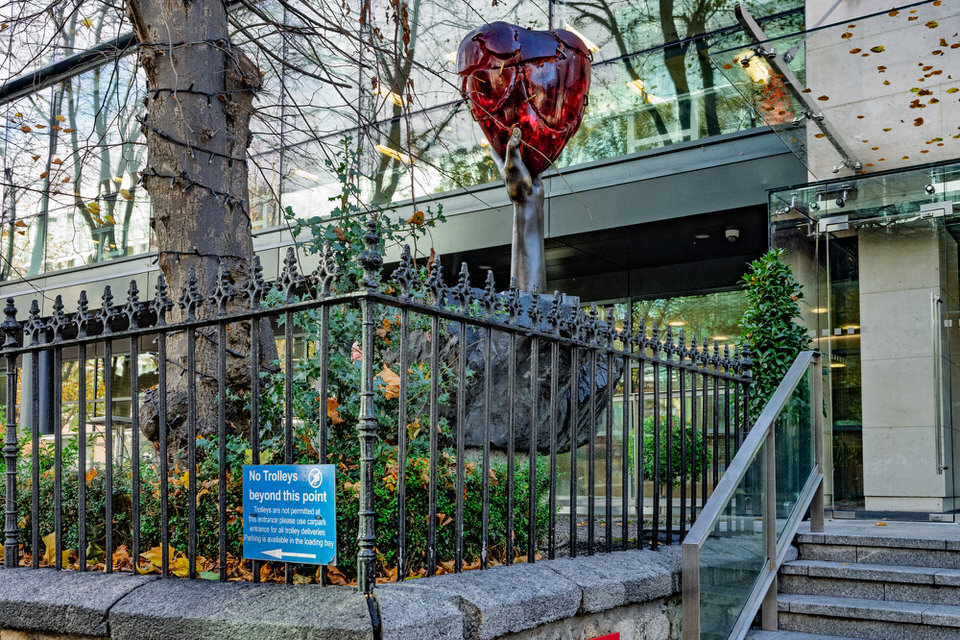
QUEN MAEVE HAS BEEN REPLACED

HEARTFELT SCULPTURE

PHOTO GALLERY WHAT’S THE STORY

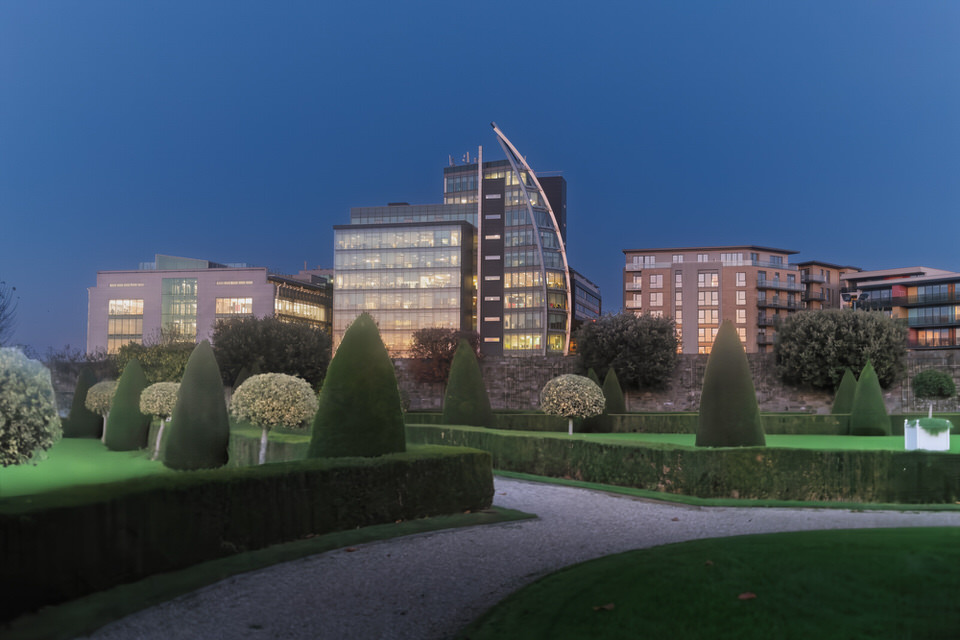
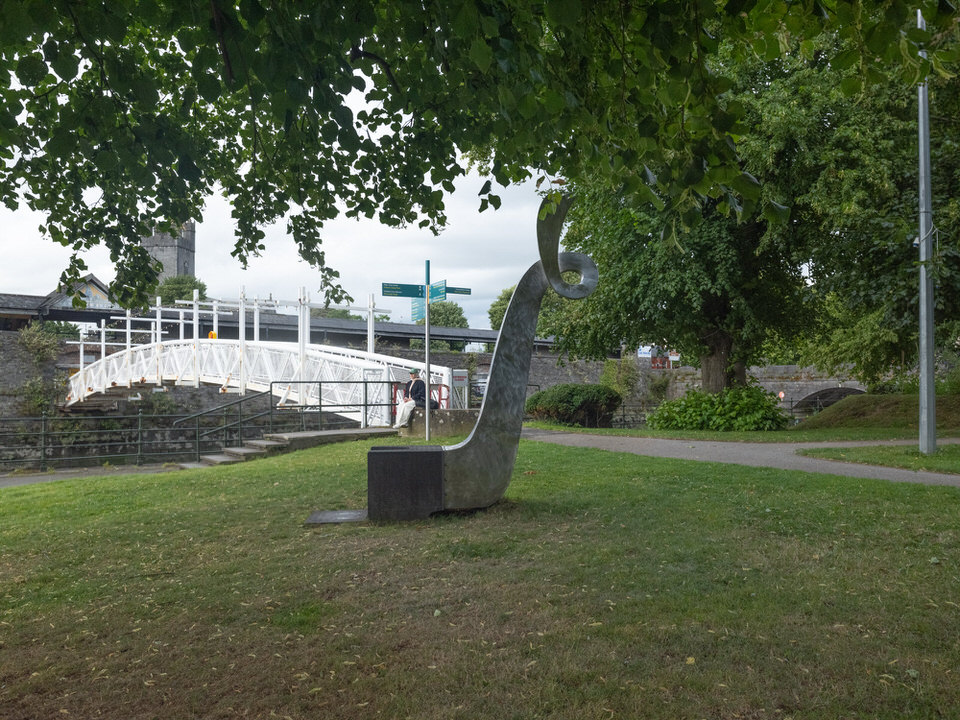
The official meaning is rooted in the building's corporate vision. The "Heartfelt" piece was installed as a "brand new heart" for the refurbished building, representing vitality, creativity, and a welcoming, community-oriented hub. The artist confirmed its meaning is about "connection, emotion, and place" and "positive transformation."

However, the beauty of O'Reilly's art is that it invites personal interpretation. While its official title is "Heartfelt," its towering, slightly curved profile on the plinth could easily be read as a sail on a ship, symbolising the building's new owners confidently navigating into their future. Either way, this new colourful landmark is a powerful symbol of renewal, replacing the warrior queen with an icon of modern emotion and design.

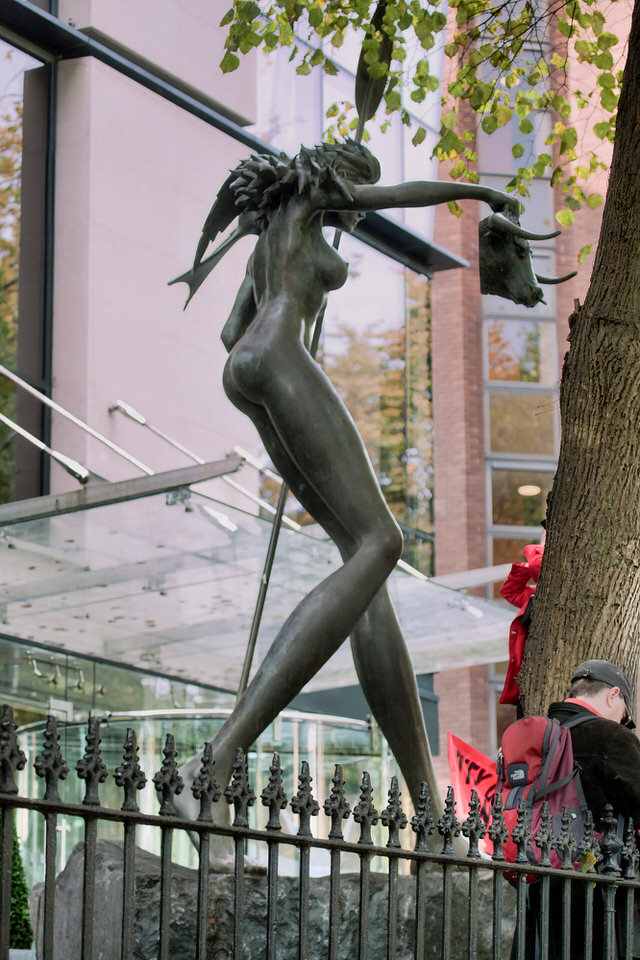
THE ORIGINAL HAS DISAPPEARED

THE QUEEN WARRIOR

PHOTO GALLERY WHAT’S THE STORY

👑 The Bronze Titan and the Digital Censor: Queen Maeve and the Controversy of the Naked Warrior

The original Queen Maeve Statue was far more than mere public art—it was a truly remarkable, unfiltered confrontation with ancient Irish mythology. This enormous bronze figure, standing at a commanding 15 feet, was an arresting and raw representation of the Connacht queen.

The artist did not shy away from the legendary figure's power, choosing to depict Maeve in her naked, warrior form. This nudity was not gratuitous; it was a stylistic choice, often interpreted as emphasizing her primal, untamed strength and her close connection to the land and sovereignty in Irish myth. Completing the composition, Maeve held a spear and, in a vivid and visceral reference to the epic Cattle Raid of Cooley (Táin Bó Cúailnge), the severed head of a bull. This powerful iconography cemented the statue as a direct, uncompromising commentary on the themes of war, power, and sacrifice that define the Táin.

GLASNEVIN CEMETERY NOVEMBER 2025

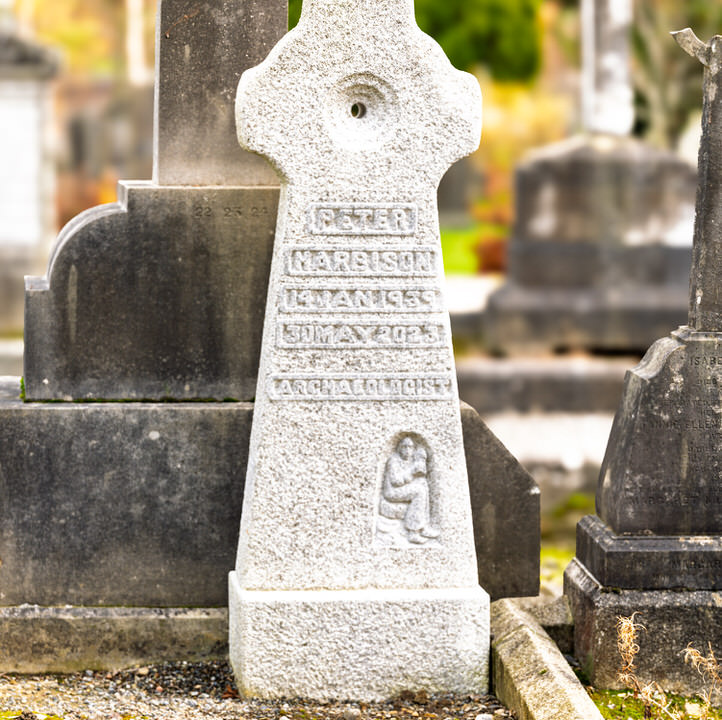
PETER HARBISON RIP

PHOTO COLLECTION ABOUT PETER HARBISON

Archaeologist for Bord Fáilte (Irish Tourist Board): From 1966, he served as the archaeologist for Bord Fáilte, and was the editor of its flagship magazine, "Ireland of the Welcomes", for ten years (1986–1996). This role made him a brilliant and effective communicator, blending serious scholarship with broad public outreach to promote cultural tourism.

Dr. Peter Desmond Harbison (14 January 1939 – 30 May 2023) was a highly distinguished Irish archaeologist, art historian, and author, who made a profound contribution to the understanding and popularisation of Irish heritage.

I USED A SONY FE30 WITH AN OLD LENS

OLD SONY 30MM MACRO

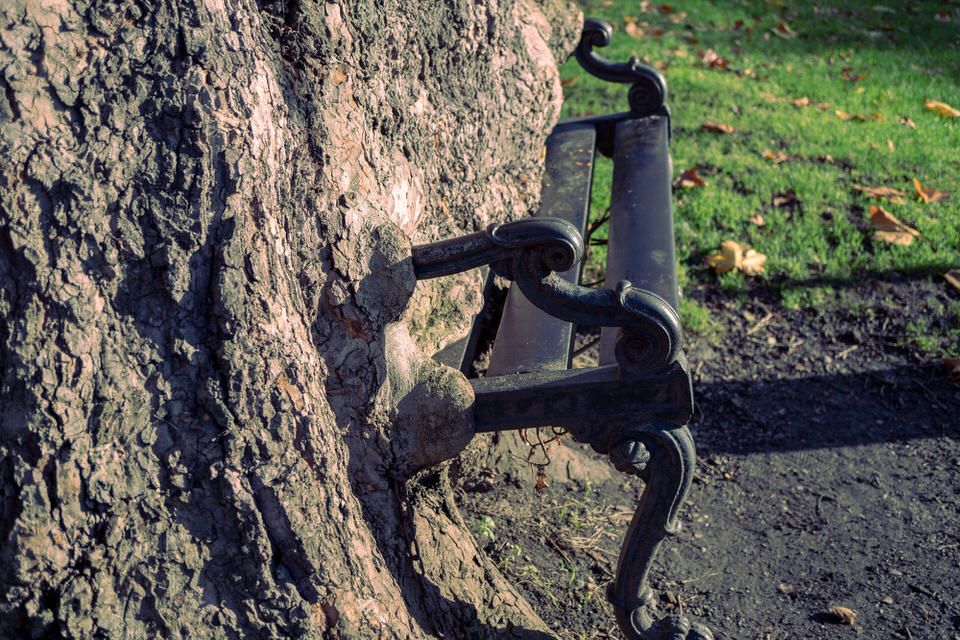
PHOTOGRAPHED USING SEL30 PHOTOGRAPHS OF THE HUNGRY TREE KINGS INNS

The "Hungry Tree" at King's Inns is a London plane tree in Dublin, famous for appearing to "eat" a cast-iron bench that was placed too close to its trunk. The tree, estimated to be about 80 years old, has gradually grown around the 19th-century bench, causing the bark to engulf parts of it, leading to the nickname. This natural phenomenon is located on the grounds of the King's Inns, Ireland's oldest law school, and is a popular and quirky photo spot accessible to the public.

King's Inns is a key historical, educational, and architectural landmark in Dublin. It is Ireland's oldest school of law, founded in 1541, and serves as the country's Inn of Court, the institution responsible for training and admitting barristers.


GLASNEVIN CEMETERY NOVEMBER 2025

TEAPOT TRIBUTE

PHOTO COLLECTION ABOUT THE TRIBUTE

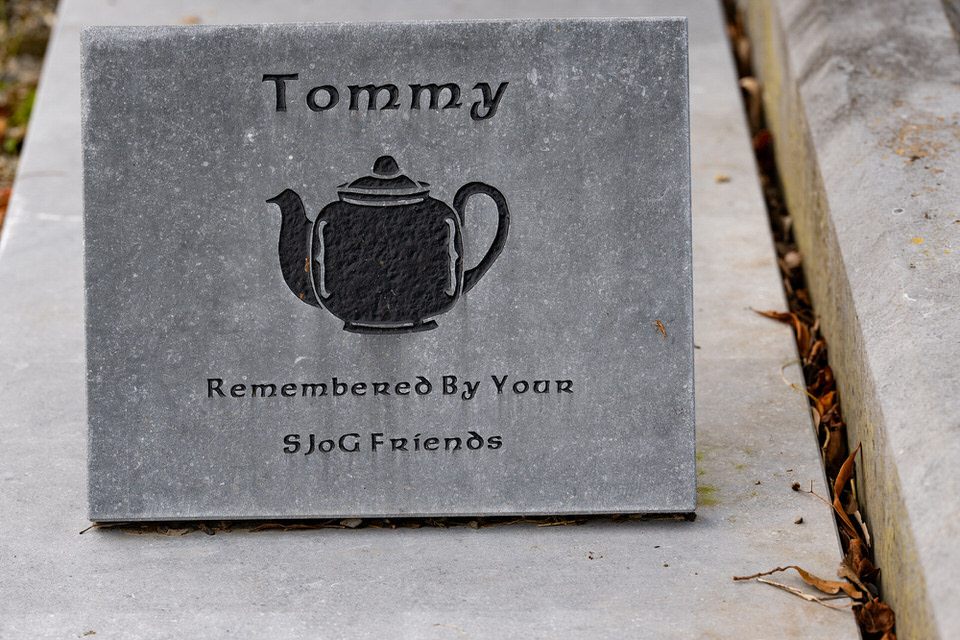
I generally try to avoid photographing recent graves but I was compelled to capture this one because of the unusual memorial featuring a teapot.

The distinctive gravestone for Thomas (Tommy) Thompson, located in Glasnevin Cemetery, has been noted in discussions about the site; however, this was my first time seeing it, and I must say that I find it very appealing.

The memorial also bears the inscription, "Remembered By Your S JoG Friends." This abbreviation, "S JoG," is commonly used for Saint John of God, a charitable organisation that provides health, educational, and social care services. "SJOG" refers to the various services and facilities operated by the Saint John of God Hospitaller Services Group, including the St John of God University Hospital in Stillorgan, Dublin, and numerous community services.

Given that the inscription mentions "Friends" who remembered him, it is highly likely that this refers to acquaintances made through a facility or service associated with the St John of God order. Alternatively, it could refer to former colleagues if Tommy Thompson worked for them, which I suspect may be the case. The teapot is a charming and unique personal touch to this lasting tribute.

THIS WAS LOCKS

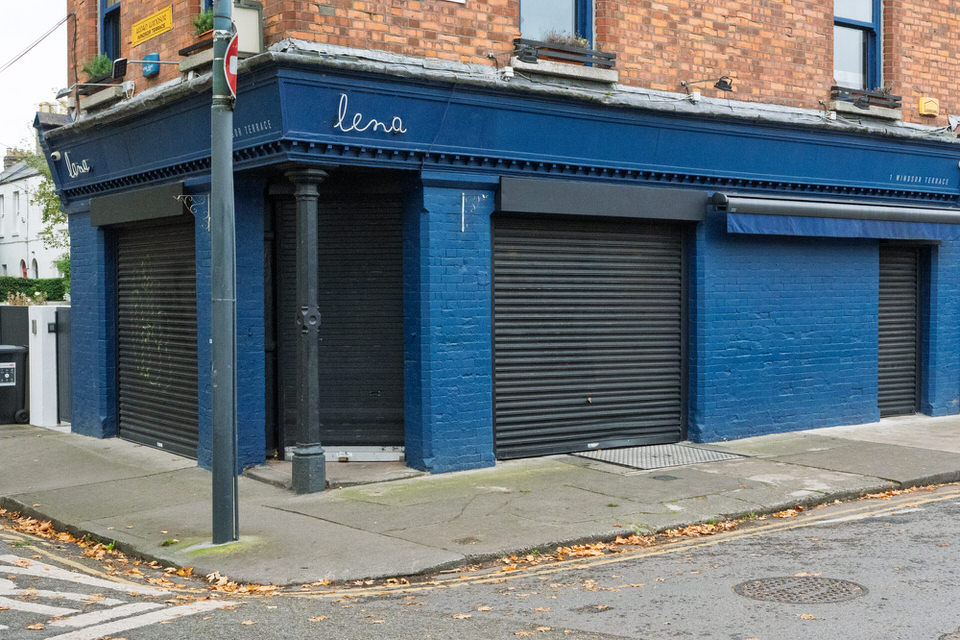
LENA

FROM LOCKS TO LENA PHOTOGRAPHS

Lena is a neighbourhood Italian restaurant located at 1 Windsor Terrace in Portobello, Dublin 8. It occupies a well-known, canal-side spot, offering picturesque views of the Grand Canal.

FROM RUIN TO A MASSIVE PUBLIC PARK

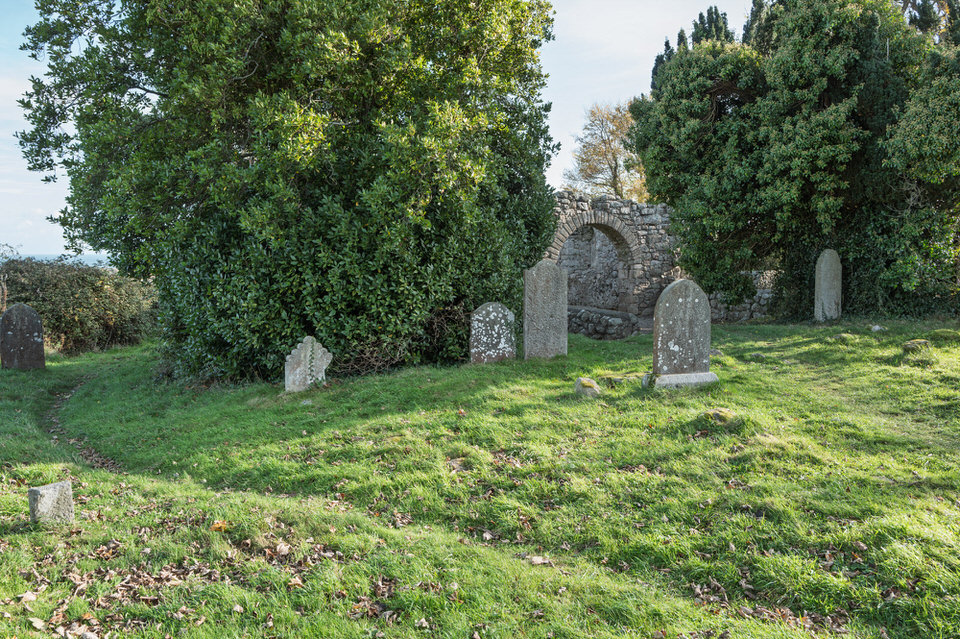
TULLY CHURCHYARD

TULLY CHURCH 2025 TULLY CHURCH 2024 TULLY CHURCH 2023 THE PROTECTION PLAN THE LAUGHANSTOWN TRAM STOP

Until recently, Tully Church was a "hidden spot" in the truest sense. Descriptions from as recently as 2011 note the site was located "down a narrow lane" and was "quite overgrown." Visitors were advised to "step carefully" due to "loose rocks lurking in the undergrowth," and access itself required climbing over a "solidly built stone stile in the wall."

FAST GALLERIES

PHOTOGRAPHS PROVIDED BY WILLIAM MURPHY

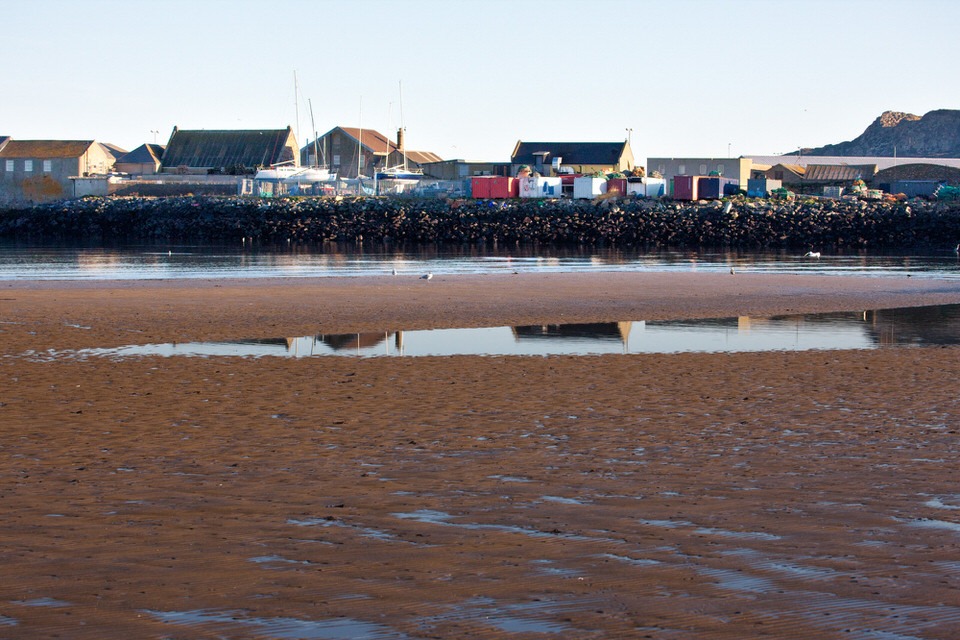
January 2009 Visit To Howth Village

These images were created with a Canon 1Ds MkIII. For those who remember the camera forums from that era, you'll know this body had a reputation for poor AF performance.

At the time, I was unaware that my specific camera was affected by a well-known (and later, recalled) hardware flaw in its autofocus system. This made the AF incredibly unreliable, especially for tracking subjects. If some images in this collection feel slightly less sharp than my current work, this is often the culprit.

Furthermore, you may notice that the shadow areas have a different character than my modern Sony images. Sensor technology from 2007, while top-of-the-line for its day, had far less dynamic range. When I "lift" the shadows on these older files, I'm pulling up a lot more noise and "grain" than you'd see from a modern camera. Rather than trying to scrub it all away and create a plastic-looking image, I've chosen to embrace it as part of the texture and history of that file.

These technical challenges were, in fact, the beginning of my journey to the Sony mirrorless system I use today.

It's a fascinating process to revisit these old files. It reminds me how far the technology has come, but also that a strong composition and moment will always shine through. I still own that 1Ds MkIII—and as it turns out, with manual focus, it still works beautifully as a studio camera!

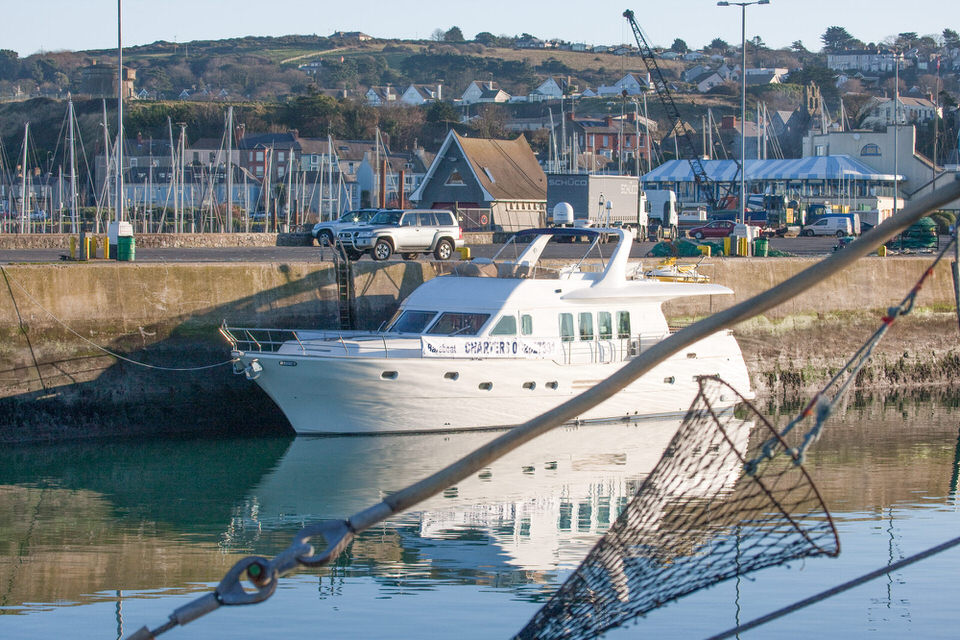
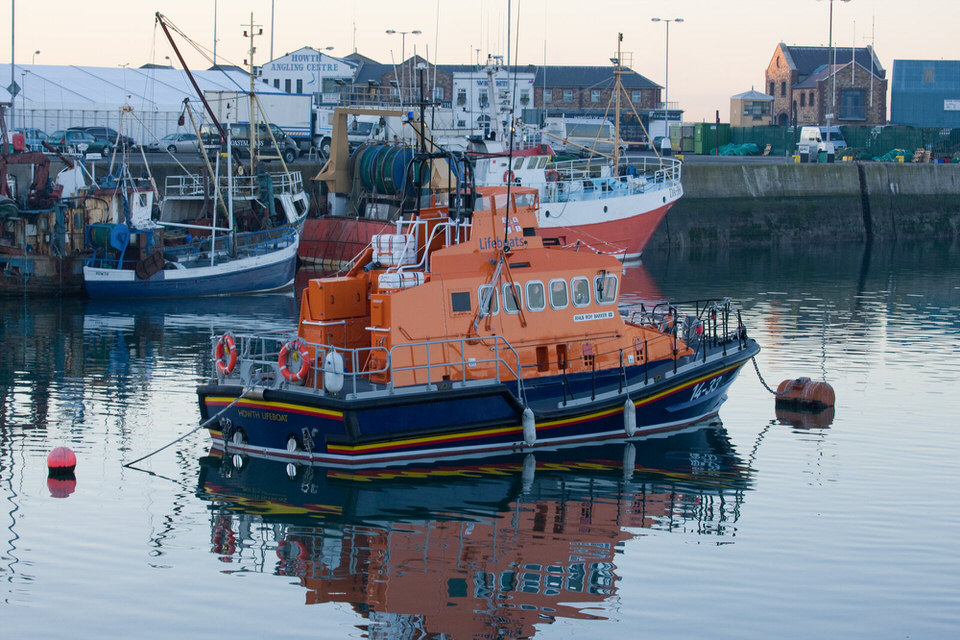
HOWTH HARBOUR JANUARY 2009 PHOTOGRAPHS OF THE HARBOUR THE RNLI LIFEBOAT

I USED A CANON 1Ds MKIII

THE RNLI LIFEBOAT

The lifeboat is named in memory of Mr Frederick Roy Barker. Mr. Barker, who was known as Roy, generously left his entire estate to the RNLI. His bequest was used to establish the Roy Barker Memorial Fund. The income from this fund has paid for several lifeboats over the years, with the Roy Barker III at Howth being the third such boat.

PHOTOGRAPHED 9 JANUARY 2009

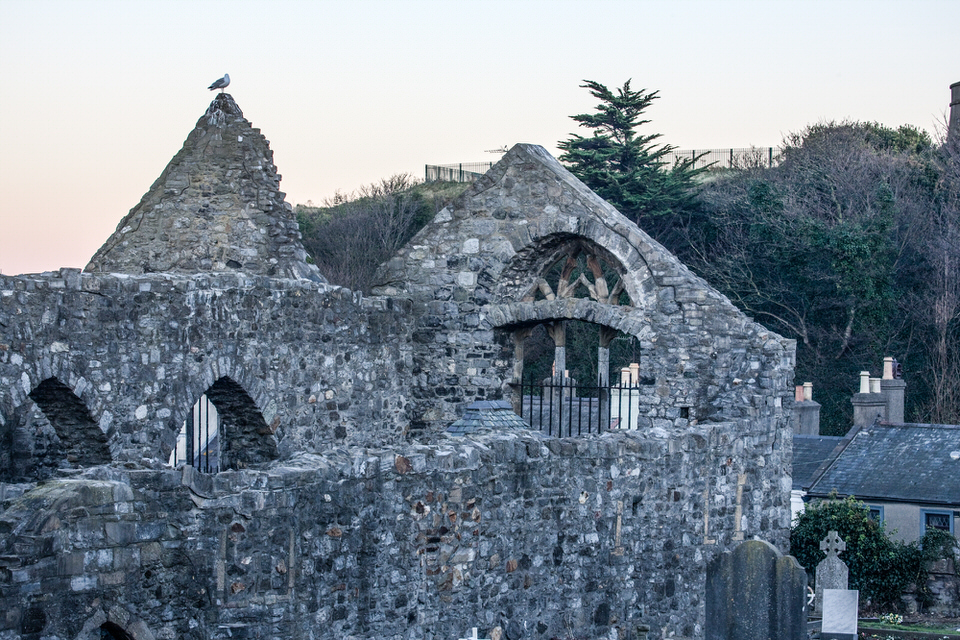
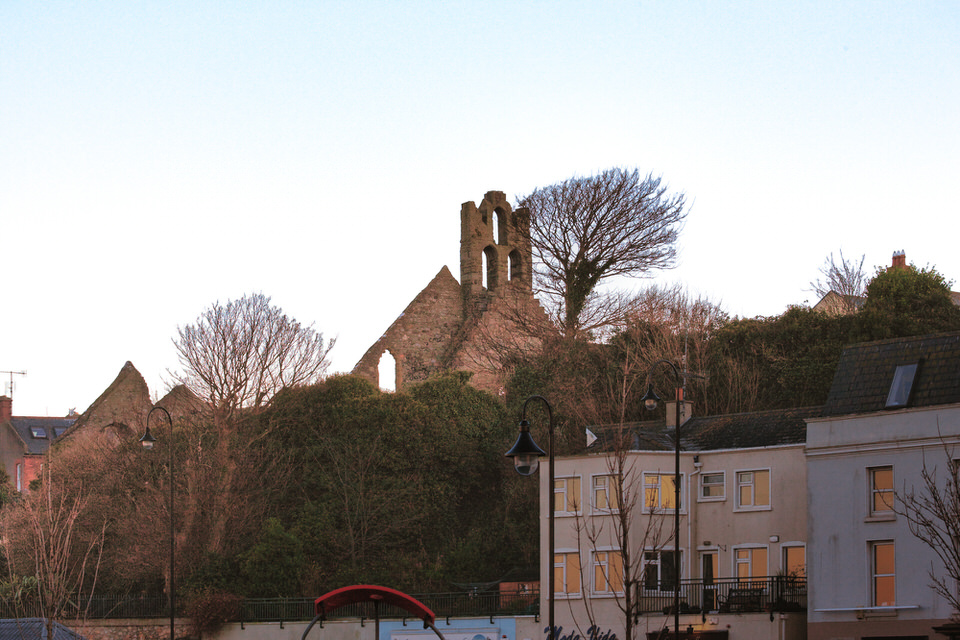
ST MARY’S ABBEY

Historical Background

Viking Origins: The first church on this site was founded around 1042 by Sigtrygg (or Sitric), the Viking King of Dublin, who also founded the original church at Christ Church Cathedral.

Medieval Amalgamation: Around 1235, this early church was amalgamated with the monastery on the nearby island of Ireland's Eye. A new church was built on this site, founded by Luke, the Archbishop of Dublin, on land granted by Sir Almeric St. Lawrence.

Current Structure: Very little remains of these first two structures. The majority of the present-day ruins are from a late 14th or early 15th-century rebuilding. It was established as a collegiate church, meaning it was served by a college of three or more priests.

ST MARY’S ABBEY

REMASTERED PHOTOGRAPHS

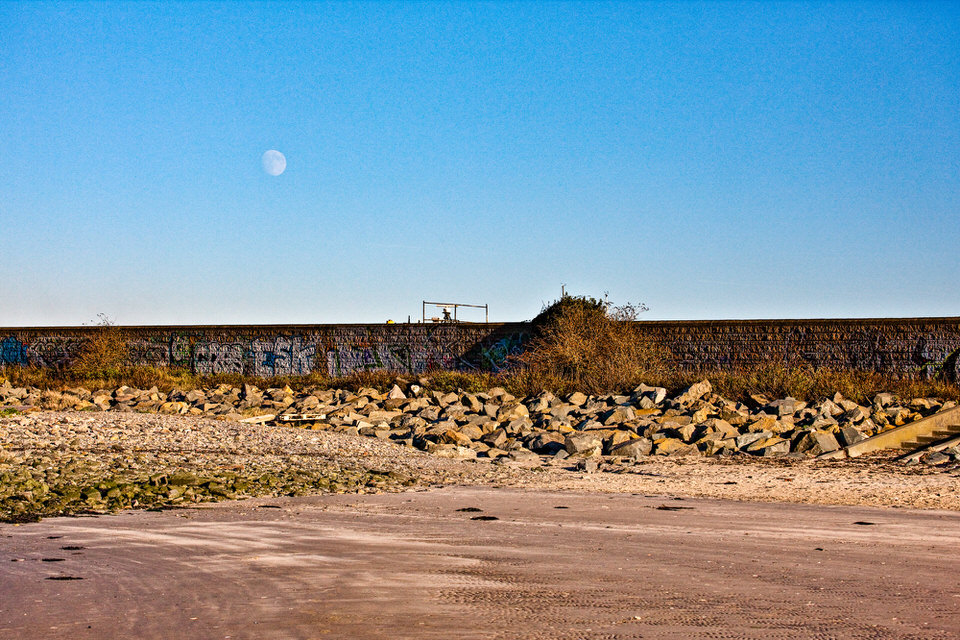
CHARLMONT BEACH

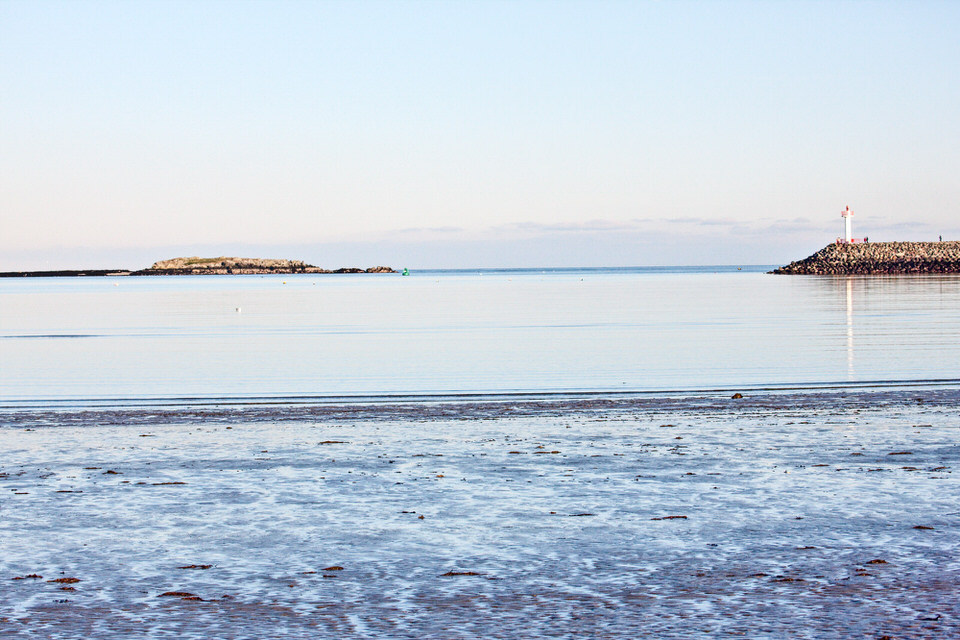
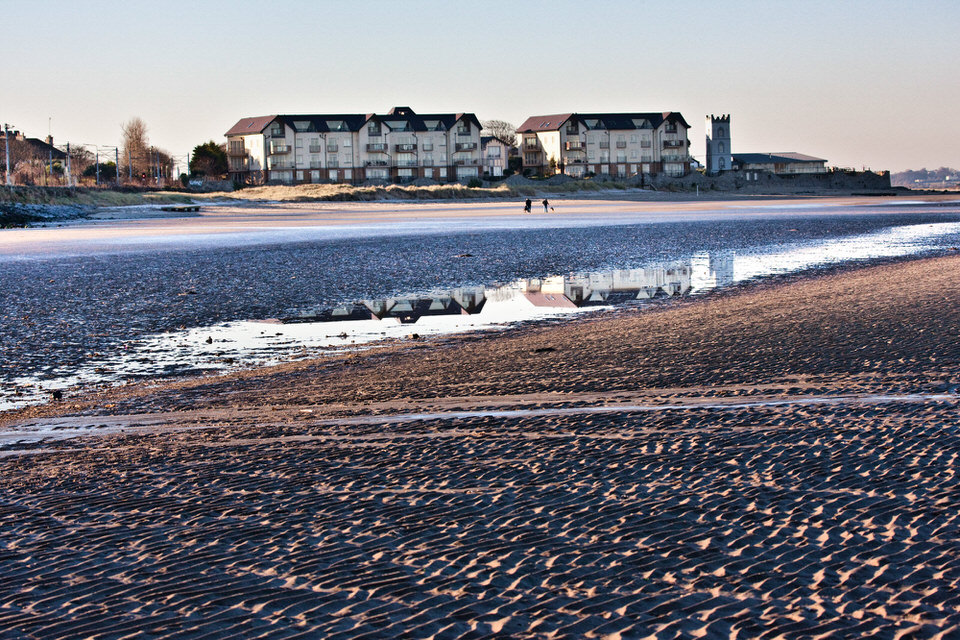
The name "Claremont" is not ancient and is linked to the 19th-century Victorian development of Howth. The beach almost certainly derives its name from Claremont Tower, a distinctive, castellated Martello-style tower located on the hill just above the beach.

This name is also associated with Howth Lodge, a nearby 19th-century building that once served as the summer home for the British viceroy. This building and its surrounding lands were eventually redeveloped into a complex of luxury apartments, and the area's name was reinforced by the large, modern "Claremont" residential development built on a former industrial site adjacent to the beach.

PHOTOGRAPHS OF CHARLMONT BEACH SECOND VISIT TO HOWTH JUNE 2009 JANUARY 2018 VISIT TO HOWTH

Dublin Quays 6 November 2025 - A Quick Stroll

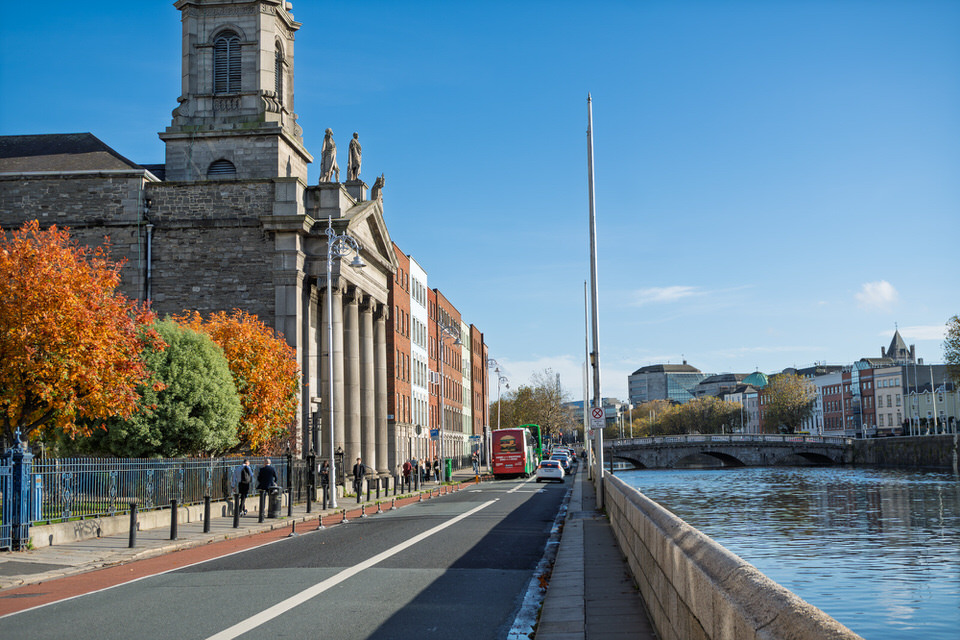
Today as I was on my way to meet some friends at Eatokyo Restaurant on Wellington Quay I took the opportunity to photograph sections of the Quays, North and South.

I USE AN OLD SONY SEL30 MACRO LENS

ALONG THE QUAYS

It is a vastly more pleasant experience to walk along the quays upriver from O'Connell Bridge now, precisely because of the recent traffic restrictions.

ALONG THE QUAYS
ALONG THE QUAYS QUICK AND SIMPLE PHOTO GALLERY THE QUAYS OF DUBLIN

For decades, the quays—particularly Bachelors Walk and Aston Quay (bordering Temple Bar)—functioned as a high-volume, east-west artery for private cars. Dublin City Council officials noted that over 60% of this traffic was "through traffic," meaning drivers who were not stopping in the city centre but just using the quays as a shortcut.


Legacy: January 2018 Visit To Howth

The rugged peninsula of Howth, just a short trip from Dublin city, offers no shortage of breathtaking views, but for a photographer, the ruined majesty of St. Mary's Abbey is a genuine treasure. I was there on 22 January 2018 to capture its crumbling stone walls and atmospheric graveyard, a location that offers both serene beauty and, as I’ve found, a touch of wild drama.

I USED A SIGMA DP2 CAMERA

ST MARY’S ABBEY

The present ruins of St. Mary's, perched dramatically above Howth village, mostly date back to the late 14th or early 15th century, though a church has stood on this spot since the Viking era of 1042. Wandering among the walls, you feel the weight of history, especially at the site of the splendid effigial tomb of Sir Christopher St. Lawrence, a 15th-century Baron of Howth. It’s a photographer’s dream, with intricate stonework framed by the expansive Irish sky.


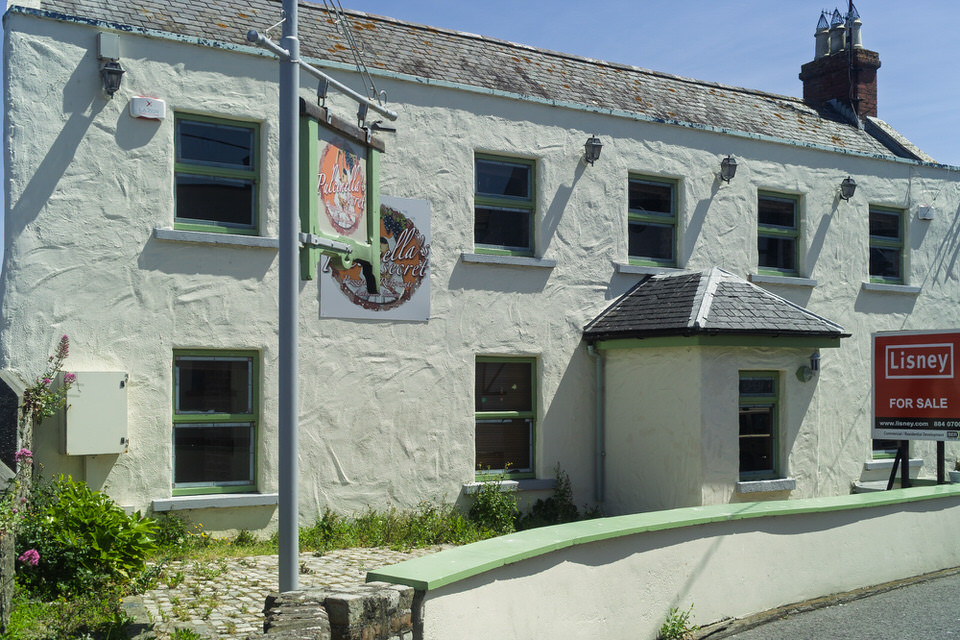
RESTAURANT FOR SALE QUICK AND SIMPLE PHOTO GALLERY ABOUT 30 CHURCH STREET


30 CHURCH STREET

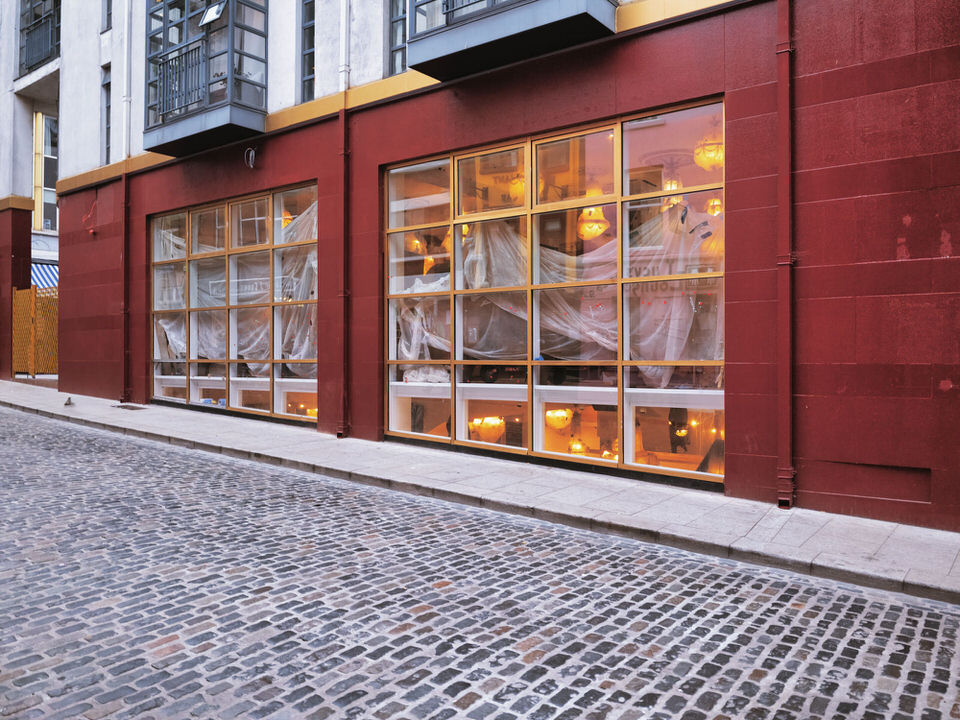
The premise, which is a historic building, was once home to a variety of eateries. One particularly well-remembered iteration was Pulcinella's Secret Restaurant, an authentic Italian pizzeria known for its stone-baked pizzas and classic pasta dishes. However, like its predecessors (including an early venue named The Big Blue), Pulcinella's eventually closed its doors.


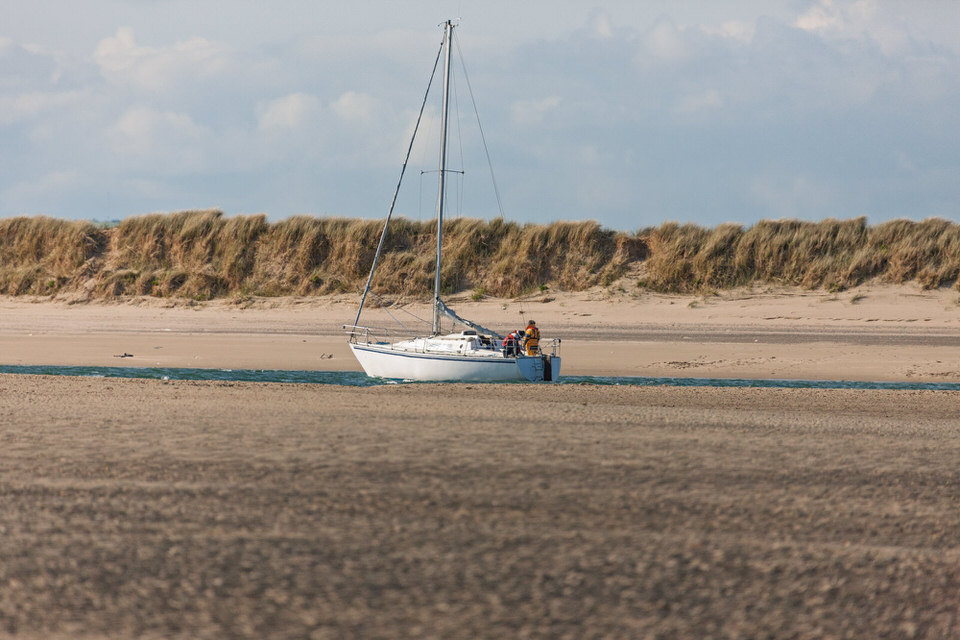
Sailing And Boating Off The North Dublin Coast

A discussion of boating and yachting in the Malahide and Portmarnock area of North County Dublin centres predominantly around Malahide, which is a significant maritime hub offering comprehensive facilities. Portmarnock's coastline is primarily a beach, and while it's part of the beautiful sailing area, it does not possess the dedicated marina or club infrastructure found in its neighbouring village.

BETWEEN MALAHIDE AND PORTMARNOCK

SAILING AND BOATING

For yachting and structured boating, Malahide is the undisputed centre, providing a full suite of services, a sheltered marina, and active yacht and training clubs. Portmarnock, while offering a spectacular coastal backdrop, is not a base for marine traffic.


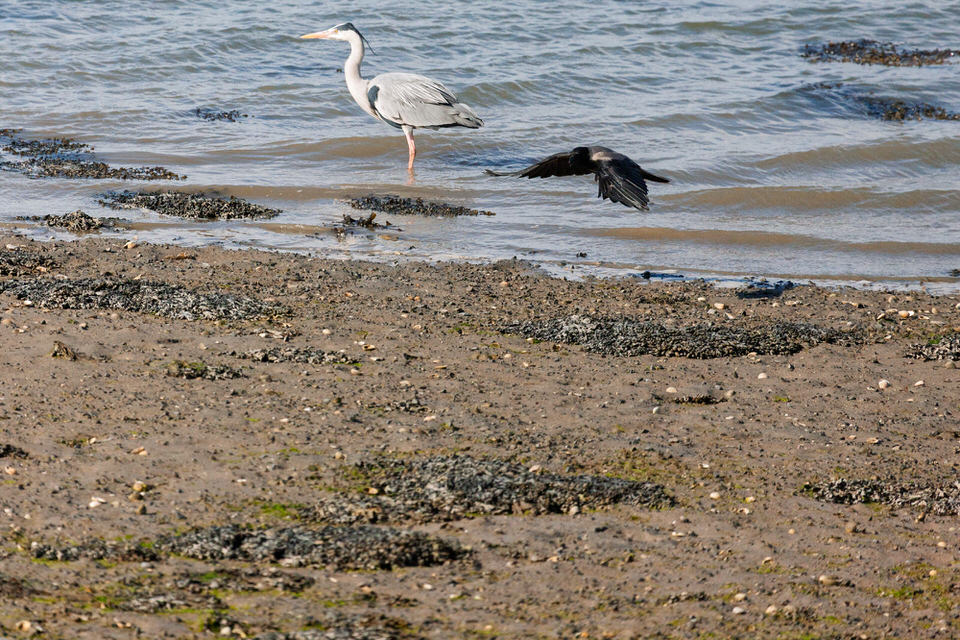
A Hooded Crow Mobbing A Heron On The Velvet Strand

I failed to capture the full sequence of images, as my camera wasn't set up for bird photography at the time. A few days ago, however, I had the photographs analysed to determine the species and activity.

BETWEEN MALAHIDE AND PORTMARNOCK

MOBBED BY CROW

The images clearly show a Grey Heron (Ardea cinerea) being mobbed by a Hooded Crow (Corvus cornix).

The larger bird standing in the water is the Grey Heron. It was identified by its characteristic features: large size, long legs, sinuous neck, and the grey/white coloration with black markings on the head and wings.

The smaller bird flying and seemingly attacking is the Hooded Crow, distinguished by its black and grey plumage, specifically the dark head and wings contrasting with the lighter grey body.

The activity captured is known as mobbing, a common behaviour where smaller birds, like crows, aggressively harass a larger bird, such as a heron. This is typically done to drive away a perceived threat to a nesting territory or food source.


Legacy: Malahide Waterfront May 2018

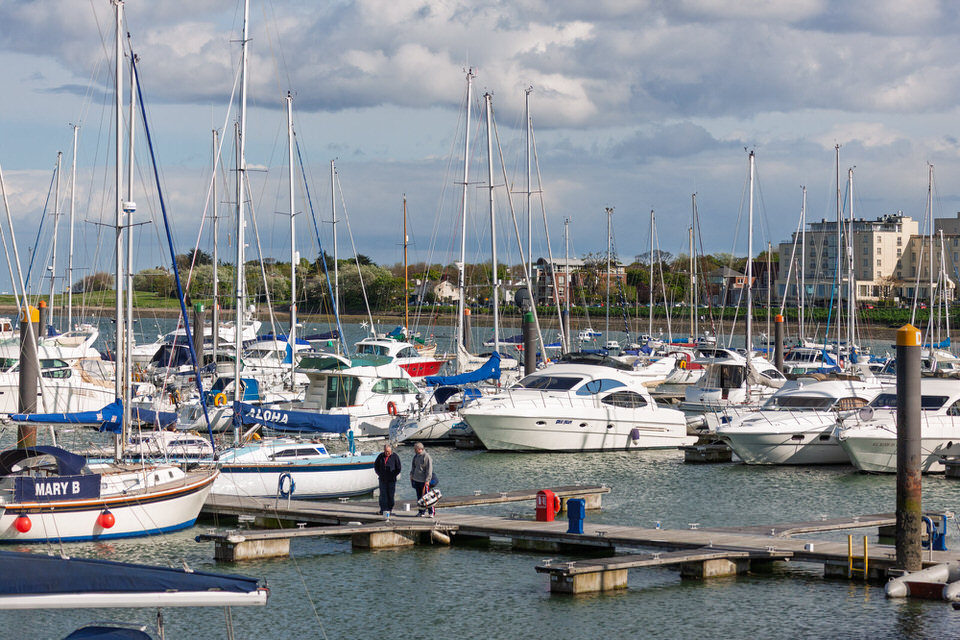
Malahide is an exquisite coastal town, and the Marina and Waterfront area serves as its lively, picturesque centre. The ambiance is one of relaxed seaside sophistication, blending the history of a traditional fishing village with the vibrancy of a modern neighbourhood hub.

The Marina is a focal point, with its flotilla of boats bobbing gently in the water, offering a serene view that stretches out over the Malahide Estuary. It's an exceptionally popular location for dining, largely thanks to the breathtaking views it affords, particularly during the sunset. The restaurants here are a significant draw, ensuring the area is bustling year-round. While the tenants of the waterside spots may change over time—as with the move of the popular Geisha Asian Restaurant to Ashtown—the location itself remains a premium culinary setting, now featuring quality establishments like Sienna's Italian Restaurant.

IT WAS A VERY HOT DAY - WAY TOO HOT

THE WATERFRONT

Beyond dining, the waterfront invites leisurely activity. It's common to see people taking slow strolls, admiring the moorings, or simply breathing in the fresh sea air. The architecture and surroundings create a truly colourful and engaging atmosphere, solidifying the waterfront as one of Malahide's most treasured and favourite spots.


Lock Six And Seven On The Royal Canal And Two Swans

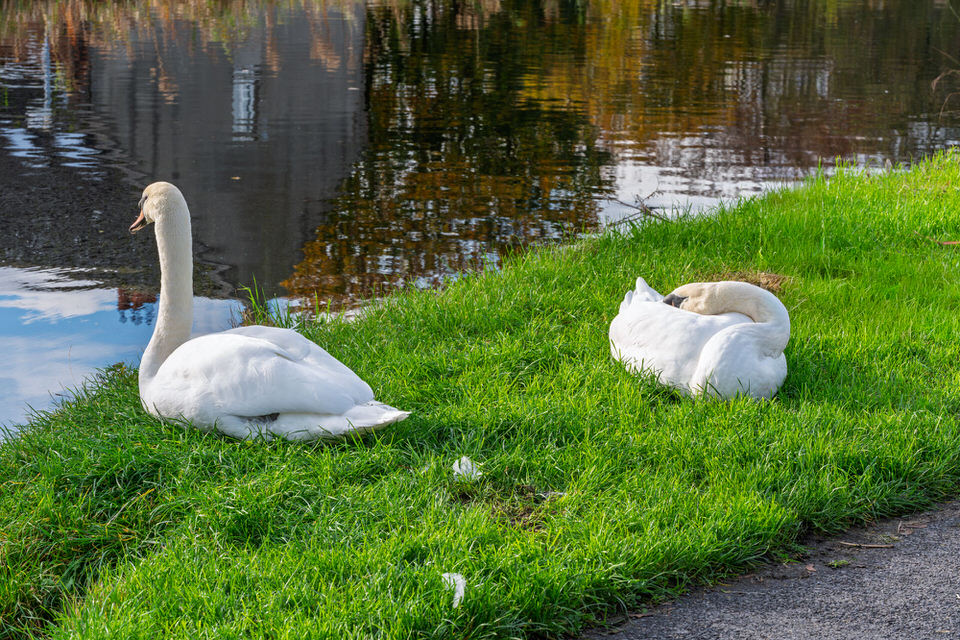
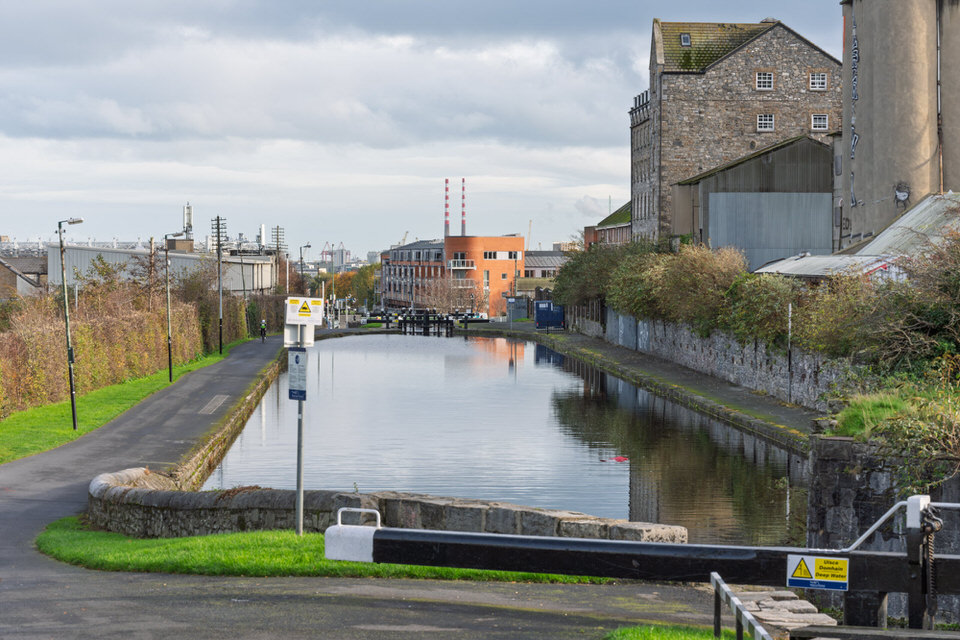
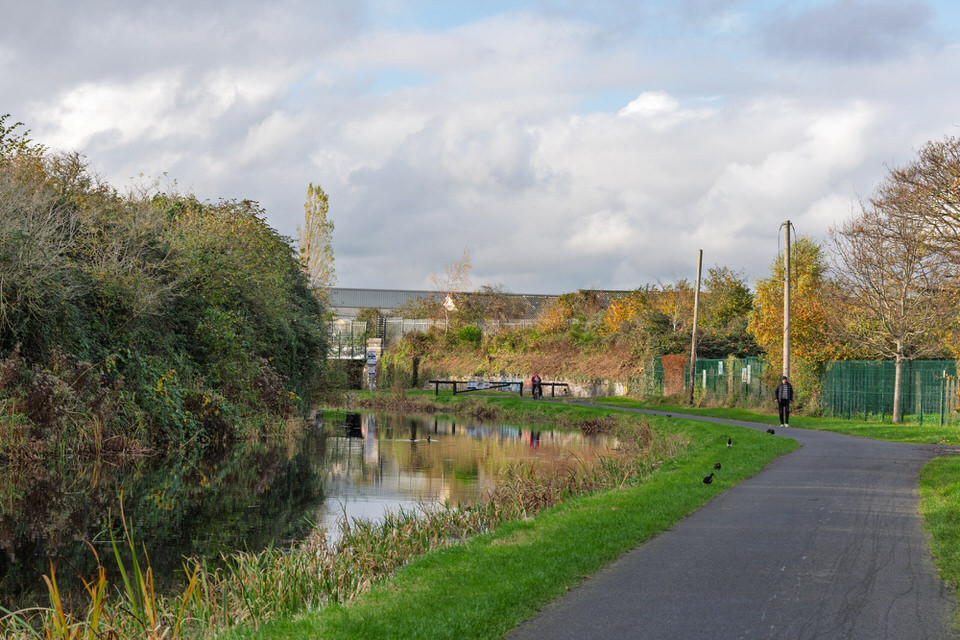
My new FE 100mm F2.8 Macro GM OSS Sony Lens arrived three days ago on the 7th November 2025, and I took it on a walk along the Royal Canal from Lock 6 to Broombridge

THE PATHWAY HAS RECENTLY BEEN UPGRADED

LOCK 6 AND LOCK 7

Ireland’s National Famine Way is a poignant and immersive 165 km cross-country pilgrim walk that traces the steps of the Strokestown famine emigrants of 1847. More than just a route, it is a journey layered with history, art, and culture. The trail weaves through country lanes, villages, towns, and Dublin city, predominantly following the historic banks of the Royal Canal. It offers flexibility, as it can be completed in sections or all at once, allowing walkers to choose their own pace. The emigrants’ tragic yet hopeful journey is marked by 30 pairs of evocative bronze shoe sculptures spaced out along the entire route. This remarkable trail is bookended by iconic museums: the National Famine Museum at Strokestown Park in Co. Roscommon, and in Dublin, the Jeanie Johnston Famine Ship and EPIC The Irish Emigration Museum.

QUICK AND SIMPLE PHOTO GALLERY ABOUT THE FAMINE WAY THE FAMINE WAY

Botanic Gardens 8 November 2025

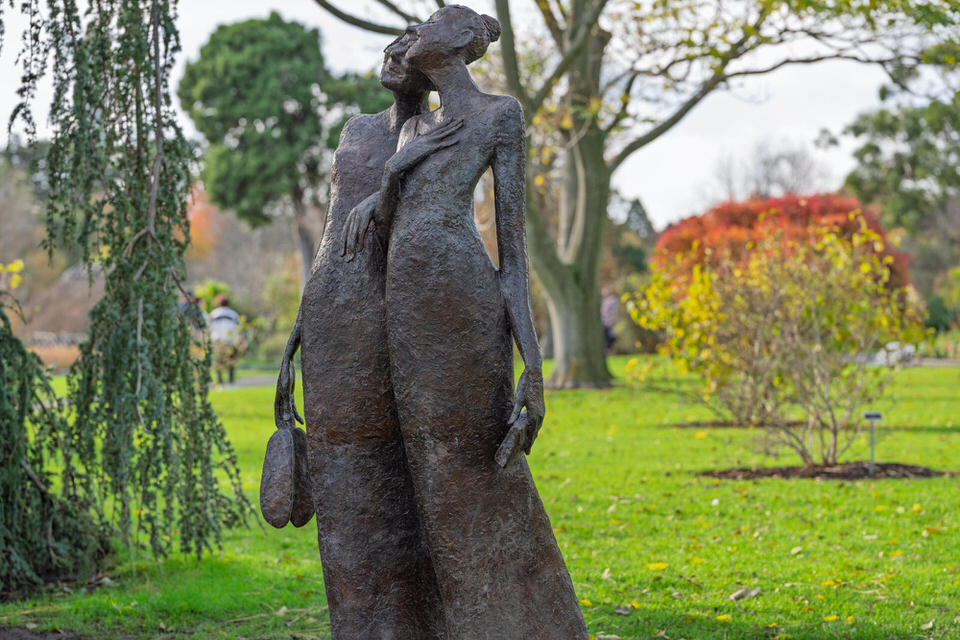
My new FE 100mm F2.8 Macro GM OSS Sony Lens arrived yesterday, 7 November 2025, and I took it to the National Botanic Gardens to photograph what has changed since my last visit.

THERE IS NOW A NEW BUS SERVICE

BOTANIC GARDENS

Born in 1948, Bob Quinn enjoyed a long career in the Irish advertising business as a commercial artist, designer, and head of a successful design and production company. He now works full-time as a sculptor in Blackrock, Co. Dublin, where he lives with his wife and two daughters.

QUICK AND SIMPLE PHOTO GALLERY ABOUT BOB QUINN Why a ALONG THE QUAYS? The 'Utah' Connection

Why a Teapot? The 'Utah' Connection

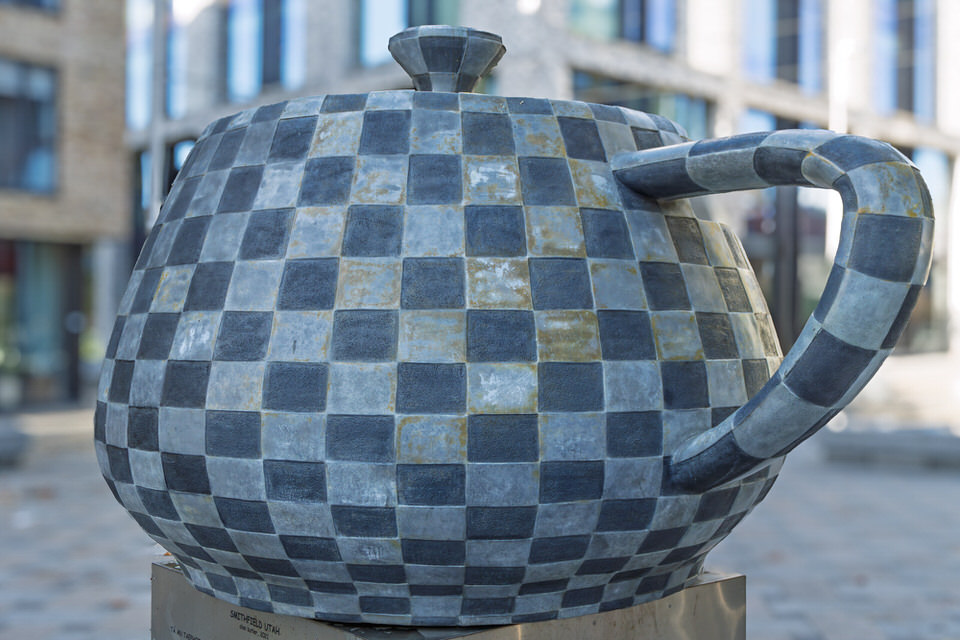
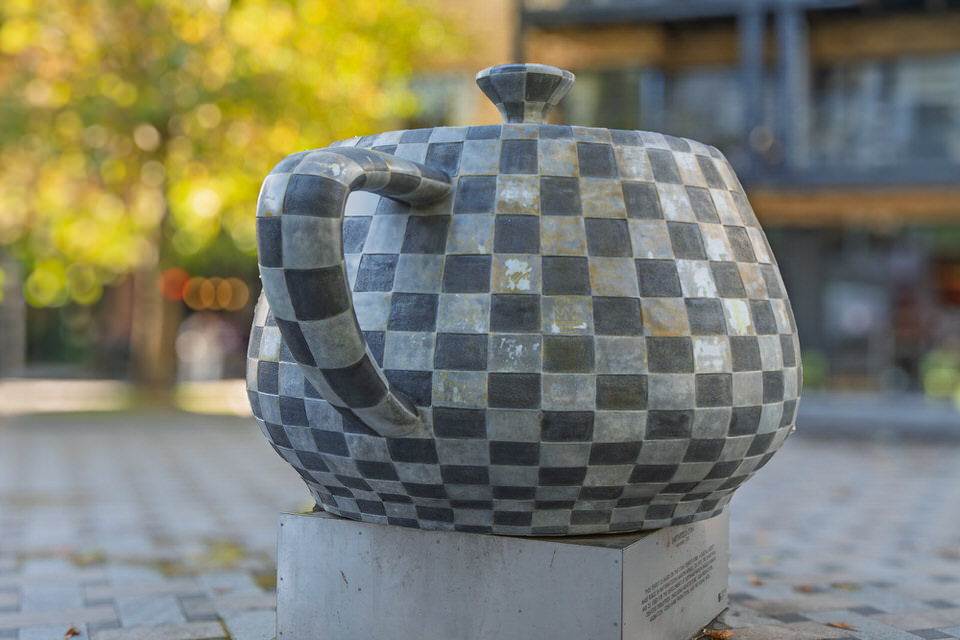
The most fascinating aspect of this sculpture is its name and origin. It is not just a random teapot; it is a direct, physical representation of one of the most famous objects in the history of computer graphics: the 'Utah Teapot'.

I USE AN OLD SONY SEL30 MACRO LENS

BY ALAN BUTLER

The teapot is a universal symbol of warmth, hospitality, and community—all relevant to Smithfield's long history as a marketplace and gathering spot.

Why a Teapot? The 'Utah' Connection

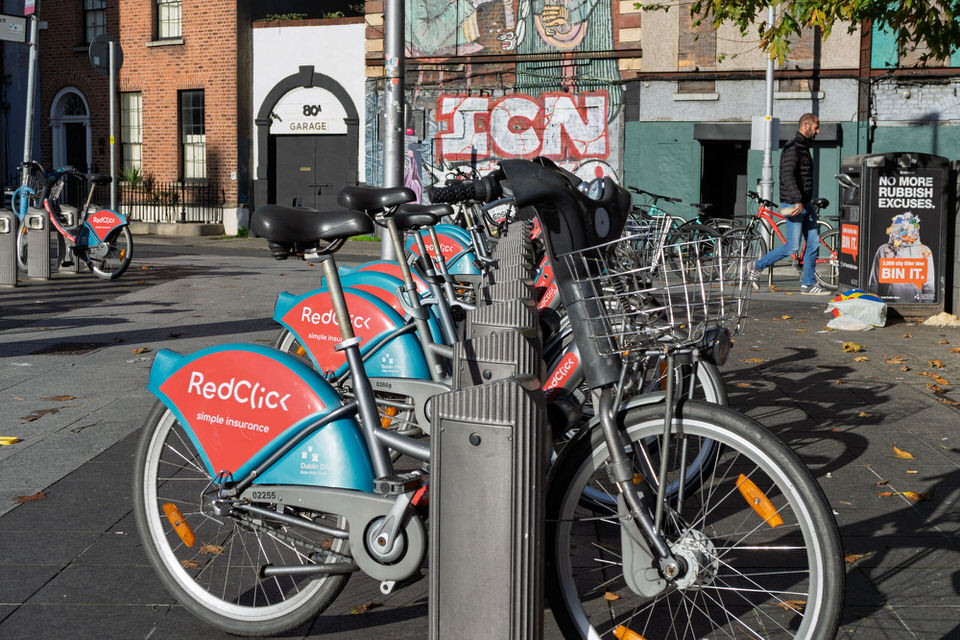
DublinBikes Docking Station At Smithfield Plaza

The Dublinbikes docking station at Smithfield Plaza is a key transport hub in the area, forming an important part of Dublin's popular public bike-sharing scheme.

I USE AN OLD SONY SEL30 MACRO LENS

DOCKING STATION 21

It is a particularly busy and strategic station because it is located right next to the Smithfield Luas (tram) stop on the Red Line. This makes it a popular spot for commuters and visitors to switch between the tram and a bike to complete their journey.

CHQ And The EPIC Museum

The building housing the EPIC Museum, known as the CHQ Building, has a rich and varied history, marking a dramatic transformation from 19th-century industry to 21st-century culture and innovation.

I USE AN OLD SONY SEL30 MACRO LENS

6 NOVEMBER 2025

EPIC The Irish Emigration Museum: The building's flagship attraction, located in the atmospheric vaults. It is a world-class, interactive museum that has been voted "Europe's Leading Tourist Attraction" at the World Travel Awards multiple times, beating landmarks like the Eiffel Tower and Buckingham Palace.

MORE ABOUT THE BUILDING

Definition and Development of Cherrywood September 2023

Later analysis reveals that the area photographed in September 2023 is incomparably more defined in November 2025. The spatial and toponymic confusion evident in 2023 was a valid observation of a specific "in-between" phase of large-scale, infrastructure-led development. By November 2025, this ambiguity has been resolved for this specific locality through the maturation of public amenities, the construction of new infrastructure, and the formal assignment of legal addresses.

TULLY PARK WAS ESTABLISHED 2023

SEPTEMBER 2023

The three flagship parks for Cherrywood —Tully, Beckett, and Ticknick — were only officially opened in May 2023. In September 2023, just four months later, these parks would have been new, raw, and lacking the mature landscaping, clear signage, and established pathways required to fully integrate them into the surrounding environment.

QUICK AND SIMPLE PHOTO GALLERY MORE ABOUT TULLY PARK

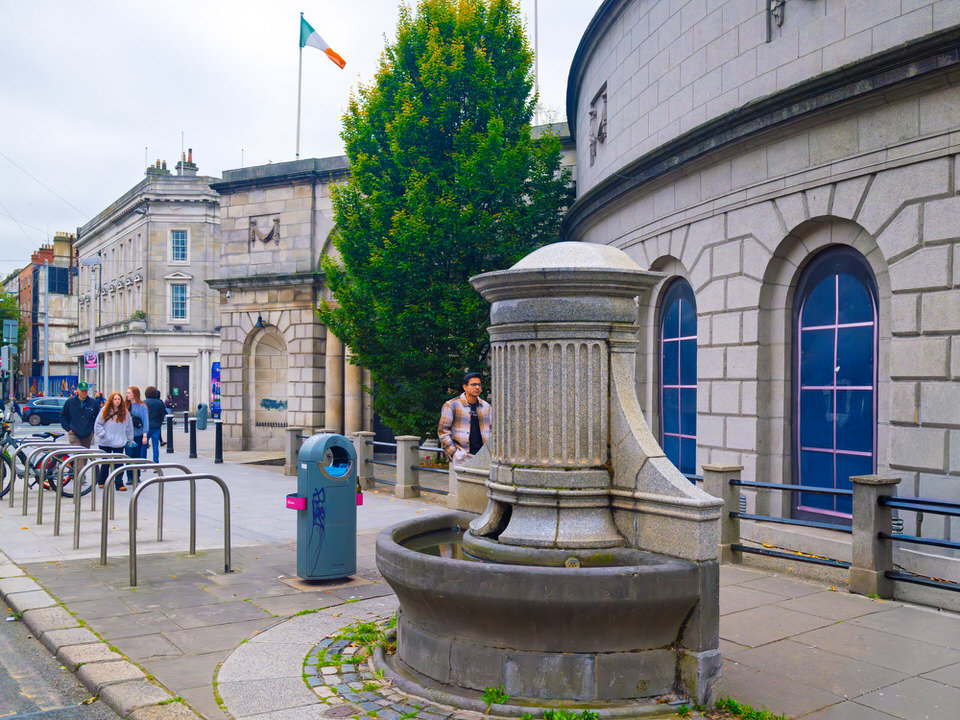
Fountain In Poor Condition At The Ambassador Theatre

DESIGNED BY JOHN ENSOR

I USED A FUJI GFX100RF

The fountain sits at the terminus of the vista looking north up O'Connell Street (formerly Sackville Street). In 18th-century urban planning, such focal points were crucial. The fountain and the sweeping, curved façades of the Ambassador and Gate Theatres behind it were all designed as a single, magnificent architectural set piece.

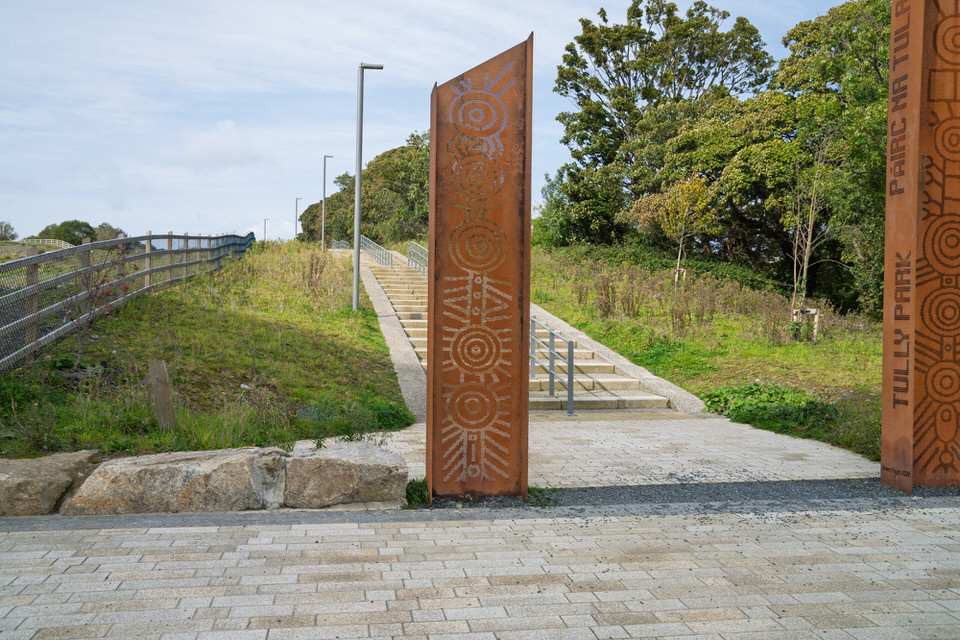
November 2025 Visit To Tully Park In Cherrywood

TULLY PARK WAS ESTABLISHED 2023

NOVEMBER 2023

The abstract "residential areas" under construction in 2023 are now formally defined residential neighbourhoods with legal addresses. The developer (Quintain, now rebranded as Evara) is marketing the area as "Cherrywood Village". Crucially, new, official street names such as "Tully Park View," "Tully Drive," "Tully Close," and "Tully Green" now exist. Sales for these properties began appearing on the Property Price Register (PPR) in late 2023 and have been assigned unique Eircodes (e.g., D18KV8X), integrating them fully into the national postal system. Developer site plans from 2024 and 2025 clearly delineate the precise spatial layout of these streets, definitively resolving the 2023 boundary questions.

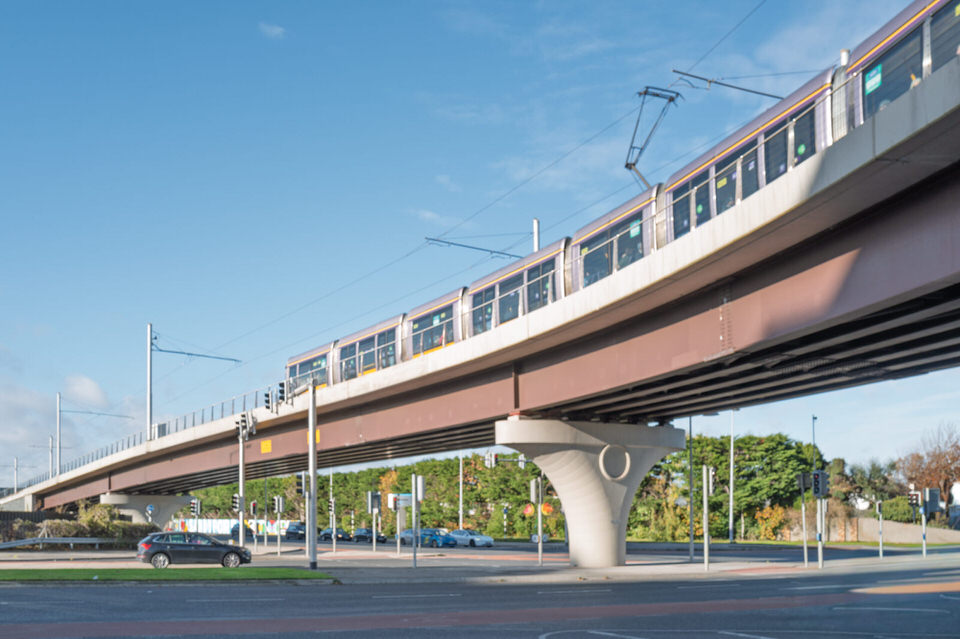
Luas Viaduct At Central Park - Sandyford

CONNECTING CENTRAL PARK AND SANDYFORD

SANDYFORD VIADUCT

The flyover shown in my photographs is a significant piece of engineering on the Luas Green Line. Technically a viaduct, this large bridge structure serves a critical function. Its primary purpose is to create a grade-separated crossing, allowing the tram line to pass safely and efficiently over the multi-lane M50 motorway—Dublin's main orbital route—as well as the nearby Leopardstown Road/Torquay Road.

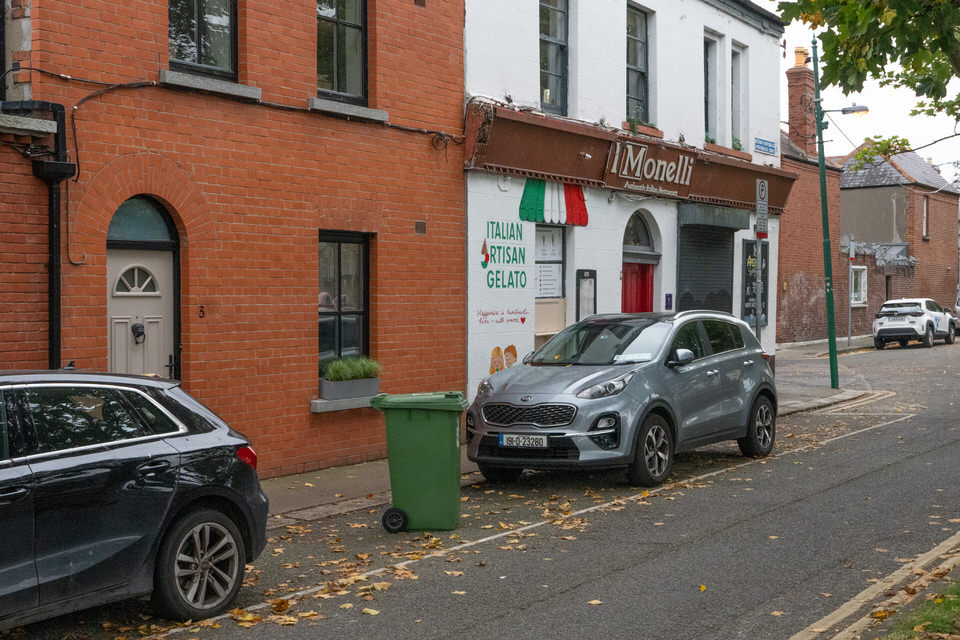
iMonelli An Authentic Italian Restaurant Located At 1-2 Portobello Road

The name iMonelli (pronounced ee-moh-nelly) is an Italian term. It translates to English as "the rascals," "the scamps," or, more affectionately, "the cheeky boys."

PHOTOGRAPHED USING A SONY FX30

iMONELLI RESTAURANT

iMonelli was not always in its current location. It was previously located in the nearby suburb of Rathgar before moving to its present spot on Portobello Road around 2017. The restaurant has built a strong reputation for its authentic, high-quality Italian cuisine, earning accolades such as "Dublin's Most Authentic Italian Restaurant" at the 2019 Love Italian Life awards.

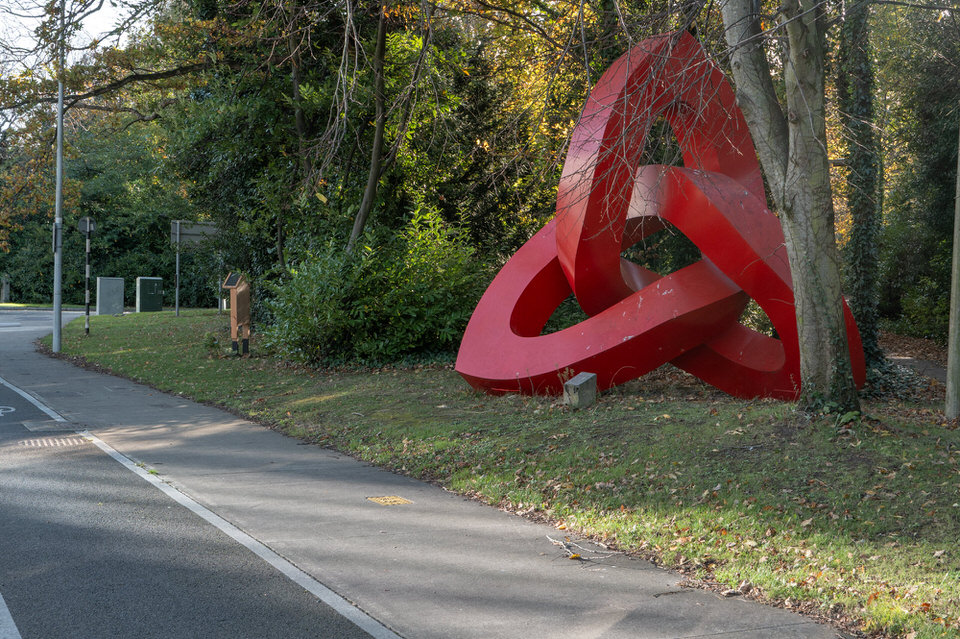
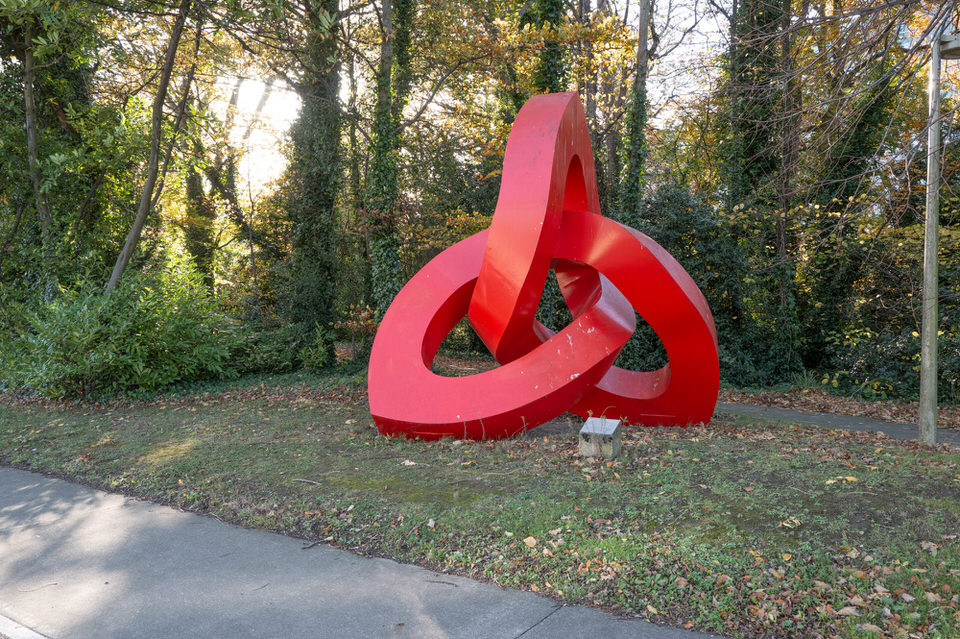
Triple Infinity Is A Large Red Metal Sculpture

The sculpture I photographed in November 2025 is named "Triple Infinity". It is a 4-meter high (approximately 13 feet) steel sculpture designed as a contemporary Celtic triple knot. It serves as an Entrance Statement for the Leopardstown Industrial Estate in Dublin, which aligns with the Central Park location mentioned in some accounts.

PHOTOGRAPHED USING A LEICA Q3

BY JOAN WALSH-SMITH

The artist listed on the plaque, Joan Smith, is Joan Walsh-Smith OAM. She is an Irish-born sculptor who works collaboratively with her husband, Charles Smith OAM, as "Smith Sculptors".

Here are further details about the artists:

Early Life: Joan Walsh-Smith was born in Ireland in 1946 and graduated from the National College of Art and Design in Dublin in 1971, where she met her husband.

Career: They began their careers in Ireland, winning the Irish National Fine Art Sculpture Award in 1978.

Move to Australia: In 1984, the couple and their family emigrated to Western Australia, where they established their studio in Perth.

Major Works: While they have works in Ireland like "Triple Infinity," they are perhaps best known for their large-scale public art and major memorials in Australia, including the National Australian Army Memorial in Canberra and the HMAS Sydney II Memorial in Geraldton.

LEGACY IMAGES

REMASTERED PHOTOGRAPHS FROM THE PAST

Claremont Beach In Howth 8 January 2009

Back in 2009 I did not have access to good photographic software so I am now reviewing my catalogue of photographs to see if they can be remastered.

I USED A CANON 1Ds MKIII

CLAREMONT BEACH

Claremont Beach is a classic example of a "local's secret" that is hidden in plain sight. Most visitors who arrive in Howth, particularly by DART, are immediately funnelled towards the two main attractions

OLD PHOTOGRAPHS OF CLAREMONT BEACH IN HOWTH OLD PHOTOGRAPHS OF CLAREMONT BEACH IN HOWTH
OLD PHOTOGRAPHS OF CLAREMONT BEACH IN HOWTH QUICK AND SIMPLE PHOTO GALLERY ABOUT CHARLMONT BEACH

Claremont Beach is extremely popular with dog walkers because it is not a Blue Flag beach.

In Fingal, beaches that have been awarded Blue Flag status (like nearby Donabate or Portmarnock) have strict prohibitions on dogs during bathing season (June to September, between 11 am and 7 pm).

Claremont Beach does not have this restriction. While Fingal County Council bye-laws state that dogs must be on a leash or under "effectual control" in all public places, Claremont's lack of a specific summer ban makes it a reliable, year-round destination for dog owners. Its calm, shallow waters and wide-open space at low tide are ideal for dogs to run and play.


Botanic Gardens 8 November 2025

My new FE 100mm F2.8 Macro GM OSS Sony Lens arrived yesterday, 7 November 2025, and I took it to the National Botanic Gardens to photograph what has changed since my last visit.

THERE IS NOW A NEW BUS SERVICE

BOTANIC GARDENS

Born in 1948, Bob Quinn enjoyed a long career in the Irish advertising business as a commercial artist, designer, and head of a successful design and production company. He now works full-time as a sculptor in Blackrock, Co. Dublin, where he lives with his wife and two daughters.

QUICK AND SIMPLE PHOTO GALLERY ABOUT BOB QUINN Why a ALONG THE QUAYS? The 'Utah' Connection

Why a Teapot? The 'Utah' Connection

The most fascinating aspect of this sculpture is its name and origin. It is not just a random teapot; it is a direct, physical representation of one of the most famous objects in the history of computer graphics: the 'Utah Teapot'.

I USE AN OLD SONY SEL30 MACRO LENS

BY ALAN BUTLER

The teapot is a universal symbol of warmth, hospitality, and community—all relevant to Smithfield's long history as a marketplace and gathering spot.

Why a Teapot? The 'Utah' Connection

DublinBikes Docking Station At Smithfield Plaza

The Dublinbikes docking station at Smithfield Plaza is a key transport hub in the area, forming an important part of Dublin's popular public bike-sharing scheme.

I USE AN OLD SONY SEL30 MACRO LENS

DOCKING STATION 21

It is a particularly busy and strategic station because it is located right next to the Smithfield Luas (tram) stop on the Red Line. This makes it a popular spot for commuters and visitors to switch between the tram and a bike to complete their journey.

CHQ And The EPIC Museum

The building housing the EPIC Museum, known as the CHQ Building, has a rich and varied history, marking a dramatic transformation from 19th-century industry to 21st-century culture and innovation.

I USE AN OLD SONY SEL30 MACRO LENS

6 NOVEMBER 2025

EPIC The Irish Emigration Museum: The building's flagship attraction, located in the atmospheric vaults. It is a world-class, interactive museum that has been voted "Europe's Leading Tourist Attraction" at the World Travel Awards multiple times, beating landmarks like the Eiffel Tower and Buckingham Palace.

MORE ABOUT THE BUILDING

Definition and Development of Cherrywood September 2023

Later analysis reveals that the area photographed in September 2023 is incomparably more defined in November 2025. The spatial and toponymic confusion evident in 2023 was a valid observation of a specific "in-between" phase of large-scale, infrastructure-led development. By November 2025, this ambiguity has been resolved for this specific locality through the maturation of public amenities, the construction of new infrastructure, and the formal assignment of legal addresses.

TULLY PARK WAS ESTABLISHED 2023

SEPTEMBER 2023

The three flagship parks for Cherrywood —Tully, Beckett, and Ticknick — were only officially opened in May 2023. In September 2023, just four months later, these parks would have been new, raw, and lacking the mature landscaping, clear signage, and established pathways required to fully integrate them into the surrounding environment.

QUICK AND SIMPLE PHOTO GALLERY MORE ABOUT TULLY PARK

Fountain In Poor Condition At The Ambassador Theatre

DESIGNED BY JOHN ENSOR

I USED A FUJI GFX100RF

The fountain sits at the terminus of the vista looking north up O'Connell Street (formerly Sackville Street). In 18th-century urban planning, such focal points were crucial. The fountain and the sweeping, curved façades of the Ambassador and Gate Theatres behind it were all designed as a single, magnificent architectural set piece.

November 2025 Visit To Tully Park In Cherrywood

TULLY PARK WAS ESTABLISHED 2023

NOVEMBER 2023

The abstract "residential areas" under construction in 2023 are now formally defined residential neighbourhoods with legal addresses. The developer (Quintain, now rebranded as Evara) is marketing the area as "Cherrywood Village". Crucially, new, official street names such as "Tully Park View," "Tully Drive," "Tully Close," and "Tully Green" now exist. Sales for these properties began appearing on the Property Price Register (PPR) in late 2023 and have been assigned unique Eircodes (e.g., D18KV8X), integrating them fully into the national postal system. Developer site plans from 2024 and 2025 clearly delineate the precise spatial layout of these streets, definitively resolving the 2023 boundary questions.

Luas Viaduct At Central Park - Sandyford

CONNECTING CENTRAL PARK AND SANDYFORD

SANDYFORD VIADUCT

The flyover shown in my photographs is a significant piece of engineering on the Luas Green Line. Technically a viaduct, this large bridge structure serves a critical function. Its primary purpose is to create a grade-separated crossing, allowing the tram line to pass safely and efficiently over the multi-lane M50 motorway—Dublin's main orbital route—as well as the nearby Leopardstown Road/Torquay Road.

iMonelli An Authentic Italian Restaurant Located At 1-2 Portobello Road

The name iMonelli (pronounced ee-moh-nelly) is an Italian term. It translates to English as "the rascals," "the scamps," or, more affectionately, "the cheeky boys."

PHOTOGRAPHED USING A SONY FX30

iMONELLI RESTAURANT

iMonelli was not always in its current location. It was previously located in the nearby suburb of Rathgar before moving to its present spot on Portobello Road around 2017. The restaurant has built a strong reputation for its authentic, high-quality Italian cuisine, earning accolades such as "Dublin's Most Authentic Italian Restaurant" at the 2019 Love Italian Life awards.

Triple Infinity Is A Large Red Metal Sculpture

The sculpture I photographed in November 2025 is named "Triple Infinity". It is a 4-meter high (approximately 13 feet) steel sculpture designed as a contemporary Celtic triple knot. It serves as an Entrance Statement for the Leopardstown Industrial Estate in Dublin, which aligns with the Central Park location mentioned in some accounts.

PHOTOGRAPHED USING A LEICA Q3

BY JOAN WALSH-SMITH

The artist listed on the plaque, Joan Smith, is Joan Walsh-Smith OAM. She is an Irish-born sculptor who works collaboratively with her husband, Charles Smith OAM, as "Smith Sculptors".

Here are further details about the artists:

Early Life: Joan Walsh-Smith was born in Ireland in 1946 and graduated from the National College of Art and Design in Dublin in 1971, where she met her husband.

Career: They began their careers in Ireland, winning the Irish National Fine Art Sculpture Award in 1978.

Move to Australia: In 1984, the couple and their family emigrated to Western Australia, where they established their studio in Perth.

Major Works: While they have works in Ireland like "Triple Infinity," they are perhaps best known for their large-scale public art and major memorials in Australia, including the National Australian Army Memorial in Canberra and the HMAS Sydney II Memorial in Geraldton.

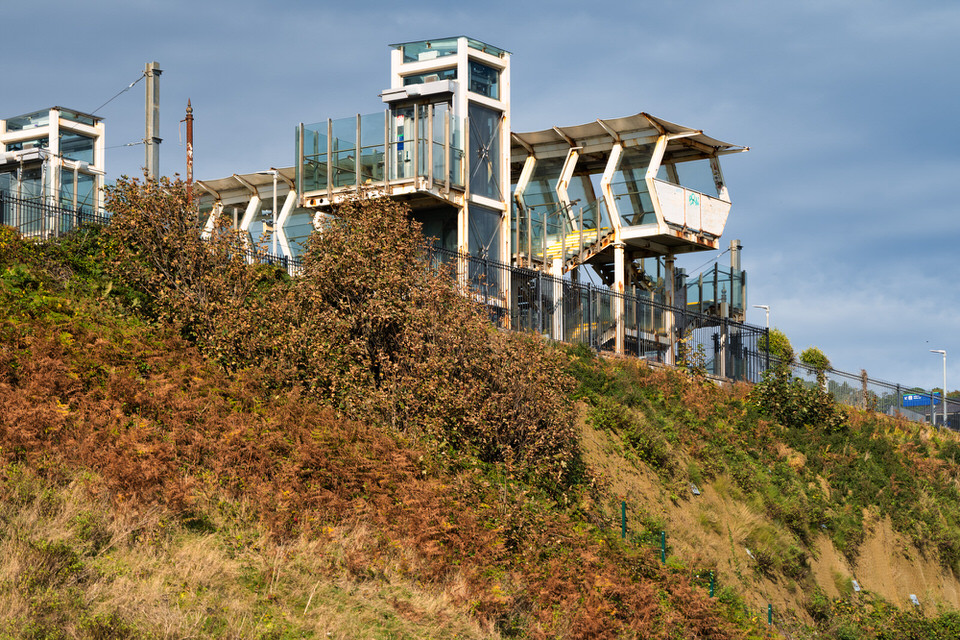
MASSIVE REDEVELOPMENT UNDERWAY

LAUGHANSTOWN STOP

THE LAUGHANSTOWN TRAM STOP ABOUT THE IMMEDIATE AREA TULLY CHURCH IS NEARBY

Laughanstown vs. Lehaunstown: What's in a Name?

It is easy to be confused by the two spellings, as both are used and have historical backing.

Official Tram Stop Name: The official name of the Luas Green Line stop is Laughanstown. This is the name used by Transport Infrastructure Ireland (TII) and on all official Luas maps and signage.

Historical/Variant Spelling: Lehaunstown is an older, anglicised version of the same name. The Irish name for the area is Baile an Locháin, which translates to "the town of the small lake." Over time, this was anglicised into various spellings, with both "Laughanstown" and "Lehaunstown" becoming common.

In short, while you will see "Lehaunstown" used in historical contexts and on some planning documents, Laughanstown is the official name for the tram stop itself.


MARCH 2024 VISIT TO LEHAUNSTOWN LANE NOVEMBER 2025 TO LEHAUNSTOWN LANE

TRANSPORT HUBS IN LIMERICK

ROCKBORO ROAD

PHOTO GALLERY BUS AND RAILWAY DEPOTS MORE ABOUT LIMERICK

My route took me along the edge of Janesboro. This large residential estate essentially sits "behind" Roxboro Road. As you walk its length, the avenues and streets of Janesboro branch off, primarily to one side. The road effectively separates this residential area from other parts of the city, acting as a major thoroughfare.


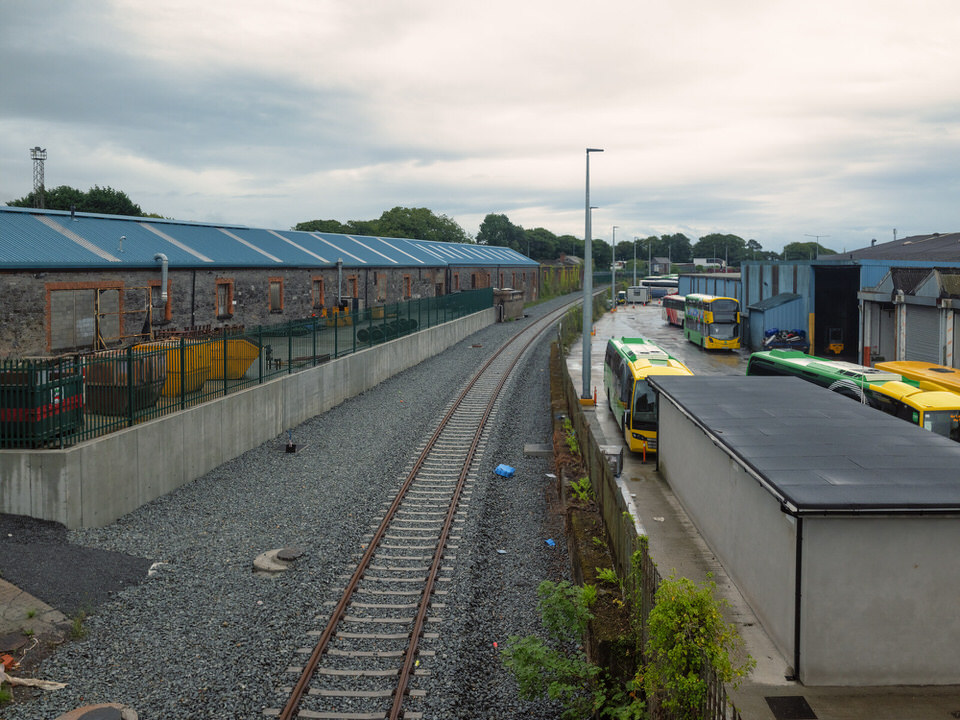
Just a stone's throw from the public-facing platforms of Limerick's Colbert Station lies the real engine room of the region's transport network. I spent a few minutes capturing the industrial beauty of the sprawling Bus Éireann and Iarnród Éireann (Irish Rail) depots, which sit side-by-side on Roxboro Road.

These photos show the "behind-the-scenes" world that passengers rarely get to see. This isn't a terminal; it's a home.

On one side, the Bus Éireann depot is a hive of activity. My camera was drawn to the perfect, orderly rows of buses, gleaming after a wash or waiting for their morning routes. This facility is the main maintenance garage for the entire Limerick fleet, harbouring over 100 vehicles. It’s where the hard graft of fuelling, cleaning, and repairing happens. The site is also in the middle of a major upgrade, preparing to welcome a new, fully electric fleet—a sign of a quieter, greener future.

Right next door, the scenery shifts from rubber tyres to steel wheels. The Iarnród Éireann Limerick Works is the domain of heavy engineering. As these photos show, it's a tangle of tracks, maintenance sheds, and resting carriages. This is where the rail stock is serviced and maintained, ensuring the trains that connect Limerick to Dublin, Galway, and beyond are safe and ready for their journeys.

It's a fascinating place for a photographer, full of strong lines, industrial textures, and a sense of powerful machinery at rest. This is where the journey truly begins.


EXPLORING DUBLIN SOUTHSIDE

FAST GALLERIES

EXPLORING DUBLIN SOUTHSIDE EXPLORING DUBLIN NORTHSIDE TULLY CHURCH AND GRAVEYARD

TULLY CHURCH AND GRAVEYARD

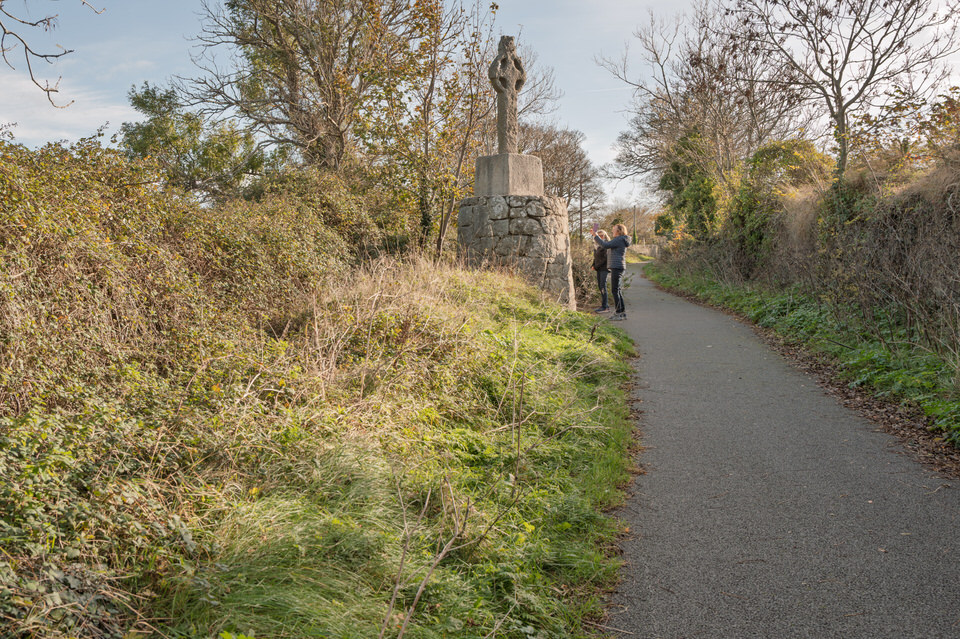
⛪ Tully Church and High Crosses, Laughanstown

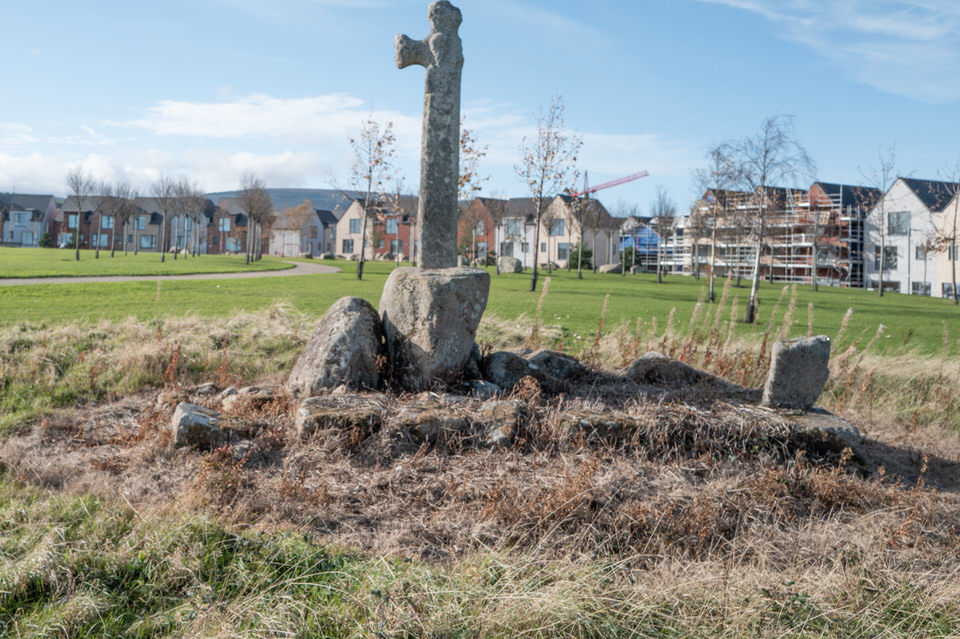
Located in Laughanstown, near Cabinteely, County Dublin, this important historical site contains the ruins of the medieval Tully Church, an ancient graveyard, and two significant granite high crosses.

History and Architecture

The site's ecclesiastical importance dates back to the 1st Millennium AD, as recorded in early literature by its Irish name, Tulach na nEpscop, which translates to 'the Hill of the Bishops'. This name strongly suggests it was a major diocesan or monastic centre, possibly a place for synods. The church is reputedly dedicated to St. Bridget.

Following the Anglo-Norman invasion, the lands were granted to Christ Church Cathedral in Dublin around 1180 by Sitric Mac Torcaill, a local Hiberno-Norse chieftain. The church remained an active place of worship until the early 17th century, likely falling into disuse during the turmoil of the Reformation.

The remaining ruins consist of a nave and chancel. The nave belongs to an earlier structure, possibly dating to the 9th century. A chancel was added in the late 12th or early 13th century, featuring two notable elements

SANDYFORD LUAS TRAM STOP MARCH 2024 VISIT TO TULLY CHURCHYARD LAUGHANSTOWN TRAM STOP MARCH 2024 CHERRYWOOD TRAM STOP

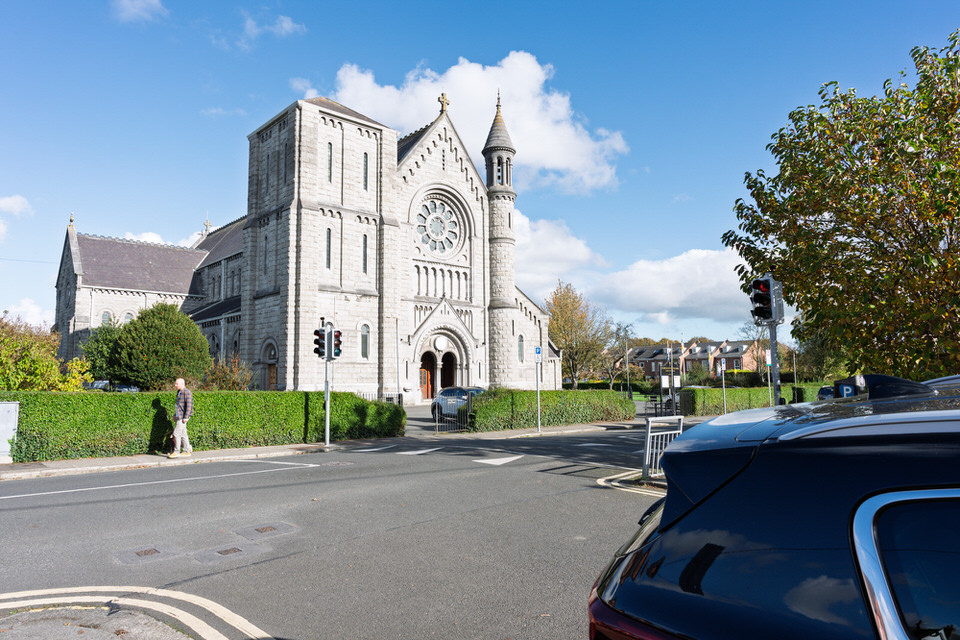
WELCOME TO OUR LADY OF DOLOURS

BOTANIC ROAD

PHOTOGRAPHS OF THE CHURCH

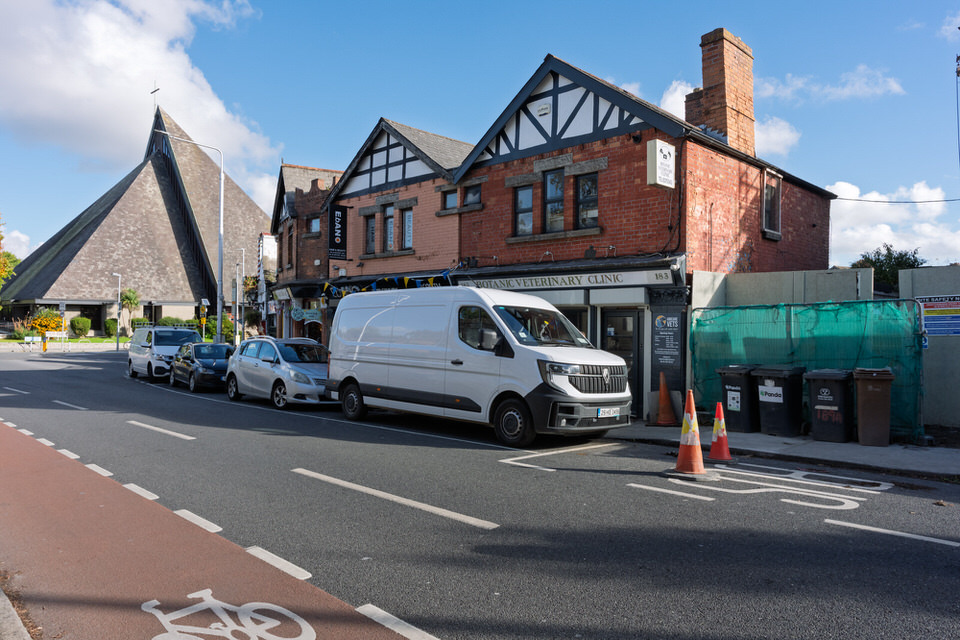
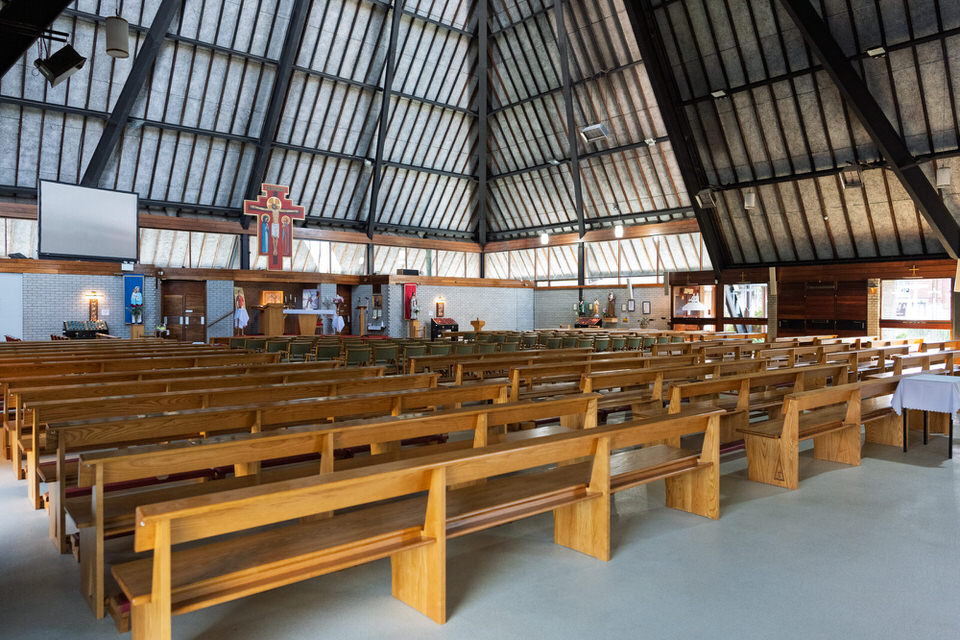
Our Lady of Dolours on Botanic Road is one of the most distinctive modern churches in Dublin. Standing on a prominent corner site beside the Tolka River and opposite the National Botanic Gardens, its dominant feature is a striking pyramidal steel roof.

Designed by the architect Vincent Gallagher in a contemporary, post-Vatican II style, the church's foundation stone was laid in 1971, and it was dedicated in 1972. It replaced an earlier, more traditional church on the same site.

The design was technically innovative for its time, featuring a parish centre in the basement. Inside, the exposed steel roof structure creates a vast, open, and undivided space, in line with the new liturgical ideas of the post-Vatican II era. Its unique, sloping profile makes it a major and unmissable landmark in the Glasnevin townscape.

When I was young I thought that this was the church of donors. My father referred to it as such as they were constantly seeking donations in the late 1960s and throughout the 1970s. It made perfect sense: it was a house of God, built by its donors. It wasn't until I was much older and read the parish newsletter myself that I saw the words "Our Lady of Dolours" and finally realised my mistake. Still, every time I pass that distinctive pyramid I think of it as the church my father's donations helped to build.

PUBLIC TRANSPORT

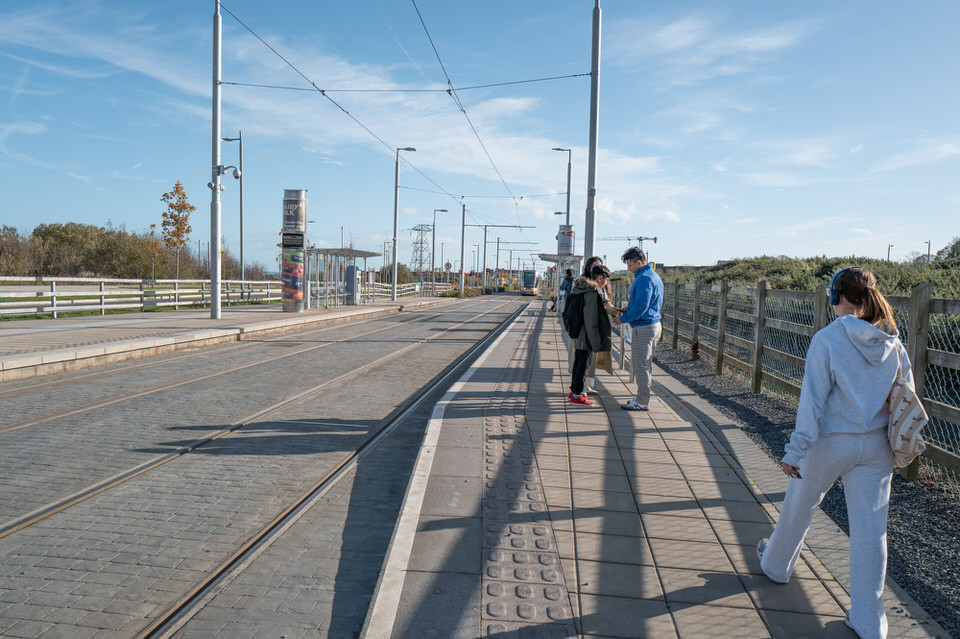
CHERRYWOOD STOP

CHERRYWOOD TRAM STOP EXPLORING DUBLIN SOUTHSIDE TULLY CHURCH IS NEARBY

📍 Location and Strategic Importance

The stop's primary function is to serve the Cherrywood Strategic Development Zone (SDZ). This is a major, long-term project planned to create a new, self-sufficient town with thousands of new homes, extensive commercial and retail space, new schools, and large public parks.

The Luas stop is at the very heart of this new "town centre". It was built in anticipation of this development, and recent years have seen a massive acceleration in construction, with large-scale apartment complexes (such as those by Hali, Hines, and Quintain) and office blocks now surrounding the station.

It provides a vital public transport link for the thousands of new residents and the employees at the established Cherrywood Science and Technology Park, connecting them directly to other major employment hubs like Sandyford, Central Park, and Dublin City Centre (St. Stephen's Green) in approximately 35-40 minutes

NFL DEBUT - PR AND CONFLICTING NARRATIVES

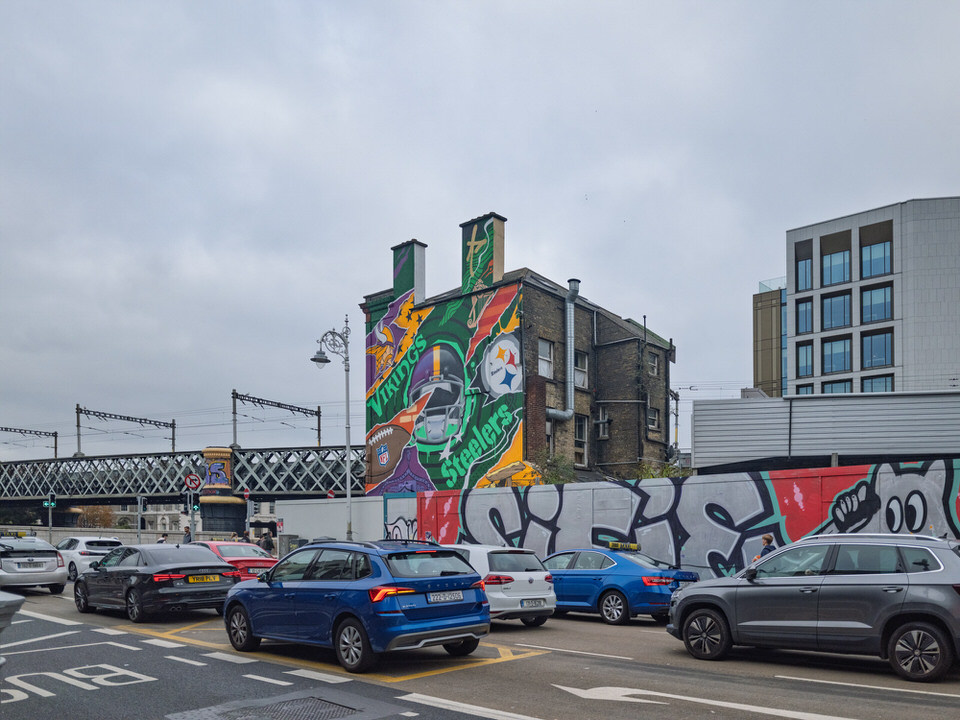
TARA STREET NFL MURAL

THE TARA STREET MURAL THE COMPLICATED STORY AUDIO: DISCUSS THE STORY

When the National Football League (NFL) arrived in Dublin for the landmark game between the Pittsburgh Steelers and the Minnesota Vikings on 28 September 2025, it brought more than just American football. It unleashed a major marketing campaign that collided, in fascinating and contradictory ways, with the city's own complex stories.

What unfolded was a tale of two games: the official, polished event publicised to the world, and the messy, complex local reality. This friction played out through public art, the story of a landmark building, and a curious incident involving a player


Two Games, One City

Looking back, the NFL's Dublin debut operated on two parallel tracks. There was the meticulously branded, globally broadcasted event. And then there was the complex local reality it collided with.

The "odd" feeling was, in fact, the correct identification of this very gap—the friction point where a global entertainment brand met a local reality it could not fully control, and therefore chose to manage, contain, or, in the case of the Ormond Quay and Tara Street murals, simply paint over.

THE ORMOND QUAY VOID AND MURAL

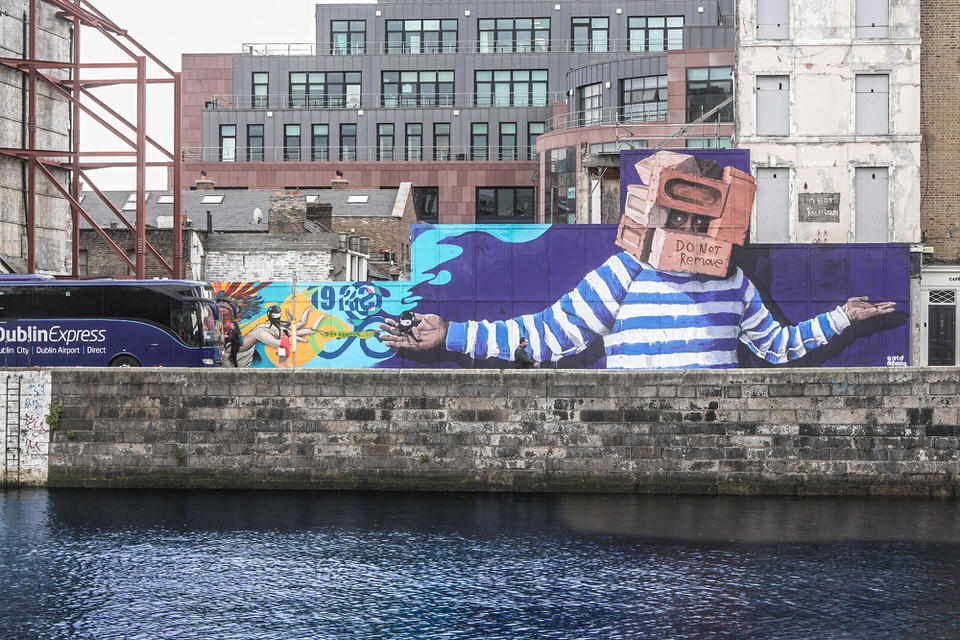
DO NOT REMOVE

THE DO NOT REMOVE MURAL THE ORMOND QUAY VOID WHAT IS A HOME ABOUT THE ASBESTOS MURAL IN CORK

When I took these photographs, I was trying to capture three stories:
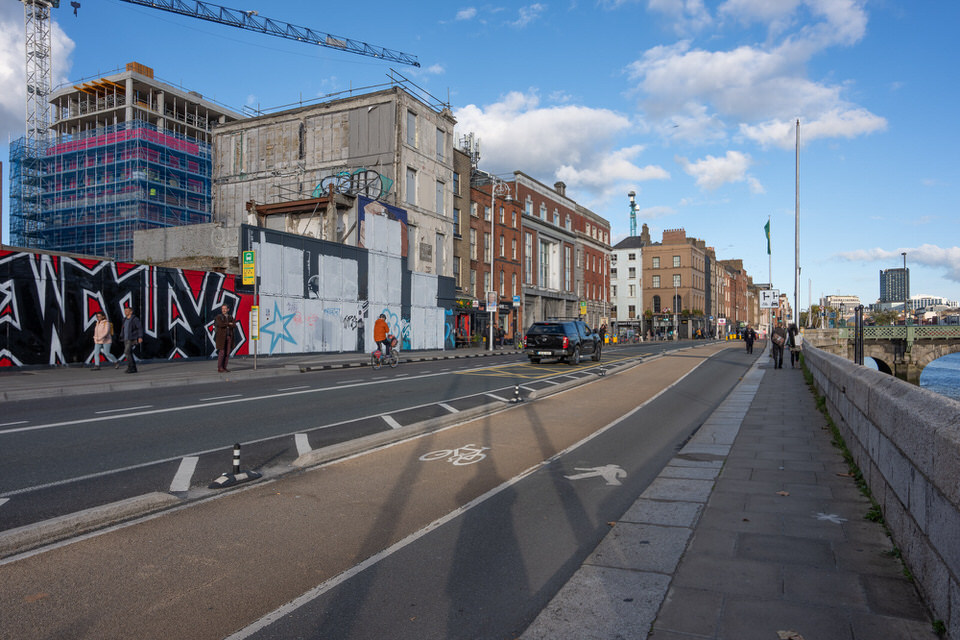
The void site where the Ormond Hotel once was. I will monitor this going forward.
The NFL and the painted-over "Do Not Remove" mural at the Ormond Hotel site.
The hotel under construction on Little Strand Street, now visible from the quays via the gap created by the Ormond's absence.

There was also an Asbestos in Cork


The Ormond Void and the Mural Row

The first story is the void itself, the prominent site on Ormond Quay where the historic Ormond Hotel once stood. This site recently became the centre of a significant public controversy involving a street art installation on its hoardings. To make way for a temporary NFL-themed piece, one of Dublin's best-known street murals - a 2022 collaboration by artists Neto Vettorello and Asbestos titled 'Do Not Remove'— was painted over.

Commissioned to mark 200 years of Brazilian independence, the original mural depicted a figure with its head covered by bricks. It was widely seen as a powerful commentary on Dublin's severe housing and homelessness crisis. The decision to erase this potent social commentary for what critics called a "gaudy-looking" piece of commercial advertising was met with immediate backlash. As one commentator noted, it was deeply ironic that "one of the few murals that wasn't just an ad" was replaced by what was, in effect, a "handpainted ad for the NFL."

The temporary NFL artwork received a mixed reception from locals and was removed soon after the match. Artist Neto Vettorello stated he had not been contacted by Dublin City Council about the plans to black out his mural. “It’s quite ironic, since the title of the piece was actually ‘Do Not Remove’,” Vettorello said.


THIS WEEKEND IS THE BANK HOLIDAY

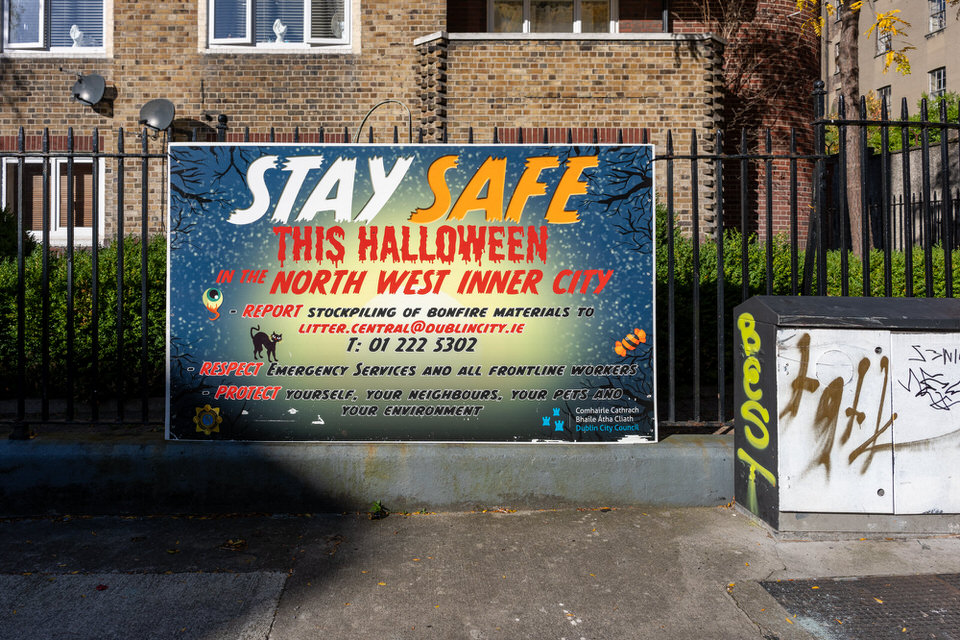
HALLOWEEN WEEK

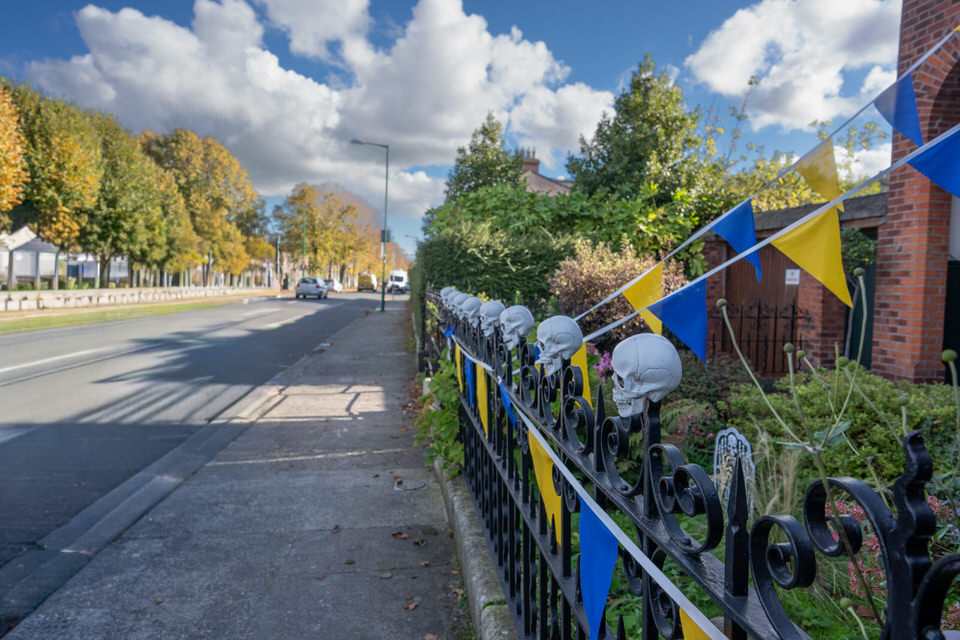
QUICK AND SIMPLE GALLERY WHAT YOU NEED TO KNOW WHY YELLOW AND BLUE BUNTING

The Bank Holiday (This Monday, 27th Oct): This is officially the October Bank Holiday. Its rule is simple: it always falls on the last Monday of October, regardless of the date. We call it the "Halloween Bank Holiday" simply because it's close to the date and marks the start of the mid-term break for schools.

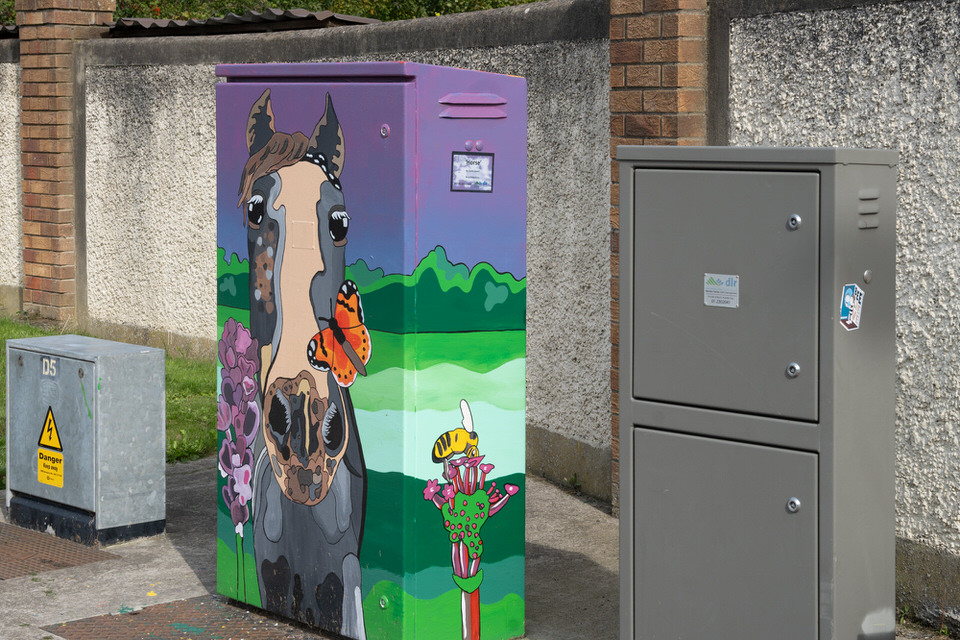
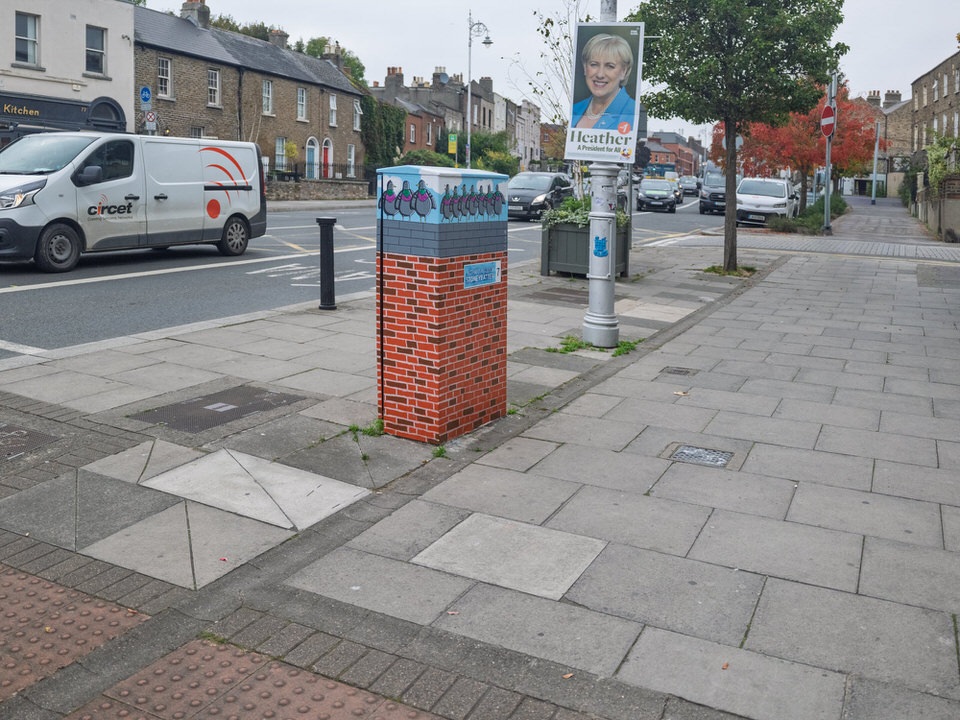
HORSE BY CAITLIN GRANT IS AN EXAMPLE OF PAINT-A-BOX STREET ART

Valley Drive is a residential road in Cherrywood, Dublin 18, which falls within the administrative area of Dún Laoghaire–Rathdown County Council. It is a modern area, known for several large apartment and duplex complexes, such as The Oval and Tullyvale. The drive is situated adjacent to the Cherrywood Business Park, a significant local employment hub.

AT RIVER VALLEY NEAR THE CHERRYWOOD LUAS

BY CAITLIN GRANT

PHOTO COLLECTION THE ARTIST AND HER ART

The Artwork and Artist: The artwork titled 'Horse' and was created by the artist Caitlin Grant in 2023. It is part of the Dublin Canvas public art project, which commissions artists to decorate traffic light control boxes, turning them into colourful pieces of public art.

According to the artist's profile for the project, Caitlin Grant is a local artist who has previously contributed another piece to Dublin Canvas called 'Cow in the City'. Her stated aim for the 'Horse' artwork was to "highlight the beauty of nature with the horse, flowers, bees, and butterflies" and to encourage people to care for the local environment.


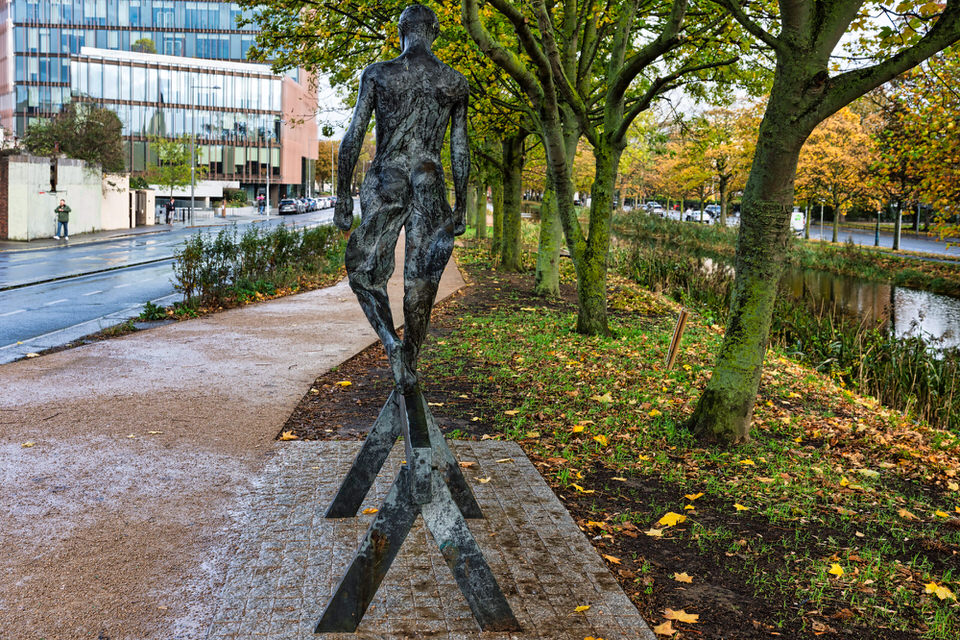
MAN ON TRESTLE BY CAROLYN MULHOLLAND

According to my version of Siri it would not rain today so I got the E1 bus to Leeson Street bridge and it was raining but the wet surface did make the photographs a bit more interesting.

NEAR LEESON STREET BRIDGE

BY CAROLYN MULHOLLAND

PHOTO COLLECTION THE ARTIST AND HER ART

Man on Trestle (by Carolyn Mulholland) As part of the new landscaping, a second sculpture was installed to "welcome visitors at the Leeson Street Bridge end" of the terrace. This piece, titled "Man on Trestle", is by the renowned Armagh-born sculptor Carolyn Mulholland. The bronze figure, shown balancing on a simple trestle, evokes a sense of poise, industry, and perhaps the precariousness of human endeavour, providing a thoughtful contrast to Kavanagh's quiet repose further down the bank.

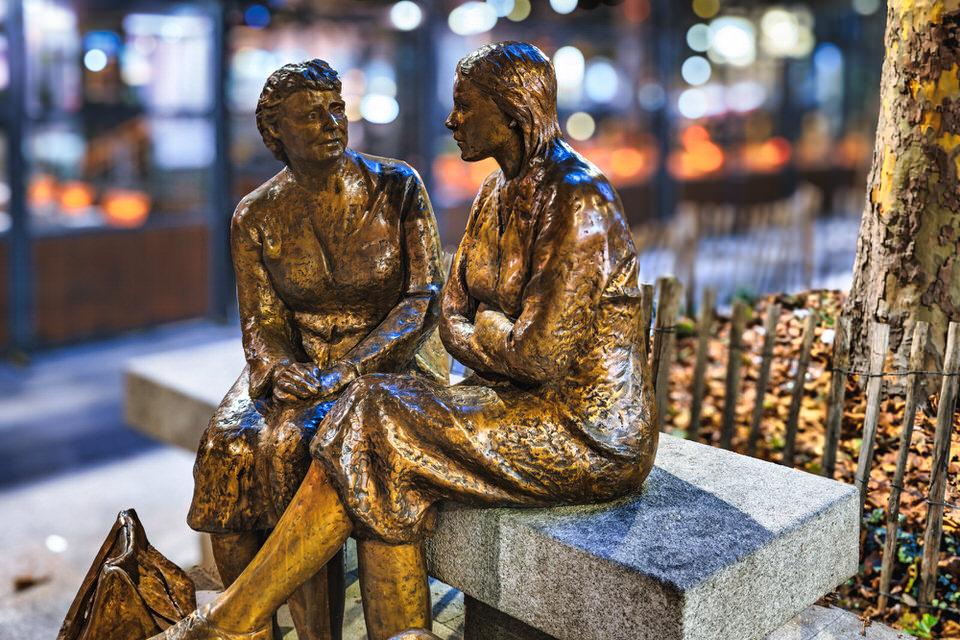
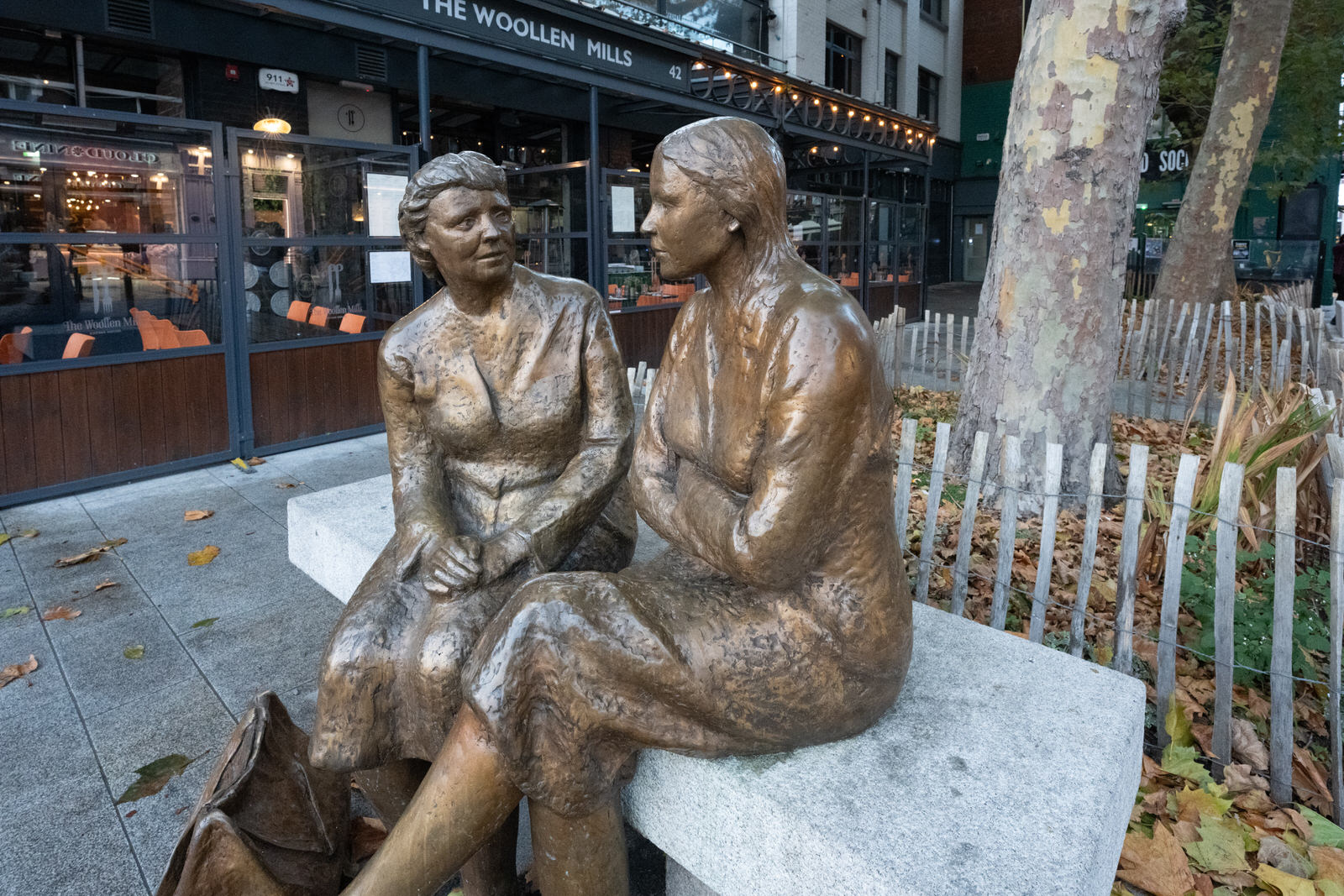
THE HAGS WITH THE BAGS SCULPTURE

The artwork captures a familiar slice of Dublin life—shoppers pausing for a chat. If you look closely at the bags, you can see one is from Arnotts, the famous department store located just up the street.

THE MEETING PLACE ON LOWER LIFFEY STREET

BY JACKIE McKENNA

QUICK AND SIMPLE GALLERY THE ARTIST AND HER ART

The statue perfectly reflects its surroundings. The two women are placed exactly where thousands of real shoppers pass every day, making it one of the city's most interactive and photographed pieces of art

THIS WEEKEND IS THE BANK HOLIDAY

HALLOWEEN WEEK

QUICK AND SIMPLE GALLERY WHAT YOU NEED TO KNOW WHY YELLOW AND BLUE BUNTING

The Bank Holiday (This Monday, 27th Oct): This is officially the October Bank Holiday. Its rule is simple: it always falls on the last Monday of October, regardless of the date. We call it the "Halloween Bank Holiday" simply because it's close to the date and marks the start of the mid-term break for schools.

A NEW EXAMPLE OF PAINT-A-BOX STREET ART

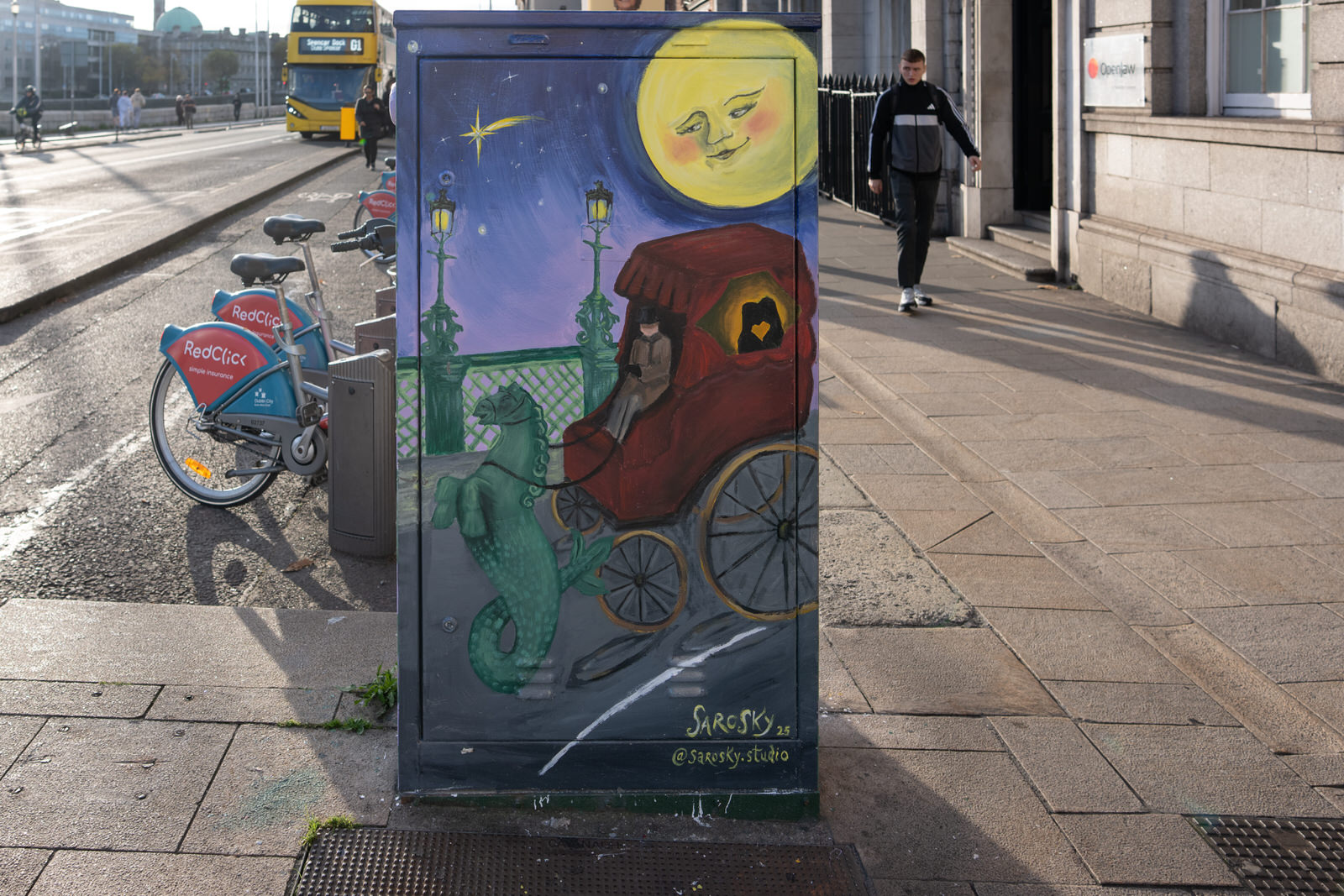
Dublin's street art scene has a vibrant new addition at Grattan Bridge. The utility box at the intersection of Ormond Quay Upper and Capel Street, a spot long familiar to Dubliners as the home of the iconic "Bang Bang" artwork, now features a striking piece titled "Carriers of Love" by Spanish artist Sara Maneiro Rey.

THIS HAS REPLACED BANG BANG

CARRIERS OF LOVE

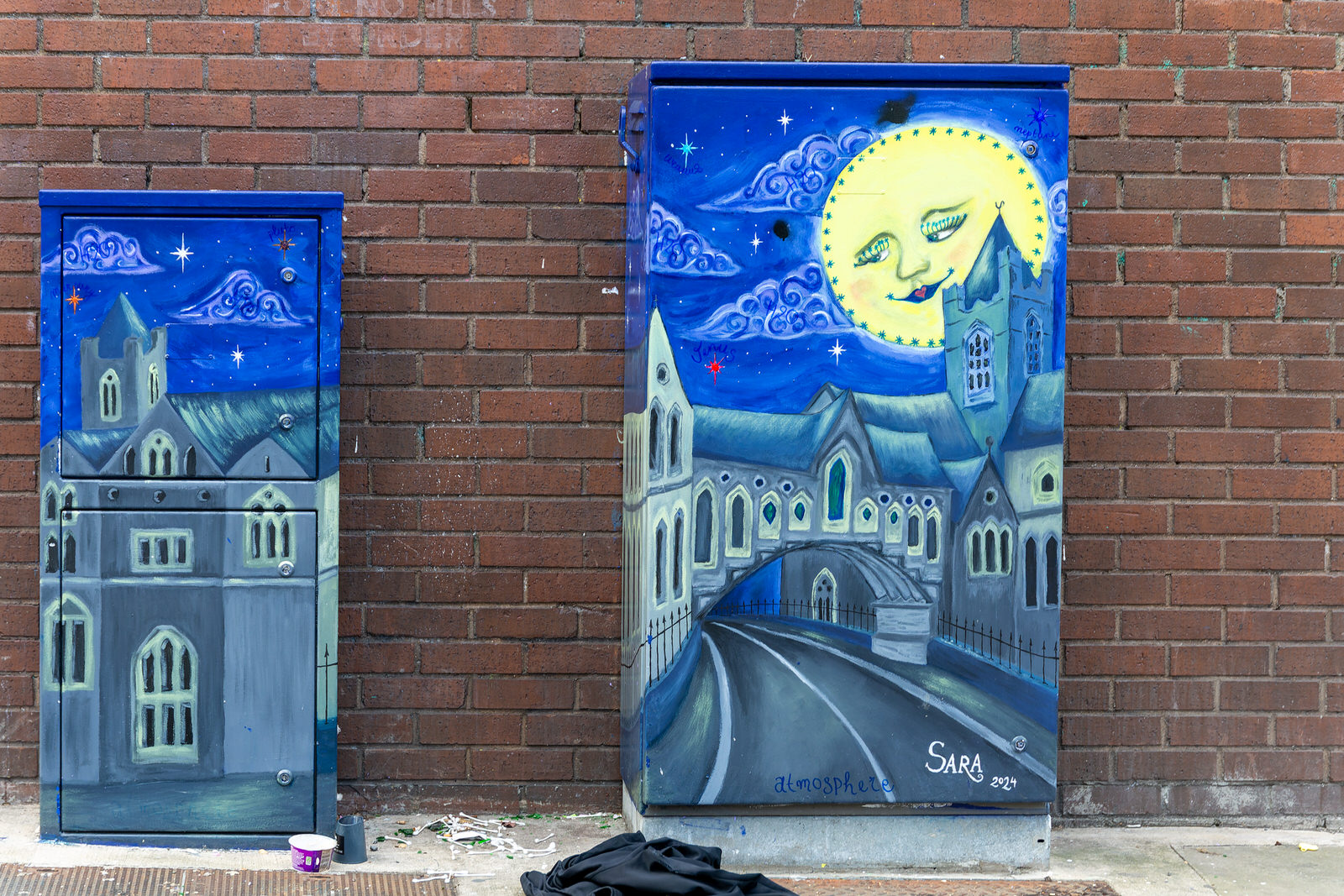
QUICK AND SIMPLE GALLERY THE ARTIST AND HER ART HER TRIBUTE TO LUKE KELLY FULL MOON BY SAME ARTIST

Her first piece, a widely admired and powerful tribute to Dublin music legend Luke Kelly, established her as a welcome talent in the local street art scene.

Her artistic style, now seen in two locations, is immediately recognisable. It is characterised by the use of vibrant, saturated colours and bold, confident lines. She specialises in creating powerful portraits and figures, often focusing on female subjects, that seem to capture the unique spirit and energy of her models. As the title "Carriers of Love" suggests, her work often explores themes of connection and emotion. Rey frequently weaves intricate patterns and elements of nature into her compositions, lending her pieces a unique, dreamlike quality that now brightens this busy Dublin 1 location.

THIS WEEKEND IS THE BANK HOLIDAY

HALLOWEEN WEEK

QUICK AND SIMPLE GALLERY WHAT YOU NEED TO KNOW WHY YELLOW AND BLUE BUNTING

The Bank Holiday (This Monday, 27th Oct): This is officially the October Bank Holiday. Its rule is simple: it always falls on the last Monday of October, regardless of the date. We call it the "Halloween Bank Holiday" simply because it's close to the date and marks the start of the mid-term break for schools.

BARE TO THE WORLD HERE CAME SWEENEY

📖 The Legend of Sweeney: The "Sweeney" (or Suibhne Geilt) mentioned is a mythological Irish king from Ulster. According to the 12th-century text, Sweeney insulted Saint Ronan and, as punishment, was cursed by the saint during the Battle of Mag Rath (Moira).

AT THE HUNT MUSEUM IN LIMERICK CITY

BY ROWAN GILLESPIE

QUICK AND SIMPLE GALLERY PHOTOGRAPHED USING A FUJI GFX100RF ABOUT THE ART AND THE ARTIST

Rowan Gillespie is renowned for his bronze figurative sculptures that capture deep psychological states, such as the Famine Memorial in Dublin. His depiction of Sweeney, often shown as a gaunt, bird-like, and anguished figure, visualises this legend.


SHEEP AND POST BY JOE NEESON

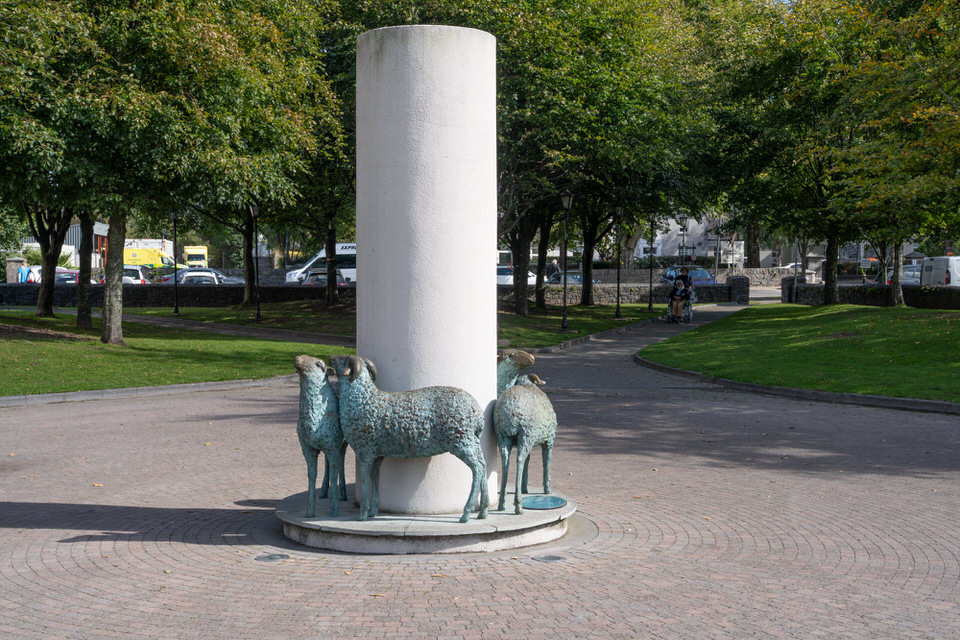
🐑 "Sheep at the Post" by Joe Neeson - This sculpture at the Fair Green in Midleton is a significant piece of public art that masterfully connects the location's past with its present.

ALSO KNOWN AS THE SHEEP AT THE FAIR

MIDLETON FAIR GREEN

QUICK AND SIMPLE GALLERY ABOUT THE ART AND THE ARTIST

Symbolism: The piece is a direct and powerful homage to the original, centuries-long purpose of the Fair Green. This open space was the historic heart of Midleton's agricultural commerce, where farmers from all over East Cork would gather to trade livestock, including cattle, geese, and, as depicted, sheep. The sculpture places this heritage in plain sight, ensuring that the history of the green is not forgotten as it serves its modern purpose.

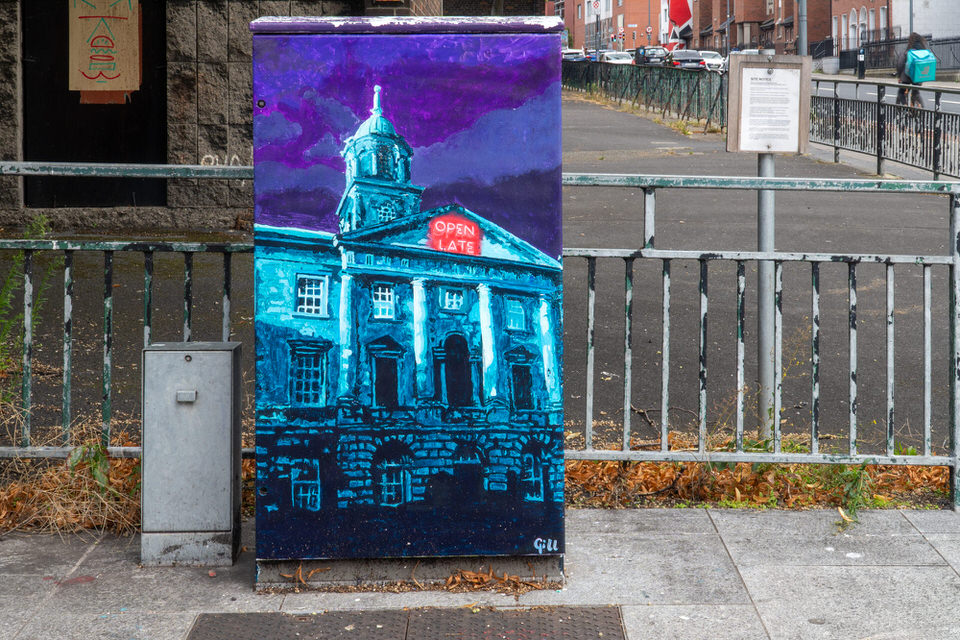
LATE NIGHT DELIVERY IS AN EXAMPLE OF PAINT-A-BOX ART

This dates from 2023 and it was located at the corner of Upper Dominick Street and Dorset Street, but it is now effectively part of a very large building site.

BY GILLIAN CROWE

LATE NIGHT DELIVERY

QUICK AND SIMPLE GALLERY ABOUT THE ART AND THE ARTIST

This artwork depicts the Rotunda Hospital, the oldest continuously operating maternity hospital in the world. The hospital was opened in 1745 by surgeon-midwife Bartholomew Mosse to provide medical care for destitute mothers, and to train midwives and surgeons. Originally located on the southside at George’s Lane, the hospital moved to its present location in 1757 where it has remained open 24 hours a day, 365 days a year ever since. Today, over 9,000 babies are born in the Rotunda each year, making it the busiest maternity hospital in Europe and the largest in Ireland.

FLOODING CAN BE A PROBLEM ALONG BOTANIC AVENUE

The Flood Zone (Low Ground): The source of all flooding here is the River Tolka, which runs through Griffith Park. During periods of extreme rainfall, the river has repeatedly burst its banks and inundated the low-lying land.

BOTANIC AVENUE AND BOTANIC PARK

ALONG THE TOLKA RIVER

QUICK AND SIMPLE GALLERY FLOODING CAN BE AN ISSUE

Major Floods (1954 & 2002): The area experienced catastrophic floods, most notably in December 1954 and November 2002. In these events, the River Tolka overflowed, and Griffith Park was completely submerged.

Impact on Botanic Avenue: The floodwaters spread onto the lowest-lying sections of Botanic Avenue and adjacent streets like Millmount Road. Homes and businesses at this southern, low-lying end of the avenue were badly damaged, with reports from 1954 mentioning residents being rescued by boat.
The "Safe" Zone (High Ground): This is where "Botanic Park" is located.

MEMORIAL PLAQUE AT BROADSTONE STATION

The plaque is dedicated to Joe Howley who was mortally wounded 103 years ago on 4th Dec 1920 by the RIC. It was unveiled near, near the Broadstone Marian statue, in December 2023.

PHOTOGRAPHED OCTOBER 2025

AT BROADSTONE STATION

On 4 December 1920, Joe Howley of Oranmore, Co. Galway – a 25-year-old veteran of the Easter Rising and Commandant of the Mid-Galway Brigade of the Irish Republican Army (IRA) – travelled by train to Dublin, apparently on an official visit to meet the IRA leadership. Shortly after arriving at Broadstone Station, Howley was shot and mortally wounded by Crown forces.

MICHAEL JOSEPH HOWLEY MEMORIAL PLAQUE

NO LINKS

WHAT HAPPENED TO ANDERSONS CAFE ON CARLINGFORD ROAD

The premises at 1A Carlingford Road in Drumcondra, formerly the popular Andersons Creperie, has seen significant changes. Following the café's closure, it was slated to become a funeral home. However, the building currently appears to be unoccupied.

COULD HAVE BEEN REPLACED BY A FUNERAL HOME

ANDERSONS CAFE

QUICK AND SIMPLE GALLERY WHAT HAPPENED TO THE CAFE

A retention planning application (Ref: 3907/24) for the change of use from a café to a funeral home was refused by Dublin City Council on 20 August 2024. The primary reason for denying permission was the potential for significant traffic congestion and disruption from crowds in the residential area.

IS IT A MUSEUM OR A BUSINESS

The common assumption that the shop is a "typewriter museum" is incorrect in its specific detail but remarkably accurate in its spirit. This misconception is not random; it's a logical conflation of at least four distinct, real-world factors.

LOCATED NEAR GRIFFITH PARK ON BOTANIC ROAD

IS IT A MUSEUM?

QUICK AND SIMPLE GALLERY THE BACKGROUND STORY

On a corner of Botanic Avenue in the Dublin suburb of Drumcondra, a shopfront with big gold letters spelling out "Botanic Office Equipment LTD" offers the first clue to a business that has become a local landmark. For the casual observer, the business at 63 Botanic Avenue presents a puzzle. The name suggests a supplier of modern office consumables—printer ink, notepads, or pens. The reality, however, is a portal to a bygone era of commerce.

AN EXAMPLE OF PAINT-A-BOX STREET ART ON ST MOBHI ROAD

The Artist Did Not Sign Their Art

THIS APPEARS TO BE RECENT

ST MOBHI ROAD

QUICK AND SIMPLE GALLERY

This example of Paint-A-Box street art is on St Mobhi Road and it references the nearby Botanic Gardens and the Royal Canal or the Tolka river which flows through the gardens. I cannot identify the artist at this stage.

PAINT-A-BOX STREET ART AT GRIFFITH PARK

What Does A GP Do In Their Spare Time

AODHBA BRADLEY IS AN ARTIST AND A DOCTOR

GRRRIFFITH BARK

QUICK AND SIMPLE GALLERY

Artist: The artist is Dr. Aodhba Bradley, who works under the name Aodhba Art.

Dr. Bradley is both a practicing General Practitioner (GP) in Dublin and a professional artist.

The Location Pun: The text "[GRRRIFFITH BARK]" is a playful pun on the artwork's location. The box is located at the entrance to Griffith Park on the Tolka. The artwork on the box also features a portrait of a dog, tying into the "Bark" pun.

PRE HALLOWEEN STREET SCENES

October in Dublin is famous for its "four seasons in one day." You get fast-moving clouds and frequent, short rain showers.

PARNELL STREET AND BOLTON STREET

AUTUMN SUNLIGHT

QUICK AND SIMPLE GALLERY

The last few days I have observed a "perfect storm" for street photography: the low-angle golden hour light of autumn, interacting with the red-brick architecture of the Northside, and amplified by the dramatic, showery weather of October. The weather pattern means the sun isn't just low; it's often bursting through dramatic, dark clouds, creating a "stage spotlight" effect that is fleeting and beautiful.

Wet Surfaces: This is the magic ingredient. After a quick shower, the pavements, roads, and rooftops are wet. These wet surfaces act like mirrors, reflecting the low, intense sun. This doubles the "intensity" of the street view, filling the shadows with reflected light and creating brilliant specular highlights that add sparkle and energy to the entire scene.

U2 BAND MEMBERS DID NOT ATTEND THIS SCHOOL

Many Dublin locations have stories attached to them, but these are often based on half-truths rather than facts. A classic example is the persistent local legend that claims an association between Lindsay Road School in Glasnevin and the band U2.

THE SCHOOL AND THE STREET ART

LINDSAY ROAD

QUICK AND SIMPLE GALLERY

The U2 Myth of Lindsay Road School

While the area is home to the school and a laneway with street art leading to a railway bridge, the story that band members attended the primary school is incorrect. The four future members attended different schools across the city before they ever converged.

Where the Band Actually Went

Research confirms the U2 members' different primary school paths:

Bono (Paul Hewson), who grew up on Cedarwood Road in Glasnevin, attended the nearby Glasnevin National School.

The Edge (David Evans) and Adam Clayton both attended the preparatory school at St. Andrew's College in Booterstown.

Larry Mullen Jr., who lived in Artane, attended Scoil Colmcille on Marlborough Street.

The Real Connection: Mount Temple

The source of the rumour stems from an actual, though indirect, link. Lindsay Road School is one of the designated feeder primary schools for Mount Temple Comprehensive School.

This is the crucial connection. All four members did, of course, attend Mount Temple. It was there, in 1976, that Larry Mullen Jr. famously posted a notice on the school's bulletin board seeking musicians. This notice led to the band's first practice in his parents' kitchen and the formation of U2.

THE HALFPENNY BRIDGE ALSO KNOWN AS THE LIFFEY BRIDGE

Yes, the bridge popularly known as the Ha'penny Bridge was originally named the Wellington Bridge but it's official name is the Liffey Bridge.

ONCE WAS THE WELLINGTON BRIDGE

BEST BRIDGE EVER

QUICK AND SIMPLE GALLERY

When the cast-iron pedestrian bridge first opened in May 1816, it was officially christened the Wellington Bridge. This was to honour Arthur Wellesley, the 1st Duke of Wellington, who was a Dublin-born statesman and soldier, famous for his victory at the Battle of Waterloo the previous year.

However, the name "Ha'penny Bridge" quickly became its enduring popular title. This moniker arose from the half-penny toll that was charged to every person who crossed it. This toll, which matched the price of the ferry service it replaced, was collected by turnstiles at either end until it was finally abolished in 1919.

Following the establishment of the Irish Free State, the bridge was officially renamed the Liffey Bridge in 1922, as part of a wider effort to change street and place names associated with British rule. Despite this, "Ha'penny Bridge" remains its most common and recognised name by Dubliners and visitors alike.

DUBLIN DISCOVERED BOAT TOURS

The River Liffey Sightseeing Cruise offers a unique perspective of Dublin's city centre and its historic Docklands, navigating the tidal artery that splits the city north from south.

AN INTERESTING BOAT FROM SWEDEN

SPIRIT OF THE DOCKLANDS

QUICK AND SIMPLE GALLERY

The tour, which typically lasts around 45 minutes, is operated by Dublin Discovered Boat Tours. It provides a live-commentary narrative that covers the city's history, from its Viking origins and 18th-century Georgian splendour to the significant urban regeneration of the Docklands area.

The vessel used for the main sightseeing cruise is the Spirit of Docklands. This is a purpose-built, all-weather river cruiser, easily recognisable by its distinctive red exterior. Its design is specifically tailored to the unique conditions of the Liffey:

All-Weather Viewing: The boat features a fully enclosed, glass-roofed cabin. This allows for comfortable, panoramic sightseeing regardless of Dublin's changeable weather, protecting passengers from rain and wind while ensuring excellent views.

ST COLUMBA'S CHURCH ON IONA ROAD IN DRUMCONDRA

St. Columba's Church is a large neo-Romanesque building in Drumcondra, designed by the Dublin architecture firm Ashlin & Coleman.

QUICK AND SIMPLE PHOTO GALLERY

ST COLUMBA'S CHURCH

QUICK AND SIMPLE GALLERY

The church's exterior is marked by its skilful stonework, though its proportions can appear unbalanced. This is most noticeable at the entrance front, where a slender round tower to the east contrasts with a large, incomplete square tower to the west. This western tower was originally intended to feature a belfry but was never finished.

The interior is dramatic, dominated by tall arcades separating the main nave from the side-aisles. A particularly noteworthy feature is the fine Gothic reredos (the screen behind the altar), which serves as an excellent example of the era's high-quality sculpture.

Setting and History
The church enjoys a fine setting, making it a key landmark in the suburb. It also provides a welcome expanse of green space in what is a densely built-up district.

The parish was established to serve the growing population of the Drumcondra suburbs during the late nineteenth and early twentieth centuries. The church itself was built on land provided by the sisters from the nearby St. Alphonsus Convent.

The foundation stone was laid on 7 August 1903, just three days after the election of Pope Pius X. Notably, St. Columba's was the first church in the world to have the new Pope's name engraved on its cornerstone. The building officially opened on 15 October 1905, and Father John Byrne was appointed the first parish priest.

EXPLORING WATERFORD 2016-2025

I TRY TO VISIT WATERFORD IN LATE AUGUST OR EARLY IN SEPTEMBER EVERY YEAR BUT I MISSED A FEW YEARS

THE MURALS ARE THE MAJOR ATTRACTION

EXPLORING WATERFORD

NEW SECTION


My photographic journeys to Waterford began in 2016, initially as an exciting mission to find and document its street art. The city was buzzing with anticipation, full of 'Waterford Walls' signs that hinted at a vibrant transformation. While I was perhaps a little underwhelmed by the amount of art on display during that first trip, the highlight was undoubtedly discovering the De La Salle Hall. The striking mural on this beautiful, old building captivated me, and from then on, checking in on the hall and its artwork became a ritual of every subsequent visit.


LEGACY STREET ART FROM AUGUST 2021

Sometimes a photograph holds a mystery. Back in August 2021, I was captivated by a vibrant mural on the wall of the old British and Irish Steam Packet Company building in Dublin's Docklands. I took the photograph, but the artist's signature remained elusive. Today, thanks to new software, I was finally able to process the image and uncover the name behind the art: KinMx

ON THE WALL OF THE B+I BUILDING

KINMX'S MURAL

MORE PHOTOGRAPHS THE LOCATION AND THE ART


The Artist: KinMx (Kathrina Rupit)

The artist behind the mural, Kathrina Rupit (aka KinMx), is a prominent visual artist who splits her time between Dublin and Tulum, Mexico. Originally from northern Mexico, where she graduated from the University of Visual Arts in Nuevo Leon, Kathrina's journey is one of incredible determination. She travelled widely after university, often surviving by selling her art on the streets, before settling in Dublin.

Today, she is a leading figure in Ireland’s street art scene.

She is a founder of the Minaw Collective, the country's first all-female and non-binary street art collective.


STREET ART TRIBUTE TO RORY GALLAGHER

On the Mardyke in Cork, a powerful street art tribute captures the spirit of one of Ireland's greatest musicians, Rory Gallagher. This striking piece, created by Cork-based artist Alan Hurley, serves as a modern monument to a local hero, seamlessly blending the city's rich history with its vibrant contemporary culture.

PUBLISHED 17 OCTOBER 2025

SEPTEMBER 2025 VISIT

MORE PHOTOGRAPHS ABOUT THE ART AND RORY


Although born in Ballyshannon, Co. Donegal, in 1948, Rory Gallagher was quintessentially a Corkman. His family moved to the city in the early 1950s, and it was here that his formidable musical journey began. From buying his first guitar to forming the seminal blues-rock trio Taste in 1966, Gallagher's formative years were steeped in Cork's music scene.

Despite achieving worldwide fame for his virtuosic guitar playing, relentless touring, and passionate live performances, Gallagher never lost his deep affection for Cork. The city has, in turn, passionately embraced his legacy. This deep connection is beautifully encapsulated in various tributes, most notably the powerful mural on the Mardyke.

ELEVATED VIEW OF COBH AND DETAILS OF A VISITING CRUISE SHIP

The central design element of the AIDA Sol, and its sister ships, is the Theatrium. This groundbreaking space serves as the vessel's heart, ingeniously combining a theatre, atrium, and bar into a single, multi-level venue.

PUBLISHED 16 OCTOBER 2025

SEPTEMBER 2025 VISIT

MORE PHOTOGRAPHS ABOUT COBH CRUISE SHIP ABOUT THE AIDA SOL


Today, Cobh is a vibrant tourist destination and a popular port for cruise liners, its streetscape still retaining much of its Victorian and Edwardian character.

GLASNEVIN CEMETERY IS HUGE AND IS WELL WORTH A VISIT

A visit to this landmark is highly recommended for any visitor to Dublin seeking to understand the heart and history of the nation. Here, amongst the impressive collection of Celtic crosses and timeworn monuments, lie the men and women who shaped modern Ireland.

I USED A FUJIFILM GFX100RF

GLASNEVIN CEMETERY

MORE PHOTOGRAPHS THE HISTORY


A Walk Through Irish History: The cemetery is the final resting place of some of Ireland's most influential figures. From political titans like Daniel O'Connell, Michael Collins, and Éamon de Valera to cultural icons such as the writer Brendan Behan and the celebrated singer Luke Kelly of The Dubliners, a tour of Glasnevin is a tangible connection to the nation's story.

THE BRIDGE TO NOWHERE AS SEEN FROM FORT ELIZABETH

The area at Crosse's Green, which I photographed during previous visits to Cork City, is now undergoing a major transformation which meant that the street art that I wanted to photograph is gone. It is now the site of a significant new residential and commercial development, fundamentally altering a landscape rich with Cork's history.

PUBLISHED 16 OCTOBER 2025

NEW BRIDGES

MORE PHOTOGRAPHS THE NEW BRIDGES


Claim: "...the new bridge across the Lee is currently being dubbed a 'bridge to nowhere'." Fact-check: This is accurate. The new pedestrian bridge, which connects Proby's Quay to the undeveloped Events Centre site, has been dubbed a "bridge to nowhere" by some. However, Cork City Council has confirmed that a publicly accessible and well-lit pathway will be built through the Events Centre site. This will connect the new bridge to South Main Street, allowing the public to use the bridge while awaiting progress on the events centre. Therefore, while it has been called a "bridge to nowhere," it will have a purpose.


VISIT THE OCTOBER 2025 PHOTO CATALOG SEPTEMBER 2025 INDEX OCTOBER 2025 INDEX

A new viral phenomenon known as "Nano Banana" has captured the attention of social media users worldwide. Contrary to what the name might suggest, this trend has nothing to do with miniature fruits or nanotechnology. Instead, "Nano Banana" is the catchy moniker for Google's powerful AI image-editing tool, officially named Gemini 2.5 Flash Image. This innovative technology allows users to transform their photos into hyper-realistic 3D figurines and much more, sparking a wave of creative and often amusing user-generated content.

THE BRIDGE TO NOWHERE AS SEEN FROM FORT ELIZABETH

The area at Crosse's Green, which I photographed during previous visits to Cork City, is now undergoing a major transformation which meant that the street art that I wanted to photograph is gone. It is now the site of a significant new residential and commercial development, fundamentally altering a landscape rich with Cork's history.

PUBLISHED 16 OCTOBER 2025

NEW BRIDGES

MORE PHOTOGRAPHS THE NEW BRIDGES


Claim: "...the new bridge across the Lee is currently being dubbed a 'bridge to nowhere'." Fact-check: This is accurate. The new pedestrian bridge, which connects Proby's Quay to the undeveloped Events Centre site, has been dubbed a "bridge to nowhere" by some. However, Cork City Council has confirmed that a publicly accessible and well-lit pathway will be built through the Events Centre site. This will connect the new bridge to South Main Street, allowing the public to use the bridge while awaiting progress on the events centre. Therefore, while it has been called a "bridge to nowhere," it will have a purpose.


FORT ELIZABETH IS A STAR SHAPED FORT

Elizabeth Fort is a prime example of a star-shaped fort, a design that gained prominence in the age of gunpowder artillery. This architectural style, with its projecting bastions, was designed to provide comprehensive defensive fire and eliminate blind spots. The current stone structure largely dates back to the 1620s. Walking the ramparts, visitors can appreciate the strategic genius of its design and take in the stunning vistas of Cork City, including landmarks like St. Fin Barre's Cathedral and the Shandon Bells.

ELEVATED VIEW OF COBH AND DETAILS OF A VISITING CRUISE SHIP

The central design element of the AIDA Sol, and its sister ships, is the Theatrium. This groundbreaking space serves as the vessel's heart, ingeniously combining a theatre, atrium, and bar into a single, multi-level venue.

PUBLISHED 16 OCTOBER 2025

SEPTEMBER 2025 VISIT

MORE PHOTOGRAPHS ABOUT COBH CRUISE SHIP ABOUT THE AIDA SOL


Today, Cobh is a vibrant tourist destination and a popular port for cruise liners, its streetscape still retaining much of its Victorian and Edwardian character.

GLASNEVIN CEMETERY IS HUGE AND IS WELL WORTH A VISIT

A visit to this landmark is highly recommended for any visitor to Dublin seeking to understand the heart and history of the nation. Here, amongst the impressive collection of Celtic crosses and timeworn monuments, lie the men and women who shaped modern Ireland.

I USED A FUJIFILM GFX100RF

GLASNEVIN CEMETERY

MORE PHOTOGRAPHS THE HISTORY


A Walk Through Irish History: The cemetery is the final resting place of some of Ireland's most influential figures. From political titans like Daniel O'Connell, Michael Collins, and Éamon de Valera to cultural icons such as the writer Brendan Behan and the celebrated singer Luke Kelly of The Dubliners, a tour of Glasnevin is a tangible connection to the nation's story.

IT IS NICE TO VISIT ST STEPHEN’S GREEN IN OCTOBER

St Stephen's Green in October is a picturesque Victorian public park that serves as an essential green oasis in the heart of Dublin's bustling city centre. The park is most notable at this time of year for its autumnal transformation, where the numerous trees and shrubs shed their summer foliage for vibrant shades of gold, orange, and red.

I USED A FUJIFILM GFX100RF

A REALLY NICE PARK

MORE PHOTOGRAPHS ABOUT THE PARK


The original Victorian layout is well-maintained, with accessible pathways for strolling, a serene ornamental lake home to waterfowl, and historical commemorative sculptures throughout. October is typically within the period where the herbaceous borders still provide colourful planting before the winter. As the daylight hours shorten, the park's atmosphere shifts to a more tranquil setting, though it remains a popular spot for Dubliners and visitors seeking a peaceful retreat amidst the Georgian architecture that frames the square.

GHOST BIKE NEAR THE CLAREMONT TRAM STOP

Along the Grand Canal, near the Charlemont Luas stop, a ghost bike stands as a silent, poignant sentinel. Painted stark white, it's a memorial to a cyclist whose life was cut short. When I first photographed it, I wanted to learn the story behind it, to honour the individual it represents. However, finding a clear answer proved difficult, uncovering a web of confusion that tangles together different locations, names, and tragedies along the canal.

THE SUBJECT IS CURRENTLY UNKNOWN

GHOST BIKE

MORE PHOTOGRAPHS THE LONG STORY WHY USE A SONY FX30


The story of this specific memorial remains elusive. It is a stark reminder that behind every ghost bike is a personal tragedy, a family shattered, and a story that deserves to be told and remembered correctly. While we can clarify the known facts about the memorials at Harold's Cross and Blackrock, the identity of the cyclist remembered at Charlemont remains, for now, a mystery. What is not a mystery is the urgent message it sends—a silent plea for safer streets for everyone.

THE AREA IMMEDIATE TO HAROLD’S CROSS BRIDGE

The original bridge over the Grand Canal at Harold's Cross was constructed in 1790. The current structure, however, was rebuilt in 1936 and officially named the Robert Emmet Bridge. This was to honour the Irish nationalist leader who was captured nearby in 1803 following his failed rebellion against British rule. A plaque on the bridge commemorates him.

MANY DERELICT SITES

HAROLD’S CROSS

THE PHOTO COLLECTION ABOUT THE AREA WHY USE A SONY FX30


The bus services in Harold's Cross are set for a major overhaul with the implementation of Phase 7 of the BusConnects Network Redesign, centred on the new F-Spine. This is scheduled to launch on Sunday, 19 October 2025.

Key changes for the Harold's Cross area include:

New Route F3: This new spine route will directly replace the current route 9, serving key locations such as Kimmage, Harold's Cross, and Clanbrassil Street to Leonard's Corner.

Discontinuation of Route 54a: This route will be replaced by the new route 82, which will run every twenty minutes.

Increased Frequency and 24-Hour Services: The overall BusConnects plan aims to provide more frequent services, especially during off-peak hours and weekends, with some spine routes like the F1 and F2 operating 24 hours a day.

These changes are part of a wider strategy to create a more efficient and user-friendly bus network for the entire Dublin region.

PROJECT ASH IS A MASSIVE TWIN HOTEL DEVELOPMENT

In the heart of Dublin 1, between Abbey Street Upper and Great Strand Street, a semi-derelict plot is undergoing a remarkable transformation. What was once a vacant site, partly owned by the state transport company CIÉ, is now rising from the ground as "Project Ash" – a major development set to introduce two new hotels to the city's skyline.

GREAT STRAND STREET - MIDDLE ABBEY STREET

TWIN HOTELS

THE PHOTO COLLECTION THE LONG STORY LET’S DISCUSS PROJECT ASH WHY USE A SONY FX30


This project is a story of significant international investment. Led by Irish developer Marlet Property Group, the finished hotels will be owned by Starwood Capital Group, a major global private equity firm. Day-to-day operations will be managed by one of the world's most recognisable hospitality brands, Marriott International. It's a venture that weaves together Dublin's deep history with its ambitious future.

A WALK ALONG WINDSOR TERRACE IN PORTOBELLO

Windsor Terrace, nestled in the heart of Dublin's vibrant Portobello district, is a handsome Victorian streetscape offering picturesque views of the Grand Canal. This sought-after residential area is characterised by its period architecture, rich history, and proximity to the city centre.

THE PORTOBELLO AREA

WINDSOR TERRACE

THE PHOTO COLLECTION WINDSOR TERRACE WHY USE A SONY FX30


A Glimpse into the Past

The development of Windsor Terrace is intrinsically linked to the expansion of Dublin in the 19th century and the construction of the Grand Canal, which was completed in 1797. The canal spurred residential development in the surrounding areas, and streets like Windsor Terrace were laid out in the early 1800s. The houses, built circa 1845, were speculative ventures, resulting in charming groupings of similar, yet not identical, terraced homes.

The broader Portobello area has a fascinating history. In the late 19th and early 20th centuries, it became the heart of Dublin's Jewish community, earning it the nickname "Little Jerusalem." This cultural heritage adds another layer to the rich tapestry of the neighbourhood.

FROM TELESCOPES TO DERAILLEURS - THE CYCLES OF CHANGE IN DUBLIN

Thomas Grubb (1800-1878) was a quintessential Victorian innovator. A self-educated Quaker, he established his first engineering works here on Canal Road around 1830. Initially, he manufactured cast-iron billiard tables, but his true passion lay with the stars. In a small, self-built observatory on this site, he crafted a 9-inch reflecting telescope of such quality that it captured the attention of the astronomical world.

A HISTORIC BUILDING

A FAILED BUSINESS

THE PHOTO COLLECTION THE LONG STORY WHY ARE BIKE SHOPS FAILING WHY USE A SONY FX30


Standing outside 6 Canal Road, the connection between the past and present is palpable. Thomas Grubb succeeded because he was on the bleeding edge of a technological wave, creating instruments that were decades ahead of their time. The Cycle Clinic, and others like it, have fallen because a new technological and economic wave has broken over them.

A SWAN ON THE GRAND CANAL

Ireland is home to a native swan species and plays host to two migratory species that grace its wetlands during the winter months. While feeding these elegant birds is a popular pastime, it is crucial to understand the potential harm caused by inappropriate food, particularly bread.

WAITING FOR BREAD

BIG WHITE SWAN

THE PHOTO COLLECTION ABOUT SWANS IN IRELAND WHY USE A SONY FX30


The Mute Swan (Cygnus olor): This is Ireland's only native swan species and can be found in waterways and coastal areas throughout the year. They are easily recognizable by their bright orange bill with a prominent black knob at the base. While they are year-round residents, their numbers can be supplemented by individuals migrating from Britain and Europe during the winter.

A VOID ON MANOR STREET WHERE THE PIGEON HOUSE WAS

As you can see from my photographs the pigeon problem has not been fully resolved.

30 MANOR STREET HAS BEEN DEMOLISHED

THE PIGEON HOUSE

VISIT THE PHOTO GALLERY DISCUSSING THE PROBLEM AS IT WAS IN JULY 2024 JULY 2024 INDEX THE FUJI GFX100RF


The story of 30 Manor Street is a rich tale of urban transformation. Its identity was forged by one man's persistent ritual, which created a notorious local landmark and a challenge for the community and council alike. The recent sale and planning application mark the end of this drama. The physical transformation will erase the conditions of neglect that allowed the "pigeon house" phenomenon to flourish.


The East Quad And The Lower House The Punk Pigeons On Manor Street THE RELATED STREET ART

The artwork is inspired by a complex local story. A nearby house at 30 Manor Street became informally known as the "Pigeon House" due to a resident who enthusiastically fed the local feral pigeons. Over time, the excess food also attracted rats, leading some to dub it the "Rat House." Gonnelly's art playfully references this notorious piece of Stoneybatter history.


THE EAST QUAD AND THE LOWER HOUSE AT TU GRANGEGORMAN

Today I continue testing my Fuji GFX100RF and I made a mistake when I engage GPS tracking so the embedded location data is not accurate.

PLUS THE LOWER HOUSE

THE EAST QUAD AT TU

VISIT THE PHOTO GALLERY ABOUT THE EAST QUAD THE FUJI GFX100RF OCTOBER 2025 INDEX


The East Quad at the Technological University Dublin (TU Dublin) campus in Grangorman is a vibrant cultural and academic hub. Completed in 2020, this modern building serves as a centre for creative arts, media, and social sciences, playing a key role in the university's consolidation of its city-centre locations into a unified campus.


THE GARDEN OF REMEMBRANCE AND THE CHILDREN OF LIR

Dublin's Garden of Remembrance, a site of quiet contemplation and national pride, is a poignant memorial to those who sacrificed their lives for Irish freedom. Central to its design and symbolism is the magnificent bronze sculpture depicting the "Children of Lir," a powerful allegory for Ireland's own journey of struggle and eventual rebirth.

THE CHILDREN OF LIR SCULPTURE

REMEMBRANCE

VISIT THE PHOTO GALLERY ABOUT THE CHILDREN OF LIR THE FUJI GFX100RF OCTOBER 2025 INDEX


The focal point of the garden is the dramatic and moving sculpture of the Children of Lir, created by the artist Oisín Kelly and added in 1971. The sculpture illustrates a well-known Irish legend in which the four children of King Lir are transformed into swans by their jealous stepmother, doomed to spend 900 years in that form before being returned to their human shapes, old and withered, only to die shortly after.


MY ERROR CONCERNING GERMAN FOOTBALL SUPPORTERS

In my original post, I described seeing a large group on Bolton Street, who I mistakenly identified as Spanish nationals joyously celebrating Día de la Hispanidad. I described them as being like "passionate football supporters" and their chanting as a "public and joyous expression of national pride."

I GOT I WRONG

FOOTBALL SUPPORTERS

VISIT THE PHOTO GALLERY AN IMPORTANT CORRECTION THE FUJI GFX100RF OCTOBER 2025 INDEX

My earlier observation of a Tuna group near the Dominick Street Luas stop was correct. This traditional Spanish university student group, in their distinctive historical dress and wooden albarcas (clogs from Cantabria), brought a wonderful piece of authentic Spanish heritage to the streets. They were heading to St. Saviour's Church, a hub for Dublin's Spanish community, likely for the weekly Spanish Vigil Mass, a fitting way to mark the eve of their national day.


THE TWILFIT PREMIER INN IS A WORK IN PROGRESS

The Premier Inn rising on the corner of Jervis Street is more than just a building; it is a monument to the conflicting forces that define modern urban development. Its decade-long timeline is a consequence of a meticulous planning process driven by commercial ambition.

A WIP FOR ALMOST A DECADE

TWILFIT HOUSE

VISIT THE PHOTO GALLERY UPDATED 22 OCTOBER ABOUT TWILFIT HOUSE THE FUJI GFX100RF OCTOBER 2025 INDEX


At the bustling intersection of Jervis Street and Middle Abbey Street, a major construction project is reshaping a prominent corner in the commercial heart of Dublin. Behind the hoardings, the new Premier Inn Twilfit House is gradually taking shape—a €41 million hotel promising over 200 much-needed rooms for the capital. Yet, for a city accustomed to rapid development, this project is distinguished by its remarkably protracted timeline. With completion now forecast for November 2026, its journey from conception to opening will have spanned the better part of a decade.


JURASSIC GREEN BY SHANE HA

While the piece has occasionally been attributed to another artist, the creator is confirmed by the signature "Torc_art" —Shane Ha's artistic name— which is clearly visible on the side of the box.


JURASSIC GREEN

BY SHANE HA

VISIT THE PHOTO GALLERY THE ARTIST THE FUJI GFX100RF OCTOBER 2025 INDEX


Shane Ha, who works under the artistic name Torc, is a Dublin-based artist and designer recognised for his large-scale murals, canvases, and illustrative work. He has completed several pieces for the Dublin Canvas project, an initiative that commissions artists to brighten up the city by painting its traffic light control boxes.

SOME LUCKY PERSON HAD THEIR GATE DECORATED BY JULIETTE VIODE

This is not recent as I have photographed it a number of times but, until today, I had noticed that it was signed by Juliette Viode and that surprised as I can usually spot her work a mile away,

I USED A FUJI GFX100RF TODAY

BY JULIETTE VIODE

VISIT THE PHOTO GALLERY THE ARTIST THE FUJI GFX100RF OCTOBER 2025 INDEX

Juliette Viode is a French mural artist and illustrator based in Dublin, Ireland. Her work is renowned for its character-focused, bright, and cheerful style, often created in collaboration with communities to foster local pride.

Artistic Style and Themes

Viode's artistic style is heavily influenced by her background in animation and illustration, which she studied in Ireland. Her work is character-driven, vibrant, and tells stories inspired by comic books, animation, mythology, and games. She believes that colour is a powerful tool for conveying emotion, and her palette ranges from pastels to bold and bright hues. A recurring theme in her work is the empowerment of communities and the use of art as a tool for expression and communication, particularly for children.

Career Highlights

After graduating, Viode became deeply involved in Dublin's street art scene. She has been a self-employed artist for the past five years, painting murals both in Ireland and internationally.


Key projects and collaborations include: Lead Artist for the Dublin Canvas Project: Since early 2019, she has designed and painted numerous murals around Dublin city.

Community Work: Viode has a strong focus on working with disadvantaged communities and children with disabilities. She collaborates with schools to nurture the next generation of artists.


High-Profile Clients: Her clients include Dublin County Council, Kerry County Council, Trinity College Dublin, and Cartoon Saloon.

International Festivals: Her work has been featured in multiple international festivals, including Waterford Walls, Ireland's largest street art festival. In 2021, she participated in the festival's mentorship programme.


Media Recognition: Viode's work has been featured on RTÉ and in various national and international media outlets.

A notable recent work is a mural in Stoneybatter, Dublin, commissioned by Dublin City Council to celebrate the city's reopening after the pandemic. The piece is a reimagining of the iconic "We can do it!" poster from the Second World War, with a subtle nod to healthcare workers.

Illustration Work

Beyond street art, Viode continues her work as an illustrator through commissioned pieces and exhibitions. A significant project involves creating educational illustrations for a multi-million euro research project in collaboration with the AMBER research centre at Trinity College Dublin and universities in Germany, Spain, and France.


ILLUSTRATED TILES BY KILLIAN MULLARNEY

The recent refurbishment of the former Luigi Malones restaurant on Cecilia Street in Temple Bar has sparked curiosity, particularly as the well-known branding has been left in place. The restaurant, a popular fixture for many years, ceased trading earlier in 2025, leaving a prominent vacancy in one of Dublin's busiest districts.

WOLFE TONE STREET POCKET PARK

IRISH NATIVE BIRDS

VISIT THE PHOTO GALLERY THE ARTIST AND HIS ART THE FUJI GFX100RF OCTOBER 2025 INDEX

The pocket park, more formally known as Wolfe Tone Crescent, is a small, accessible public space in the heart of Dublin. The installation of the bird tiles was part of a Dublin City Council initiative to enhance the area's biodiversity and create a more welcoming environment. The park's design thoughtfully incorporates elements of nature, with the bird illustrations intended to inspire a greater appreciation for the wildlife that can be found even in urban settings. The tiles are strategically placed at various heights to ensure they are accessible and engaging for all visitors. The project's concept was influenced by the idea of connectivity in nature, with stainless steel "roots" flowing from a central oak tree towards the tiled facade, visually linking the different elements of the park.

WHAT'S NEXT FOR THE FORMER LUIJI MALONES IN TEMPLE BAR

The recent refurbishment of the former Luigi Malones restaurant on Cecilia Street in Temple Bar has sparked curiosity, particularly as the well-known branding has been left in place. The restaurant, a popular fixture for many years, ceased trading earlier in 2025, leaving a prominent vacancy in one of Dublin's busiest districts.

WHAT’S THE STORY

LUIJI MALONES

VISIT THE GALLERY WHAT’S THE STORY RORY DUBLIN HOTEL BOOM OCTOBER 2025 INDEX

The decision to retain the Luigi Malones branding is the most puzzling aspect of the transition. The most probable explanation is that this is a temporary and strategic choice by the landlord. Immediately removing the familiar signage would create a visibly vacant unit, which can detract from the perceived appeal and vitality of the area. By keeping the branding for now, the owner maintains a visual placeholder, giving an impression of continuity while marketing the property to prospective tenants. It is a simple, low-cost way to manage the building's appearance during a vacancy.

WAS THE CENTRAL HOTEL NOW IT IS THE HOXTON

Today I used my Fuji GFX100RF which I have not had much opportunity to use since it arrived in May 2025

THE CENTRAL HOTEL HAS BEEN REDEVELOPED

THE HOXTON

VISIT THE GALLERY ABOUT THIS NEW HOTEL LET’S DISCUSS THE REDEVELOPMENT DUBLIN HOTEL BOOM

A pivotal decision was signing a long-term management agreement with Ennismore, a global leader in lifestyle hospitality, to operate the hotel under its sought-after Hoxton brand. This partnership leveraged Ennismore's brand equity and operational expertise to transform the asset's market position and income-generating potential. The project models the modern hospitality industry's separation of real estate ownership and brand operation.

KILLINEY TRAIN STATION

Today I used a Sony A1 II combined with a Sony FE 70-200mm Macro GII lens and it was my first time to use this combination.

NEW SONY TELECONVERTER

6 OCTOBER 2025

VISIT THE GALLERY ABOUT THE STATION OCTOBER 2025 INDEX

The station's defining feature is its position, nestled into the cliffside overlooking the sweeping curve of Killiney Bay. The platforms and connecting footbridge provide panoramic views stretching from Dalkey Island in the north, across the Irish Sea, to Bray Head and the Sugar Loaf Mountains in the south. The southbound platform feels carved directly from the rock, with the sea just metres away. This dramatic scenery transforms the simple act of waiting for a train into a memorable photographic opportunity.

KILLINEY BAY

Today I used a Sony A1 II combined with a Sony FE 70-200mm Macro GII lens and it was my first time to use this combination.

PUBLIC TRANSPORT

6 OCTOBER 2025

VISIT THE GALLERY ABOUT KILLINEY BAY OCTOBER 2025 INDEX

Killiney Bay is distinct from Killiney Beach, although the two are directly related. Killiney Bay is the large, crescent-shaped body of water, while Killiney Beach is the shoreline that runs along the bay.

MY FIRST TIME TO PHOTOGRAPH WOODBROOK TRAIN STATION

Today I used a Sony A1 II combined with a Sony FE 70-200mm Macro GII lens and it was my first time to use this combination.

PUBLIC TRANSPORT

6 OCTOBER 2025

VIEW THE PHOTOGRAPHS ABOUT THIS NEW TRAIN STATION PHOTO BLOG POST OCTOBER 2025 INDEX

The station, the 147th on the Irish Rail network, provides a significant boost to local connectivity. It is served by up to 191 DART services every weekday, offering a journey time of approximately 40 minutes to Dublin's city centre. The introduction of the new station has led to minor timetable adjustments on the DART, Rosslare, Northern, and Maynooth commuter lines to integrate the new stop and enhance overall service performance.


MY FIRST VISIT TO MULLINGAR RAILWAY STATION

Today I Had No Option But To Use An iPhone

MY FIRST VISIT

7 OCTOBER 2025

PHOTOGRAPHS OF THE STATION ABOUT THE STATION OCTOBER 2025 INDEX

There is ongoing discussion about the future of rail transport in the region. A recent Strategic Rail Review has recommended doubling the track between Mullingar and Maynooth as a priority. Furthermore, there have been repeated calls to restore the Mullingar to Athlone line, highlighting its potential economic and social benefits.


FAMINE MEMORIAL IN MULLINGAR

Mullingar takes its English name from the Irish An Muileann gCearr, usually translated "the left‑hand" or "wry mill", a reference to a local mill whose rotation was said to have been miraculously reversed by St Colman in the 7th century

PUBLIC ART IN MULLINGAR

FAMINE MEMORIAL

VISIT THE GALLERY ABOUT THE ARTIST OCTOBER 2025 INDEX

Located on The Square at the eastern end of Dominick Street, Mullingar's primary memorial to the Great Famine is a poignant sculpture by Gerard Leslie, erected in 1997. The monument features a large granite slab adorned with a bronze plaque and three sets of emerging bronze hands. A bronze mill wheel, a reference to the town's name (An Muileann gCearr, meaning 'the left-handed mill'), rests at its base.


CHRIST THE KING CATHEDRAL IN MULLINGAR

My own uncle was a priest based here for most of his working life, but I never had the opportunity to visit this remarkable place until I attended a family funeral. Seeing it for the first time on such a poignant day only enhanced my appreciation for its serene beauty and historical weight.

CHURCH AND GRAVE

MULLINGAR CATHEDRAL

VISIT THE GALLERY ABOUT THE CATHEDRAL OCTOBER 2025 INDEX

The Cathedral of Christ the King is a magnificent and prominent landmark in Mullingar, County Westmeath. Dominating the town's skyline, this Roman Catholic cathedral is not only a significant place of worship but also a treasure trove of Irish art, architecture, and history.

Architectural Grandeur

Designed by the acclaimed Irish architect Ralph Byrne, the cathedral is a stunning example of modernised Renaissance Revival architecture. Construction began in March 1933, and it was officially dedicated on 6 September 1936. At the request of Pope Pius XI, it holds the distinction of being the first cathedral in the world dedicated to Christ the King.

Its most distinctive features are the iconic twin towers, which rise to a height of approximately 55 metres and are surmounted by striking bronze crosses. The overall design is basilican, a grand and symmetrical style inspired by ancient Roman halls of justice, which gives the structure its impressive scale and presence.

Artistic Treasures Within

The interior of Mullingar Cathedral is as impressive as its exterior, housing several significant works of art. The building is particularly renowned for the exquisite mosaics found in the chapels of Saint Patrick and Saint Anne. These are the work of the Russian-born artist Boris Anrep, whose mosaics also adorn Westminster Cathedral in London.

The mosaic in the Saint Patrick chapel vividly depicts the saint lighting the Paschal fire on the Hill of Slane. The Saint Anne mosaic is also of special interest, as the image of the saint is believed to be a portrait of the poet Anna Akhmatova, with whom the artist shared a deep and complex relationship.

A Link to the Past

The cathedral also features an Ecclesiastical Museum, which contains a fascinating collection of historical artefacts. Visitors can see beautifully preserved vestments worn by St. Oliver Plunkett and view intricate models of local church buildings from the 17th century to the present day.


TRAIN STATION GROTTO IN MULLINGAR

This is very different to other Marian Statues that I have photographed to-date.

INFORMATION

MARIAN GROTTO

VISIT THE GALLERY ABOUT THE TRAIN STATION GROTTO OCTOBER 2025 INDEX

Located within the precincts of Mullingar's historic railway station is a Marian Statue, a testament to the faith of the railway workers who erected it. This statue of Our Lady was placed in the Station Yard in 1954 to commemorate the Marian Year as declared by the Roman Catholic Church.

The cost of the statue was funded by the staff of the railway station, making it a personal and significant contribution to the local religious landscape. Its installation was part of a wider movement across Ireland during the Marian Year, which saw the erection of numerous shrines and grottos dedicated to the Virgin Mary.

Today, the statue and its grotto continue to be a place of religious devotion. It is listed as the "Train Station Grotto, Mullingar" on the All Ireland Rosary Rally website, with regular prayer meetings held at the site. This indicates that the statue remains an active part of the community's spiritual life, more than half a century after its installation.


THE SETTING FORTH SCULPTURE BY RICHIE CLARKE

The notices, the utility cabinet and the flag poles are distracting to such a degree that I found them annoying so I published two versions of the photograph and it is up to you to decide which one you prefer,

WOOD SCULPTURE

THE SETTING FORTH

MULLINGAR TOWN OCTOBER 2025 INDEX

The "Setting Forth Sculpture" is a wood carving called The Norse and The Gael, created by Richie Clarke, and usually described as located in Mullingar Town Park. It depicts the Norse King Olaf and the Gaelic King Malachy in conflict, with the Celtic Goddess of War, the Morrigan, at the top, commemorating the history and legends of Mullingar and the surrounding area.

Confusion about the location is common because the sculpture is associated with the Town Park but is actually situated on the grounds of the cathedral next to it. Apparently it was commissioned for the park, its final placement is on the cathedral grounds, which is why I photographed it there.


RANDOM IMAGES OF MULLINGAR TOWN CENTRE

The day itself was hindered by persistent misty rain that turned the light flat and diffuse. I did not bring my dedicated camera but used an iPhone 12 Pro Max, which meant some images lacked the sharpness I would normally achieve.

INFORMATION

THE TOWN CENTRE

VISIT THE GALLERY ABOUT MULLINGAR OCTOBER 2025 INDEX

A family event in Mullingar on 7 October 2025 provided a convenient opportunity to trial the day‑trip approach. The day itself was hindered by persistent misty rain that turned the light flat and diffuse. I did not bring my dedicated camera but used an iPhone 12 Pro Max, which meant some images lacked the sharpness I would normally achieve. The poor weather also caused about a fifteen‑minute delay on my return rail journey to Dublin. The following day I learned that recent problems affecting Irish Rail services to Sligo — signalling faults and engineering works — have in other instances produced bus transfers, long delays or cancellations, which is a reminder to check service updates before planning rail‑dependent day trips. The worrying aspect is that I trialed this ideal back in 2019 and abandoned the idea as the train services proved to be unreliable so my visit to Mullingar did little to restore my confidence.


PAINT-A-BOX STREET ART BY MMAGSWASHERE

Dublin’s streets are a living gallery, and nowhere is this more evident than in the Dublin Canvas project, which transforms drab utility boxes into colourful works of art. While strolling past the grand facade of the Custom House, a couple of recently painted pieces from July 2025 caught my eye, both signed by an intriguing artist: "mmagswashere."

WHO IS MMAGSWASHERE?

BY MEGAN GIFFORD

VISIT THE GALLERY ABOUT THE ARTIST

Naturally, I wanted to find out more. My first port of call was the official Dublin Canvas website, which diligently catalogues the hundreds of installations and their creators. However, a search for "mmagswashere" drew a blank. There was no listed artist under that name, leaving me with a classic street art mystery. Was this a new artist on the scene, an unofficial alias, or a secret well-kept from the online world?

For a while, the trail went cold, and the artist's identity remained a puzzle.


NIAMH SYNNOTT AND HER ART

BACK IN 2013 I USED A SONY NEX-7 AND AN 18-200MM LENS

INFORMATION

SEPTEMBER 2013

VISIT THE GALLERY ABOUT THE ARTIST

Synnott's formal training culminated in a Bachelor's Degree in Craft Design, specialising in Ceramics, from the National College of Art and Design (NCAD) in 1999. This foundation in ceramics has remained a cornerstone of her artistic output, with a particular emphasis on durable stoneware suitable for outdoor and public art installations.


LIGHT AND TURN BY MARK RYAN

I USED FOUR DIFFERENT CAMERAS

SCULPTURE IN CONTEXT 2025

SEPTEMBER 2025

VISIT THE GALLERY ABOUT THE ARTIST

Mark Ryan, a prominent Dublin-based sculptor, has carved a significant niche in the Irish art scene through his versatile approach to materials and his consistent presence in the public and private spheres. His career is distinguished by a dynamic range of work, from intimate pieces to large-scale public commissions, and a long-standing relationship with the prestigious annual exhibition, Sculpture in Context, held in the capital.


ESTER BARRETT AND HER ART

I USED A LEICA Q3 AND A SONY A1 II

I USED VARIOUS CAMERAS

SEPTEMBER 2025

VISIT THE GALLERY ABOUT THE ARTIST

Ester Barrett has a direct and current relationship with Sculpture in Context, Ireland's largest and longest-running outdoor sculpture exhibition.

She was selected as one of the featured artists for the major 40th-anniversary Sculpture in Context exhibition in 2025. This prestigious event is held in the National Botanic Gardens, Glasnevin, Dublin, and her inclusion alongside other leading Irish and international artists underscores her standing in the contemporary sculpture scene. Her participation in this pivotal anniversary show highlights her as a significant figure in modern Irish sculpture.


KOI POND NAKED RAKU BY URSULA McGIVERN

I USED VARIOUS CAMERAS

I USED VARIOUS CAMERAS

SEPTEMBER 2025

VISIT THE GALLERY ABOUT THE ARTIST

An accomplished Irish artist, Ursula McGivern is a celebrated ceramic sculptor known for her elegant forms and mastery of the raku firing technique. Her work, which has garnered national recognition, is characterised by a deep connection to the natural elements and a continual exploration of the transformative properties of clay.


MASQUERADE BY JACKIE BALL

I USED A SONY A7RV AND A SONY A1 II

I USED VARIOUS CAMERAS

SEPTEMBER 2025

VISIT THE GALLERY ABOUT THE ARTIST

Jackie Ball is a prominent Irish sculptor and art teacher. Her career is distinguished not only by her own artistic practice but also by her significant contributions to the administration and promotion of sculpture in Ireland.

As an artist, Ball creates three-dimensional works and has been a regular exhibitor at major Irish art events. Her sculptures, such as 'Sanctuary' (exhibited in 2017) and 'White Collar Crime' (exhibited in 2012), demonstrate her long-standing practice. Her work is featured in Irish galleries, such as The Kildare Gallery.


IN BLOOM BY RAY DELANEY

I USED FOUR DIFFERENT CAMERAS

I USED VARIOUS CAMERAS

SEPTEMBER 2025

VISIT THE GALLERY ABOUT THE ARTIST


Delaney’s primary source of inspiration is nature. His sculptures often explore the fluid dynamics of movement, seeking to encapsulate a fleeting moment in time. This focus is evident in recurring motifs such as birds, butterflies, and abstracted natural forms. His work ranges from intimate, indoor pieces to larger, commanding garden sculptures, all created in limited editions.


A Correction and Updated Post: Contrasting Events in Dublin on Saturday


A few days ago, I posted about what I believed were various celebrations for Spanish National Day in Dublin on Saturday, the 11th of October. I need to issue a significant correction and an apology for a serious error in that post. My initial account misrepresented a major event and I am truly sorry for the mistake and any confusion it caused.

My Original Error

In my post, I described seeing a large group on Bolton Street, who I mistakenly identified as Spanish nationals joyously celebrating Día de la Hispanidad. I described them as being like "passionate football supporters" and their chanting as a "public and joyous expression of national pride."

This was completely wrong.

The group was, in fact, comprised of supporters of the German football club FC Schalke 04, who were in Dublin for a friendly match. Far from being a joyous celebration, their march through the city was marred by a violent incident where a female documentary photographer, Carly Clarke, was assaulted.


According to reports from RTÉ News and Ms. Clarke's own account, she was pushed, her camera was grabbed, and a friend who intervened was knocked to the ground and kicked. This behaviour is appalling and has been rightly condemned. FC Schalke 04 issued a statement expressing their sympathy for those affected, stating the incidents were "completely unjustifiable" and that they would be rigorously investigated. It's a sobering reminder of how easily a situation can be misinterpreted from a distance. I was fortunate not to have gotten any closer.

The Genuine Spanish Celebrations

While that incident cast a dark shadow over the afternoon, it is important to acknowledge that there were indeed genuine and beautiful Spanish cultural celebrations happening elsewhere in the city, which were entirely separate and peaceful.

My earlier observation of a Tuna group near the Dominick Street Luas stop was correct. This traditional Spanish university student group, in their distinctive historical dress and wooden albarcas (clogs from Cantabria), brought a wonderful piece of authentic Spanish heritage to the streets. They were heading to St. Saviour's Church, a hub for Dublin's Spanish community, likely for the weekly Spanish Vigil Mass, a fitting way to mark the eve of their national day.

Furthermore, the official celebration took place at the Riu Plaza The Gresham Hotel, where the Spanish Embassy hosted its National Day reception. The event, led by Chargé d’Affaires ad interim, Cristian Font, and attended by Ambassador-Designate Teresa Lizaranzu, featured the music of Salsa Brava and showcased Spanish food and wine. It also highlighted the strong economic ties between Spain and Ireland, with sponsors like Avant Money (part of Spain's Bankinter), AYESA, Elecnor Group, and others who have a significant presence here.

Reflections

Saturday, the 11th of October, presented two starkly different scenes in Dublin. One was a beautiful and authentic display of cultural heritage, and the other was an ugly and violent incident that has been rightly condemned. My initial post conflated the two, and for that, I am again very sorry. Thank you for reading this correction.
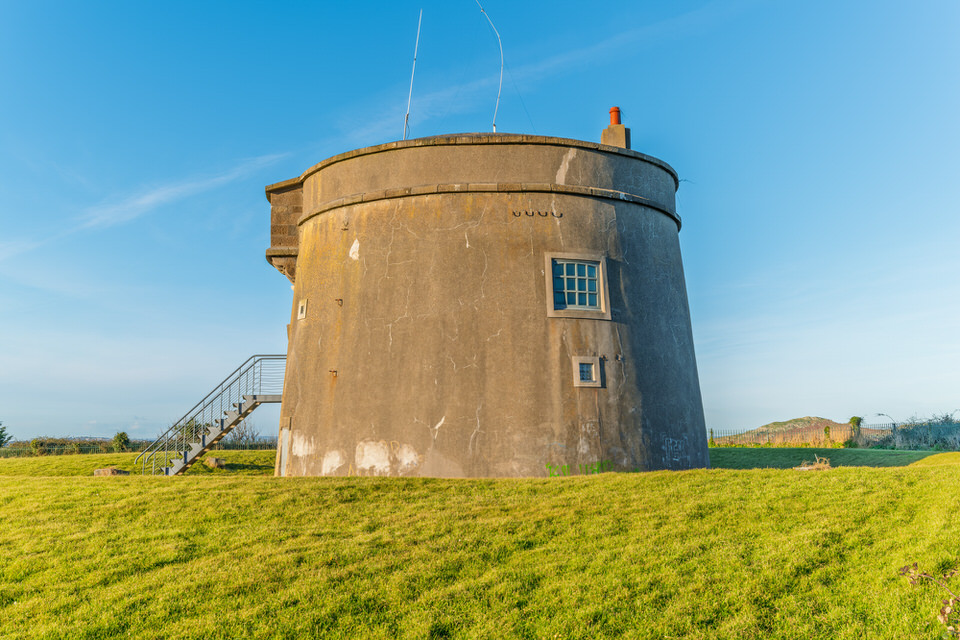
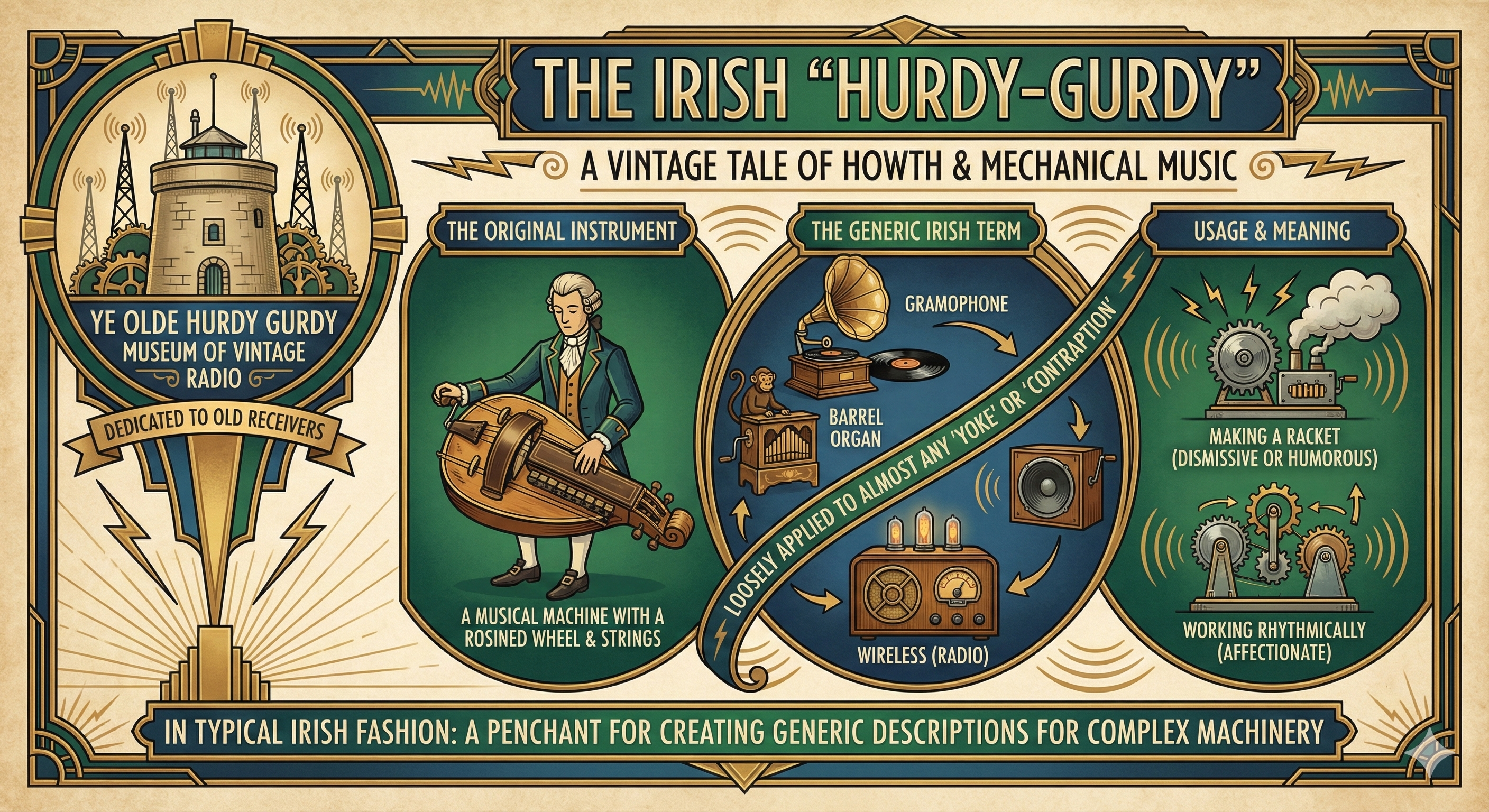


SCULPTURE IN CONTEXT 2025

A BRIEF PREVIEW

The 2023 event, hosted at the National Botanic Gardens in Glasnevin, Dublin, was a major success. It was the longest-running, largest, and most important sculpture exhibition in the country, showcasing the work of over 140 established and emerging artists. The exhibition ran from September 7 to October 13, 2023, and was free to the public. It featured a diverse range of contemporary sculptures, from monumental stone works to intricate ceramic pieces, displayed both outdoors throughout the 50 acres of gardens and indoors in the glasshouses and gallery. The event also included a program of lectures and guided tours.