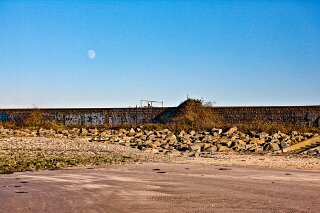
REMASTERED PHOTOGRAPHS OF CHARLMONT BEACH
OLD PHOTOGRAPHS OF CLAREMONT BEACH IN HOWTH [PHOTOGRAPHED JANUARY 2009 USING A CANON 1Ds MKIII WHICH I STILL USE]
Back in 2009 I did not have access to good photographic software so I am now reviewing my catalogue of photographs to see if they can be remastered.
Claremont Beach is a sandy, gently sloping beach located on the north side of the Howth peninsula. It sits in the shadow of the main harbour, separated from the East Pier by the DART (train) station, which makes it feel somewhat disconnected from the main village hub.
The beach offers stunning views looking north towards Ireland's Eye and the coast of Fingal. At low tide, it provides a wide expanse of firm sand, making it a popular spot for a peaceful walk, in contrast to the more rugged and busy cliff paths.
🏛️ The Source of its Name
The name "Claremont" is not ancient and is linked to the 19th-century Victorian development of Howth. The beach almost certainly derives its name from Claremont Tower, a distinctive, castellated Martello-style tower located on the hill just above the beach.
This name is also associated with Howth Lodge, a nearby 19th-century building that once served as the summer home for the British viceroy. This building and its surrounding lands were eventually redeveloped into a complex of luxury apartments, and the area's name was reinforced by the large, modern "Claremont" residential development built on a former industrial site adjacent to the beach.
🤫 Why Are Many Visitors Unaware of It?
Claremont Beach is a classic example of a "local's secret" that is hidden in plain sight. Most visitors who arrive in Howth, particularly by DART, are immediately funnelled towards the two main attractions:
The Harbour: They turn right out of the station to walk along the bustling West and East Piers, visit the market, and eat at the famous seafood restaurants.
The Cliff Walk: They head up the hill to begin the famous cliff loop, one of Dublin's most popular hikes.
Claremont Beach is located to the left of the station, effectively "behind" the main village. It is not on the way to any of the primary tourist destinations and is therefore easily missed by day-trippers focused on Howth's more famous sights. It is seen as a place for a quiet, leisurely stroll rather than a key tourist "to-do".
🐕 Why Is It So Popular for Dogs?
Claremont Beach is extremely popular with dog walkers because it is not a Blue Flag beach.
In Fingal, beaches that have been awarded Blue Flag status (like nearby Donabate or Portmarnock) have strict prohibitions on dogs during bathing season (June to September, between 11 am and 7 pm).
Claremont Beach does not have this restriction. While Fingal County Council bye-laws state that dogs must be on a leash or under "effectual control" in all public places, Claremont's lack of a specific summer ban makes it a reliable, year-round destination for dog owners. Its calm, shallow waters and wide-open space at low tide are ideal for dogs to run and play.
⚠️ Does It Suffer from Pollution?
Yes, the beach has had noted issues with water quality.
While it is open for swimming, its most recent classification from the Environmental Protection Agency (EPA) for 2024 was "Sufficient". This is the minimum acceptable passing grade required by EU standards. This rating was based on water samples taken over the 2021–2024 period, which indicates that the water quality can be poor and is vulnerable to pollution events, often after heavy rainfall.
🚢 The Howth Shipwreck
This shipwreck is not located directly on Claremont Beach but is a famous wreck nearby, off the coast of Howth Head. The wreck is that of the PS Queen Victoria, a paddle steamer that sank in a blizzard on 15th February 1853. While travelling from Liverpool to Dublin, she struck rocks near the Baily Lighthouse in poor visibility. The ship sank within minutes, resulting in the tragic loss of over 80 lives, including passengers and crew. The wreck still lies in the water south of the Baily Lighthouse and is now a protected archaeological site.
Back in 2009 I did not have access to good photographic software so I am now reviewing my catalogue of photographs to see if they can be remastered.
Claremont Beach is a sandy, gently sloping beach located on the north side of the Howth peninsula. It sits in the shadow of the main harbour, separated from the East Pier by the DART (train) station, which makes it feel somewhat disconnected from the main village hub.
The beach offers stunning views looking north towards Ireland's Eye and the coast of Fingal. At low tide, it provides a wide expanse of firm sand, making it a popular spot for a peaceful walk, in contrast to the more rugged and busy cliff paths.
🏛️ The Source of its Name
The name "Claremont" is not ancient and is linked to the 19th-century Victorian development of Howth. The beach almost certainly derives its name from Claremont Tower, a distinctive, castellated Martello-style tower located on the hill just above the beach.
This name is also associated with Howth Lodge, a nearby 19th-century building that once served as the summer home for the British viceroy. This building and its surrounding lands were eventually redeveloped into a complex of luxury apartments, and the area's name was reinforced by the large, modern "Claremont" residential development built on a former industrial site adjacent to the beach.
🤫 Why Are Many Visitors Unaware of It?
Claremont Beach is a classic example of a "local's secret" that is hidden in plain sight. Most visitors who arrive in Howth, particularly by DART, are immediately funnelled towards the two main attractions:
The Harbour: They turn right out of the station to walk along the bustling West and East Piers, visit the market, and eat at the famous seafood restaurants.
The Cliff Walk: They head up the hill to begin the famous cliff loop, one of Dublin's most popular hikes.
Claremont Beach is located to the left of the station, effectively "behind" the main village. It is not on the way to any of the primary tourist destinations and is therefore easily missed by day-trippers focused on Howth's more famous sights. It is seen as a place for a quiet, leisurely stroll rather than a key tourist "to-do".
🐕 Why Is It So Popular for Dogs?
Claremont Beach is extremely popular with dog walkers because it is not a Blue Flag beach.
In Fingal, beaches that have been awarded Blue Flag status (like nearby Donabate or Portmarnock) have strict prohibitions on dogs during bathing season (June to September, between 11 am and 7 pm).
Claremont Beach does not have this restriction. While Fingal County Council bye-laws state that dogs must be on a leash or under "effectual control" in all public places, Claremont's lack of a specific summer ban makes it a reliable, year-round destination for dog owners. Its calm, shallow waters and wide-open space at low tide are ideal for dogs to run and play.
⚠️ Does It Suffer from Pollution?
Yes, the beach has had noted issues with water quality.
While it is open for swimming, its most recent classification from the Environmental Protection Agency (EPA) for 2024 was "Sufficient". This is the minimum acceptable passing grade required by EU standards. This rating was based on water samples taken over the 2021–2024 period, which indicates that the water quality can be poor and is vulnerable to pollution events, often after heavy rainfall.
🚢 The Howth Shipwreck
This shipwreck is not located directly on Claremont Beach but is a famous wreck nearby, off the coast of Howth Head. The wreck is that of the PS Queen Victoria, a paddle steamer that sank in a blizzard on 15th February 1853. While travelling from Liverpool to Dublin, she struck rocks near the Baily Lighthouse in poor visibility. The ship sank within minutes, resulting in the tragic loss of over 80 lives, including passengers and crew. The wreck still lies in the water south of the Baily Lighthouse and is now a protected archaeological site.
CHARLMONT BEACH