The Urban Cartographer’s December Photo Diary

NEW: OUR EQUIPMENT IN DETAIL
THE URBAN CARTOGRAPHER
JULY 2025 VISIT TO DUN LAOGHAIRE ABOUT THE URBAN CARTOGRAPHER THE FUJI X100 VI FITTED WITH THE TCL-X100 II DECEMBER 2025 VISIT TO BELFAST CITY MAY 2025 VISIT TO BELFAST CITY

CHRISTMAS DAY 2025

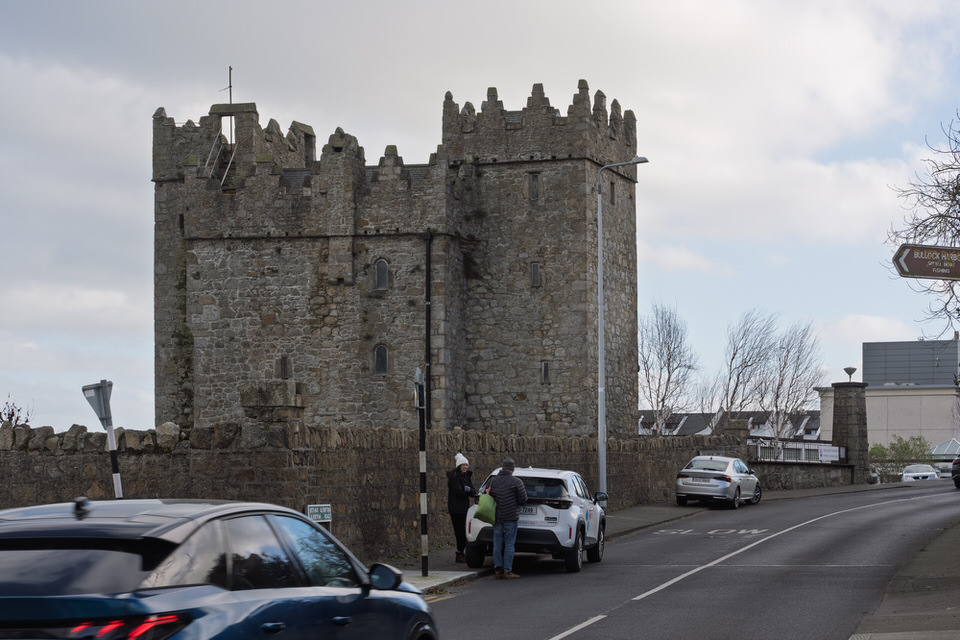
BULLOCK OR BULLOCH

As I was based in Dun Laoghaire over Christmas and invited to Christmas Dinner in Dalkey, the plan was ambitious: spend at least four hours photographing the heritage town of Dalkey in all its festive glory. However, as anyone familiar with the Irish coast in December knows, the weather often has the final say. It simply wasn't practical to roam the streets with a camera in the wind and rain.

MORE PHOTOGRAPHS
BULLOCH OR BULLOCK
ULVERTON ROAD

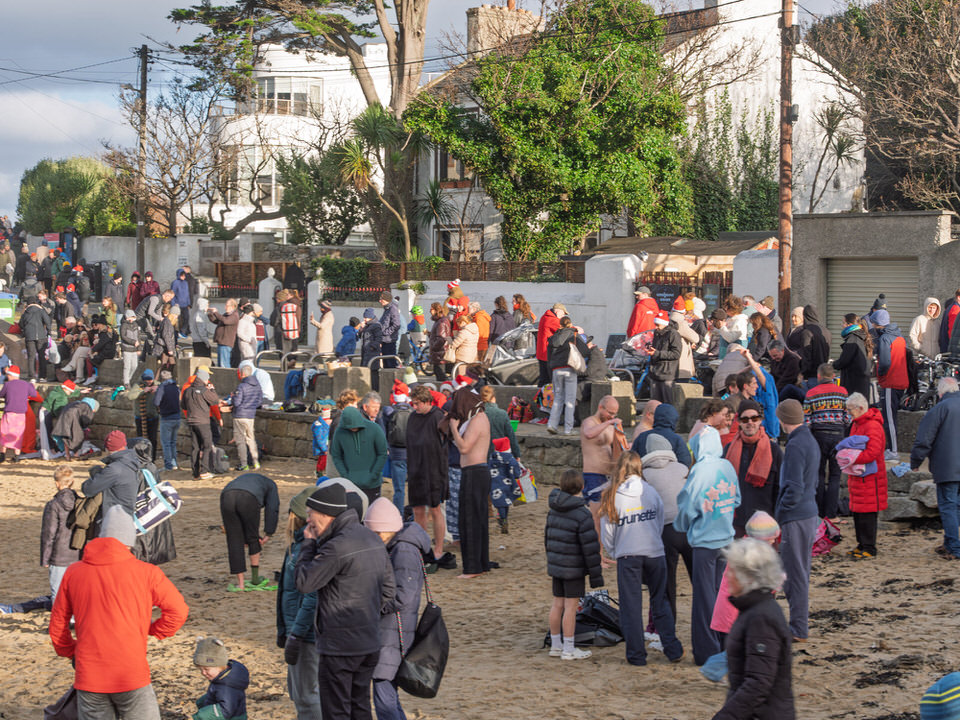
CHRISTMAS DAY SWIM

FORTY FOOT MEN ONLY

Christmas 2025 saw thousands at Sandycove as rough Irish Sea weather closed the Forty Foot. We explore the 2025 event and the funny history of the "Men Only" sign.

MORE PHOTOGRAPHS
ABOUT THE FORTY FOOT
SANDYCOVE NEW YEAR 2025

THE DAY AFTER CHRISTMAS

THE WATERFRONT AT NIGHT

This was my second attempt on the day after Christmas and it proved to be even more difficult than the first attempt even though I used a Leica Q3 which have been a better choice but I had upgraded the firmware a few hours earlier and had yet to learn how to use what had in reality became a different camera

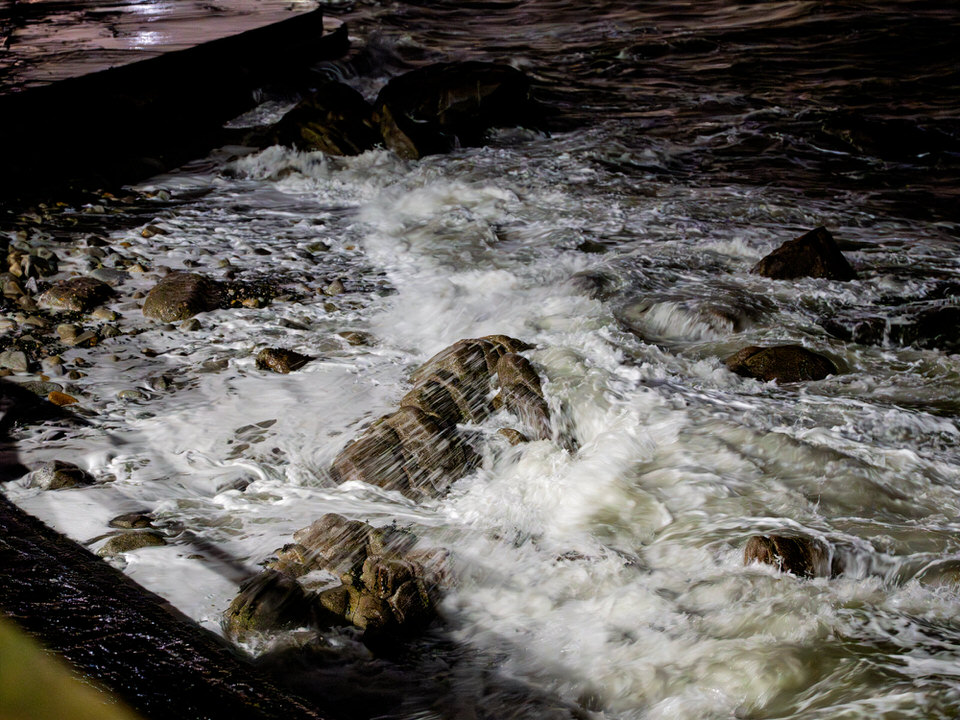
My objective was to document the coastline at night, but the conditions made photography close to impossible. The wind was not merely blowing; it was physically pushing back, threatening to topple both tripod and photographer. Salt spray coated the lens the moment the cap was removed. It was, in no uncertain terms, unsafe. But it is often in these extremes that the coast reveals its true, brutal character.

EXPLORING DUN LAOGHAIRE

CHRISTMAS 2025

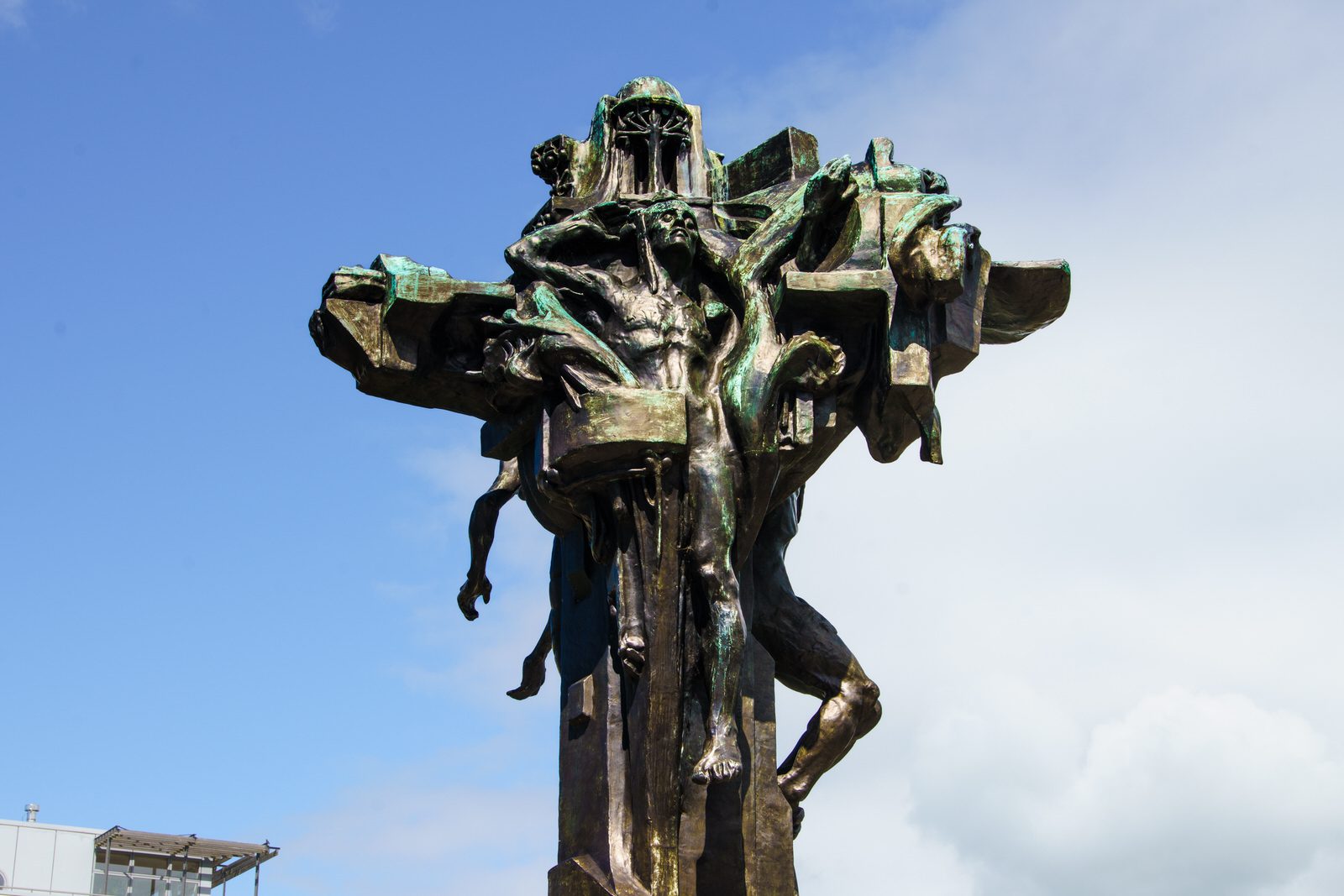
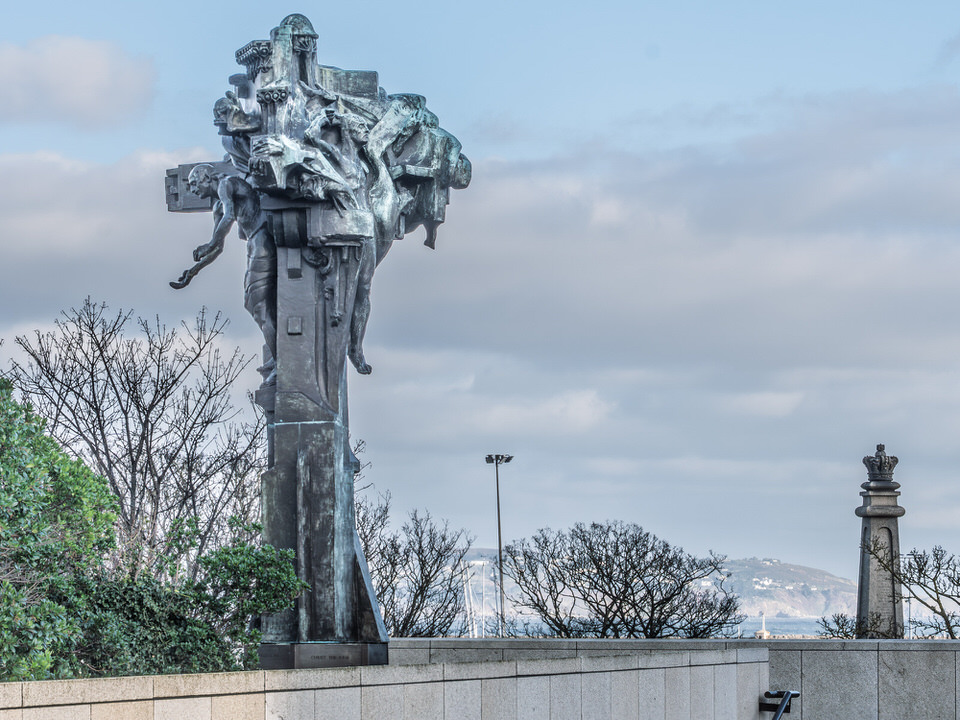
The Hidden History of Dún Laoghaire’s "Triple Cross"

Discover the fascinating history of Dún Laoghaire’s Christ the King statue (the Triple Cross). Sculpted by Andrew O'Connor, rejected by Archbishop McQuaid, and hidden in a garden for 30 years, this bronze masterpiece now stands in Moran Park.

IN FRONT OF THE ROYAL MARINE

TRIPLE CROSS

In 2012, the statue was temporarily removed to facilitate the construction of the new central library, the dlr LexIcon. After undergoing essential restoration work, Christ the King was returned to the public in 2014. It now stands in a prominent, elevated position at the western end of Moran Park, creating a fascinating dialogue between historic religious art and the modern civic architecture of the library.

MORE PHOTOGRAPHS
THE ART AND THE ARTIST

BELOW IN AN OLDER BUT MORE DETAILED IMAGE

ALSO THE VICTIMS BY THE SAME ARTIST

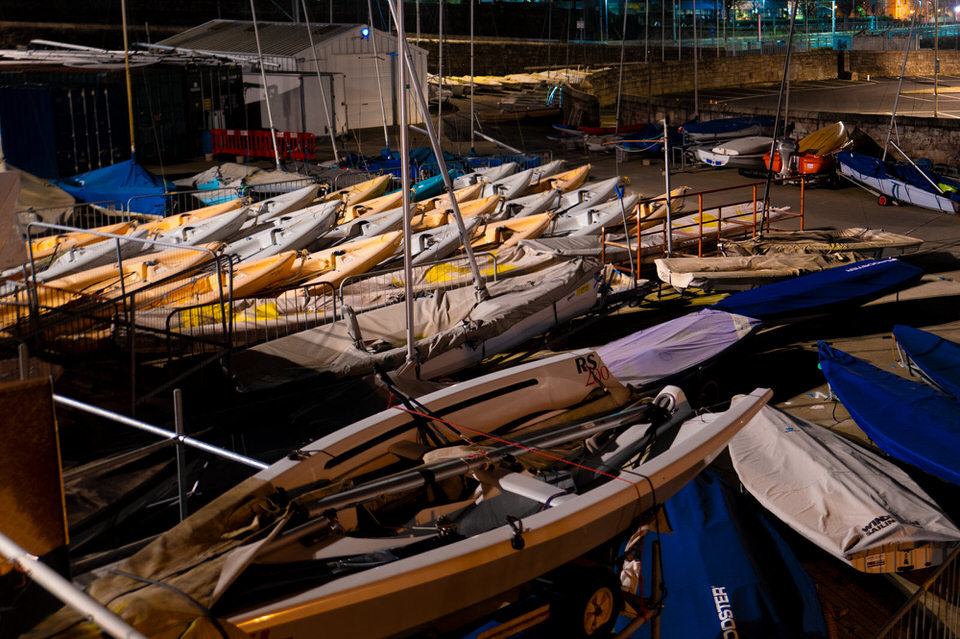
Traders Wharf Off Harbour Road In Dun Laoghaire

Traders' Wharf Dún Laoghaire: History & Current Status Description: Discover the history of Traders' Wharf off Harbour Road, Dún Laoghaire. From its 1855 origins as a coal quay to its current status as a public slipway and boat yard

CHRISTMAS 2025

TRADERS WHARF

Completed around 1855, Traders’ Wharf was constructed to facilitate commerce—specifically the importation of coal and other heavy goods that fuelled the Victorian township of Kingstown (now Dún Laoghaire). It effectively splits the inner harbour area, creating the Coal Harbour on one side and the Old Harbour (a tidal inlet that dates back to the 1760s, predating the main piers) on the other.
.

MORE PHOTOGRAPHS
THE HISTORY OF THE AREA

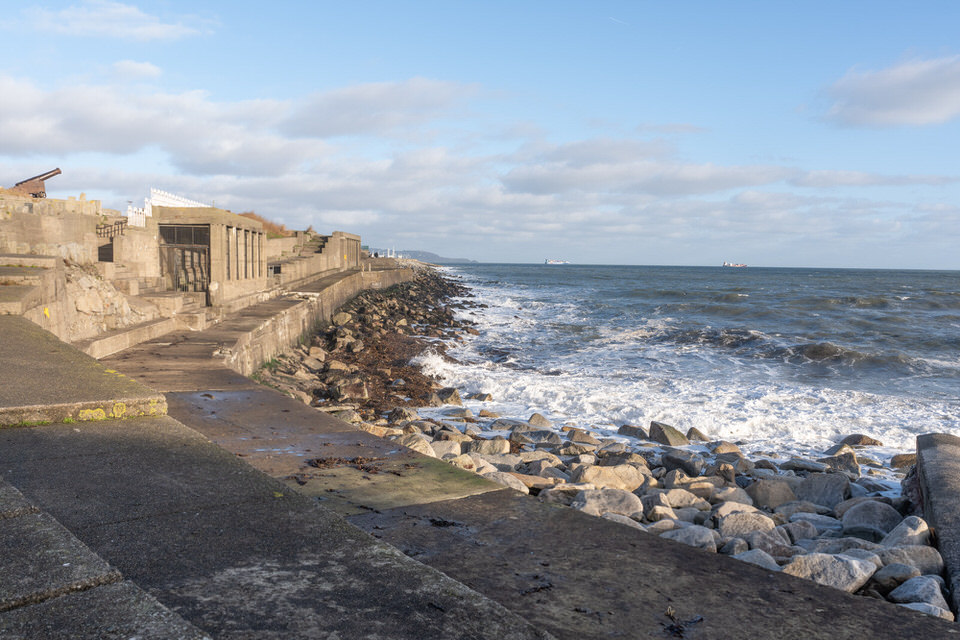
Exploring The Waterfront Along Queen’s Road

Join me on a perilous Christmas photography walk along Queen's Road, Dun Laoghaire. Discover the dramatic contrast between the decaying Victorian seafront and the controversial new Baths as the Irish Sea crashes against the coast.

ST STEPHEN’S DAY 26 DECEMBER 2025

DECAYING INFRASTRUCTURE

Walking south from the East Pier, the first thing that strikes you—other than the wind—is the state of the infrastructure. This area is a legacy of the Victorian era, a time when grand promenades were the height of fashion. Today, however, that legacy is crumbling.

The decay is undeniable. Sections of the wall and pathways have surrendered to the relentless pounding of the Irish Sea and decades of neglect. In the dim, storm-light of December, the hazards were amplified. Navigating the broken pavement while buffeted by gusts felt less like a walk and more like a tactical manoeuvre. It raises a serious question: how much longer can this historic stretch remain accessible to pedestrians before it is deemed entirely unsafe?

.

MORE PHOTOGRAPHS
THE HISTORY OF THE AREA

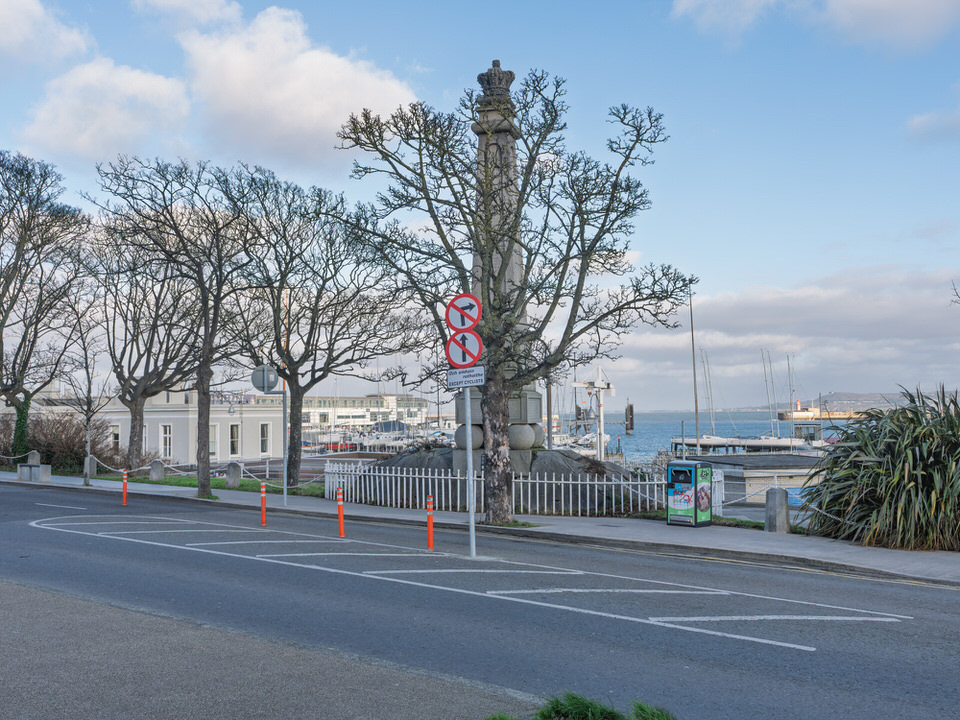
The King George IV Monument

A "Hideous Obelisk"

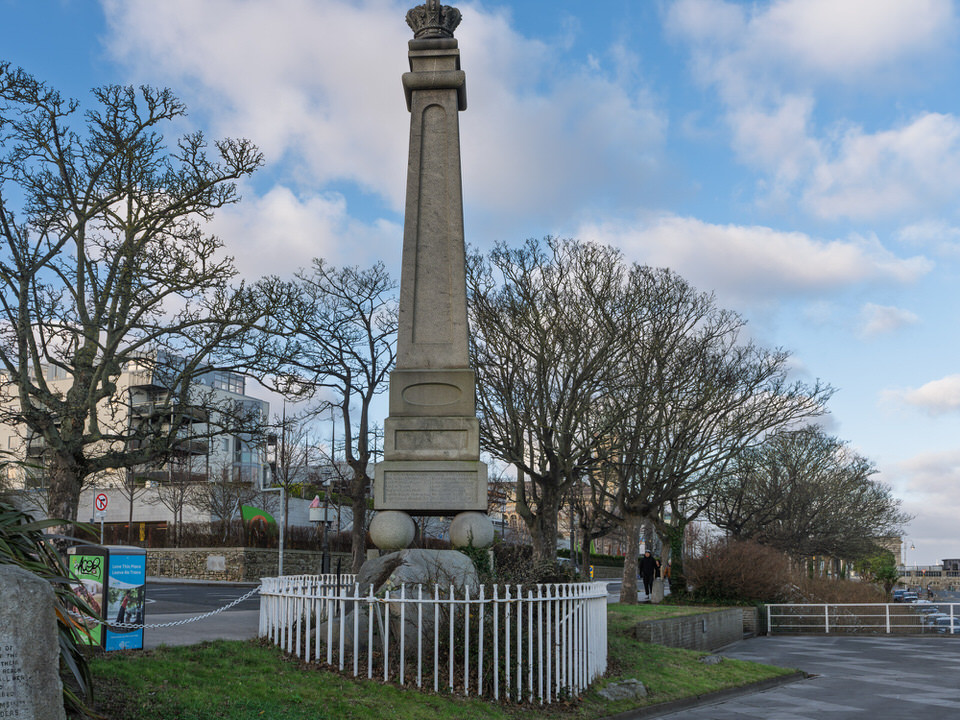
The monument was erected around 1823 to commemorate the visit of King George IV in 1821. It was a visit of immense significance at the time, leading to the town being renamed Kingstown until independence saw it revert to Dún Laoghaire in 1920.

However, the design has not always won admirers. The author William Makepeace Thackeray, writing in his 1842 work The Irish Sketch Book, was less than impressed. He famously described it as a "hideous obelisk, stuck upon four fat balls and surmounted with a crown on a cushion."
Thackeray didn’t stop there, adding a biting piece of satire by suggesting that the "fat balls" were "perhaps no bad emblems of the monarch in whose honour they were raised."

CHRISTMAS 2025

NOW IN GOOD CONDITION

The King George IV Monument: A Hideous Obelisk or a Window into History?

If you have ever walked along the Queen’s Road near the harbour in Dún Laoghaire, you have almost certainly passed the King George IV Monument. It is a structure that is impossible to miss, yet easy to overlook—a relic of an empire that once renamed this town "Kingstown."

For many locals and visitors, the monument is a curious piece of stone architecture, but for those of us who have lived and worked in the area long enough, it holds a stranger, more turbulent history.

My Connection: A Daily Commute

My own connection to this monument goes back to my days working in Dún Laoghaire. We were based quite close to the seafront, and my daily commute took me past the monument on the way to and from the train station.

It was during these walks that I became intimately familiar with the monument’s "injured" state. While formal records discuss the monument's neglect due to the harsh coastal environment—the sea air, wind, and salt spray—what I remember most vividly is the result of political volatility.

Bombs and Wooden Blocks

In 1970, due to its controversial nature as a British symbol in independent Ireland, the monument became a target. A bomb was placed at the base, badly damaging one of the four granite balls that Thackeray had so despised.

For a very long time, the repair job was far from royal. The missing granite sphere was replaced not with stone, but with a simple block of wood.

Although some formal written sources struggle to document the wooden block, I can attest to its existence. Walking past it every day, that wooden stump became a notable, if informal, part of the landscape. It stood as a testament to a time when limited heritage funding and a lack of local interest in imperial monuments meant that a "temporary fix" could last for years.

THE TRADERS WHARF


Setting the Record Straight

There is a common misconception today—often repeated in casual conversation—that the monument currently sits on only three balls.

I can confirm that this is not true.

Eventually, the wooden block—my companion on those daily walks to the train—was replaced by a proper stone replica. Recent photographs clearly show that the obelisk is once again balanced on four spheres, restoring the symmetry that the 1970 bombing (and a subsequent grenade attack in 1993) had disrupted.

A Changed Perspective

For decades, the monument suffered because it sat awkwardly with the emerging local and national identity. It was a symbol of a past many wanted to move on from. However, attitudes are shifting.

Today, local heritage initiatives and walking tours are beginning to highlight the King George IV Monument not as an object of celebration, but as a fascinating historical artefact. It is a key part of the harbour’s story—from its development as a major asylum and packet harbour to its role as a symbolic "gateway to Ireland."

Next time you are walking along the seafront, perhaps on your way to the DART station, pause for a moment at the obelisk. Look closely at the base. You won't see the wooden block anymore, but you will see a monument that has survived satire, bombs, and sea spray to tell the complicated story of Dún Laoghaire.


THE TRADERS WHARF

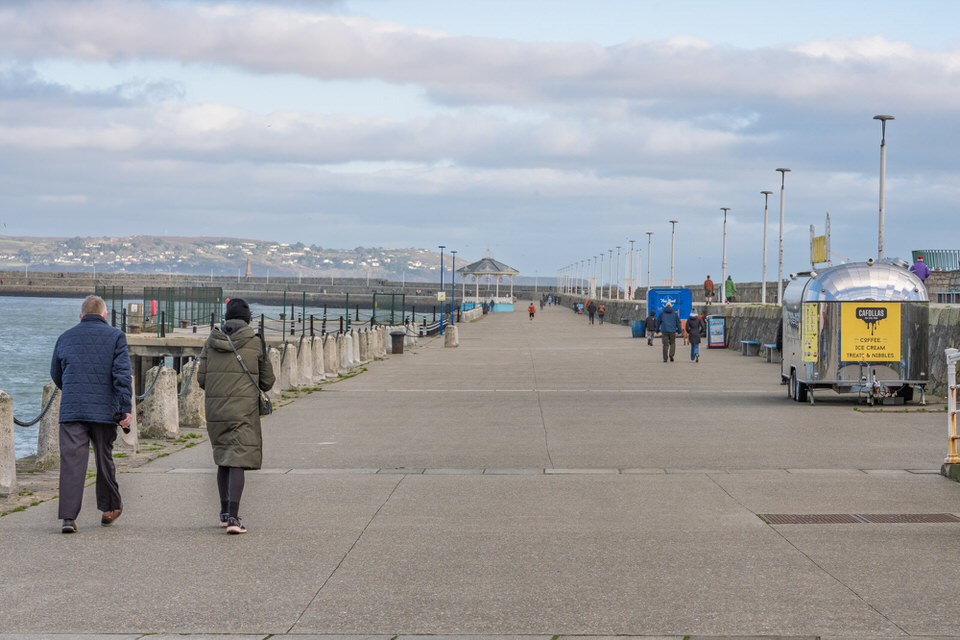
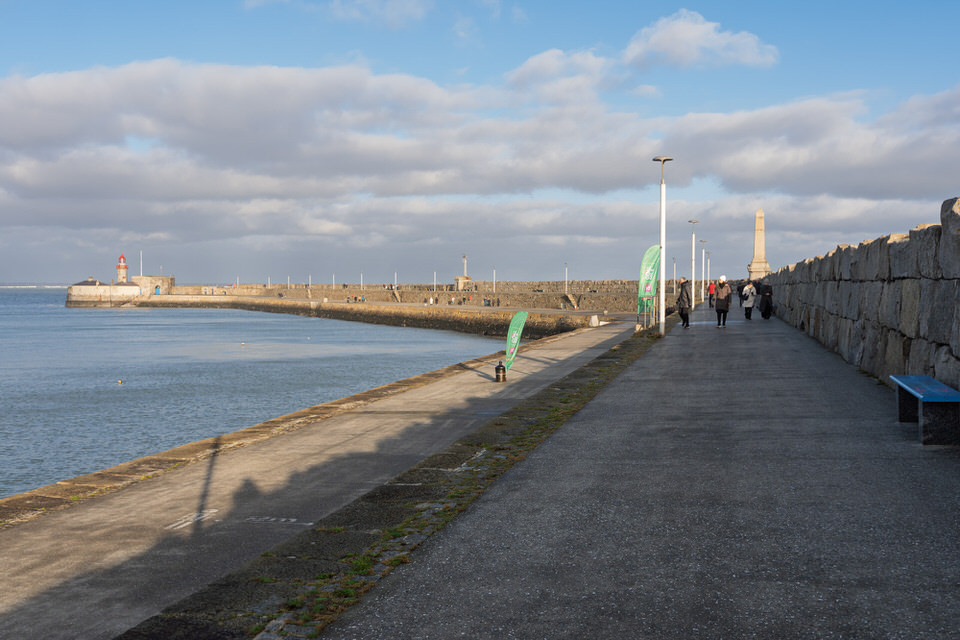
Christmas Morning Visit To The East Pier

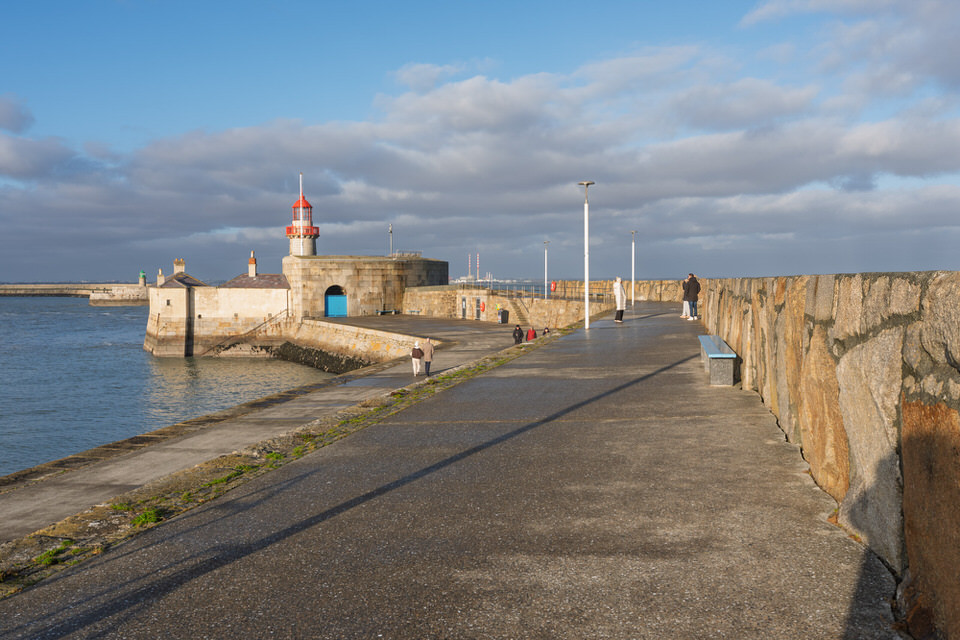
There were not many people on the pier when I visited because it was very windy and very cold but the night before was much worse as I had to abandon my plan to photograph the pier at night as soon as I got as far as the bandstand.

A Walk with History. When you step onto the East Pier, you are walking on a marvel of Victorian engineering. Constructed in the early 19th century from Dalkey granite, the pier was originally designed as an "asylum harbour" to shelter ships from treacherous storms. Today, it provides an attractive walk before we have our Christmas Dinner.

PHOTOGRAPHS OF THE EAST PIER

The "Commuter Christmas": An Experiment at the Royal Marine

Christmas is usually a binary choice: you are either hosting the madness, or you are a guest sleeping on a relatives' air mattress. This year, I decided to try a third option. I undertook an experiment by booking a stay at the Royal Marine Hotel in Dún Laoghaire, but with a twist.

Unlike most of the guests, I didn't book the Christmas lunch package. I wasn't there for the turkey and ham. My plan was to use the hotel as a luxurious base camp, "commuting" to Dalkey for family festivities, while dedicating the quiet mornings and evenings to street photography along the coast.

It was a fascinating few days that revealed a lot about Irish weather, the comfort of solitude, and a growing trend in how we handle the holidays.

The Royal Marine: A Grand Base Camp

The Royal Marine is an institution. Standing tall since the Victorian era, it commands views across Dublin Bay that are usually breathtaking. At Christmas, the hotel leans into its grandeur—soaring ceilings, deep carpets, and a sense of history that feels right for the season.

Staying there provided a strange, delightful contrast. I would leave the high-energy chaos of a family Christmas in Dalkey—wrapping paper flying, ovens blazing, children screaming—and retreat to the absolute stillness of a hotel room. It turns out, having a sanctuary to retreat to doesn't make you anti-social; it actually makes you a better guest when you are there.

The Emerging Trend: The "Hotel Grandparent"

While navigating the lobby and the lifts, I noticed I wasn't the only one pulling this manoeuvre. I struck up conversations with several other guests—predominantly grandparents—and realised I had stumbled upon a significant trend.

Many of the people I met were not eating in the hotel either. They were suited and booted, waiting for taxis or children to collect them to go to local homes for dinner.

Is staying in a hotel the new normal? It seems the days of multi-generational overcrowding are fading. Talking to these guests, the reasoning was clear:

Space is at a premium: Modern homes (and apartments in places like Dalkey or Dún Laoghaire) often don't have the spare bedrooms to house extended family comfortably.

The Gift of Sleep: Grandparents adore their grandchildren, but they also adore a full night's sleep on a high-quality mattress, away from the 6:00 AM wake-up calls of excited toddlers.

Autonomy: It allows for a "best of both worlds" scenario. You get the connection and warmth of the family dinner, but the autonomy of your own breakfast and a quiet evening.

It wasn't that they didn't want to be with family; it was that they wanted to be rested for their family.

The Failed Photography Plan My own "experiment" had a second objective: Street Photography.

My vision was romantic: early mornings capturing the moody winter light over the Irish Sea, and late afternoons documenting the empty streets of Dún Laoghaire.

The reality, however, was a physical battle. While the forecast for the rest of Dublin read "settled," the coast tells a different story. We were hit with a "Fresh Easterly"—a wind that travels uninterrupted across the Irish Sea to slam directly into the harbour.

Met Éireann data confirmed Force 6 gusts, which on the East Pier translates to salt spray hitting you horizontally and a wind chill dropping to -4°C. It wasn't just blustery; it was unsafe. The sea was churning with such violence that approaching the edge for a composition wasn't brave, it was stupid.

Any photographer knows that wind is the enemy of sharpness, but salt spray is the enemy of electronics. Between the gale-force gusts and the risk of being swept off a footing, the camera stayed largely in the bag. Sometimes, the smartest photo you take is the one you decide not to shoot.
 

A MEMORIAL OBELISK ON THE EAST PIER

THE HEROS MONUMENT

If you walk down the East Pier in Dún Laoghaire today, past the Victorian bandstand and the ice cream sellers, you will come across a grey granite obelisk. It is weathered by time and salt spray, easy to walk past without a second glance. But stop for a moment. This stone marks the spot of a Victorian tragedy that brought the city of Dublin to a standstill.

MORE PHOTOGRAPHS
THE ACTUAL STORY

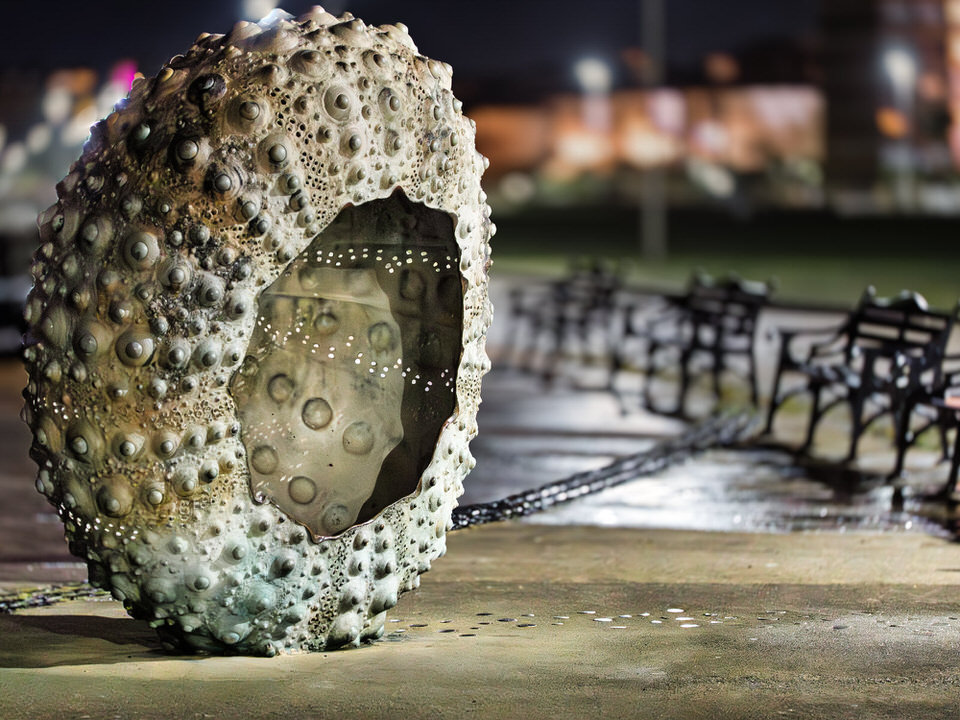
THE MOTHERSHIP BY RACHEL JOYNT

ALSO THE SEA URCHIN

Mothership (The Sea Urchin) by Rachel Joynt | Public Art Dún Laoghaire Description: Discover "Mothership," the iconic bronze sea urchin sculpture by Rachel Joynt on the Sandycove/Dún Laoghaire seafront. Commissioned in 1999 to celebrate clean water, this 2-metre interactive artwork invites passers-by to climb inside. Learn about the artist and the hidden meaning linking the sculpture to local infrastructure.

MORE PHOTOGRAPHS
THE ART AND THE ARTIST
SAME LOCATION JULY 2024
CELEBRATION BY DICK JOYNT

THE BEACON WITH A BIG BANG IN DUN LAOGHAIRE

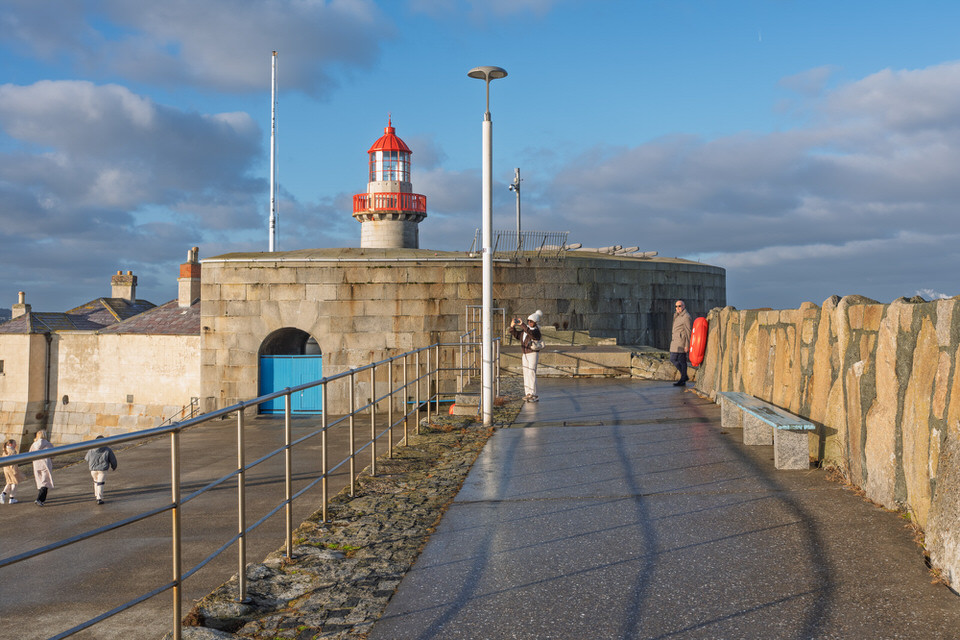
EAST PIER LIGHTHOUSE

The lighthouse itself is a quintessential piece of Irish maritime engineering. Designed by George Halpin, the Chief Engineer of the Ballast Board, it was established on 1st October 1847.

Its purpose was vital. Dún Laoghaire (then Kingstown) was constructed as an "Asylum Harbour"—a safe refuge for ships trying to escape the treacherous sandbars of Dublin Bay during storms. The lighthouse was the final signal that a vessel had reached safety.

Originally standing 41 feet above the high-water mark, the tower was actually heightened by another 12 feet in the 1890s. The Commissioners of Irish Lights needed to improve its range to ensure the beam could reach the Mugglins rocks near Dalkey, preventing further shipwrecks.

CHARITY EVENT ON DECEMBER 26

GOAL MILE ON THE EAST PIER

Join the St. Stephen's Day tradition at the GOAL Mile in Dún Laoghaire. Discover the actual distance of the East Pier walk, event times for 2025, and the history behind this iconic charity fundraiser.

MORE PHOTOGRAPHS
ABOUT THE GOAL MILE