IS IT BULLOCK OR BULLOCH
BULLOCK OR BULLOCH [A BRIEF VISIT TO THE FAMOUS HARBOUR IN DALKEY]
As I was based in Dun Laoghaire over Christmas and invited to Christmas Dinner in Dalkey, the plan was ambitious: spend at least four hours photographing the heritage town of Dalkey in all its festive glory. However, as anyone familiar with the Irish coast in December knows, the weather often has the final say. It simply wasn't practical to roam the streets with a camera in the wind and rain.
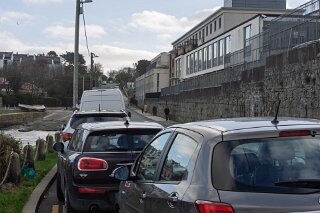
But, not wanting to leave empty-handed, I seized a small window of opportunity to visit Bullock Harbour for about fifteen minutes. It was a fleeting visit, but even a quarter of an hour in this unique corner of County Dublin is time well spent.
The Spelling Mystery: Bullock or Bulloch?
As you approach the harbour, you might notice a curious inconsistency that has puzzled visitors for years. Is it Bullock or Bulloch?
If you check Google Maps or official maritime charts, you will likely see "Bullock Harbour". However, walk around the local area or look at the nameplates on nearby houses, and "Bulloch" appears frequently.
There is no great dispute or dramatic historical schism behind the difference. It is widely accepted that both spellings are anglicised versions of the Irish name Cuan Bhlóic (Bloyke’s Harbour). Over the centuries, the name has drifted phonetically through variations like Bloyke and Bullog before settling on the two we see today.
While "Bullock" is generally the standard on modern maps, the local community often uses the two interchangeably. So, whether you spell it with a 'ck' or a 'ch', you are in the right place.
A Harbour of History
Even during a fifteen-minute dash between rain showers, the history of the place is palpable. Dominating the skyline is the imposing Bullock Castle. Dating back to the 12th century, it was built by Cistercian monks from St. Mary’s Abbey in Dublin. They constructed the castle and the original quay to protect their fishing rights—a reminder that this quiet spot was once a strictly guarded commercial asset.
In the 19th century, the harbour found a new purpose as a base for the brave pilots and hobblers who would row out to guide large ships safely into Dublin Port.
A Working Harbour
Unlike the purely leisure-focused marinas nearby, Bullock retains the gritty charm of a working harbour. Even in the grey depths of winter, you get a sense of its daily life. It is home to a small fleet of fishing boats catching lobster and crab, and the premises of Western Marine (a local institution) sit right on the quay.
Usually, the harbour is famous for its resident seals, who have learned that the returning fishing boats—and generous tourists—mean an easy meal. While my visit was too short to wait for a sighting, they are as much a part of the local furniture as the granite walls.
Until Next Time
My plan to photograph Dalkey may have been washed out, but standing on the quay at Bullock Harbour, watching the grey Irish Sea churn against the 19th-century granite, was a worthy consolation prize. It is a place that demands more than fifteen minutes, and certainly better weather. I will be back to capture it properly—regardless of how it is spelled.
As I was based in Dun Laoghaire over Christmas and invited to Christmas Dinner in Dalkey, the plan was ambitious: spend at least four hours photographing the heritage town of Dalkey in all its festive glory. However, as anyone familiar with the Irish coast in December knows, the weather often has the final say. It simply wasn't practical to roam the streets with a camera in the wind and rain.
But, not wanting to leave empty-handed, I seized a small window of opportunity to visit Bullock Harbour for about fifteen minutes. It was a fleeting visit, but even a quarter of an hour in this unique corner of County Dublin is time well spent.
The Spelling Mystery: Bullock or Bulloch?
As you approach the harbour, you might notice a curious inconsistency that has puzzled visitors for years. Is it Bullock or Bulloch?
If you check Google Maps or official maritime charts, you will likely see "Bullock Harbour". However, walk around the local area or look at the nameplates on nearby houses, and "Bulloch" appears frequently.
There is no great dispute or dramatic historical schism behind the difference. It is widely accepted that both spellings are anglicised versions of the Irish name Cuan Bhlóic (Bloyke’s Harbour). Over the centuries, the name has drifted phonetically through variations like Bloyke and Bullog before settling on the two we see today.
While "Bullock" is generally the standard on modern maps, the local community often uses the two interchangeably. So, whether you spell it with a 'ck' or a 'ch', you are in the right place.
A Harbour of History
Even during a fifteen-minute dash between rain showers, the history of the place is palpable. Dominating the skyline is the imposing Bullock Castle. Dating back to the 12th century, it was built by Cistercian monks from St. Mary’s Abbey in Dublin. They constructed the castle and the original quay to protect their fishing rights—a reminder that this quiet spot was once a strictly guarded commercial asset.
In the 19th century, the harbour found a new purpose as a base for the brave pilots and hobblers who would row out to guide large ships safely into Dublin Port.
A Working Harbour
Unlike the purely leisure-focused marinas nearby, Bullock retains the gritty charm of a working harbour. Even in the grey depths of winter, you get a sense of its daily life. It is home to a small fleet of fishing boats catching lobster and crab, and the premises of Western Marine (a local institution) sit right on the quay.
Usually, the harbour is famous for its resident seals, who have learned that the returning fishing boats—and generous tourists—mean an easy meal. While my visit was too short to wait for a sighting, they are as much a part of the local furniture as the granite walls.
Until Next Time
My plan to photograph Dalkey may have been washed out, but standing on the quay at Bullock Harbour, watching the grey Irish Sea churn against the 19th-century granite, was a worthy consolation prize. It is a place that demands more than fifteen minutes, and certainly better weather. I will be back to capture it properly—regardless of how it is spelled.
IS IT BULLOCH OR BULLOCK