TRADERS WHARF OFF HARBOUR ROAD IN DUN LAOGHAIRE
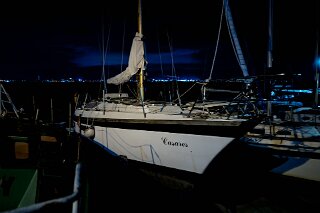
TRADERS WHARF OFF HARBOUR ROAD IN DUN LAOGHAIRE [AT NIGHT]
It was very dark by the time I arrived at Traders Wharf and I was disappointed by the quality of the resulting images - I could not hold the camera steady because of the wind which made it difficult for me to even stand upright. It should be noted that the geotagging is not precise.
The Hidden Workhorse of the Harbour: A Guide to Traders' Wharf, Dún Laoghaire
When most people think of Dún Laoghaire Harbour, they picture the sweeping granite arms of the East and West Piers, the polished yachts of the marina, or the Sunday strolls with an ice cream in hand. But tucked away off Harbour Road lies a structure that tells a grittier, more authentic story of this maritime town: Traders’ Wharf.
Unlike the grand promenade of the East Pier, Traders' Wharf is a functional, working piece of maritime infrastructure. Situated between the "Old Harbour" and the "Coal Harbour," it is a place where the town’s commercial past meets its recreational present. If you are curious about what lies off Harbour Road, here is the history and current status of this historic quay.
A History Built on Coal and Stone
To understand Traders' Wharf, you have to look back to the mid-19th century. While the great East and West Piers (completed in 1842) were built to create an "Asylum Harbour" for ships sheltering from storms, the internal wharves were built for business.
Completed around 1855, Traders’ Wharf was constructed to facilitate commerce—specifically the importation of coal and other heavy goods that fuelled the Victorian township of Kingstown (now Dún Laoghaire). It effectively splits the inner harbour area, creating the Coal Harbour on one side and the Old Harbour (a tidal inlet that dates back to the 1760s, predating the main piers) on the other.
For over a century, this area was the industrial lungs of the town. While the gentry promenaded on the upper piers, Traders' Wharf was a smoky, busy hub of hobblers (unlicensed pilots), fishermen, and dockers unloading Welsh coal to power the local trains and heat homes.
Current Status: A Working Wharf
Today, the smog and coal dust are gone, but Traders' Wharf remains a "working" section of the harbour. It is now managed by Dún Laoghaire-Rathdown County Council, following the dissolution of the Dún Laoghaire Harbour Company in 2018.
Here is what you will find there today:
The Public Slipway: The wharf is home to a vital non-tidal public slipway. It is one of the few places where the public can launch small boats and ribs, making it a hive of activity on summer weekends.
Boat Storage (Hardstanding): The surface of the wharf is largely used as a "hardstanding" area. In winter, it is a parking lot for yachts and fishing vessels pulled out of the water for maintenance. It lacks the glamour of the marina pontoons, retaining a functional, boat-yard aesthetic.
The "Floating Homes" Controversy: In 2017, the wharf made headlines when a proposal was floated to build a cluster of residential "floating homes" off its weather side. The plan was met with significant local resistance and concerns about privatisation of public amenities. The project did not proceed, preserving the wharf's status as an open maritime utility rather than a residential enclave.
Access: While it is less of a walking route than the main piers, it offers a unique vantage point. From here, you get a close-up view of the National Yacht Club and the inner workings of the harbour that casual tourists rarely see.
The Verdict
Traders’ Wharf is not a destination for a casual Sunday stroll in the same way the East Pier is. It is industrial, utilitarian, and quiet. However, for maritime enthusiasts, it is the beating heart of the harbour's daily logistics—a place where boats are fixed, launched, and stored, just as they have been for 170 years.
It was very dark by the time I arrived at Traders Wharf and I was disappointed by the quality of the resulting images - I could not hold the camera steady because of the wind which made it difficult for me to even stand upright. It should be noted that the geotagging is not precise.
The Hidden Workhorse of the Harbour: A Guide to Traders' Wharf, Dún Laoghaire
When most people think of Dún Laoghaire Harbour, they picture the sweeping granite arms of the East and West Piers, the polished yachts of the marina, or the Sunday strolls with an ice cream in hand. But tucked away off Harbour Road lies a structure that tells a grittier, more authentic story of this maritime town: Traders’ Wharf.
Unlike the grand promenade of the East Pier, Traders' Wharf is a functional, working piece of maritime infrastructure. Situated between the "Old Harbour" and the "Coal Harbour," it is a place where the town’s commercial past meets its recreational present. If you are curious about what lies off Harbour Road, here is the history and current status of this historic quay.
A History Built on Coal and Stone
To understand Traders' Wharf, you have to look back to the mid-19th century. While the great East and West Piers (completed in 1842) were built to create an "Asylum Harbour" for ships sheltering from storms, the internal wharves were built for business.
Completed around 1855, Traders’ Wharf was constructed to facilitate commerce—specifically the importation of coal and other heavy goods that fuelled the Victorian township of Kingstown (now Dún Laoghaire). It effectively splits the inner harbour area, creating the Coal Harbour on one side and the Old Harbour (a tidal inlet that dates back to the 1760s, predating the main piers) on the other.
For over a century, this area was the industrial lungs of the town. While the gentry promenaded on the upper piers, Traders' Wharf was a smoky, busy hub of hobblers (unlicensed pilots), fishermen, and dockers unloading Welsh coal to power the local trains and heat homes.
Current Status: A Working Wharf
Today, the smog and coal dust are gone, but Traders' Wharf remains a "working" section of the harbour. It is now managed by Dún Laoghaire-Rathdown County Council, following the dissolution of the Dún Laoghaire Harbour Company in 2018.
Here is what you will find there today:
The Public Slipway: The wharf is home to a vital non-tidal public slipway. It is one of the few places where the public can launch small boats and ribs, making it a hive of activity on summer weekends.
Boat Storage (Hardstanding): The surface of the wharf is largely used as a "hardstanding" area. In winter, it is a parking lot for yachts and fishing vessels pulled out of the water for maintenance. It lacks the glamour of the marina pontoons, retaining a functional, boat-yard aesthetic.
The "Floating Homes" Controversy: In 2017, the wharf made headlines when a proposal was floated to build a cluster of residential "floating homes" off its weather side. The plan was met with significant local resistance and concerns about privatisation of public amenities. The project did not proceed, preserving the wharf's status as an open maritime utility rather than a residential enclave.
Access: While it is less of a walking route than the main piers, it offers a unique vantage point. From here, you get a close-up view of the National Yacht Club and the inner workings of the harbour that casual tourists rarely see.
The Verdict
Traders’ Wharf is not a destination for a casual Sunday stroll in the same way the East Pier is. It is industrial, utilitarian, and quiet. However, for maritime enthusiasts, it is the beating heart of the harbour's daily logistics—a place where boats are fixed, launched, and stored, just as they have been for 170 years.
TRADERS WHARF