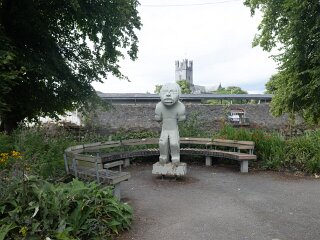
IT IS A PITY THAT THEY PAINTED IT
OLMEC MAN AT THE HUNT MUSEUM IN A GARDEN APPEARS TO HAVE RECEIVED A PAINT JOB [I PREFERRED ITS ORIGINAL CONDITION]
🌳 The Hunt Museum's 'Museum in a Garden'
The garden space behind The Hunt Museum in Limerick was conceived with a clear philosophy: to break down the perceived barriers of a traditional museum building. By bringing objects and concepts into the public domain, the garden acts as a welcoming and accessible extension of the museum experience for the whole community.
This public space officially opened in 2016. A significant step towards accessibility was taken in the summer of 2020 when, with the assistance of local recycling company UMR, the surrounding railings were removed, creating a truly open and inviting atmosphere.
The garden is designed to encourage creativity, leisure, and engagement. It hosts a wide variety of events, including music performances, theatre, and tournaments for chess and boules. For casual visitors, a permanent chessboard is available alongside other outdoor games like quoits, boules, and croquet, which can be borrowed from the museum.
🗿 The Olmec Man: A Modern Link to an Ancient World
The 'Olmec Man' holds the distinction of being the first sculpture installed in the Hunt Museum's garden.
The Ancient Olmec
The sculpture pays homage to the Olmec, one of the earliest known major civilisations in Mesoamerica (modern-day Mexico). Flourishing long before the Maya and the Aztecs, the Olmec were profound artists and craftspeople.
They are perhaps most famous for their "colossal heads"—massive stone representations of human heads, which are considered masterpieces of Mesoamerican art. This particular sculpture is inspired by smaller figures found at an elaborate burial site in the Olmec city of La Venta, which was a prominent centre between approximately 900 and 400 BC.
Modern Creation
The garden's 'Olmec Man' is a distinctly modern creation. It was produced from a 3D scan that was enlarged and then precisely machined using computer numerical control (CNC). The material used is Tricoya, a durable, sustainable, and innovative Irish wood-based product.
The sculpture was a collaborative project involving:
Arup (engineering and design firm)
Transition Year students from Ardscoil Mhuire and Coláiste Chiaráin
MONARÚ (a fabrication company)
An enabling grant from the ESB
A Note on Appearance: Visitors familiar with the sculpture from its installation may recall its original wooden finish. It has since been painted, a change that has significantly altered its aesthetic.
🌱 The Garden's Evolution and Future
The garden space itself has evolved. During the initial Garden Design Competition, the Office of Public Works (OPW) conducted a detailed tree survey. This survey, corroborated by two subsequent assessments, identified the garden's Pink Chestnut tree as severely diseased and a safety hazard, necessitating its removal.
To protect the roots of neighbouring large trees and ensure ground stability, the lower trunk and root system were left in place. Following public consultation, a strong desire emerged to transform this remaining stump into a new, meaningful sculpture, adding another creative element to the space.
Supporting the Space
The museum is actively seeking support to continue this vision. The project aims to produce more 3D-printed museum replicas and encourage sculptors to create new pieces for the six remaining plinths in the garden.
Further goals include improving the garden's lighting and enhancing disabled access to ensure the space is usable for everyone. The museum notes that for donations of €250 or more, it can claim 31% tax relief, making any contribution worth nearly a third more.
🌳 The Hunt Museum's 'Museum in a Garden'
The garden space behind The Hunt Museum in Limerick was conceived with a clear philosophy: to break down the perceived barriers of a traditional museum building. By bringing objects and concepts into the public domain, the garden acts as a welcoming and accessible extension of the museum experience for the whole community.
This public space officially opened in 2016. A significant step towards accessibility was taken in the summer of 2020 when, with the assistance of local recycling company UMR, the surrounding railings were removed, creating a truly open and inviting atmosphere.
The garden is designed to encourage creativity, leisure, and engagement. It hosts a wide variety of events, including music performances, theatre, and tournaments for chess and boules. For casual visitors, a permanent chessboard is available alongside other outdoor games like quoits, boules, and croquet, which can be borrowed from the museum.
🗿 The Olmec Man: A Modern Link to an Ancient World
The 'Olmec Man' holds the distinction of being the first sculpture installed in the Hunt Museum's garden.
The Ancient Olmec
The sculpture pays homage to the Olmec, one of the earliest known major civilisations in Mesoamerica (modern-day Mexico). Flourishing long before the Maya and the Aztecs, the Olmec were profound artists and craftspeople.
They are perhaps most famous for their "colossal heads"—massive stone representations of human heads, which are considered masterpieces of Mesoamerican art. This particular sculpture is inspired by smaller figures found at an elaborate burial site in the Olmec city of La Venta, which was a prominent centre between approximately 900 and 400 BC.
Modern Creation
The garden's 'Olmec Man' is a distinctly modern creation. It was produced from a 3D scan that was enlarged and then precisely machined using computer numerical control (CNC). The material used is Tricoya, a durable, sustainable, and innovative Irish wood-based product.
The sculpture was a collaborative project involving:
Arup (engineering and design firm)
Transition Year students from Ardscoil Mhuire and Coláiste Chiaráin
MONARÚ (a fabrication company)
An enabling grant from the ESB
A Note on Appearance: Visitors familiar with the sculpture from its installation may recall its original wooden finish. It has since been painted, a change that has significantly altered its aesthetic.
🌱 The Garden's Evolution and Future
The garden space itself has evolved. During the initial Garden Design Competition, the Office of Public Works (OPW) conducted a detailed tree survey. This survey, corroborated by two subsequent assessments, identified the garden's Pink Chestnut tree as severely diseased and a safety hazard, necessitating its removal.
To protect the roots of neighbouring large trees and ensure ground stability, the lower trunk and root system were left in place. Following public consultation, a strong desire emerged to transform this remaining stump into a new, meaningful sculpture, adding another creative element to the space.
Supporting the Space
The museum is actively seeking support to continue this vision. The project aims to produce more 3D-printed museum replicas and encourage sculptors to create new pieces for the six remaining plinths in the garden.
Further goals include improving the garden's lighting and enhancing disabled access to ensure the space is usable for everyone. The museum notes that for donations of €250 or more, it can claim 31% tax relief, making any contribution worth nearly a third more.