THE BLACK MILL AREA OF KILKENNY
THE BLACK MILL AREA OF KILKENNY AND THE RIVER BREAGAGH [FEBRUARY 2026]
The Black Mill area of Kilkenny, located in the city's historic medieval quarter, has seen significant change in recent years. This quarter, defined by its narrow streets and proximity to the Black Abbey, has transitioned from a hub of neighbourhood commerce to a more residential character.
The Closed Pubs
The decline of the traditional Irish pub has hit Black Mill Street particularly hard, with two prominent family-run establishments closing their doors:
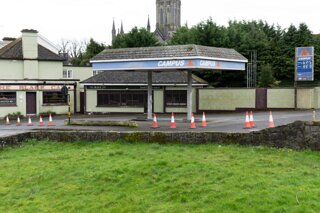
The Black Cat: Located at the corner of Dominic Street and Black Mill Street, this was more than just a pub; it also operated as a service station for decades. Following the death of its long-time owner, Nicholas Cleere, the site has been slated for redevelopment. Plans were lodged to demolish the existing structure to make way for a modern complex of 23 dwelling units, including houses and apartments.
Campions: Situated at 19 Black Mill Street, David Campion’s was a classic neighbourhood pub known for its warm, personal hospitality. It ceased trading around 2018. The "imposing" three-storey detached building and its substantial 0.25-acre site have recently been on the market for approximately €395,000, marketed as a prime development opportunity.
The River and the Mill
The primary river flowing through Kilkenny is the River Nore, but the specific watercourse that defines the Black Mill area is its tributary, the River Breagagh.
The area is named after the Black Mill, which once stood on the banks of the Breagagh. The mill was a vital part of Kilkenny’s industrial history, dating back to at least the 18th century (and likely much earlier, as milling was established in the city by the Normans). The mill pond was eventually filled in during the 1930s, and the site is now largely occupied by the Butts Roundabout.
Today, a sculpture of large gear wheels stands at the Waterbarrack Bridge as a memorial to the machinery and the water-powered industry that once defined the street.
The Black Mill area of Kilkenny, located in the city's historic medieval quarter, has seen significant change in recent years. This quarter, defined by its narrow streets and proximity to the Black Abbey, has transitioned from a hub of neighbourhood commerce to a more residential character.
The Closed Pubs
The decline of the traditional Irish pub has hit Black Mill Street particularly hard, with two prominent family-run establishments closing their doors:
The Black Cat: Located at the corner of Dominic Street and Black Mill Street, this was more than just a pub; it also operated as a service station for decades. Following the death of its long-time owner, Nicholas Cleere, the site has been slated for redevelopment. Plans were lodged to demolish the existing structure to make way for a modern complex of 23 dwelling units, including houses and apartments.
Campions: Situated at 19 Black Mill Street, David Campion’s was a classic neighbourhood pub known for its warm, personal hospitality. It ceased trading around 2018. The "imposing" three-storey detached building and its substantial 0.25-acre site have recently been on the market for approximately €395,000, marketed as a prime development opportunity.
The River and the Mill
The primary river flowing through Kilkenny is the River Nore, but the specific watercourse that defines the Black Mill area is its tributary, the River Breagagh.
The area is named after the Black Mill, which once stood on the banks of the Breagagh. The mill was a vital part of Kilkenny’s industrial history, dating back to at least the 18th century (and likely much earlier, as milling was established in the city by the Normans). The mill pond was eventually filled in during the 1930s, and the site is now largely occupied by the Butts Roundabout.
Today, a sculpture of large gear wheels stands at the Waterbarrack Bridge as a memorial to the machinery and the water-powered industry that once defined the street.
BLACK MILL AREA