MY FEBRUARY 2026 VISITS TO THIS OLD GRAVEYARD
ST PATRICK'S CEMETERY IN KILKENNY [FEATURES FOUR COMMONWEALTH WAR GRAVES]
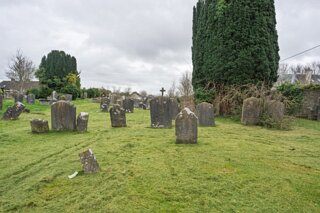
I visited this Cemetery twice during my February 2026. On the first day visit there was a large maintenance crew undertaking a grass cutting operation so I decided to leave and return on the following morning as it would be easier to access the graves.
St Patrick’s Cemetery (often referred to as St Patrick's Graveyard) in Kilkenny is one of the city's most significant historical and religious sites. Located on the outskirts of the medieval city, it serves as a chronicle of Kilkenny’s social and military history, housing burials that date from the medieval era through to the mid-20th century.
Historical Significance
The graveyard is renowned for its large collection of medieval tombs and elaborate 18th-century headstones. It was historically the primary burial ground for several prominent Kilkenny merchant families, including the Archers, Lanigans, Walshes, and Brennan families. One of the most notable features is an altar tomb from 1580 belonging to the Archer family, which displays the family’s coat of arms.
By the early 1900s, the cemetery became the subject of public health inquiries due to overcrowding. This eventually led to the opening of the nearby St Kieran’s Cemetery in 1931, though burials in existing family plots at St Patrick's continued for decades after.
Commonwealth War Graves
St Patrick's Graveyard is officially recognised by the Commonwealth War Graves Commission (CWGC) as the final resting place for soldiers who died during the First World War. While Kilkenny has several sites with military burials (such as Kilkenny New Cemetery and St Canice’s Cathedral), St Patrick’s is specifically noted for the following:
Total Casualties: There are 4 officially recorded Commonwealth burials from the First World War.
Identification: These graves typically feature the iconic white Portland stone headstones or are marked on family memorials. They represent local men who returned from the front only to succumb to wounds or illness (such as the Spanish Flu) shortly after the armistice.
Regiments: The burials include members of the Royal Irish Regiment, which was traditionally headquartered in Kilkenny at the nearby Elizabeth (now Stephens) Barracks.
Notable War Grave Mention
While the CWGC records four official First World War casualties, local military heritage projects have identified additional service members buried within family plots whose deaths were service-related but may not have met the strict CWGC criteria at the time of interment.
I visited this Cemetery twice during my February 2026. On the first day visit there was a large maintenance crew undertaking a grass cutting operation so I decided to leave and return on the following morning as it would be easier to access the graves.
St Patrick’s Cemetery (often referred to as St Patrick's Graveyard) in Kilkenny is one of the city's most significant historical and religious sites. Located on the outskirts of the medieval city, it serves as a chronicle of Kilkenny’s social and military history, housing burials that date from the medieval era through to the mid-20th century.
Historical Significance
The graveyard is renowned for its large collection of medieval tombs and elaborate 18th-century headstones. It was historically the primary burial ground for several prominent Kilkenny merchant families, including the Archers, Lanigans, Walshes, and Brennan families. One of the most notable features is an altar tomb from 1580 belonging to the Archer family, which displays the family’s coat of arms.
By the early 1900s, the cemetery became the subject of public health inquiries due to overcrowding. This eventually led to the opening of the nearby St Kieran’s Cemetery in 1931, though burials in existing family plots at St Patrick's continued for decades after.
Commonwealth War Graves
St Patrick's Graveyard is officially recognised by the Commonwealth War Graves Commission (CWGC) as the final resting place for soldiers who died during the First World War. While Kilkenny has several sites with military burials (such as Kilkenny New Cemetery and St Canice’s Cathedral), St Patrick’s is specifically noted for the following:
Total Casualties: There are 4 officially recorded Commonwealth burials from the First World War.
Identification: These graves typically feature the iconic white Portland stone headstones or are marked on family memorials. They represent local men who returned from the front only to succumb to wounds or illness (such as the Spanish Flu) shortly after the armistice.
Regiments: The burials include members of the Royal Irish Regiment, which was traditionally headquartered in Kilkenny at the nearby Elizabeth (now Stephens) Barracks.
Notable War Grave Mention
While the CWGC records four official First World War casualties, local military heritage projects have identified additional service members buried within family plots whose deaths were service-related but may not have met the strict CWGC criteria at the time of interment.


ST PATRICK'S CEMETERY