THE MOON PROJECT APRIL 2026
A New View of the Moon: Artemis II Captures Historic "Earthset"
The Artemis II mission has officially ushered in a new era of lunar exploration. On April 6, 2026, as the Orion spacecraft Integrity swung around the far side of the Moon, the crew captured a breathtaking perspective of our home world sinking below the lunar horizon.
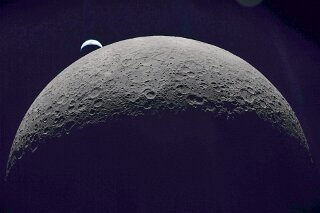
This image, designated NASA ID: art002e009287, serves as a modern successor to the iconic "Earthrise" photo of 1968. It features the Orientale basin perched on the lunar limb, with the concentric rings of the Hertzsprung Basin visible nearby. As Earth sets at 6:41 p.m. EDT, the Australia and Oceania regions are visible on the sunlit side, while the rest of the planet transitions into night.
The Mission: Paving the Way for Humanity’s Return
Artemis II is the first crewed mission of NASA’s Artemis program, marking the first time humans have ventured to the Moon since Apollo 17 in 1972.
The Crew: Commander Reid Wiseman (NASA), Pilot Victor Glover (NASA), Mission Specialist Christina Koch (NASA), and Mission Specialist Jeremy Hansen (CSA).
The Achievement: The mission successfully tested the Space Launch System (SLS) and the Orion spacecraft with a crew on board. During their journey, the crew set a new record for the farthest distance humans have ever traveled from Earth—reaching 252,756 miles.
The Success: Beyond the technical milestones, the mission proved that the Orion life-support systems can sustain a crew for deep-space transit. This success clears the path for Artemis III, which aims to land the first woman and first person of color on the lunar surface.
The Artemis II mission has officially ushered in a new era of lunar exploration. On April 6, 2026, as the Orion spacecraft Integrity swung around the far side of the Moon, the crew captured a breathtaking perspective of our home world sinking below the lunar horizon.
This image, designated NASA ID: art002e009287, serves as a modern successor to the iconic "Earthrise" photo of 1968. It features the Orientale basin perched on the lunar limb, with the concentric rings of the Hertzsprung Basin visible nearby. As Earth sets at 6:41 p.m. EDT, the Australia and Oceania regions are visible on the sunlit side, while the rest of the planet transitions into night.
The Mission: Paving the Way for Humanity’s Return
Artemis II is the first crewed mission of NASA’s Artemis program, marking the first time humans have ventured to the Moon since Apollo 17 in 1972.
The Crew: Commander Reid Wiseman (NASA), Pilot Victor Glover (NASA), Mission Specialist Christina Koch (NASA), and Mission Specialist Jeremy Hansen (CSA).
The Achievement: The mission successfully tested the Space Launch System (SLS) and the Orion spacecraft with a crew on board. During their journey, the crew set a new record for the farthest distance humans have ever traveled from Earth—reaching 252,756 miles.
The Success: Beyond the technical milestones, the mission proved that the Orion life-support systems can sustain a crew for deep-space transit. This success clears the path for Artemis III, which aims to land the first woman and first person of color on the lunar surface.
EARTHRISE IMAGE BY NASA