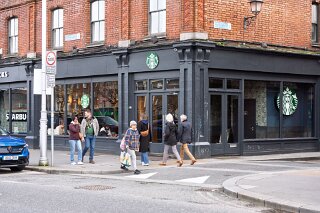
MY FIRST DAY USING THE SONY 50-150mm LENS
DUBLIN CITY QUAYS NORTH AND SOUTH [CITY CENTRE SECTIONS 22 FEBRUARY 2026]
After a trip to Belfast in December 2025, it felt as though the rain simply never stopped. For a street photographer, the persistent grey deluge was a significant setback. However, waking up today to dry skies felt like a rare gift, providing the perfect opportunity to traverse the Liffey and put my new Sony FE 50-150mm f/2 lens through its paces.
With a four-day trip to Kilkenny on the horizon, I have set myself a challenge: I plan to shoot exclusively with this lens. Whether that proves to be a masterstroke or a massive miscalculation remains to be seen, depending entirely on the Irish weather and my ability to handle this particular piece of glass.
The Equipment: A "Super-Prime" Powerhouse
The combination of the Sony Alpha 1 II and the FE 50-150mm f/2 GM represents a "no-compromise" philosophy. Released in late 2024 and mid-2025 respectively, this pairing marries the industry’s most sophisticated 50.1MP stacked sensor with a world-first zoom aperture.
While the A1 II delivers the 30fps speed and high resolution necessary for high-stakes photography, the 50-150mm f/2 GM is the genuine disruptor. As the first telephoto zoom to maintain a constant f/2 aperture throughout its range, it effectively bridges the gap between standard and telephoto focal lengths.
Why Street Photographers are Embracing this "Monster"
Street photography typically favours small, discreet prime lenses, such as a 35mm or 50mm. Opting for a 1.3kg lens that looks like a small white cannon seems counterintuitive, yet photographers are increasingly drawn to it for several strategic reasons:
The "One-Lens" Solution: In fast-paced urban environments, a shot is often lost in the seconds it takes to swap an 85mm for a 135mm. This lens encompasses the "holy trinity" of portrait lengths—50mm, 85mm, and 135mm—within a single barrel.
Cinematic Isolation: At 150mm, the f/2 aperture produces a depth of field so shallow it can isolate a subject from chaotic city backgrounds with a precision that a standard f/2.8 zoom cannot match.
Low-Light Dominance: For nocturnal street photography, that extra stop of light over an f/2.8 lens allows for faster shutter speeds to freeze motion or lower ISO settings for cleaner files—essential for maximising the A1 II’s high-resolution sensor.
The "Professional" Pass: Ironically, while its size attracts attention, it signals "professional" rather than "intruder." In many cities, appearing like a working photojournalist can grant a photographer more social leeway than looking like a hobbyist with a concealed camera.
Performance: Can it Replace Primes?
Early feedback from the photography community has been a blend of awe and physical fatigue. Reviewers describe the sharpness as "disturbingly good," rivaling the 135mm f/1.8 GM even when shot wide open. Furthermore, its four Linear XD motors ensure the autofocus keeps pace with the A1 II’s 120 AF/AE calculations per second without a hitch.
However, the weight is the primary deterrent. At 1,340g and requiring massive 95mm filters, it is a demanding companion for a full day of shooting. While it technically replaces the focal range of 50mm, 85mm, 105mm, and 135mm primes, it cannot fully replicate the ultra-wide f/1.2 "look" or the effortless portability of those smaller lenses.
The Verdict: The "Prime-Killer" Argument
Many professionals are now parting with their 85mm and 135mm primes, concluding that the 50-150mm f/2 is "close enough" in terms of bokeh and vastly superior in versatility. While you sacrifice the light-gathering of an f/1.4, the ability to transition from a standard street scene to a tightly compressed telephoto portrait in half a second is a trade-off many find irresistible.
Note: The lens does not support teleconverters, so 150mm is the hard limit. If your work requires 200mm or more, the 70-200mm f/2.8 GM II remains the more logical—and lighter—choice.
After a trip to Belfast in December 2025, it felt as though the rain simply never stopped. For a street photographer, the persistent grey deluge was a significant setback. However, waking up today to dry skies felt like a rare gift, providing the perfect opportunity to traverse the Liffey and put my new Sony FE 50-150mm f/2 lens through its paces.
With a four-day trip to Kilkenny on the horizon, I have set myself a challenge: I plan to shoot exclusively with this lens. Whether that proves to be a masterstroke or a massive miscalculation remains to be seen, depending entirely on the Irish weather and my ability to handle this particular piece of glass.
The Equipment: A "Super-Prime" Powerhouse
The combination of the Sony Alpha 1 II and the FE 50-150mm f/2 GM represents a "no-compromise" philosophy. Released in late 2024 and mid-2025 respectively, this pairing marries the industry’s most sophisticated 50.1MP stacked sensor with a world-first zoom aperture.
While the A1 II delivers the 30fps speed and high resolution necessary for high-stakes photography, the 50-150mm f/2 GM is the genuine disruptor. As the first telephoto zoom to maintain a constant f/2 aperture throughout its range, it effectively bridges the gap between standard and telephoto focal lengths.
Why Street Photographers are Embracing this "Monster"
Street photography typically favours small, discreet prime lenses, such as a 35mm or 50mm. Opting for a 1.3kg lens that looks like a small white cannon seems counterintuitive, yet photographers are increasingly drawn to it for several strategic reasons:
The "One-Lens" Solution: In fast-paced urban environments, a shot is often lost in the seconds it takes to swap an 85mm for a 135mm. This lens encompasses the "holy trinity" of portrait lengths—50mm, 85mm, and 135mm—within a single barrel.
Cinematic Isolation: At 150mm, the f/2 aperture produces a depth of field so shallow it can isolate a subject from chaotic city backgrounds with a precision that a standard f/2.8 zoom cannot match.
Low-Light Dominance: For nocturnal street photography, that extra stop of light over an f/2.8 lens allows for faster shutter speeds to freeze motion or lower ISO settings for cleaner files—essential for maximising the A1 II’s high-resolution sensor.
The "Professional" Pass: Ironically, while its size attracts attention, it signals "professional" rather than "intruder." In many cities, appearing like a working photojournalist can grant a photographer more social leeway than looking like a hobbyist with a concealed camera.
Performance: Can it Replace Primes?
Early feedback from the photography community has been a blend of awe and physical fatigue. Reviewers describe the sharpness as "disturbingly good," rivaling the 135mm f/1.8 GM even when shot wide open. Furthermore, its four Linear XD motors ensure the autofocus keeps pace with the A1 II’s 120 AF/AE calculations per second without a hitch.
However, the weight is the primary deterrent. At 1,340g and requiring massive 95mm filters, it is a demanding companion for a full day of shooting. While it technically replaces the focal range of 50mm, 85mm, 105mm, and 135mm primes, it cannot fully replicate the ultra-wide f/1.2 "look" or the effortless portability of those smaller lenses.
The Verdict: The "Prime-Killer" Argument
Many professionals are now parting with their 85mm and 135mm primes, concluding that the 50-150mm f/2 is "close enough" in terms of bokeh and vastly superior in versatility. While you sacrifice the light-gathering of an f/1.4, the ability to transition from a standard street scene to a tightly compressed telephoto portrait in half a second is a trade-off many find irresistible.
Note: The lens does not support teleconverters, so 150mm is the hard limit. If your work requires 200mm or more, the 70-200mm f/2.8 GM II remains the more logical—and lighter—choice.
SONY 50-150mm LENS