THIS PHOTO CATALOG WAS REBUILT IN NOVEMBER 2025
The Urban Cartographer has decided to upgrade the photo catalogs and the first one is "Church And Grave" which needed a lot of work as many of the files had become corrupted.
We now geo-tag all photographs and the map feature is now essential but Google started billing us for using Google Maps and the first bill caught us be surprise so we had to find an alternative but we have had to rebuild our catalogues in order the get the mapping to function as expected.
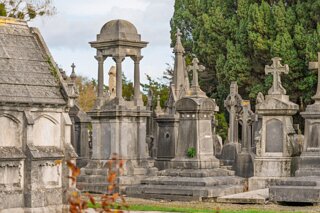
Irish cemeteries are distinct from many others in Europe or North America because they often function as living archaeological sites. Rather than being strictly manicured, modern parks, they are frequently ancient monastic ruins that are still in active use, creating a seamless blend of the medieval and the modern.
Here is a brief description of what makes them unique:
1. The Physical Landscape
Ancient Architecture: It is common to find a modern granite headstone standing just feet away from a 10th-century Round Tower or a medieval church ruin. This physical continuity connects the current community directly to their ancestors from over a millennium ago.
Celtic High Crosses: Instead of standard cruciform shapes, you will often see the Celtic Cross (a cross with a ring surrounding the intersection). Originally used by monks to teach scripture to a non-literate population, they are now an iconic symbol of Irish heritage.
Yew Trees: Many older graveyards feature ancient Yew trees. In Celtic tradition, the Yew represented immortality and regeneration; early Christians adopted this, planting them in churchyards to symbolize the resurrection.
2. Unique Types of Burial Grounds
Cillíní (Little Churches): These are perhaps the most poignant feature of the Irish landscape. Historically, unbaptized infants, suicides, and strangers could not be buried in consecrated ground. They were buried in cillíní—unofficial, often secret burial grounds located in ringforts, field corners, or old ruins. They are usually marked only by simple, unhewn fieldstones.
Famine Plots: Many graveyards have a "Famine corner" or mass grave mounds from the Great Hunger (1845–1852), often unmarked or marked simply with a later commemorative plaque.
3. Distinct Cultural Traditions
Cemetery Sunday (Blessing of the Graves): In Ireland, the cemetery is not a place you visit only for funerals. Once a year (usually in summer), every parish holds "Cemetery Sunday." The entire community gathers to clean family plots, trim the grass, and attend an open-air Mass where the priest blesses the graves. It is a major social event that reinforces community bonds.
The "Month’s Mind": This is a specific Irish Catholic tradition where a Mass and often a meal are held exactly one month after a person’s death. It marks the official end of the immediate, intense mourning period and the transition into "ordinary" life without the deceased.
The "Good Wake": While not physically part of the cemetery, the Irish approach to death is defined by the Wake—traditionally held in the home with the body present. This comfort with mortality translates to the cemetery, which is viewed less as a frightening place and more as a social extension of the parish.
4. The "Lonely Corner"
In many older rural graveyards, you may notice a specific corner that seems separated from the rest. This was traditionally reserved for the "unknowns"—sailors washed ashore, travelers who died while passing through, or the poor who could not afford a plot.
We now geo-tag all photographs and the map feature is now essential but Google started billing us for using Google Maps and the first bill caught us be surprise so we had to find an alternative but we have had to rebuild our catalogues in order the get the mapping to function as expected.
Irish cemeteries are distinct from many others in Europe or North America because they often function as living archaeological sites. Rather than being strictly manicured, modern parks, they are frequently ancient monastic ruins that are still in active use, creating a seamless blend of the medieval and the modern.
Here is a brief description of what makes them unique:
1. The Physical Landscape
Ancient Architecture: It is common to find a modern granite headstone standing just feet away from a 10th-century Round Tower or a medieval church ruin. This physical continuity connects the current community directly to their ancestors from over a millennium ago.
Celtic High Crosses: Instead of standard cruciform shapes, you will often see the Celtic Cross (a cross with a ring surrounding the intersection). Originally used by monks to teach scripture to a non-literate population, they are now an iconic symbol of Irish heritage.
Yew Trees: Many older graveyards feature ancient Yew trees. In Celtic tradition, the Yew represented immortality and regeneration; early Christians adopted this, planting them in churchyards to symbolize the resurrection.
2. Unique Types of Burial Grounds
Cillíní (Little Churches): These are perhaps the most poignant feature of the Irish landscape. Historically, unbaptized infants, suicides, and strangers could not be buried in consecrated ground. They were buried in cillíní—unofficial, often secret burial grounds located in ringforts, field corners, or old ruins. They are usually marked only by simple, unhewn fieldstones.
Famine Plots: Many graveyards have a "Famine corner" or mass grave mounds from the Great Hunger (1845–1852), often unmarked or marked simply with a later commemorative plaque.
3. Distinct Cultural Traditions
Cemetery Sunday (Blessing of the Graves): In Ireland, the cemetery is not a place you visit only for funerals. Once a year (usually in summer), every parish holds "Cemetery Sunday." The entire community gathers to clean family plots, trim the grass, and attend an open-air Mass where the priest blesses the graves. It is a major social event that reinforces community bonds.
The "Month’s Mind": This is a specific Irish Catholic tradition where a Mass and often a meal are held exactly one month after a person’s death. It marks the official end of the immediate, intense mourning period and the transition into "ordinary" life without the deceased.
The "Good Wake": While not physically part of the cemetery, the Irish approach to death is defined by the Wake—traditionally held in the home with the body present. This comfort with mortality translates to the cemetery, which is viewed less as a frightening place and more as a social extension of the parish.
4. The "Lonely Corner"
In many older rural graveyards, you may notice a specific corner that seems separated from the rest. This was traditionally reserved for the "unknowns"—sailors washed ashore, travelers who died while passing through, or the poor who could not afford a plot.
CHURCH AND GRAVE