THE SCREW BOTTLE STOPPER
This was experimental as I decided to see how well my Leica Q3 would perform at night during a named storm.
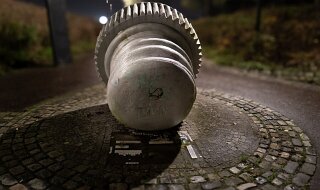
In my photograph, the central subject is a giant sculpture of a vintage vulcanite screw bottle stopper, a design that dates back to the late 19th century.
The Sculpture
The sculpture is a large-scale replica of an internal screw stopper, a device that revolutionised the beverage industry before the ubiquity of the modern metal "crown" cap.
The Original Design: Invented by Henry Barrett in 1872, these stoppers were typically made of vulcanite (a hard, durable rubber). They were designed to screw into a thread moulded directly into the glass neck of the bottle.
Key Features: The sculpture accurately depicts the deep, coarse threads and the distinctive "knurled" or "cog-like" top, which was designed to provide a better grip for wet fingers or heavy machinery during the bottling process.
Cultural Context: In many cities (particularly in the UK and Ireland), these stoppers are common finds for "mudlarks" along riverbeds. They are often embossed with the names of long-defunct local breweries, making them icons of industrial history.
A Giant Secret at the Gasworks: The Art of Belfast’s Industrial Memory
Tucked away under a railway bridge at the entrance to the Gasworks in Belfast stands this peculiar, oversized artefact that demands a second look. At first glance, it appears to be a discarded relic of a bygone bottling plant—a giant bottle top, weathered and worn, resting on the cobbles. However, this is no scrap metal; it is a piece of public art that serves as a playful nod to the city’s industrial social history. It should be mentioned that it is a magnet for anti-social activity.
Playing with Words and Memories
The legend embossed on the sculpture reads "CROMAC SPRING WATER". For those familiar with the history of the Cromac area, the name rings a bell, but the artist is engaging in a clever bit of wordplay.
While there were indeed famous mineral water springs in the Cromac area (most notably associated with Cantrell & Cochrane), the sculpture is actually a linguistic pun. There was never a prominent business specifically called "Cromac Spring Water." Instead, the artist is referencing McWatters’ Bakery, which was a landmark institution on Cromac Street for generations. By splitting the name "McWatters" into "Water" and "Springs" (perhaps a nod to the physical springs of the area), the sculpture bridges the gap between the area’s legendary water sources and its famous daily bread.
The Mystery of the Artist
The sculpture is widely attributed to the artist Mike Hogg. His work often explores the intersection of everyday objects and urban environments, scale-shifting familiar items to force the viewer to reconsider their surroundings. By placing a domestic item—a bottle top—at a scale that rivals the infrastructure of the railway bridge, Hogg highlights the importance of the "small" lives and businesses that built Belfast.
The Digital Ghost: Mornington-Belfast
Embossed within the inner circle of the sculpture is a web address: www.mornington-belfast.com. Today, this URL leads to a dead end in the digital world, but it points to a very real physical and social history.
The address refers to The Mornington Project, a community-based charity and youth centre located nearby on Ormeau Road. The project has long been a pillar of the local community, providing support and services to the people of the Cromac and lower Ormeau areas. The inclusion of the URL on the sculpture serves as a time capsule, marking the era of the sculpture’s creation and its deep connection to the local community organisations of the time.
Why It Matters
Public art like the "Cromac Spring Water" bottle top is vital to the fabric of Belfast. It ensures that as the city modernises—transforming old industrial sites like the Gasworks into sleek business parks—the ghosts of the past aren't entirely erased. It invites passers-by to stop, ponder the pun, and perhaps ask their elders about the smell of fresh bread from McWatters’ or the history of the Cromac springs.
Next time you find yourself walking through the Gasworks, take a moment to look at this "discarded" cap. It isn't just a piece of metal; it’s a tribute to the puns, projects, and people of Belfast.
In my photograph, the central subject is a giant sculpture of a vintage vulcanite screw bottle stopper, a design that dates back to the late 19th century.
The Sculpture
The sculpture is a large-scale replica of an internal screw stopper, a device that revolutionised the beverage industry before the ubiquity of the modern metal "crown" cap.
The Original Design: Invented by Henry Barrett in 1872, these stoppers were typically made of vulcanite (a hard, durable rubber). They were designed to screw into a thread moulded directly into the glass neck of the bottle.
Key Features: The sculpture accurately depicts the deep, coarse threads and the distinctive "knurled" or "cog-like" top, which was designed to provide a better grip for wet fingers or heavy machinery during the bottling process.
Cultural Context: In many cities (particularly in the UK and Ireland), these stoppers are common finds for "mudlarks" along riverbeds. They are often embossed with the names of long-defunct local breweries, making them icons of industrial history.
A Giant Secret at the Gasworks: The Art of Belfast’s Industrial Memory
Tucked away under a railway bridge at the entrance to the Gasworks in Belfast stands this peculiar, oversized artefact that demands a second look. At first glance, it appears to be a discarded relic of a bygone bottling plant—a giant bottle top, weathered and worn, resting on the cobbles. However, this is no scrap metal; it is a piece of public art that serves as a playful nod to the city’s industrial social history. It should be mentioned that it is a magnet for anti-social activity.
Playing with Words and Memories
The legend embossed on the sculpture reads "CROMAC SPRING WATER". For those familiar with the history of the Cromac area, the name rings a bell, but the artist is engaging in a clever bit of wordplay.
While there were indeed famous mineral water springs in the Cromac area (most notably associated with Cantrell & Cochrane), the sculpture is actually a linguistic pun. There was never a prominent business specifically called "Cromac Spring Water." Instead, the artist is referencing McWatters’ Bakery, which was a landmark institution on Cromac Street for generations. By splitting the name "McWatters" into "Water" and "Springs" (perhaps a nod to the physical springs of the area), the sculpture bridges the gap between the area’s legendary water sources and its famous daily bread.
The Mystery of the Artist
The sculpture is widely attributed to the artist Mike Hogg. His work often explores the intersection of everyday objects and urban environments, scale-shifting familiar items to force the viewer to reconsider their surroundings. By placing a domestic item—a bottle top—at a scale that rivals the infrastructure of the railway bridge, Hogg highlights the importance of the "small" lives and businesses that built Belfast.
The Digital Ghost: Mornington-Belfast
Embossed within the inner circle of the sculpture is a web address: www.mornington-belfast.com. Today, this URL leads to a dead end in the digital world, but it points to a very real physical and social history.
The address refers to The Mornington Project, a community-based charity and youth centre located nearby on Ormeau Road. The project has long been a pillar of the local community, providing support and services to the people of the Cromac and lower Ormeau areas. The inclusion of the URL on the sculpture serves as a time capsule, marking the era of the sculpture’s creation and its deep connection to the local community organisations of the time.
Why It Matters
Public art like the "Cromac Spring Water" bottle top is vital to the fabric of Belfast. It ensures that as the city modernises—transforming old industrial sites like the Gasworks into sleek business parks—the ghosts of the past aren't entirely erased. It invites passers-by to stop, ponder the pun, and perhaps ask their elders about the smell of fresh bread from McWatters’ or the history of the Cromac springs.
Next time you find yourself walking through the Gasworks, take a moment to look at this "discarded" cap. It isn't just a piece of metal; it’s a tribute to the puns, projects, and people of Belfast.
THE SCREW BOTTLE STOPPER