HOW NOT TO PHOTOGRAPH THE TITANIC BELFAST
CHASING SHADOWS AND FINDING LIGHT - A STORMY NIGHT AT TITANIC BELFAST [STORM BRAM DECEMBER 2025]
They say the best light often follows the worst weather, but as I stood shivering in the shadow of the Titanic Belfast last night, that adage felt like cold comfort. What began as a challenging photographic expedition into the heart of Belfast's iconic maritime quarter, battling against Storm Bram, ultimately transformed into a lesson in finding beauty and atmosphere amidst unforeseen technical and environmental hurdles.
Battling Storm Bram and Technical Woes
Belfast is a city that wears its maritime history on its sleeve, and the Titanic building—with its shimmering aluminium hulls—is a photographer’s dream. Or at least, it is when the elements aren't actively conspiring against you. My recent attempt to capture this iconic landmark was, to put it bluntly, a wash-out in terms of my initial expectations.
The primary antagonist was Storm Bram. The weather wasn't just "unsettled"; it was aggressive. A day prior, I’d been forced to abandon the Docklands entirely after the gale-force winds grew strong enough to physically knock me and several other tourists off balance. By the time I reached the Titanic Quarter on this particular evening, the conditions had transitioned into a punishing trio of dark, wet, and windy. Long exposures were out of the question; even with a heavy tripod (which I never use), the vibrations from the wind would have rendered every frame a blurred mess.
Adding to the frustration was a classic "rookie" logistical error. I had intended to shoot with my trusty Leica Q3, but in a moment of packing madness, I realised I’d left its spare batteries and charger sitting on a desk miles away. This forced me to rely on my brand-new Fujifilm X100VI. On paper, it’s a magnificent piece of kit. However, it was my first time taking it out for a proper spin, and fumbling with unfamiliar dials and menus in the pitch black while freezing rain lashed my face was far from ideal.
While the technical hurdles of Storm Bram made for a frustrating session, looking back at the frames captured by the Fujifilm X100VI, there is a strong argument that the weather actually lent the images a unique, authentic atmosphere that a clear night might have lacked.
The Beauty in the Bleak
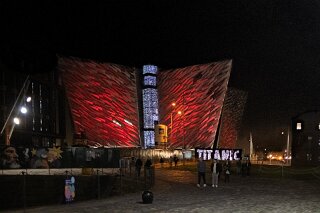
There is a certain raw honesty in the photographs of the Titanic Belfast shimmering under a punishing red light against the pitch-black sky. The harsh weather conditions forced a high-ISO approach that introduced a gritty texture, which, in many ways, mirrors the industrial "heartland" history the museum celebrates.
Atmospheric Successes
Despite the "failures," several elements of the location's mood were successfully preserved:
The Glow of the Hull: The vibrant red illumination against the sharp, angular aluminium facets of the building creates a sense of drama that feels almost cinematic amidst the gloom.
The Festive Contrast: The "TITANIC" sign, draped in delicate white fairy lights, provides a ghostly, ethereal contrast to the heavy, dark surroundings of the Docklands.
The SS Nomadic: Capturing the last remaining White Star Line ship docked nearby, its glowing yellow funnel cutting through the dark, evokes a haunting sense of time and place that a perfectly lit, "clean" shot might have missed.
The silhouette of the "Titanica" statue, arms outstretched against the glowing facade, serves as a metaphor for the entire shoot—resilience in the face of the elements. While the Leica Q3 remained sidelined due to a simple battery oversight, the Fujifilm's output proves that "disappointing" sessions often produce the most evocative storytelling.
The grain, the deep shadows, and the cold light reflecting off the wet pavement don't just show what Titanic Belfast looks like; they show what it feels like to stand in the teeth of a Northern Irish gale.
They say the best light often follows the worst weather, but as I stood shivering in the shadow of the Titanic Belfast last night, that adage felt like cold comfort. What began as a challenging photographic expedition into the heart of Belfast's iconic maritime quarter, battling against Storm Bram, ultimately transformed into a lesson in finding beauty and atmosphere amidst unforeseen technical and environmental hurdles.
Battling Storm Bram and Technical Woes
Belfast is a city that wears its maritime history on its sleeve, and the Titanic building—with its shimmering aluminium hulls—is a photographer’s dream. Or at least, it is when the elements aren't actively conspiring against you. My recent attempt to capture this iconic landmark was, to put it bluntly, a wash-out in terms of my initial expectations.
The primary antagonist was Storm Bram. The weather wasn't just "unsettled"; it was aggressive. A day prior, I’d been forced to abandon the Docklands entirely after the gale-force winds grew strong enough to physically knock me and several other tourists off balance. By the time I reached the Titanic Quarter on this particular evening, the conditions had transitioned into a punishing trio of dark, wet, and windy. Long exposures were out of the question; even with a heavy tripod (which I never use), the vibrations from the wind would have rendered every frame a blurred mess.
Adding to the frustration was a classic "rookie" logistical error. I had intended to shoot with my trusty Leica Q3, but in a moment of packing madness, I realised I’d left its spare batteries and charger sitting on a desk miles away. This forced me to rely on my brand-new Fujifilm X100VI. On paper, it’s a magnificent piece of kit. However, it was my first time taking it out for a proper spin, and fumbling with unfamiliar dials and menus in the pitch black while freezing rain lashed my face was far from ideal.
While the technical hurdles of Storm Bram made for a frustrating session, looking back at the frames captured by the Fujifilm X100VI, there is a strong argument that the weather actually lent the images a unique, authentic atmosphere that a clear night might have lacked.
The Beauty in the Bleak
There is a certain raw honesty in the photographs of the Titanic Belfast shimmering under a punishing red light against the pitch-black sky. The harsh weather conditions forced a high-ISO approach that introduced a gritty texture, which, in many ways, mirrors the industrial "heartland" history the museum celebrates.
Atmospheric Successes
Despite the "failures," several elements of the location's mood were successfully preserved:
The Glow of the Hull: The vibrant red illumination against the sharp, angular aluminium facets of the building creates a sense of drama that feels almost cinematic amidst the gloom.
The Festive Contrast: The "TITANIC" sign, draped in delicate white fairy lights, provides a ghostly, ethereal contrast to the heavy, dark surroundings of the Docklands.
The SS Nomadic: Capturing the last remaining White Star Line ship docked nearby, its glowing yellow funnel cutting through the dark, evokes a haunting sense of time and place that a perfectly lit, "clean" shot might have missed.
The silhouette of the "Titanica" statue, arms outstretched against the glowing facade, serves as a metaphor for the entire shoot—resilience in the face of the elements. While the Leica Q3 remained sidelined due to a simple battery oversight, the Fujifilm's output proves that "disappointing" sessions often produce the most evocative storytelling.
The grain, the deep shadows, and the cold light reflecting off the wet pavement don't just show what Titanic Belfast looks like; they show what it feels like to stand in the teeth of a Northern Irish gale.
TITANIC AT NIGHT