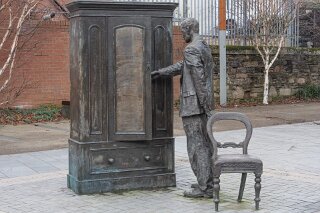
YOU SHOULD EXAMINE THE WARDROBE IN DETAIL
STEPPING INTO THE UNKNOWN - ROSS WILSON'S THE SEARCHER [C.S. LEWIS SQUARE]
If you find yourself wandering through the beating heart of East Belfast, specifically around the revitalised Holywood Arches, you will inevitably stumble upon C.S. Lewis Square. While the square is famous for its fantastical assembly of Narnian creatures, there is one piece of art that stands apart—both in style and in quiet significance.
That piece is 'The Searcher', a bronze masterpiece by Northern Irish artist Ross Wilson.
The Man and the Wardrobe
While the square is populated by the seven striking sculptures of Narnian characters created by Maurice Harron—including a majestic Aslan and a terrifying White Witch—Wilson’s contribution offers a different, more grounded perspective.
Created in 1998 to mark the centenary of C.S. Lewis's birth, The Searcher captures the very moment the magic begins. It depicts the character of Digory Kirke (who appears in The Magician's Nephew and later as the Professor in The Lion, the Witch and the Wardrobe) standing before a wardrobe.
Unlike the whimsical nature of Harron’s figures, Wilson’s sculpture is a study in anticipation. The figure is captured in the act of opening the wardrobe door, inviting the viewer to step into his shoes. It isn't just a statue of a man; it is a representation of the threshold between our world and the boundless imagination of Lewis.
A Piece of History in Holywood Arches
The placement of the sculpture is poignant. C.S. Lewis, known affectionately as 'Jack', was born and bred in East Belfast. The sculpture sits near the Holywood Arches Library, a nod to the literary giant's local roots.
For those visiting the area, it helps to understand the landscape. The Square itself sits at the intersection of the Comber and Connswater Greenways. This area, once dominated by the heavy industry and the massive stone railway arches that gave the neighbourhood its name, has been transformed into a vibrant public plaza. The Searcher acts as an anchor here, reminding locals and tourists alike that ordinary streets can lead to extraordinary worlds.
Visiting the Square
If you are planning a visit, the area is pedestrian-friendly. After paying your respects to The Searcher, you can walk the trail to view Harron’s seven other sculptures. For the photographers among you, the Connswater Community Greenway offers a safe, well-lit, and paved route that connects the Square to Victoria Park. It is a popular spot for walkers and cyclists, making it a comfortable environment to capture the art, though, as with any city exploration, keeping your gear secure is always good practice.
Ross Wilson’s The Searcher asks us to do one thing: look closer. It reminds us that the magic of Narnia didn't start with a lion or a witch; it started with the curiosity to open a door.
1. The Back of the Wardrobe
Most people photograph the front (Digory stepping in). However, Wilson designed the back of the sculpture to be just as important for those who look closely.
The Lion’s Head: There is a lion's head moulded into the back of the wardrobe, symbolising Aslan watching over the entry.
The Letter: Look for a full letter inscribed into the bronze on the rear. It is a reproduction of a real letter C.S. Lewis wrote to a young girl named Anne Jenkins in 1961, explaining the Christian allegory behind the Narnia stories. It’s a fantastic texture for a macro shot.
2. The "Reborn" Inscription
At the feet of the figure, etched into the base, is the inscription:"Born 1898, Reborn 1931". This references Lewis’s conversion to Christianity (which he described as being "surprised by joy") and makes for a poignant detail shot against the texture of the pavement.
3. The Door Handle: Zoom in on the wardrobe door handle. It is often cast with a high level of intricacy, sometimes referencing the apple tree from The Magician's Nephew (the wood from which the wardrobe was made).
4. Other Hidden Details in the Square
If you turn your lens to the other sculptures by Maurice Harron, there are more subtle textures:
The Stone Table: The table is covered in "ancient" runes/writings cracked into the bronze. This is excellent for high-contrast B&W photography.
The Robin: This is the smallest sculpture and easily missed. It is usually perched on a separate plinth or branch near the Beavers. Capturing it requires isolating a very small subject against the busy background of the square.
If you examine Wilson's sculptures you may notice that they are dull rather than polished. The "dull" finish is not due to a different material—it is still bronze—but rather a deliberate artistic choice regarding the patina.
Here is why his sculptures (like The Searcher and The Yardmen) look the way they do:
1. The Patina (The "Finish")
Bronze naturally looks like bright gold when it is first cast. To achieve that dark, matte look, the foundry applies chemicals (often potassium polysulfide) to the heated metal. This oxidises the surface instantly, turning it dark brown or black.
Wilson’s Preference: He generally prefers a dark, matte patina.
The Foundry: Wilson works with Bronze Art, a specialist fine art foundry in Dublin. They are known for these rich, dark finishes that absorb light rather than reflecting it.
2. Artistic Intent: Realism over Heroism
Wilson’s subjects in East Belfast are grounded and "everyday."
Texture of Fabric: The Searcher is wearing a heavy 1919 overcoat; The Yardmen are wearing wool caps and heavy workwear. If these were polished to a high shine, they would look like golden statues. The matte finish mimics the light-absorbing texture of wool, cloth, and leather.
Industrial Grit: For The Yardmen, a shiny finish would look too "clean." The dull, dark bronze better represents the soot and grime of the shipyard environment they are walking home from.
3. Practicality in Belfast Weather
A polished bronze sculpture (like the shiny nose of a "lucky" statue) requires constant buffing. In the damp Belfast climate, bronze naturally wants to return to a dull, dark state (and eventually green/verdigris). By starting with a dark, sealed patina, the sculpture ages more gracefully and requires less aggressive maintenance to keep it looking as the artist intended.
4. Comparison to the Other Sculptures
If you compare Wilson’s work to Maurice Harron’s Aslan in the same square, you will see a difference. Aslan has high points (like the mane) that catch the light more aggressively. Wilson’s work is much more understated, inviting you to look at the form rather than the flash.
If you find yourself wandering through the beating heart of East Belfast, specifically around the revitalised Holywood Arches, you will inevitably stumble upon C.S. Lewis Square. While the square is famous for its fantastical assembly of Narnian creatures, there is one piece of art that stands apart—both in style and in quiet significance.
That piece is 'The Searcher', a bronze masterpiece by Northern Irish artist Ross Wilson.
The Man and the Wardrobe
While the square is populated by the seven striking sculptures of Narnian characters created by Maurice Harron—including a majestic Aslan and a terrifying White Witch—Wilson’s contribution offers a different, more grounded perspective.
Created in 1998 to mark the centenary of C.S. Lewis's birth, The Searcher captures the very moment the magic begins. It depicts the character of Digory Kirke (who appears in The Magician's Nephew and later as the Professor in The Lion, the Witch and the Wardrobe) standing before a wardrobe.
Unlike the whimsical nature of Harron’s figures, Wilson’s sculpture is a study in anticipation. The figure is captured in the act of opening the wardrobe door, inviting the viewer to step into his shoes. It isn't just a statue of a man; it is a representation of the threshold between our world and the boundless imagination of Lewis.
A Piece of History in Holywood Arches
The placement of the sculpture is poignant. C.S. Lewis, known affectionately as 'Jack', was born and bred in East Belfast. The sculpture sits near the Holywood Arches Library, a nod to the literary giant's local roots.
For those visiting the area, it helps to understand the landscape. The Square itself sits at the intersection of the Comber and Connswater Greenways. This area, once dominated by the heavy industry and the massive stone railway arches that gave the neighbourhood its name, has been transformed into a vibrant public plaza. The Searcher acts as an anchor here, reminding locals and tourists alike that ordinary streets can lead to extraordinary worlds.
Visiting the Square
If you are planning a visit, the area is pedestrian-friendly. After paying your respects to The Searcher, you can walk the trail to view Harron’s seven other sculptures. For the photographers among you, the Connswater Community Greenway offers a safe, well-lit, and paved route that connects the Square to Victoria Park. It is a popular spot for walkers and cyclists, making it a comfortable environment to capture the art, though, as with any city exploration, keeping your gear secure is always good practice.
Ross Wilson’s The Searcher asks us to do one thing: look closer. It reminds us that the magic of Narnia didn't start with a lion or a witch; it started with the curiosity to open a door.
1. The Back of the Wardrobe
Most people photograph the front (Digory stepping in). However, Wilson designed the back of the sculpture to be just as important for those who look closely.
The Lion’s Head: There is a lion's head moulded into the back of the wardrobe, symbolising Aslan watching over the entry.
The Letter: Look for a full letter inscribed into the bronze on the rear. It is a reproduction of a real letter C.S. Lewis wrote to a young girl named Anne Jenkins in 1961, explaining the Christian allegory behind the Narnia stories. It’s a fantastic texture for a macro shot.
2. The "Reborn" Inscription
At the feet of the figure, etched into the base, is the inscription:"Born 1898, Reborn 1931". This references Lewis’s conversion to Christianity (which he described as being "surprised by joy") and makes for a poignant detail shot against the texture of the pavement.
3. The Door Handle: Zoom in on the wardrobe door handle. It is often cast with a high level of intricacy, sometimes referencing the apple tree from The Magician's Nephew (the wood from which the wardrobe was made).
4. Other Hidden Details in the Square
If you turn your lens to the other sculptures by Maurice Harron, there are more subtle textures:
The Stone Table: The table is covered in "ancient" runes/writings cracked into the bronze. This is excellent for high-contrast B&W photography.
The Robin: This is the smallest sculpture and easily missed. It is usually perched on a separate plinth or branch near the Beavers. Capturing it requires isolating a very small subject against the busy background of the square.
If you examine Wilson's sculptures you may notice that they are dull rather than polished. The "dull" finish is not due to a different material—it is still bronze—but rather a deliberate artistic choice regarding the patina.
Here is why his sculptures (like The Searcher and The Yardmen) look the way they do:
1. The Patina (The "Finish")
Bronze naturally looks like bright gold when it is first cast. To achieve that dark, matte look, the foundry applies chemicals (often potassium polysulfide) to the heated metal. This oxidises the surface instantly, turning it dark brown or black.
Wilson’s Preference: He generally prefers a dark, matte patina.
The Foundry: Wilson works with Bronze Art, a specialist fine art foundry in Dublin. They are known for these rich, dark finishes that absorb light rather than reflecting it.
2. Artistic Intent: Realism over Heroism
Wilson’s subjects in East Belfast are grounded and "everyday."
Texture of Fabric: The Searcher is wearing a heavy 1919 overcoat; The Yardmen are wearing wool caps and heavy workwear. If these were polished to a high shine, they would look like golden statues. The matte finish mimics the light-absorbing texture of wool, cloth, and leather.
Industrial Grit: For The Yardmen, a shiny finish would look too "clean." The dull, dark bronze better represents the soot and grime of the shipyard environment they are walking home from.
3. Practicality in Belfast Weather
A polished bronze sculpture (like the shiny nose of a "lucky" statue) requires constant buffing. In the damp Belfast climate, bronze naturally wants to return to a dull, dark state (and eventually green/verdigris). By starting with a dark, sealed patina, the sculpture ages more gracefully and requires less aggressive maintenance to keep it looking as the artist intended.
4. Comparison to the Other Sculptures
If you compare Wilson’s work to Maurice Harron’s Aslan in the same square, you will see a difference. Aslan has high points (like the mane) that catch the light more aggressively. Wilson’s work is much more understated, inviting you to look at the form rather than the flash.
ROSS WILSON