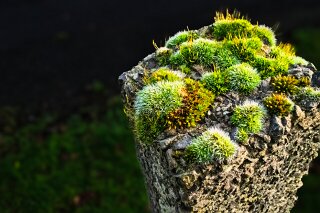
A MICRO LANDSCAPE AT BELFAST CITY CEMETERY
MICRO LANDSCAPE IN BELFAST CITY CEMETERY [DECEMBER 2025]
Miniature Gardens: The Micro-Landscapes of Belfast City Cemetery
When we visit a place like Belfast City Cemetery, our eyes are naturally drawn to the grand gestures: the towering obelisks of the industrial barons, the endless rows of headstones, and the heavy iron of the cemetery gates. But on my last visit, I found myself looking closer—much closer—at the stone itself.
Perched on top of the older gate piers and headstones are entire ecosystems in miniature. These vibrant, rounded cushions of moss are not just random growth; they are a living part of the cemetery's history.
The "Frosted" Survivor
The specific type of moss I photographed is likely Grey-cushioned Grimmia (Grimmia pulvinata). If you look closely at the image, you can see why it is so distinctive: each tiny leaf is tipped with a long, white hair. When the sun hits them, these tips reflect the light, giving the entire cushion a frosted or silvery appearance.
This isn't just for show. These white tips allow the moss to trap morning dew and reflect harsh sunlight, helping it survive on exposed stone surfaces where other plants would wither and die.
A Living Industrial History
While the monuments tell the human history of Belfast, this humble moss tells its environmental history.
In the late 19th and early 20th centuries, Belfast was an industrial powerhouse, and its air was thick with coal smoke and smog. Many sensitive lichens and plants were wiped out by the pollution. However, Grimmia is a tough survivor. It is surprisingly tolerant of urban grime, meaning these little cushions were likely some of the few living things that thrived here during the city's smokiest decades.
It thrives on the limestone and sandstone used in the Victorian monuments, slowly creating what conservationists call a "bio-receptive" surface. As the stone weathers and ages, it becomes a more welcoming home for these spores.
Life on the Stone
There is something poetic about these micro-landscapes. On structures built to mark the end of life, these resilient little gardens have taken hold, turning cold grey stone into a vibrant, living patchwork. It is a reminder that even in a place of mourning, nature quietly continues its work.
Miniature Gardens: The Micro-Landscapes of Belfast City Cemetery
When we visit a place like Belfast City Cemetery, our eyes are naturally drawn to the grand gestures: the towering obelisks of the industrial barons, the endless rows of headstones, and the heavy iron of the cemetery gates. But on my last visit, I found myself looking closer—much closer—at the stone itself.
Perched on top of the older gate piers and headstones are entire ecosystems in miniature. These vibrant, rounded cushions of moss are not just random growth; they are a living part of the cemetery's history.
The "Frosted" Survivor
The specific type of moss I photographed is likely Grey-cushioned Grimmia (Grimmia pulvinata). If you look closely at the image, you can see why it is so distinctive: each tiny leaf is tipped with a long, white hair. When the sun hits them, these tips reflect the light, giving the entire cushion a frosted or silvery appearance.
This isn't just for show. These white tips allow the moss to trap morning dew and reflect harsh sunlight, helping it survive on exposed stone surfaces where other plants would wither and die.
A Living Industrial History
While the monuments tell the human history of Belfast, this humble moss tells its environmental history.
In the late 19th and early 20th centuries, Belfast was an industrial powerhouse, and its air was thick with coal smoke and smog. Many sensitive lichens and plants were wiped out by the pollution. However, Grimmia is a tough survivor. It is surprisingly tolerant of urban grime, meaning these little cushions were likely some of the few living things that thrived here during the city's smokiest decades.
It thrives on the limestone and sandstone used in the Victorian monuments, slowly creating what conservationists call a "bio-receptive" surface. As the stone weathers and ages, it becomes a more welcoming home for these spores.
Life on the Stone
There is something poetic about these micro-landscapes. On structures built to mark the end of life, these resilient little gardens have taken hold, turning cold grey stone into a vibrant, living patchwork. It is a reminder that even in a place of mourning, nature quietly continues its work.
MICRO LANDSCAPE