Apple WWDC 2026
The Urban Cartographer
WWDC 2026 proved that building foundational models is vastly different from building premium hardware. By relying on competitors to power its primary consumer interface and hitting a regulatory brick wall in Europe, Apple's vision of an all-encompassing, private intelligent assistant feels more fragmented than ever. For a large portion of the world, the upgrade to iOS 27 will be defined not by what is added, but by what is missing.
MOBILE FRIENDLY AND MUCH FASTER
GO THERE
THE JUNE 2026 PHOTO GALLERIES
MY INTEL 27 INCH iMAC IS NO LONGER SUPPORTED
Presented By The Urban Cartographer - Photographed
Apple WWDC 2026
Author: The Urban Cartographer
|
08. Jun 2026
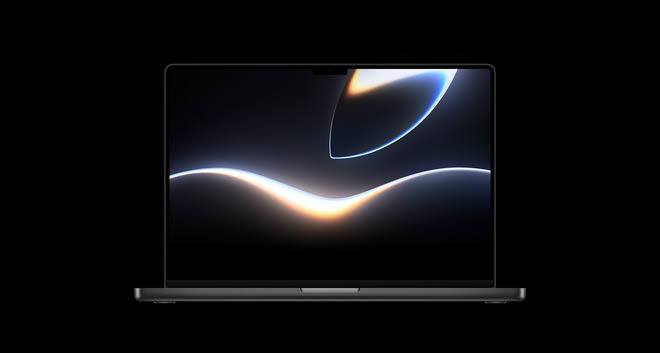
A Review of WWDC 2026 The annual Worldwide Developers Conference (WWDC) keynote is traditionally a marker for where consumer technology is moving over the next twelve months. Yet, stepping away from the 2026 broadcast, the overriding impression is one of a company still struggling to catch up with a narrative that escaped its control two years ago. While Apple presented its next tier of operating systems—including iOS 27 and macOS Golden Gate—the central focus was an undeniable admission that its standalone, on-device AI strategy was not enough. To fix a flagging Siri, Apple has had to look beyond its own walls, resulting in a fractured product experience that European users will not even get to experience on their mobile devices this autumn. The Operating Systems: Refinement Over Revolution The underlying software updates represent what the industry likes to call a "stability pass"—highly reminiscent of the old OS X Snow Leopard era. iOS 27: Following the visual changes of the previous year, this release focuses on performance optimisation, better battery management, and targeted utility. The Camera application receives a welcomed, highly customisable widget bar, and the Photos application introduces smarter framing and canvas extension tools (Extend and Spatial Reframe) designed to fix alignment or aspect ratio issues after a image is captured. macOS Golden Gate (macOS 27): On the desktop, the "Liquid Glass" design language introduced last year has been refined, offering custom opacity sliders to control window tinting. Spotlight index searching is also deeply enhanced, allowing for more precise natural language queries across local file systems. A New Global Search UI: A structural change moves notifications strictly to a top-left swipe on iOS, freeing up the top-centre swipe for a dedicated, typing-first "Search or Ask" panel. This interface acts as a central hub where users can type a query and manually route it to various external engines, including ChatGPT, Claude, and Google Gemini. The Siri Rebuild and the Cloud Problem The headline announcement was Siri AI (internally designated Campo). Apple pitched it as a complete architectural rebuild designed to give the assistant true personal context. In theory, it can scan a user's local data—emails, calendar events, notes, and messages—to stitch together cross-application workflows, such as checking a calendar availability and drafting a precise reply in a single step. However, the technical execution reveals that Apple has yet to fully resolve its core AI bottlenecks.
For years, the company positioned on-device processing and its private cloud infrastructure as the gold standard for security. Yet, to achieve the level of conversational intelligence consumers now expect, Apple has entered a massive cloud-hosting arrangement with Google. Much of Siri AI’s heavy lifting is now explicitly backed by Google Gemini models running on external servers. Labelled an internal "beta" with a slow, waitlisted rollout, this hybrid approach feels less like a seamless ecosystem integration and more like a tactical patch while Apple attempts to build its own proprietary web search and model architecture.
Why Europe Is Left in the Dark
For users operating within the European Union, the actual utility of these announcements is severely diminished. Apple confirmed that Siri AI will be completely unavailable on iOS 27 and iPadOS 27 across the EU at launch. The restriction stems directly from the EU’s Digital Markets Act (DMA). Under the strict interpretation of these regulations, if Apple deeply integrates an advanced virtual assistant into the core architecture of its mobile operating systems, it must provide third-party virtual assistants (such as Google Assistant or Alexa) with the exact same level of low-level system access, screen awareness, and private data hooks. REGULATORY BLOCK: DIGITAL MARKETS ACT (DMA)
Apple's Position: Opening deep on-screen data hooks to third-party assistants poses an unacceptable privacy and security risk.
EU Regulator Position: Complete parity of system access is required to ensure fair market competition against gatekeeper platforms. Because Apple refuses to open these sensitive system pipelines to external developers on privacy grounds, and EU regulators refuse to grant an exemption for proprietary models, a total stalemate has occurred. Interestingly, because macOS, visionOS, and watchOS are not designated as "gatekeeper platforms" under the DMA framework, EU users will be able to access Siri AI on Mac computers and Apple Vision Pro headsets, provided the system language is set to a supported option like English. But for the flagship iPhone experience, the feature is entirely blocked, with no timeline for a resolution. WWDC 2026 proved that building foundational models is vastly different from building premium hardware. By relying on competitors to power its primary consumer interface and hitting a regulatory brick wall in Europe, Apple's vision of an all-encompassing, private intelligent assistant feels more fragmented than ever. For a large portion of the world, the upgrade to iOS 27 will be defined not by what is added, but by what is missing.
The Underwhelming Reality of Apple’s AI Reconstruction:
HIGH RESOLUTION GALLERY
MY INTEL 27 INCH iMAC IS NO LONGER SUPPORTED
LET MISTER SCREEN DIRECT YOU
GLOBAL INDEX OF PHOTO GALLERIES
DUBLIN SOUTHSIDE
THE URBAN CARTOGRAPHER
THE JUNE 2026 PHOTO GALLERIES
Apple WWDC 2026 - Presented By The The Urban Cartographer