The Fitzwilton Hotel As A Huge Canvas For Some Amazing Murals
The Urban Cartographer
An analysis of Shane Sutton’s iconic Spacer murals in Waterford, comparing the rapid 2018 Bridge Street execution with the refined, infrastructure-integrated masterpiece on Slievekeale Road.
MOBILE FRIENDLY AND MUCH FASTER
GO THERE
MORE MURALS BY SHANE SUTTON
SONY A7RIII
Presented By William Murphy - The Urban Cartographer - Sony AI II With Sony Fe 24-105mm Lens Photographed August 2025
The Fitzwilton Hotel As A Huge Canvas For Some Amazing Murals
Author: William Murphy - The Urban Cartographer
|
22. Aug 2026
ONE OF THE MURALS IS STILL INTACT * In The Year 2008
* In The Year 2011
* In The Year 2017
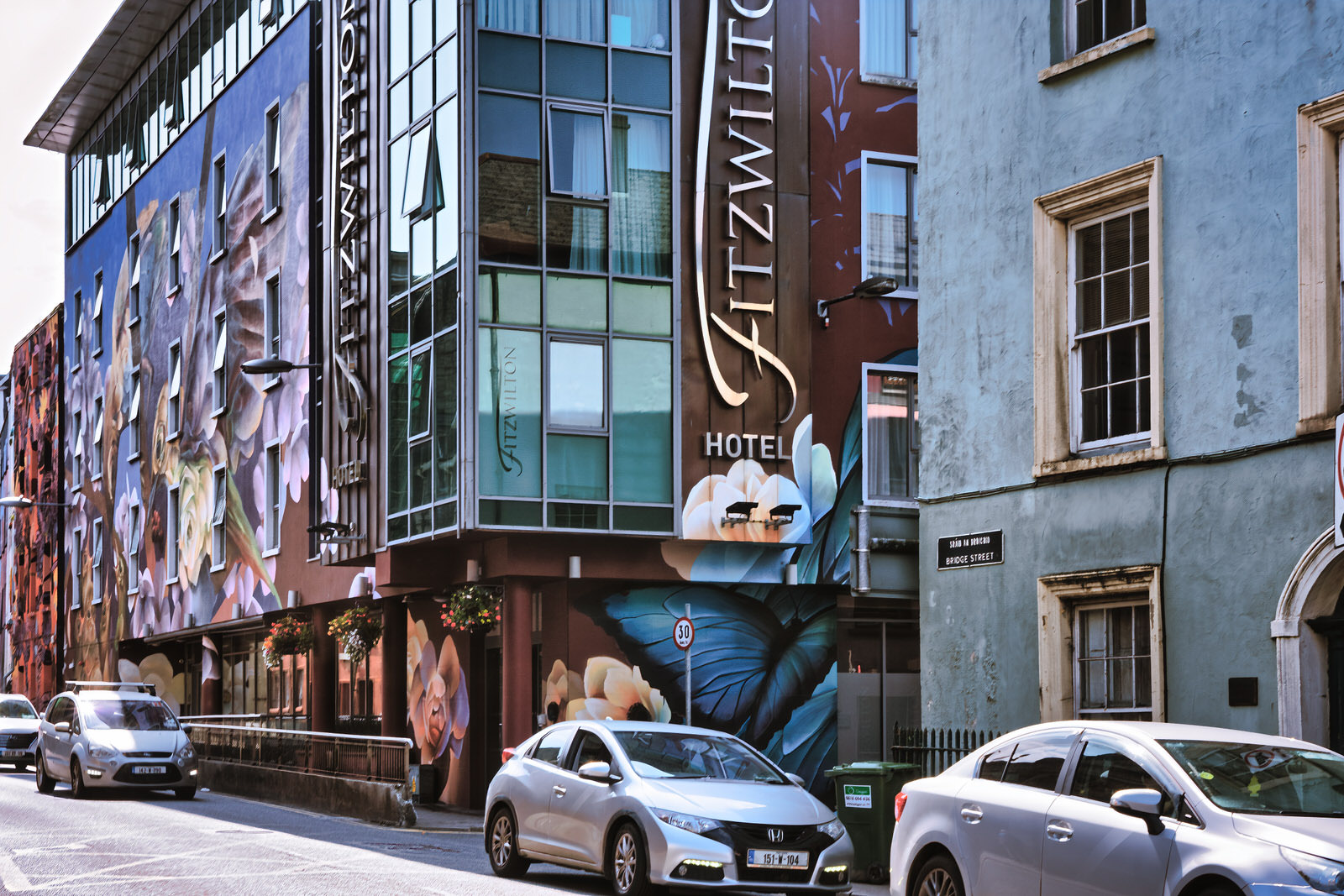
* Henrietta Back In 2010 I used a Sony A1 II and a Sony 24-105mm F4 lens. The Fitzwilton as an Urban Canvas: Architectural Geometry and the Mary Street Murals Long before the Fitzwilton Hotel on Bridge Street became a central fixture of the Waterford Walls international street art festival, its plain, rendered multistory elevations presented a stark, unyielding face to the surrounding streetscape. Offering these expansive surfaces to the festival served a dual purpose: it revitalised an austere building envelope within Waterford's Cultural Quarter and embedded the hotel directly into the city's modern cultural identity, turning private walls into lasting public assets. Rather than presenting a flat facade down a wide thoroughfare, the hotel's rear elevations along Mary Street present an intricate, stepped architectural layout: The Perpendicular Forward Gable: The outermost multistory wall carries Dan Kitchener’s (DANK) striking portrait of a Geisha cradling a butterfly, framed by blossoms and delicate colour washes. This wall sits at a strict right angle to Mary Street, facing directly across a compressed access gap and car park rather than down the open street. The Recessed Nightscape: Set back on the stepped return wall immediately beside it is Kitchener’s classic atmospheric Tokyo night scene, complete with rain-slicked asphalt, glowing vehicle headlamps, and elevated rail structures. The Flanking Elevation: Running parallel to Mary Street is the main multistory hotel facade, adorned with continuous figurative and botanical murals wrapping down to the ground-floor underpass. For documentary photography, this compressed footprint poses severe compositional challenges. With residential buildings and perimeter fencing blocking any true straight-on vantage, viewing the full verticality of Kitchener's dual murals requires walking deep into the narrow corridor. Even with ultra-wide glass, severe upward perspective distortion and keystoning are unavoidable. Securing accommodation during the August festival run highlights significant structural pressures across the city's lodging sector: Shrinking Room Supply: With properties like the Portree Guesthouse withdrawn from the open tourist market to serve alternative state contracts, the pool of central tourist beds has tightened considerably. The Value Paradox: As peak August demand allows budget and mid-tier establishments to inflate rates aggressively, the price gap between basic guesthouses and full-service institutions has all but vanished. Staying at an established heritage property like the Granville Hotel on The Quay offers vastly superior value—delivering consistent service, full amenities, and central convenience for effectively the same outlay demanded by stripped-back alternatives. The transformation of the entire northern/western side of Bridge Street into a continuous open-air gallery was a multi-year urban renewal project. It was executed deliberately across successive editions of Waterford Walls (organised by The Walls Project), backed by Creative Ireland Waterford, Waterford City & County Council, and private building owners. Bridge Street serves as the main vehicular and pedestrian gateway into Waterford when crossing Rice Bridge. Historically, this corridor suffered from visual neglect and dilapidated facades. The strategy to paint the whole street elevation developed in distinct phases rather than all at once: The transformation of the entire northern/western side of Bridge Street into a continuous open-air gallery was a multi-year urban renewal project. It was executed deliberately across successive editions of Waterford Walls (organised by The Walls Project), backed by Creative Ireland Waterford, Waterford City & County Council, and private building owners. Here is the breakdown of the major murals along this continuous terrace: 2018 — The Lower Perimeter Wall (Fitzwilton Hotel: Artist: Shane Sutton (Ireland) Work: Spacer — Sutton’s signature astronaut drifting against dark, cosmic tones, painted along the low boundary perimeter wall bordering the hotel's entrance. 2022 — No. 11 Bridge Street (Residential Facade): Artist: Sophie Mess (UK) Work: Vibrant, large-scale botanical and floral compositions featuring bold orchids and dynamic gradients that wrap the front elevation. 2022 — No. 12 Bridge Street (Apartment Block): Artist: Claire Prouvost (France / Ireland) Work: Expressive, deconstructed cubist-style figurative murals, designed in direct collaboration with the building’s residents following community workshops. 2023 — No. 9 Bridge Street: Artist: George Rose (Australia) Work: Multi-chromatic botanical and gradient floral work, completing the residential sequence between the older terrace and the hotel footprint. 2023 — The Fitzwilton Hotel Main Mary Street / Bridge Street Junction: Artist: Dan Kitchener (DANK) (UK) Work: Dual multistory gable works featuring the luminous Geisha with Butterfly portrait and the recessed Tokyo Rain nightscape. Ground & Lower Perimeter Additions: Botanical and organic embellishments by artists including Curtis Hylton around the underpass and vehicle entry. THE HOTEL AS IT WAS IN MAY 2016
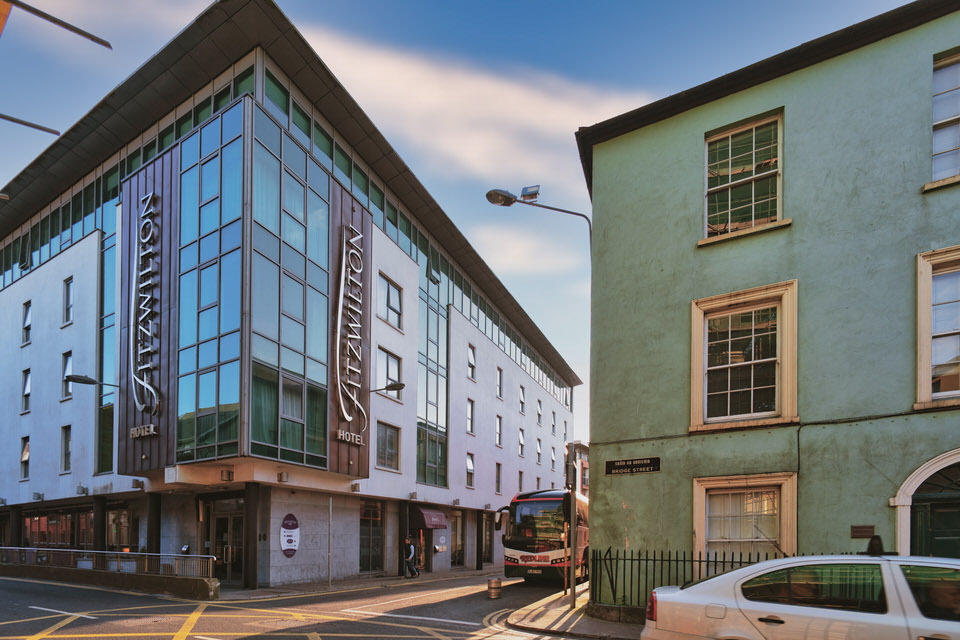
The Fitzwilton Hotel is a purpose-built modern development constructed in 2006 during Ireland’s Celtic Tiger building boom. The Historical Industrial Footprint: The plot where the hotel sits—spanning the corner of Bridge Street and extending back towards Mary Street and Summerhill—formed part of Waterford’s working-class quayside industrial and trade quarter. Historically, this area comprised low-rise brick and stone warehouses, merchant storage, yard enclosures, and light industrial premises that served the busy River Suir shipping docks and the nearby rail approaches. Urban Clearance: By the late 20th and early 2000s, many of these utilitarian dockland structures and older vernacular commercial premises had fallen into disrepair or dereliction. The site was assembled and cleared to make way for a contemporary four-star urban boutique hotel, designed to revitalise the primary northern entrance into the city immediately off Rice Bridge. Ownership and Financial Trajectory The property’s financial history reflects the broader lifecycle of Irish regional hospitality assets over the last two decades: Post-2008 Receivership: Like many high-spec hotel developments built at the peak of the property boom, the hotel ran into debt distress following the 2008 financial crash and was eventually placed into receivership under the National Asset Management Agency (NAMA) era. 2014 Sale & Refinancing: In December 2014, the 89/90-room four-star hotel was brought to the open market with a guide price of around €2 million and subsequently acquired for approximately €3.2 million by private institutional/international property investors (via Strategic Capital Investment Fund / private Austrian investment backing). Management Operations: The hotel was leased and operated under private hospitality management structures, trading successfully as an independent 4-star boutique brand (featuring Chez K's Bistro and the Met Bar Cafe) and positioning itself to capture both corporate traffic and tourists exploring Ireland's Ancient East and the Waterford Greenway. Over recent years, the hotel’s operators and local authorities have sought to address capacity and urban integration: Fifth-Floor Extension Planning: The hotel sought formal planning permission (lodged under planning reference 19409 and appealed to An Bord Pleanála under reference ABP-305863) for the construction of a new fifth-floor extension. This proposal aimed to expand bedroom capacity and capitalise on elevated views over the River Suir and the city skyline. Integration into Waterford's Cultural Quarter: Rather than expanding outwards into the dense street network, the hotel's long-term orientation has focused on upgrading its existing envelope and deepening its ties with the Cultural Quarter regeneration. By partnering with The Walls Project, Creative Ireland, and the local council, the hotel effectively turned its previously blank, austere elevations into permanent public art installations, anchoring the Bridge Street gateway and connecting pedestrian flows directly into O'Connell Street and the heritage district. Annual Earnings International street artists and muralists have highly variable annual incomes depending on their career tier and revenue diversity: Emerging to Mid-Tier Artists: Typically earn between €25,000 and €55,000 per year, largely combining small festival fees, community commissions, private interior jobs, and print sales. Established Global Muralists: Generally earn between €60,000 and €150,000+ per year. Their income stems primarily from high-end corporate facades, commercial brand partnerships, gallery canvas sales, limited-edition screenprints, and private architectural commissions. Revenue Breakdown: Pure street art festivals rarely represent the majority of an artist’s income; instead, they serve as high-profile portfolios that attract lucrative commercial and private clients. Travel & Accommodation Funding For official festival bookings it is standard industry practice for travel, accommodation, and materials to be covered: Flights & Transit: Curators typically provide round-trip flights or train travel, along with airport transfers. Accommodation & Per Diems: Festivals supply local hotel, guest-house, or artist-residency lodging, alongside a daily stipend (per diem) for meals and local expenses. Production & Materials: The host organisation furnishes access equipment (scissor lifts, cherry pickers, scaffolding), primers, aerosol paint, and rollers. Artist Fees / Honorariums: Reputable festivals pay an artist honorarium (commonly ranging from €1,000 to €5,000+ per wall, depending on wall square-footage and artist prestige). In contrast, when artists paint in unsanctioned or fringe spaces like Glass House Lane, work is self-funded—artists use leftover spray cans and personal supplies purely for creative freedom and peer collaboration. Under Irish tax law, the Artists’ Exemption (governed by Section 195 of the Taxes Consolidation Act 1997) permits individuals to earn up to €50,000 per year exempt from Income Tax on profits generated directly from qualifying original and creative works. Whether this applies to street artists depends on residency status, how the work is legally defined, and how the artist is contracted and paid. The €50,000 Cap and Statutory Taxes Income Tax Only: The exemption applies strictly to Income Tax up to the statutory limit of €50,000 per annum. Any creative earnings exceeding €50,000 in a given tax year are taxed at standard marginal rates. USC and PRSI Still Apply: Earnings are not exempt from the Universal Social Charge (USC) or Pay Related Social Insurance (PRSI). Residency Requirement: To qualify for a determination from the Revenue Commissioners, the artist must be tax resident (or ordinarily resident and domiciled) in Ireland, the EU/EEA, or the UK. An international artist visiting temporarily on a tourist visa or short trip cannot claim this relief. Qualifying vs Non-Qualifying Street Art Work To qualify under the visual arts category, Revenue requires the piece to be an "original and creative work" that possesses "cultural or artistic merit" within the definition of "paintings or other like pictures". What Typically Qualifies: Fine-Art Murals and Public Art Commissions: Large-scale original installations and curated festival walls where the artist retains creative freedom and conceptual authorship. Limited-Edition Fine Art Prints: Signed and numbered print editions (strictly capped at 200 copies) derived from street murals or original artwork. Studio Canvases and Original Works: Physical paintings and studio pieces sold via private collectors, exhibitions, or gallery representation. Arts Council Grants and Direct Bursaries: Public funding and stipends awarded specifically to facilitate the production of an original creative work. What Does Not Qualify: Commercial Branding and Advertising: Murals commissioned to promote a corporate brand, commercial product, storefront signage, or marketing campaign. Signwriting and Utilitarian Painting: Decorative, trade-based, or functional exterior painting where the primary purpose is civic maintenance or commercial shopfitting. Hourly Labour or Tradesperson Rates: Standard day-rate services where an artist works under direction without copyright retention or creative autonomy. Commercial Merchandise: Mass-produced apparel, stickers, postcards, non-limited posters, or commercial licensing fees. The Determination Process and Practical Realities Formal Revenue Approval Required: Revenue does not grant automatic tax-exempt status. An artist must submit an application form along with a portfolio, evidence of public exhibition, and testimonials to secure a formal determination for their work. Scrutiny on Urban Murals: Outdoor public art and utility-box projects are assessed carefully. Projects classified as purely decorative, functional, or community-maintenance tasks can be refused if they fail to meet the threshold of standalone artistic or cultural merit. Payment and Invoicing: The exemption applies only to income received by an individual sole trader directly from the qualifying work. It does not apply to fees billed through a limited company or intermediary production agency. Zabou (France) VILE (Portugal) TELMO MIEL (Netherlands) MR CENZ (UK) MR.DHEO (Portugal) Fintan Magee (Australia) Dan Kitchener / DANK (UK) L7MATRIX (France/Brazil) Fio Silva (Argentina) DAN FERRER (Spain) CONSE (Spain) SPEKER (Italy) & SILYME (Italy) NOL (Netherlands) ADOR (France) KMG (Scotland) WRN (Brazil) & MARIE (Brazil) DAN LEO (Ireland) ROB HILKEN (Northern Ireland) SHANE HA (Ireland) RASK (Ireland) SOAK (Ireland) STAYLO (Ireland) MUL (UK/Ireland) OMIM (Ireland), NOVICE (Ireland), RO (Ireland), NIALLOL (Ireland), LAIDBACK (Ireland) EMBER (Ireland), KONE (Ireland), KAROL (Ireland), HMC (Ireland), ANDYMC (Ireland) Ailbhe Larsen (Ireland) * Clontarf Railway Station
* Docklands Railway Station
* Malahide Railway Station Ballybeg Park Mount Sion Avenue Stephen Street Thomas Street O'Connell Street Parnell Street The Forum Hub Multi-Site & Citywide Installations O'Connell Cultural Quarter (O'Connell St / George's St / Gladstone St) The Glen / Ballybricken The Apple Market / Railway Square Millers Marsh / Waterside New Street / Apple Market O'Connell Street & Cultural Quarter Stephen Street / Mayor's Walk The Mall / Waterfront The Glen & Green Street Ballybricken Barrack Street / Mount Sion City Centre & Quays
THE LEGACY CATALOG
A Huge Canvas For Amazing Murals
Waterford’s Changing Accommodation Landscape
How the Bridge Street Transformation Was Organised
Chronological Listing of Bridge Street Murals & Artists
History And Ownership
Future Plans and Structural Proposals
Artist Economics: Earnings & Festival Funding
€50,000 per year exempt from Income Tax
International Artists
Irish & Northern Irish Artists
Photographic Field Strategy
Railway Stations
Examples Of Waterford Walls Murals
Waterford Walls 2025 Locations
Waterford Walls 2024 (10th Anniversary Highlights)
Waterford Walls 2023 Highlights
Waterford Walls 2022 Highlights
HIGH RESOLUTION PHOTOGRAPHS PLUS MAP
SONY A7RIII
LET MISTER SCREEN DIRECT YOU
GLOBAL INDEX OF PHOTO GALLERIES
HENRY MOORE SCULPTURE AT TRINITY
THE URBAN CARTOGRAPHER
MORE MURALS BY SHANE SUTTON
The Fitzwilton Hotel As A Huge Canvas For Some Amazing Murals - Presented By The William Murphy - The Urban Cartographer