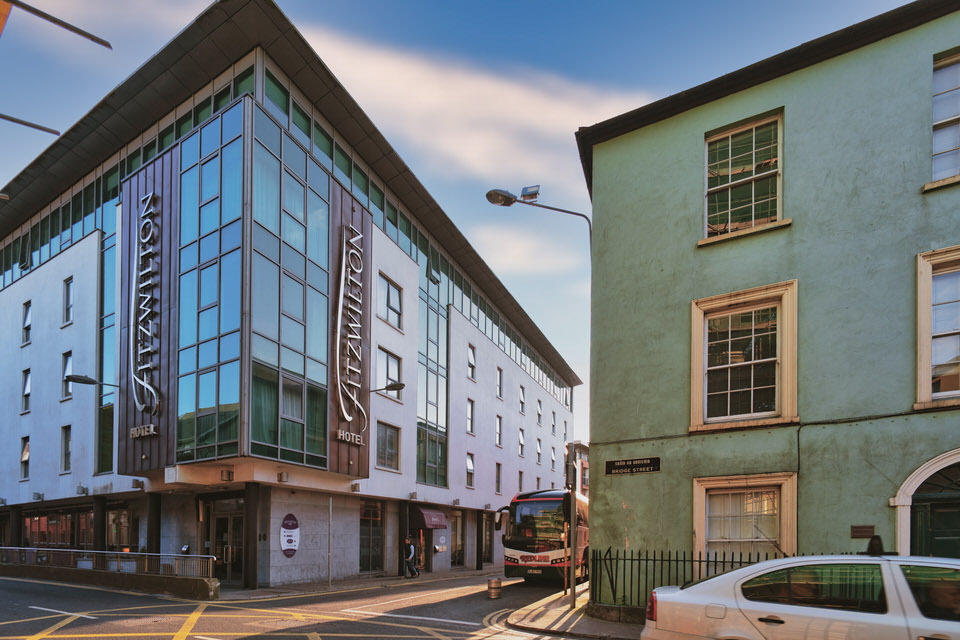
I First Photographed The Fitzwilton Hotel In May 2016
The Urban Cartographer
Securing accommodation during the August festival run highlights significant structural pressures across the city's lodging sector
MOBILE FRIENDLY AND MUCH FASTER
GO THERE
THE RELATED MURALS BY SHANE SUTTON
SONY A7RII
Presented By William Murphy - The Urban Cartographer - Sony A7RII Photographed May 2016
I First Photographed The Fitzwilton Hotel In May 2016
Author: William Murphy - The Urban Cartographer
|
22. Aug 2026
BEFORE THE MURALS * In The Year 2008
* In The Year 2011
* In The Year 2017
* Henrietta Back In 2010 In May 2016 I stayed at the Marina Hotel in Waterford but I did not like the location and had some issues with noise so I decided to see if I could find a more suitable hotel for my 2017 visit to Waterford and got a good deal when I visited the Fitzwilton but had to pay in advance. Anyway I stayed in the Fitzwilton in August 2017 and July 2018. But from then on the timing of Waterford Walls dictated that I needed to visit in August making it difficult to find accommodation and in 2019 and 2021 I had no option but to book at room at the Portree Guesthouse but they are no longer accepting bookings from the general public. For a variety of reasons I was unable to return to Waterford until August 2025 when I stayed at the Granville to which I returned in August 2026. I have booked a room for August 2027. Waterford’s Changing Accommodation Landscape Securing accommodation during the August festival run highlights significant structural pressures across the city's lodging sector: Shrinking Room Supply: With properties like the Portree Guesthouse withdrawn from the open tourist market to serve alternative state contracts, the pool of central tourist beds has tightened considerably. The Value Paradox: As peak August demand allows budget and mid-tier establishments to inflate rates aggressively, the price gap between basic guesthouses and full-service institutions has all but vanished. Staying at an established heritage property like the Granville Hotel on The Quay offers vastly superior value—delivering consistent service, full amenities, and central convenience for effectively the same outlay demanded by stripped-back alternatives. The Fitzwilton Hotel is a purpose-built modern development constructed in 2006 during Ireland’s Celtic Tiger building boom. The Historical Industrial Footprint: The plot where the hotel sits—spanning the corner of Bridge Street and extending back towards Mary Street and Summerhill—formed part of Waterford’s working-class quayside industrial and trade quarter. Historically, this area comprised low-rise brick and stone warehouses, merchant storage, yard enclosures, and light industrial premises that served the busy River Suir shipping docks and the nearby rail approaches. Urban Clearance: By the late 20th and early 2000s, many of these utilitarian dockland structures and older vernacular commercial premises had fallen into disrepair or dereliction. The site was assembled and cleared to make way for a contemporary four-star urban boutique hotel, designed to revitalise the primary northern entrance into the city immediately off Rice Bridge. Ownership and Financial Trajectory The property’s financial history reflects the broader lifecycle of Irish regional hospitality assets over the last two decades: Post-2008 Receivership: Like many high-spec hotel developments built at the peak of the property boom, the hotel ran into debt distress following the 2008 financial crash and was eventually placed into receivership under the National Asset Management Agency (NAMA) era. 2014 Sale & Refinancing: In December 2014, the 89/90-room four-star hotel was brought to the open market with a guide price of around €2 million and subsequently acquired for approximately €3.2 million by private institutional/international property investors (via Strategic Capital Investment Fund / private Austrian investment backing). Management Operations: The hotel was leased and operated under private hospitality management structures, trading successfully as an independent 4-star boutique brand (featuring Chez K's Bistro and the Met Bar Cafe) and positioning itself to capture both corporate traffic and tourists exploring Ireland's Ancient East and the Waterford Greenway. Over recent years, the hotel’s operators and local authorities have sought to address capacity and urban integration: Fifth-Floor Extension Planning: The hotel sought formal planning permission (lodged under planning reference 19409 and appealed to An Bord Pleanála under reference ABP-305863) for the construction of a new fifth-floor extension. This proposal aimed to expand bedroom capacity and capitalise on elevated views over the River Suir and the city skyline. Integration into Waterford's Cultural Quarter: Rather than expanding outwards into the dense street network, the hotel's long-term orientation has focused on upgrading its existing envelope and deepening its ties with the Cultural Quarter regeneration. By partnering with The Walls Project, Creative Ireland, and the local council, the hotel effectively turned its previously blank, austere elevations into permanent public art installations, anchoring the Bridge Street gateway and connecting pedestrian flows directly into O'Connell Street and the heritage district.
THE LEGACY CATALOG
Before The Murals Arrived
History And Ownership
Future Plans and Structural Proposals
Examples Of Waterford Walls Murals
HIGH RESOLUTION PHOTOGRAPHS PLUS MAP
SONY A7RII
LET MISTER SCREEN DIRECT YOU
GLOBAL INDEX OF PHOTO GALLERIES
HENRY MOORE SCULPTURE AT TRINITY
THE URBAN CARTOGRAPHER
THE RELATED MURALS BY SHANE SUTTON
I First Photographed The Fitzwilton Hotel In May 2016 - Presented By The William Murphy - The Urban Cartographer