An Ugly Sculpture In Kilkenny
Select Image Below To Visit The Photo Gallery: An Ugly Sculpture In Kilkenny
Photographed By William Murphy - Select Image To View Photographs
___
SCULPTURE BY DICK JOYNT
___
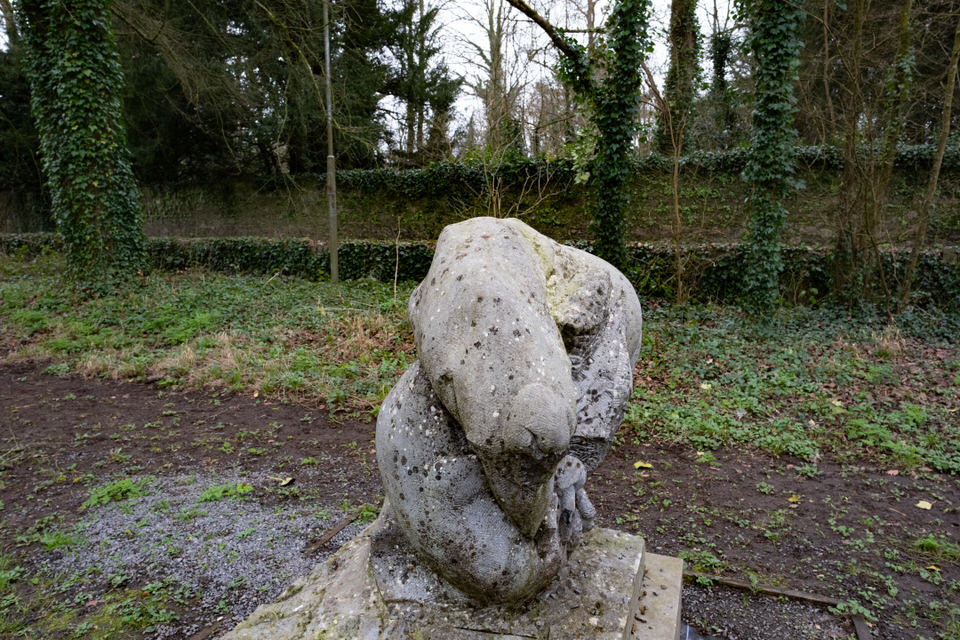
On the canal walk in Kilkenny there is what could be a sculpture that I have tried to identify but failed. This week I asked many locals and most claimed that they had never really noticed - one lady said that it was the most ugly "yoke" that she ever saw. On my return home to Dublin I decide to search if anyone online has ever referred to the "yoke" in Kilkenny - it was a long shot but much to my surprise I managed to actually identify the artist.
___
___
That "yoke" is actually a very significant piece of Kilkenny’s public art history, though it definitely has a "love it or hate it" reputation.
The sculpture is titled "The Ram" and was created by the renowned Irish sculptor Dick Joynt (1938–2003).
What You Are Looking At?
The sculpture is carved from Kilkenny Limestone (often called "black marble"). It is a highly stylised, semi-abstract representation of a ram. The Form: If you look at it from the side (as in your closer photos), the large, curved "yoke" at the top represents the animal's massive, heavy horns curling over.
The Texture: Joynt was known for his "direct carving" method, where he would work with the natural shape and grain of the stone, often leaving rough-hewn textures to contrast with polished surfaces.
Why it's There
Dick Joynt’s work is found all over Ireland—most notably his "Great Light" sculpture at the Custom House Docks in Dublin. This piece was part of a series of sculptures commissioned or placed to celebrate local materials and traditional agricultural themes, though its abstract nature means many walkers pass it by thinking it's just a strangely shaped rock.
"The Most Ugly Yoke" The old lady was not alone in her assessment! The sculpture has been a point of conversation for years. Because it is weathered and lacks a highly visible plaque, it often blends into the background of the Canal Walk. Its hunched, heavy appearance can feel a bit "lumpy" to the untrained eye, but in the art world, it’s considered a prime example of 20th-century Irish stone carving.
What is a Yoke?
The Literal Translation
In standard English, a "yoke" is a wooden beam used between two animals to pull a plow. In Ireland, we almost never mean that.
In the Irish context, "yoke" is a placeholder name for any physical object. It is the ultimate "thingamajig" or "doohickey."
When to Use It
You use "yoke" when you have forgotten the actual name of an object, or when the object is so strange/convoluted that it doesn't deserve a proper name.
The Remote Control: "Pass me that yoke for the telly."
A Complicated Machine: "How does this yoke even work?"
An Unidentified Object: "What is that yoke on the counter?"
The "Person" Exception
While usually reserved for objects, "yoke" can describe a person, often with a hint of skepticism or pity.
"I saw him out with some yoke in a tracksuit." In this case, it implies the person is a bit of a character or perhaps someone the speaker doesn't quite approve of.
Important Cultural Note: The "Other" Yoke
In certain nightlife contexts (festivals, clubs), "yoke" is also common slang for an ecstasy pill. If someone asks, "Do you have any yokes?" at 3:00 AM in a club, they aren't looking for a TV remote. Context is everything!
___
___
Saint Canices Cathedral In Kilkenny
Photographed By William Murphy - Select Image To View Photographs
___
CHURCH OF IRELAND
___
Perched upon a hill in the "Irishtown" district, St. Canice’s Cathedral and Round Tower form the ecclesiastical heart of Kilkenny. Named after St. Canice (Cainneach), who founded a monastic settlement here in the 6th century, the site has been a centre of worship for nearly 1,500 years.
___
___
The Cathedral: A Gothic Masterpiece
The current structure, built primarily between 1202 and 1285, is the second-longest cathedral in Ireland. It is a stunning example of the Early English Gothic style, constructed from local limestone and "Kilkenny Black Marble."
Architectural Features: The cathedral is cruciform in shape with a low central tower. Despite historical turmoil—including the collapse of its original tower in 1332 and desecration by Cromwell’s forces in 1650—it has retained much of its medieval character.
St. Kieran’s Chair: Inside the North Transept sits an ancient stone throne dating to at least the 12th century. To this day, it is used for the enthronement of the Bishops of Ossory.
The East Window: The original 14th-century stained glass was destroyed by Cromwell. The current window is a meticulous 19th-century replica based on drawings made by the Papal Nuncio, Rinuccini, shortly before the original's destruction.
The Round Tower: A Silent Sentinel
The 9th-century Round Tower is the oldest standing structure in Kilkenny. Standing at 30 metres (100 ft) tall, it originally served as a bell tower and a place of refuge during Viking raids.
The Climb: It is one of only two medieval round towers in Ireland that the public can still climb.
The View: After ascending a series of seven steep internal ladders (121 steps), visitors are rewarded with a panoramic view of the medieval city.
Unique State: Unlike most round towers, it lacks its original conical cap, which was replaced by a parapet that allows for safer viewing.
The Graveyards and Notable Monuments
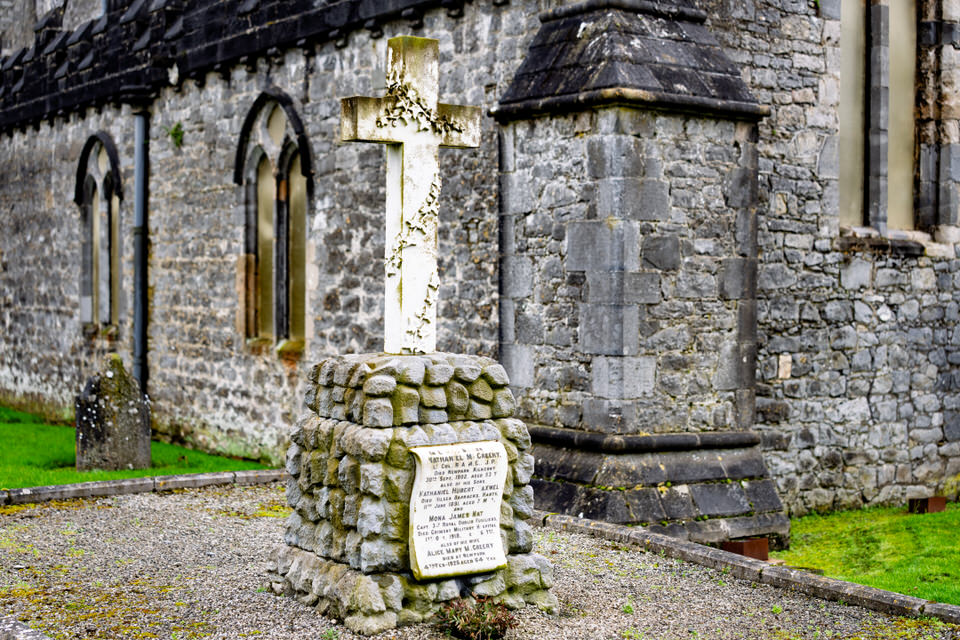
The grounds and the cathedral interior house one of the most significant collections of sepulchral monuments in Ireland. The transition from the interior "aristocratic" tombs to the exterior "merchant" graves provides a fascinating social history of Kilkenny.
Interior Effigies
Inside the cathedral, the floors and walls are lined with effigial tombs, many carved by the famous 16th-century sculptor Rory O’Tunney.
The Butler Dynasty: Numerous tombs belong to the powerful Butler family (Earls of Ormonde), including the famous "Red Piers" Butler and his wife, Margaret Fitzgerald.
The "Unknown Lady": A 16th-century effigy of a woman dressed in a religious habit, believed by some to be the "notorious" Abbess Elicia Butler.
The Kytler Connection: Look for the grave slab associated with the family of Alice Kyteler, the first woman in Ireland to be accused of witchcraft in 1324.
The Exterior Graveyard
The external graveyard contains thousands of burials, with the oldest legible stones dating back to the 17th century.
Tradesmen’s Symbols: Many 18th-century headstones feature folk-art carvings of the tools of the deceased’s trade—look for the shears of a clothier, the hammer of a smith, or the compass of a mason.
The "Vicar’s Choral": The graveyard is flanked by the original Cathedral Close buildings, including the 17th-century library and the Bishop’s Palace (now the Heritage Council HQ).
Vignoles' Improvement: In the 1840s, Dean Vignoles lowered the ground level of the graveyard, which had risen so high from centuries of burials that it was nearly blocking the cathedral windows.
___
___
{{item.url}}
{{item.title}}
{{item.body}}