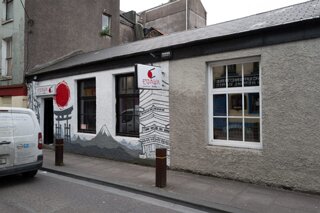
EGAWA SUSHI 18 KYLE STREET [CORK CITY APRIL 2026]
The emergence of Egawa Sushi on Kyle Street reflects a specific and fascinating chapter in Cork’s evolving food scene—one that blends historical urban grit with a modern, international fusion that differs noticeably from the Dublin experience.
Egawa Sushi & 18 Kyle Street
The Business: Egawa Sushi is a relatively new addition to the city, having opened around 2024. While the name sounds classically Japanese, the menu reveals a distinct Brazilian-Japanese fusion style. You will notice "Hot Rolls" (deep-fried sushi) and the heavy use of cream cheese and fruit—hallmarks of the "Sushiman" culture that exploded in São Paulo (home to the world's largest Japanese community outside Japan) and has recently migrated to Ireland. The restaurant occupies the site previously held by Golden Bites, a Brazilian snack bar, maintaining that community link.
The Building & Street: Kyle Street itself is one of the older arteries in the "Marsh" area of the city, located just off North Main Street. Historically, this area was outside the original medieval walls and was prone to flooding before being drained and developed in the 18th and 19th centuries. The building at 18 Kyle Street is a surviving example of Cork's mid-19th-century industrial architecture. It is a gable-fronted warehouse structure built approximately between 1840 and 1860. For much of its life, it served the wholesale and shipping trades centered around the nearby Coal Quay and Cornmarket Street. Its transition from a Victorian warehouse to a Brazilian-run Japanese sushi bar is a perfect microcosm of Cork’s urban regeneration.
The Arrival of Sushi in Cork
Sushi’s arrival in Cork was slower than in Dublin, but arguably more impactful due to the city’s compact nature.
The Early Wave: For years, sushi was a "side dish" in generic Asian fusion spots.
The Miyazaki Effect: The true "Sushi Revolution" in Cork began around 2015 with Takashi Miyazaki. He opened Miyazaki at the bottom of Barrack Street, followed by the Michelin-starred Ichigo Ichie. He effectively educated the Cork palate, moving it away from "supermarket sushi" toward authentic kappou and kaiseki styles.
The Market Influence: Maki Sushi Rolls in the English Market also played a vital role, making sushi a "grab-and-go" lunchtime staple for locals using fresh fish from the neighbouring stalls like K. O'Connell's.
Ownership & Staffing: Cork vs. Dublin
Ownership Trends: Across Ireland, many "Japanese" restaurants are indeed owned by Chinese or Korean entrepreneurs. This is a global phenomenon where the "sushi" brand is used as a high-value label for Asian dining. However, in Cork, there is a growing third category: Brazilian ownership. Because of the massive Brazilian community in Cork (and their cultural affinity for sushi), spots like Egawa are often Brazilian-owned and operated, providing a "Latin" twist on Japanese techniques.
The Malaysian Presence: A significant Malaysian presence in the hospitality sector in Cork. This is often linked to historical ties between Irish medical/engineering colleges and Malaysia (Cork’s UCC has a long-standing relationship with Malaysian students).
In Dublin: The Asian workforce is more fragmented among Chinese, Indian, and Filipino communities.
In Cork: A "chain migration" effect often occurs in smaller cities. Once a few Malaysian families established successful businesses (like the well-known Sambal or Koto influences), they tended to hire from within their own community or student network. This created a more concentrated and visible Malaysian presence in Cork’s Asian restaurants compared to the broader mix found in the capital.
The Rise of Tucano and the Brazilian Connection
The Tucano Group has emerged as a significant player in the Irish food and beverage sector, specifically within the "Sushiman" tradition. This culinary style originated in the Japanese-Brazilian diaspora of São Paulo and is characterised by a creative, fusion-heavy approach to sushi—often featuring cream cheese, fruit, and tempura finishes.
The acquisition of established venues such as Eatokyo and The Hungry Mexican demonstrates a strategy of horizontal integration. By taking over popular spots in the Capel Street and Aston Quay areas, the group leverages existing local footfall while subtly infusing these kitchens with the efficiency and stylistic flair of the Brazilian-Japanese model.
Cultural Demographics and the Staffing Shift
The observation regarding the staffing of Asian restaurants in Cork versus Dublin highlights a distinct regional trend:
Cork’s Malaysian Influence: The concentration of Malaysian staff in Cork is largely a result of established educational links, particularly at University College Cork (UCC). The city’s smaller size fosters a "chain migration" effect, where recruitment often stays within the community that first established successful local hubs like Sambal or Koto.
The Dublin Mosaic: In Dublin, the labour market is more fragmented. While Malaysian professionals are present, the sheer scale of the city draws a wider mix of Brazilian, Filipino, and South Asian staff. The Brazilian influence is particularly dominant in Dublin's sushi scene because the city serves as the primary European hub for Brazilian students and young professionals.
The Ownership Question
It is increasingly common for "Japanese" or "Mexican" restaurants in Ireland to be owned by non-nationals of those specific countries.
The "Global Brand" Effect: Sushi is often treated as a global premium brand. In the past, this was predominantly managed by Chinese or Korean entrepreneurs.
The Brazilian Wave: Today, a significant portion of new sushi ventures is Brazilian-led. This is not a case of "imitation" but rather the export of a specific, high-energy dining culture that has been a staple in Brazil for decades.
Egawa Sushi & 18 Kyle Street
The Business: Egawa Sushi is a relatively new addition to the city, having opened around 2024. While the name sounds classically Japanese, the menu reveals a distinct Brazilian-Japanese fusion style. You will notice "Hot Rolls" (deep-fried sushi) and the heavy use of cream cheese and fruit—hallmarks of the "Sushiman" culture that exploded in São Paulo (home to the world's largest Japanese community outside Japan) and has recently migrated to Ireland. The restaurant occupies the site previously held by Golden Bites, a Brazilian snack bar, maintaining that community link.
The Building & Street: Kyle Street itself is one of the older arteries in the "Marsh" area of the city, located just off North Main Street. Historically, this area was outside the original medieval walls and was prone to flooding before being drained and developed in the 18th and 19th centuries. The building at 18 Kyle Street is a surviving example of Cork's mid-19th-century industrial architecture. It is a gable-fronted warehouse structure built approximately between 1840 and 1860. For much of its life, it served the wholesale and shipping trades centered around the nearby Coal Quay and Cornmarket Street. Its transition from a Victorian warehouse to a Brazilian-run Japanese sushi bar is a perfect microcosm of Cork’s urban regeneration.
The Arrival of Sushi in Cork
Sushi’s arrival in Cork was slower than in Dublin, but arguably more impactful due to the city’s compact nature.
The Early Wave: For years, sushi was a "side dish" in generic Asian fusion spots.
The Miyazaki Effect: The true "Sushi Revolution" in Cork began around 2015 with Takashi Miyazaki. He opened Miyazaki at the bottom of Barrack Street, followed by the Michelin-starred Ichigo Ichie. He effectively educated the Cork palate, moving it away from "supermarket sushi" toward authentic kappou and kaiseki styles.
The Market Influence: Maki Sushi Rolls in the English Market also played a vital role, making sushi a "grab-and-go" lunchtime staple for locals using fresh fish from the neighbouring stalls like K. O'Connell's.
Ownership & Staffing: Cork vs. Dublin
Ownership Trends: Across Ireland, many "Japanese" restaurants are indeed owned by Chinese or Korean entrepreneurs. This is a global phenomenon where the "sushi" brand is used as a high-value label for Asian dining. However, in Cork, there is a growing third category: Brazilian ownership. Because of the massive Brazilian community in Cork (and their cultural affinity for sushi), spots like Egawa are often Brazilian-owned and operated, providing a "Latin" twist on Japanese techniques.
The Malaysian Presence: A significant Malaysian presence in the hospitality sector in Cork. This is often linked to historical ties between Irish medical/engineering colleges and Malaysia (Cork’s UCC has a long-standing relationship with Malaysian students).
In Dublin: The Asian workforce is more fragmented among Chinese, Indian, and Filipino communities.
In Cork: A "chain migration" effect often occurs in smaller cities. Once a few Malaysian families established successful businesses (like the well-known Sambal or Koto influences), they tended to hire from within their own community or student network. This created a more concentrated and visible Malaysian presence in Cork’s Asian restaurants compared to the broader mix found in the capital.
The Rise of Tucano and the Brazilian Connection
The Tucano Group has emerged as a significant player in the Irish food and beverage sector, specifically within the "Sushiman" tradition. This culinary style originated in the Japanese-Brazilian diaspora of São Paulo and is characterised by a creative, fusion-heavy approach to sushi—often featuring cream cheese, fruit, and tempura finishes.
The acquisition of established venues such as Eatokyo and The Hungry Mexican demonstrates a strategy of horizontal integration. By taking over popular spots in the Capel Street and Aston Quay areas, the group leverages existing local footfall while subtly infusing these kitchens with the efficiency and stylistic flair of the Brazilian-Japanese model.
Cultural Demographics and the Staffing Shift
The observation regarding the staffing of Asian restaurants in Cork versus Dublin highlights a distinct regional trend:
Cork’s Malaysian Influence: The concentration of Malaysian staff in Cork is largely a result of established educational links, particularly at University College Cork (UCC). The city’s smaller size fosters a "chain migration" effect, where recruitment often stays within the community that first established successful local hubs like Sambal or Koto.
The Dublin Mosaic: In Dublin, the labour market is more fragmented. While Malaysian professionals are present, the sheer scale of the city draws a wider mix of Brazilian, Filipino, and South Asian staff. The Brazilian influence is particularly dominant in Dublin's sushi scene because the city serves as the primary European hub for Brazilian students and young professionals.
The Ownership Question
It is increasingly common for "Japanese" or "Mexican" restaurants in Ireland to be owned by non-nationals of those specific countries.
The "Global Brand" Effect: Sushi is often treated as a global premium brand. In the past, this was predominantly managed by Chinese or Korean entrepreneurs.
The Brazilian Wave: Today, a significant portion of new sushi ventures is Brazilian-led. This is not a case of "imitation" but rather the export of a specific, high-energy dining culture that has been a staple in Brazil for decades.

EGAWA SUSHI 18 KYLE STREET