URBAN CARTOGRAPHER

MY 2026 VISIT TO GALWAY

GALWAY PHOTO COLLECTIONS
HOME

OPTIONS

MY 2026 VISIT TO GALWAY

It has been seven years since my last visit to Galway. The primary deterrent has been the escalating cost of accommodation, coupled with the frustrating trend of hotels demanding full payment upfront without a clear refund policy. However, I recently stumbled upon an excellent four-night offer at the Imperial Hotel on Eyre Square for Holy Week.

Given that my previous visits—even in the peak months of May and August—were defined by relentless rain, booking for April felt like a significant gamble. As it turned out, the weather held reasonably well, with the exception of a washout on Thursday that limited my photography to a mere three-hour window in the morning. Despite the unpredictable skies, I was struck by how vibrant the city was; Eyre Square was teeming with a bustling mix of domestic and international tourists.

A Legacy on Eyre Square: The History of the Imperial Hotel

The Imperial Hotel is not merely a place to stay; it is a cornerstone of Galway’s social fabric. Situated on the north side of Eyre Square, the building’s history is inextricably linked to the development of the city as a major Western hub.

Origins and Architecture

The structure dates back to the early 19th century. Originally, the site housed townhouse-style residences before being converted into a coaching inn. Its location was strategic, serving as the primary arrival point for travellers entering the "City of the Tribes" from the east.

The Mid-19th Century Boom

During the mid-1800s, the hotel gained prominence as a high-society meeting point. It was frequently used by the landed gentry and "merchant princes" of Galway for political meetings and civic banquets. Its architecture, featuring classic proportions and large windows overlooking the square, reflected the prestige of its clientele.

Modern Transformation

While the interior has been modernised to meet 21st-century standards, the hotel has carefully preserved its historic façade. It remains one of the few family-owned and operated large hotels in the city centre. Over the decades, it has hosted famous literary figures and political leaders, cementing its reputation as the "Grand Dame" of Eyre Square.

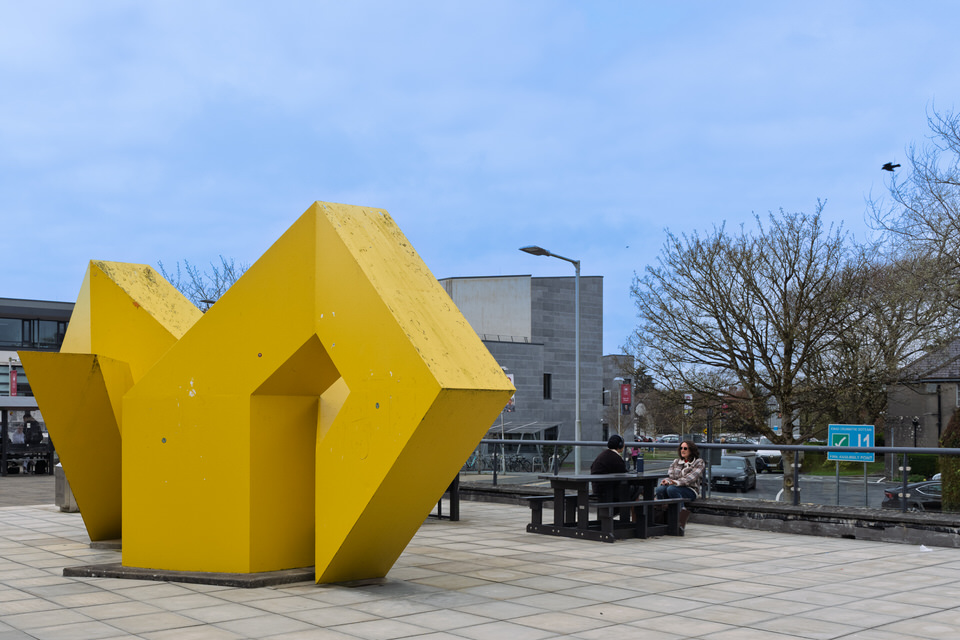
BIG YELLOW METAL SCULPTURE BY BRIAN KING

I photographed this on a very wet and windy day in April 2026 and in previously in 2016

Sculpture By Brian King April 2026

The Yellow Yoke: A Study in Irish Public Art

Across the towns and villages of Ireland, a familiar sight often holds court at the center of the local roundabout: the ubiquitous abstract metal sculpture. For many, these installations eventually blend into the background, earning the affectionate—if slightly dismissive—moniker of the "red metal yoke." In the Irish vernacular, a "yoke" is any nondescript object, and the sheer prevalence of a certain primary-red shade has turned these sculptures into a national archetype of public art.

A Defiant Splash of Color

In Galway, however, the script is flipped. Our "yoke" is not red; it is defiantly, unmissably yellow.

Known by a spectrum of names—ranging from the pragmatic "BYT" (The Big Yellow Thing) to the more imaginative student nickname, "Archimedes’ Balls"—the sculpture on the University of Galway campus bears the official title Galway Yellow. Created by the notable Irish sculptor Brian King, it was presented to the University in 1976 by P.J. Carroll & Co. Ltd. in conjunction with the Arts Council.

More Than Just a Landmark

For a student rushing past on a damp Tuesday morning, it is easy to dismiss the structure as just another piece of abstract clutter—"that yellow yoke on campus." Yet, this casual perception belies its true cultural weight.

While it might surprise daily commuters, the Galway City Council has officially placed the sculpture on its list of protected structures. This designation underscores a value that transcends immediate aesthetics:

A Snapshot of Modernism: Galway Yellow is a vital artifact of the 1970s, a period of intense creative and cultural evolution in Ireland.

Artistic Pedigree: As a representative example of Brian King’s early career, it serves as a potent symbol of the "modern" Irish art movement.

Historical Context: Its value lies not just in its geometric form, but in what it represents about Ireland's mid-century shift toward avant-garde public expression.

Not Your Average Yoke

This brings us back to that intentional choice of color. In a national landscape populated by generic red metal yokes, Galway Yellow makes a quiet, sculptural protest. It refuses to be the archetype. While it remains a "yoke" in the fond, familiar Irish sense, it is pointedly—and importantly—not the red one. It is our yellow one: a bright, humorous departure from the norm.

Ultimately, Brian King’s work is woven into the very fabric of the university and the city. It is a protected piece of Irish art history that reminds us, with a characteristically Galwegian dash of humor, that not all yokes are created equal. Some, thankfully, are yellow.


MORE PHOTOGRAPHS

LORD HAW HAW IS BURIED HERE

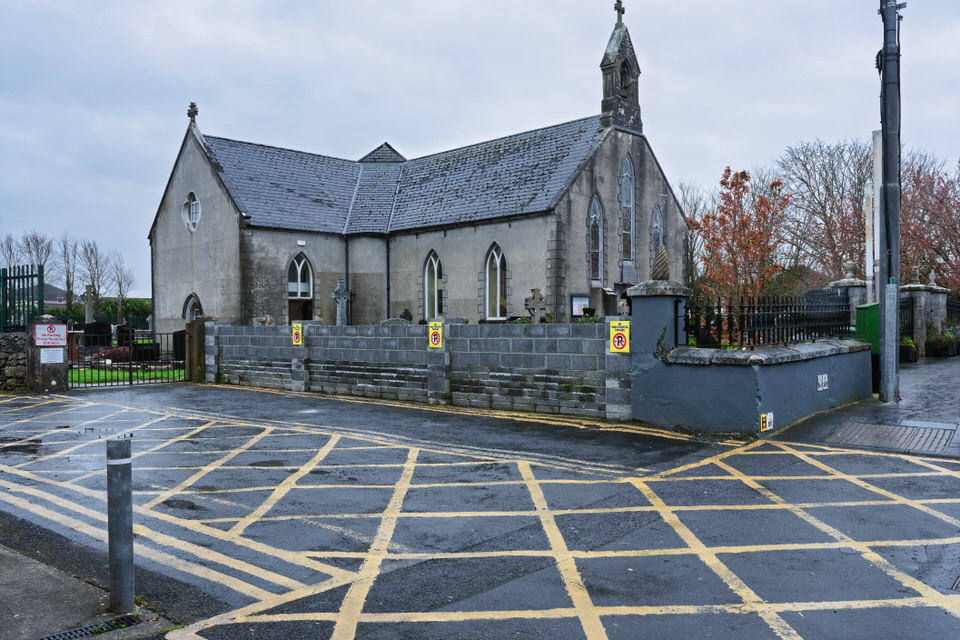
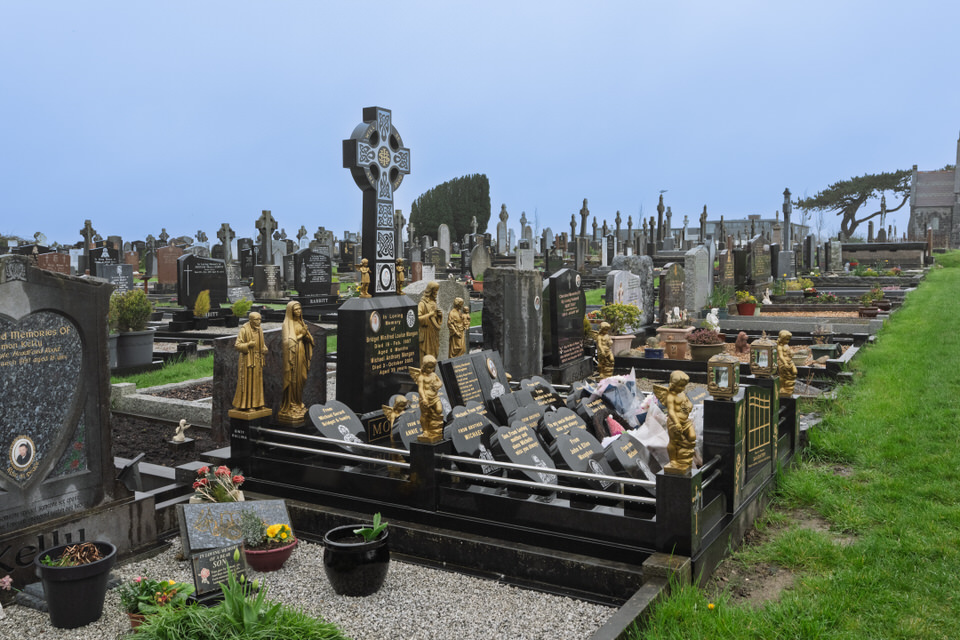
It seems a rule of the universe that every time I set foot in Bohermore Cemetery, the heavens open. Why should Holy Week 2026 be any different?

 Bohermore Cemetery April 2026

On this latest pilgrimage, I walked from Eyre Square, ducking into Cabbage Lane along the way. It is currently home to a series of striking, high-quality murals that demand a closer look—though I shall save that particular gallery for a future post. For now, my focus remains on the "New Cemetery," the final resting place of Galway’s most celebrated and its most humble.

The Label Debate: Style vs. Era

When I first shared a collection of photographs from Bohermore in August 2016, the response was unexpectedly academic. My description of the site as a "Victorian Cemetery" drew thoughtful criticism from readers who felt the term didn't quite fit the reality on the ground. This prompted a deeper look into the nuances of funerary history.

I originally stumbled upon the burial ground by pure chance while wandering through Bohermore—a name derived from the Irish Bóthar Mór, or "the big road." Expecting the romantic, melancholic disarray often found in historic graveyards, I was instead met with a space that was remarkably well-organised and immaculately maintained. This orderly character is likely why, despite opening in 1880 to relieve overflowing parish churchyards, it is still referred to locally as the "New Cemetery."

What Makes a Cemetery "Victorian"?

The objections to my initial description were less about politics and more about architectural taxonomy. When people think of a "Victorian" cemetery, they usually envision the "garden cemetery" movement—sprawling, theatrical landscapes like Highgate in London or Glasnevin in Dublin. These were often commercial ventures, designed as public parks where mourners could promenade amidst:

Ornate Gothic mausoleums and weeping angels.

Grand obelisks and winding, picturesque paths.

The overt display of wealth and status through masonry.

Bohermore does not fit this flamboyant mould. Established as a municipal cemetery in the late Victorian period (1837–1901), it was born in a post-Famine Ireland. Here, the design prioritised public health, civic order, and practicality over the opulent architectural excesses seen in the wealthier heartlands of the British Empire. In this strict aesthetic sense, the critics were right: it is not a "Victorian-style" cemetery.

A Uniquely Irish Synthesis

However, to strip the "Victorian" label away entirely is to ignore the historical clock. Bohermore is, unequivocally, a Victorian-era cemetery. Its foundations and earliest residents are rooted firmly in the late 19th century.

Furthermore, the stones themselves tell a fascinating story of Victorian-era cultural tension. Alongside conventional headstones of the period stand magnificent Celtic crosses, powerful symbols of the Gaelic Revival and a burgeoning national identity. The site houses figures whose lives—and deaths—capture the complexity of the age:

Lady Gregory: The dramatist and folklorist who helped shape the Irish Literary Revival.

William Joyce ("Lord Haw-Haw"): The infamous propagandist whose story remains a dark, complex footnote in 20th-century history.

Final Thoughts

"Victorian-era" serves as the more precise and respectful term. It acknowledges the historical timeframe without imposing a British aesthetic style that the site never intended to mimic. Bohermore is a sober, dignified, and distinctly Irish response to the universal need to honour the dead—a product of its time, place, and the persistent Galway rain.

William Joyce, notoriously known as "Lord Haw-Haw," remains one of the most polarising and unusual figures in the history of 20th-century wartime propaganda. His journey from a Brooklyn birthplace to a Galway grave via a London gallows is a strange tale of shifting identities and ultimate treason.

The Rise of "Lord Haw-Haw"

Born in New York in 1906 to an Irish Unionist father and an English mother, Joyce moved to Ireland as a child and later to England. In the 1920s and 30s, he became deeply involved in far-right politics, eventually becoming a leading figure in Oswald Mosley’s British Union of Fascists. Known for his vitriolic oratory and a distinctive scar on his cheek (received during a political brawl), he eventually fled to Nazi Germany just days before the outbreak of World War II in 1939.

In Germany, he became the primary English-language voice of Nazi radio. He was nicknamed "Lord Haw-Haw" by British radio critics due to his exaggerated, upper-class nasal drawl. His broadcasts, which began with the chilling catchphrase "Germany calling, Germany calling," were designed to demoralise the British public and spread disinformation. While many listeners tuned in for his unintentional comedic value, his mockery of the British war effort made him the most hated man in Britain.

The Trial and Execution

Joyce was captured by British forces near the Danish border in May 1945. His trial became a landmark legal case. Although he was born in the US and had become a naturalised German citizen, he had travelled on a British passport he obtained by lying about his birthplace. The court ruled that by holding a British passport, he owed allegiance to the Crown, making his broadcasts for the enemy an act of high treason.

He was executed by hanging at Wandsworth Prison in London on 3 January 1946. He was the penultimate person to be executed for treason in the United Kingdom.

How He Ended Up in Galway

After his execution, Joyce was buried in an unmarked grave within the walls of Wandsworth Prison, which was standard practice for executed criminals. However, his family—specifically his daughter, Heather Iandoli—campaigned for decades to have his remains repatriated.


Despite his "Lord Haw-Haw" persona, Joyce had deep ties to Galway; he had spent much of his youth there and attended St Ignatius College. In 1976, the British government finally permitted the exhumation of his body. His remains were flown to Ireland and reinterred in Bohermore Cemetery (the "New Cemetery") in Galway.

The move was controversial at the time, but the family wished for him to lie in the place he considered home. His grave in Bohermore is relatively simple, often surprising visitors who expect something more imposing for such a notorious historical figure. It serves as a stark reminder of the complexities of identity and loyalty during the darkest years of the 20th century.
 

MORE PHOTOGRAPHS

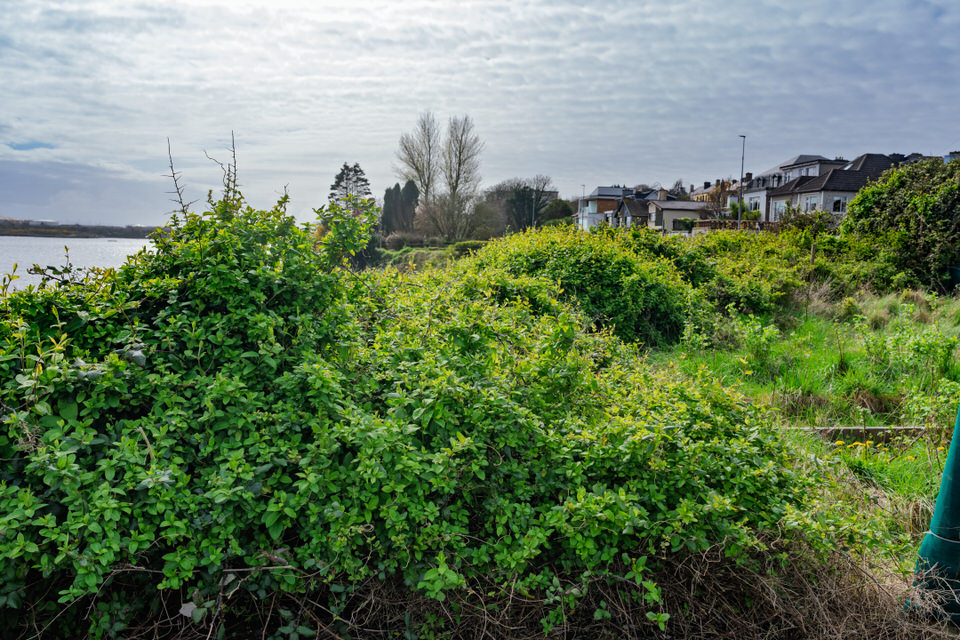
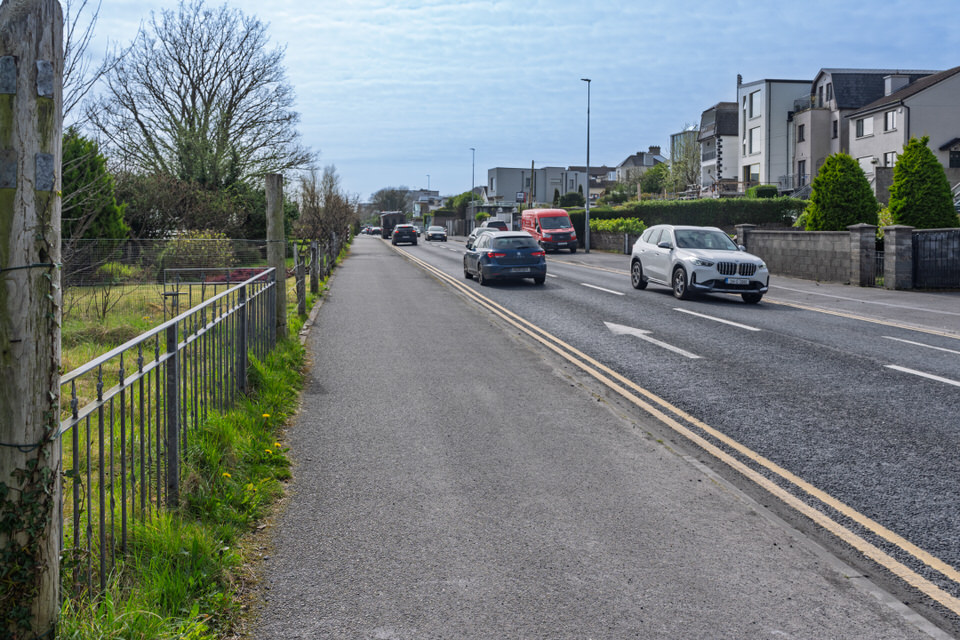
Atalia Road In Galway April 2026

Author: The Urban Cartographer

|

06. Apr 2026

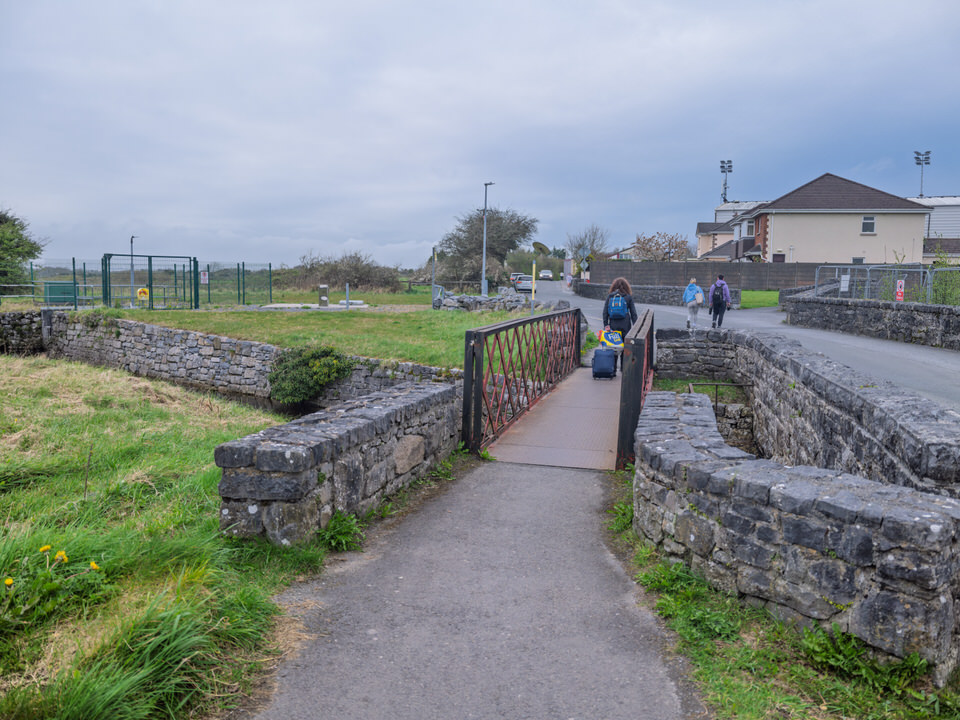
 Atalia Road In Galway April 2026 Lough Atalia Road - Select Image To View Photographs

___

LOUGH ATALIA ROAD

___


Lough Atalia Road is one of Galway City’s most distinctive thoroughfares, serving as a scenic arterial route that skirts the northern shore of the Lough Atalia inlet. Acting as a vital bridge between the industrial grit of the docks and the residential tranquility of Renmore, the road offers a unique cross-section of Galway’s evolution from a medieval stronghold to a modern maritime hub.

___


History and Tradition

Historical Origins and the Railway Influence

Originally, the area was a wide tidal inlet of Galway Bay. The modern character of the road was fundamentally shaped by the arrival of the Midland Great Western Railway in the mid-19th century. The construction of the massive railway embankment restricted the natural flow of the tide, effectively creating the "lough" as a semi-enclosed salt lake.

Historically, the road served the functional periphery of the city, but as Galway expanded eastward, it transformed into a premier residential location, prized for its south-facing aspect and unobstructed water views.

The Residential Profile: A Unique Property Layout

The residential stretch of Lough Atalia Road features a blend of mid-20th-century semi-detached houses and substantial, older detached residences. The demographic is largely professional and well-established, making it a "mature" area where properties are highly coveted and rarely reach the open market.

The "Across the Road" Gardens

One of the most curious features of the road is the strip of green space situated between the pavement and the water’s edge.

Ownership: In a rare legal arrangement, many homeowners on the landward side hold the deeds to the narrow slips of garden on the seaward side of the road.

Usage: These "disconnected" gardens often feature private seating areas, boat launches, or small sheds. While the shoreline remains accessible in parts, these tiered gardens are private property, creating a layout where a public road bisects a private domestic holding.

The Industrial Heart: The Galway Docks

As the road travels west toward the city centre, the atmosphere shifts abruptly at the industrial terminus. This section is dominated by the Galway Docks, defined by heavy commercial traffic, oil storage tanks, and timber yards.

This area represents the city's commercial lungs, though it is currently at the centre of long-standing redevelopment discussions. Future "masterplans" suggest a potential shift of heavy industry further afield to allow for a modern waterfront district featuring apartments, offices, and leisure spaces.

Forthill Graveyard: A Site of Execution and Remembrance

At the western terminus where Lough Atalia Road meets the city, lies Forthill Graveyard. Though it may not appear significantly elevated today, it was historically an elevated limestone outcrop known as St Augustine’s Hill.

The Evolution of the "Hill"

The site's elevation was masked in the 19th century when the surrounding ground level was raised during the construction of the railway and modern road networks. However, the graveyard still sits within the footprint of a star-shaped fort (St Augustine’s Fort) established by the English in 1602. The sturdy boundary walls visible from the road today actually incorporate the original 17th-century fortifications.

The Spanish Armada Connection

Forthill is the site of one of the most somber events in Galway's history. In September 1588, following the wreck of the Spanish Armada along the Irish coast, approximately 300 Spanish survivors were brought to Galway as prisoners. Under the orders of Sir Richard Bingham, the Governor of Connacht, they were taken to this hill and executed. Today, two modern monuments within the grounds—unveiled in 1988—commemorate these sailors in Spanish and Irish.

Cultural Heritage

The graveyard is also noted for:

Augustinian Roots: It was originally the site of a 15th-century friary, and remarkably, the site remains the property of the Augustinian Order today.

Vocational Headstones: Visitors can find 18th-century stones carved with the symbols of the deceased's trade, including blacksmith’s anvils, weaver’s shears, and mason’s trowels.

Modern Status

Today, Lough Atalia Road is a vital yet congested transport link, famous locally for its low railway bridge which frequently challenges unsuspecting lorry drivers. It remains a place of stark contrasts—where private garden retreats sit mere metres from heavy industrial shipping, and where the echoes of the Spanish Armada linger beside the busy commute into the heart of the "City of the Tribes."


___

DUBLIN NORTHSIDE
DUBLIN SOUTHSIDE
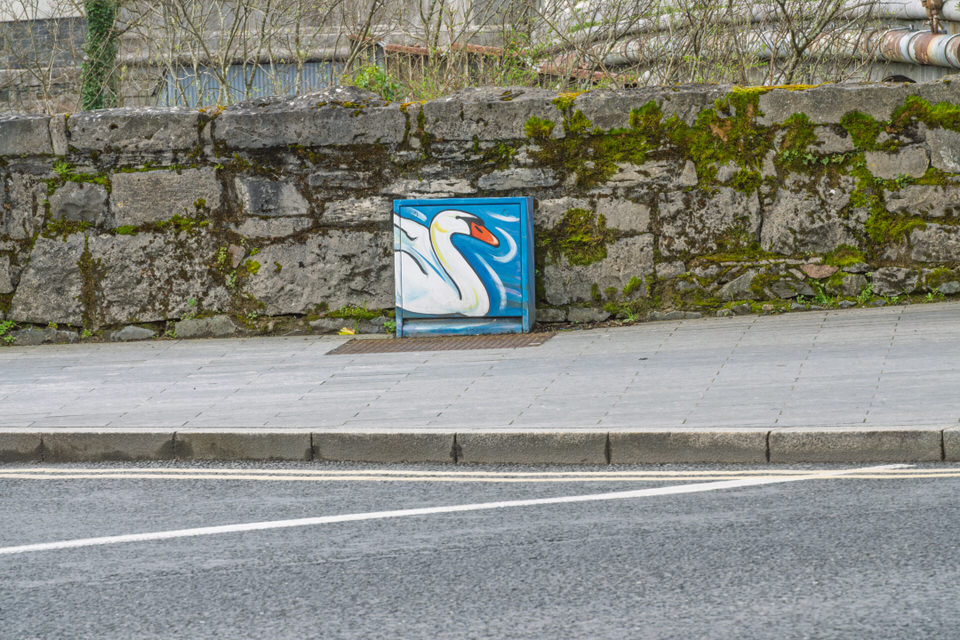
PAINT-A-BOX STREET ART
DUBLIN CASTLE MARCH 2026

___

BACK TO EXCELLENT STREET IMAGES

DOUBLE DOWN SCULPTURE

ANCHORED VOID

THE RIVER NORE

McSORLEYS STILL NOT OPEN

ST CANICES CATHEDRAL

THE RAM SCULPTURE

SAINT JOHNS CHURCH YARD

THE CASTLE DUCK POND

THE CASTLE GRAVEYARD


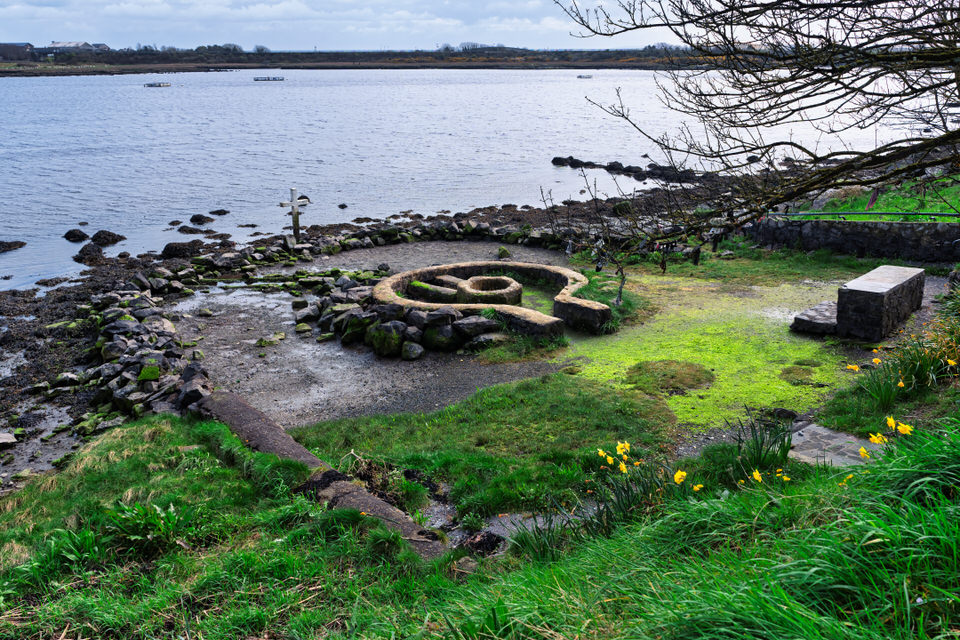
 Holy Well Galway April 2026 The Holy Well - Select Image To View Photographs