The Magazine Fort At Phoenix Park
The Urban Cartographer
The structural stabilisation and restoration of the Duke of Dorset Gate by the OPW are undeniably positive steps for Dublin's built heritage. However, national reporting that declares a site "open" without detailing these severe access constraints does a disservice to visitors.
MOBILE FRIENDLY AND MUCH FASTER
GO THERE
PARKS AND GARDENS
SONY A1 II
Presented By William Murphy - The Urban Cartographer - Sony A1II - Firmware 4.0 Photographed 31 July 2026
The Magazine Fort At Phoenix Park
Author: William Murphy - The Urban Cartographer
|
31. Jul 2026
MY FIRST TIME TO USE A FLASH ON THE SONY A1 II * In The Year 2008
* In The Year 2011
* In The Year 2017
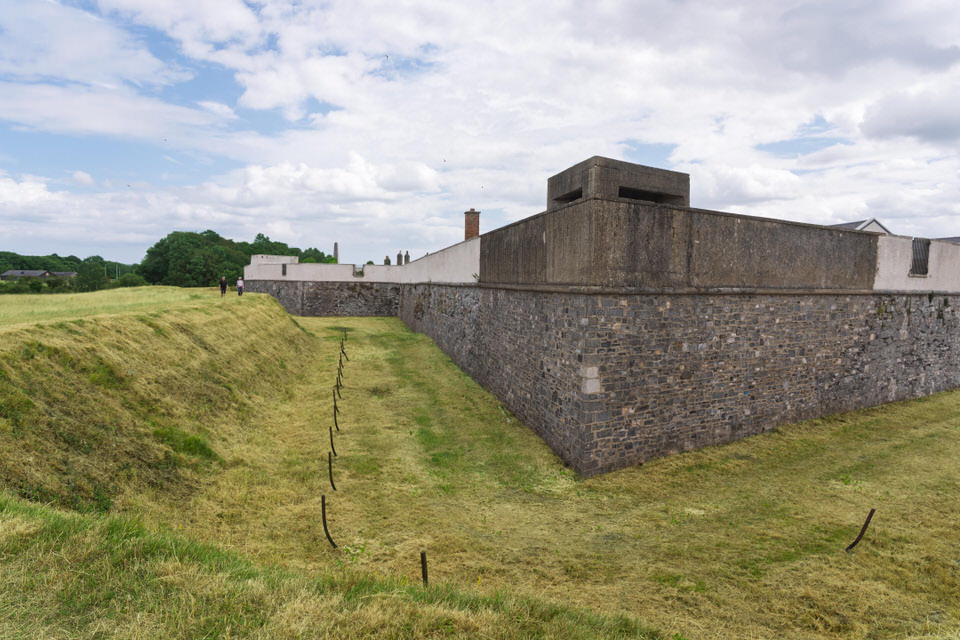
* Henrietta Back In 2010 The Magazine Fort Reopening: Public Access or Public Relations? Recent headlines across national media announced that the historic Magazine Fort in Phoenix Park has finally reopened to the public following an extensive multi-million-euro conservation project. Promoted as a major milestone for local tourism, the news naturally invited a closer look. Intrigued by the publicity and keen to document the site, I set aside time today to head up Thomas Hill to inspect the restored works. However, anyone expecting to simply walk up and explore will be met with a stark reality: the main gates remain firmly locked. The Operational Reality Behind the Headlines While the coverage presents the fort as an open heritage asset, operational access is tightly restricted: Locked Gates: Outside of specific, brief windows, the perimeter gates are locked shut. Arriving at 13:00, I found the entire site sealed. A Single Daily Tour: Access inside the walls is permitted only via an official OPW guided tour running once per day at 11:00 AM. Strict Capacity Limits: Each tour is capped at just 12 visitors, with tickets requiring advance booking online or through the Phoenix Park Visitor Centre. There is no self-guided roaming, no drop-in entry, and no public access outside that single morning slot. For a site declared "open to the public," locking the gates for 23 hours a day feels like a considerable contradiction. Getting There: The Visitor Challenge For local residents, a locked gate is easily written off as a minor inconvenience—there is always plenty more of Phoenix Park to explore and photograph. But for tourists or first-time visitors making a dedicated journey, the experience could prove frustrating. The fort sits in a relatively quiet elevated section of the park. While Dublin Bus route 80 serves the immediate area with a nearby stop, public awareness remains thin; even the driver on my service today was unfamiliar with the Magazine Fort stop. Combined with limited signage and strict booking rules, navigating a visit requires careful forward planning rather than a spontaneous outing. Final Thoughts The structural stabilisation and restoration of the Duke of Dorset Gate by the OPW are undeniably positive steps for Dublin's built heritage. However, national reporting that declares a site "open" without detailing these severe access constraints does a disservice to visitors. If you plan to visit, ensure you secure an 11:00 AM tour ticket well in advance. Otherwise, you will be limited—as I was today—to capturing the formidable outer ramparts from beyond the perimeter fence. * Clontarf Railway Station
* Docklands Railway Station
* Malahide Railway Station Yesterday I updated my Sony A1 II firmware to version 4.0 and all went well, I also purchased a Godox IT30Pro S and it worked amazing well today. The Godox iT30Pro S is the Sony-dedicated (Multi-Interface Shoe) variant of Godox's ultra-compact TTL mini speedlite. Weighing only 120 g, it provides a pocket-sized, modern fill-lighting option. When paired with modern, high-resolution Sony camera bodies—such as the Sony A1 II or A7R VI—it serves as an unobtrusive fill light for street shooting, family events, or as a master trigger for off-camera Godox studio lighting. Technical Review: Pros, Cons & What to Be Aware Of The Pros Native Sony Multi Interface (MI) Connection: Communicates seamlessly with Sony’s P-TTL auto-exposure system across all mirrorless bodies. High-Speed Sync Capabilities: Works seamlessly up to 1/8000s HSS for outdoor fill in harsh daylight. It is also fully compatible with Sony high-speed electronic / global shutter readout protocols. Integrated Wireless Commander: Acts as a lightweight 2.4 GHz Godox X master trigger to fire larger off-camera strobes (e.g. Godox V1, V860III, or AD-series studio lights) while retaining a backup direct flash on the camera body. Integrated Diffuser Panel: The mechanical side WN switch drops an internal panel across the optical lens to broaden beam spread and reduce harsh, direct highlights. The Cons & Things to Be Aware Of Low Axis Height & Lens Shadowing (Crucial Sony Warning): Because the flash sits extremely low to the top plate (only ~46 mm high), wide-angle, long, or thick G Master lenses—such as the Sony 24-70mm f/2.8 GM II or 50mm f/1.2 GM—will physically block the lower portion of the flash beam at short distances. To avoid a noticeable dark semi-circle shadow at the bottom of your image, you must remove the lens hood or shoot with compact primes (like the 24mm/40mm/50mm G compact series). Fragile Multi Interface Shoe Construction: Sony's MI shoe design uses fragile electronic contacts at the front edge of the hot shoe foot. Avoid forcing or rocking the iT30Pro S into place, and always depress the quick-release lock when mounting to prevent bending the pins. Touchscreen Sensitivity: Carrying the camera across your chest on a strap can lead to accidental touch input on the 2.8" screen. The touchscreen lock feature is essential when moving. Fixed Flash Head: The flash head does not bounce or swivel. Direct light is your primary option unless you hold it off-camera via the Godox X system. Modest Power (GN 15): On high-resolution bodies like the 61 MP A7R VI, exposing for wide landscape scenes will require raising ISO, as GN 15 is strictly optimized for close-range subject illumination. Ideal Settings & Step-by-Step Setup Recommended Operational Settings for Sony Street / Environmental Fill-Flash: Set mode to Sony TTL, with Flash Exposure Compensation (FEC) set between -1.0 EV and -1.3 EV. This lifts deep shadow detail on faces while maintaining the ambient background exposure. Wide-Angle / Close Range: Slide the WN switch to "W" (Wide) to ensure full coverage down to 24 mm focal lengths and soften the beam output. Open-Aperture Daylight Shooting: Enable HSS (High-Speed Sync) on the flash menu to sync past the standard focal plane sync limit. Step-by-Step Instructions
1 2 3 4 5 Why Are Official Sony-Branded Flashes So Expensive? While the Godox iT30Pro S retails brand new for roughly ~€65 – €85, official Sony-branded speedlites carry significantly higher price points. Pricing Context (EU Market)
Godox iT30Pro S: ~€65 – €85 (New)
Sony HVL-F28RM: ~€280 – €320 (New — Sony's entry-level compact TTL speedlite)
Sony HVL-F46RM: ~€430 – €480 (New — Mid-range tilt/swivel speedlite)
Sony HVL-F60RM2: ~€650 – €700 (New — Flagship Sony speedlite) Key Reasons for the Sony Price Premium Weather Sealing and Thermal Integration: Official Sony flashes (such as the HVL-F28RM and HVL-F60RM2) feature extensive silicone gasketing designed to match the weather sealing of high-end bodies like the A1 II and A7R VI. They also incorporate heat-resistant materials designed to withstand sustained burst shooting. Advanced MI Shoe Communication: Sony’s proprietary flashes feed precise lens distance data (ADI metering) and white balance telemetry directly into the camera's BIONZ processing engine for accurate colour rendition. Mechanical Flexibility & Power: Higher-end Sony speedlites feature rotating bounce heads (such as Sony's Quick Shift Bounce system) and zoom heads ranging from 24 mm to 200 mm with higher output power (GN 28 to GN 60). Proprietary Wireless Ecosystem: Sony speedlites integrate natively into Sony's radio command network without requiring third-party firmware updates when Sony issues major camera system updates. However, for creators prioritising minimal weight and simple fill light, the Godox iT30Pro S provides high-speed sync, TTL accuracy, and Godox X system integration at a fraction of the cost.
THE LEGACY CATALOG
The Magazine Fort Reopening
Railway Stations
Recommended Photo Galleries
Our Equipment Choices
HIGH RESOLUTION PHOTOGRAPHS PLUS MAP
SONY A1 II
LET MISTER SCREEN DIRECT YOU
GLOBAL INDEX OF PHOTO GALLERIES
HENRY MOORE SCULPTURE AT TRINITY
THE URBAN CARTOGRAPHER
PARKS AND GARDENS
The Magazine Fort At Phoenix Park - Presented By The William Murphy - The Urban Cartographer