The Large Papal Cross In The Park
The Urban Cartographer
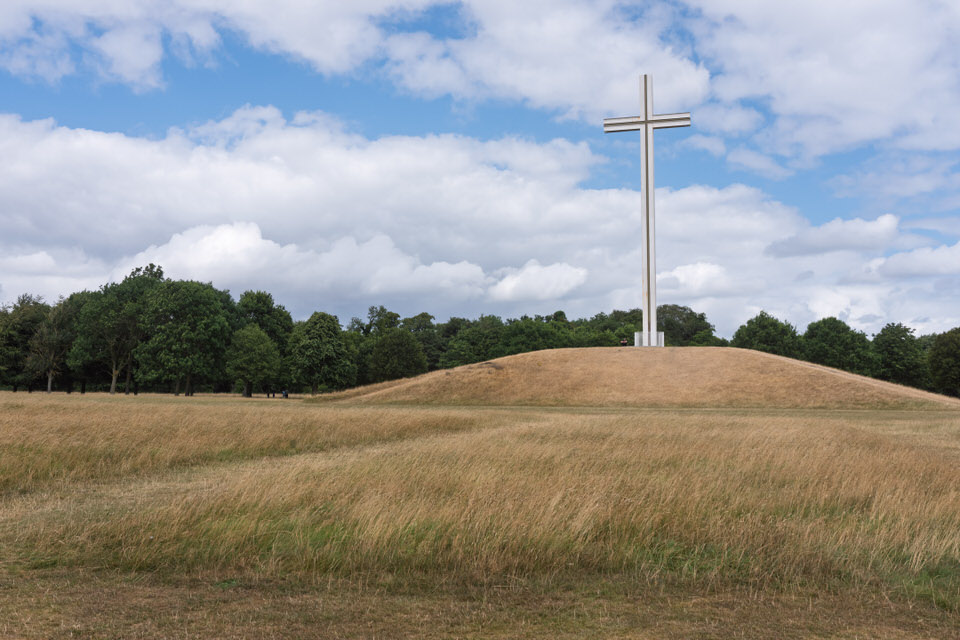
Discover the history of the Papal Cross in Dublin’s Phoenix Park. Built for Pope John Paul II’s historic 1979 visit, this original 35-metre landmark hosted a second papal Mass with Pope Francis in 2018 and is maintained by the OPW.
MOBILE FRIENDLY AND MUCH FASTER
GO THERE
PARKS AND GARDENS
SONY A1 II
Presented By William Murphy - The Urban Cartographer - Sony A1II - Firmware 4.0 Photographed 31 July 2026
The Large Papal Cross In The Park
Author: William Murphy - The Urban Cartographer
|
31. Jul 2026
MY FIRST TIME TO USE A FLASH ON THE SONY A1 II * In The Year 2008
* In The Year 2011
* In The Year 2017
* Henrietta Back In 2010 The Papal Cross is one of the most recognisable landmarks within Dublin’s Phoenix Park. It was erected specifically for the historic pastoral visit of Pope John Paul II, who arrived in Ireland on 29th September 1979. On that afternoon, Pope John Paul II celebrated an open-air Mass at the site before a congregation estimated at over 1.25 million people—representing roughly a third of the entire population of the island of Ireland at the time. Designed by renowned architect Ronnie Tallon of Scott Tallon Walker, the giant white steel structure was constructed in just ten weeks by J. & C. McGloughlin of Inchicore. Standing 35 metres (115 feet) high and weighing 31 tonnes, the cross served as the iconic backdrop for the altar. Was there a second Papal Visit? Yes. Ireland hosted a second papal visit 39 years later, when Pope Francis visited Dublin on 25–26 August 2018 for the World Meeting of Families. On Sunday, 26th August 2018, Pope Francis celebrated an open-air Mass at the exact same location in Phoenix Park, with the Papal Cross once again serving as the central focal point for the altar setup. Is the cross on display the original? Yes, the cross standing in Phoenix Park today is the original 1979 structure. Although engineered as a temporary installation for the 1979 event, strong public sentiment—alongside interventions by then-Taoiseach Charles Haughey and church leaders—led to the decision to retain the monument permanently. It was given formal planning retention status shortly thereafter and has remained on its granite-paved mound ever since. Does it attract much attention? Who owns and maintains the Papal Cross? The Papal Cross is managed and maintained by the Office of Public Works (OPW), the Irish government body responsible for the conservation, care, and overall management of Phoenix Park. The OPW undertakes routine maintenance, structural inspections, and periodic repainting—such as the extensive refurbishment carried out prior to Pope Francis’s visit in 2018—to ensure the steel structure is preserved against the elements. * Clontarf Railway Station
* Docklands Railway Station
* Malahide Railway Station Yesterday I updated my Sony A1 II firmware to version 4.0 and all went well, I also purchased a Godox IT30Pro S and it worked amazing well today. The Godox iT30Pro S is the Sony-dedicated (Multi-Interface Shoe) variant of Godox's ultra-compact TTL mini speedlite. Weighing only 120 g, it provides a pocket-sized, modern fill-lighting option. When paired with modern, high-resolution Sony camera bodies—such as the Sony A1 II or A7R VI—it serves as an unobtrusive fill light for street shooting, family events, or as a master trigger for off-camera Godox studio lighting. Technical Review: Pros, Cons & What to Be Aware Of The Pros Native Sony Multi Interface (MI) Connection: Communicates seamlessly with Sony’s P-TTL auto-exposure system across all mirrorless bodies. High-Speed Sync Capabilities: Works seamlessly up to 1/8000s HSS for outdoor fill in harsh daylight. It is also fully compatible with Sony high-speed electronic / global shutter readout protocols. Integrated Wireless Commander: Acts as a lightweight 2.4 GHz Godox X master trigger to fire larger off-camera strobes (e.g. Godox V1, V860III, or AD-series studio lights) while retaining a backup direct flash on the camera body. Integrated Diffuser Panel: The mechanical side WN switch drops an internal panel across the optical lens to broaden beam spread and reduce harsh, direct highlights. The Cons & Things to Be Aware Of Low Axis Height & Lens Shadowing (Crucial Sony Warning): Because the flash sits extremely low to the top plate (only ~46 mm high), wide-angle, long, or thick G Master lenses—such as the Sony 24-70mm f/2.8 GM II or 50mm f/1.2 GM—will physically block the lower portion of the flash beam at short distances. To avoid a noticeable dark semi-circle shadow at the bottom of your image, you must remove the lens hood or shoot with compact primes (like the 24mm/40mm/50mm G compact series). Fragile Multi Interface Shoe Construction: Sony's MI shoe design uses fragile electronic contacts at the front edge of the hot shoe foot. Avoid forcing or rocking the iT30Pro S into place, and always depress the quick-release lock when mounting to prevent bending the pins. Touchscreen Sensitivity: Carrying the camera across your chest on a strap can lead to accidental touch input on the 2.8" screen. The touchscreen lock feature is essential when moving. Fixed Flash Head: The flash head does not bounce or swivel. Direct light is your primary option unless you hold it off-camera via the Godox X system. Modest Power (GN 15): On high-resolution bodies like the 61 MP A7R VI, exposing for wide landscape scenes will require raising ISO, as GN 15 is strictly optimized for close-range subject illumination. Ideal Settings & Step-by-Step Setup Recommended Operational Settings for Sony Street / Environmental Fill-Flash: Set mode to Sony TTL, with Flash Exposure Compensation (FEC) set between -1.0 EV and -1.3 EV. This lifts deep shadow detail on faces while maintaining the ambient background exposure. Wide-Angle / Close Range: Slide the WN switch to "W" (Wide) to ensure full coverage down to 24 mm focal lengths and soften the beam output. Open-Aperture Daylight Shooting: Enable HSS (High-Speed Sync) on the flash menu to sync past the standard focal plane sync limit. Step-by-Step Instructions
1 2 3 4 5 Why Are Official Sony-Branded Flashes So Expensive? While the Godox iT30Pro S retails brand new for roughly ~€65 – €85, official Sony-branded speedlites carry significantly higher price points. Pricing Context (EU Market)
Godox iT30Pro S: ~€65 – €85 (New)
Sony HVL-F28RM: ~€280 – €320 (New — Sony's entry-level compact TTL speedlite)
Sony HVL-F46RM: ~€430 – €480 (New — Mid-range tilt/swivel speedlite)
Sony HVL-F60RM2: ~€650 – €700 (New — Flagship Sony speedlite) Key Reasons for the Sony Price Premium Weather Sealing and Thermal Integration: Official Sony flashes (such as the HVL-F28RM and HVL-F60RM2) feature extensive silicone gasketing designed to match the weather sealing of high-end bodies like the A1 II and A7R VI. They also incorporate heat-resistant materials designed to withstand sustained burst shooting. Advanced MI Shoe Communication: Sony’s proprietary flashes feed precise lens distance data (ADI metering) and white balance telemetry directly into the camera's BIONZ processing engine for accurate colour rendition. Mechanical Flexibility & Power: Higher-end Sony speedlites feature rotating bounce heads (such as Sony's Quick Shift Bounce system) and zoom heads ranging from 24 mm to 200 mm with higher output power (GN 28 to GN 60). Proprietary Wireless Ecosystem: Sony speedlites integrate natively into Sony's radio command network without requiring third-party firmware updates when Sony issues major camera system updates. However, for creators prioritising minimal weight and simple fill light, the Godox iT30Pro S provides high-speed sync, TTL accuracy, and Godox X system integration at a fraction of the cost.
THE LEGACY CATALOG
The Papal Cross in Phoenix Park and the First Papal Visit
Railway Stations
Recommended Photo Galleries
Our Equipment Choices
HIGH RESOLUTION PHOTOGRAPHS PLUS MAP
SONY A1 II
LET MISTER SCREEN DIRECT YOU
GLOBAL INDEX OF PHOTO GALLERIES
HENRY MOORE SCULPTURE AT TRINITY
THE URBAN CARTOGRAPHER
PARKS AND GARDENS
The Large Papal Cross In The Park - Presented By The William Murphy - The Urban Cartographer