The Botanic Gardens 22 July 2009
The Urban Cartographer
The National Botanic Gardens in Glasnevin, Dublin, remain one of Ireland’s premier botanical institutions and historic designed landscapes. Spanning nearly 20 hectares along the River Tolka, the gardens showcase historic Victorian glasshouses, extensive arboreta, formal borders, and crucial national research facilities including the National Herbarium.
MOBILE FRIENDLY AND MUCH FASTER
GO THERE
LIMERICK 2018 PHOTO COLLECTIONS
PANASONIC LUMIX DMC-LX2
Presented By William Murphy - The Urban Cartographer - PANASONIC LUMIX DMC-LX2 Photographed 22 July 2009
The Botanic Gardens 22 July 2009
Author: William Murphy - The Urban Cartographer
|
01. Sep 2026

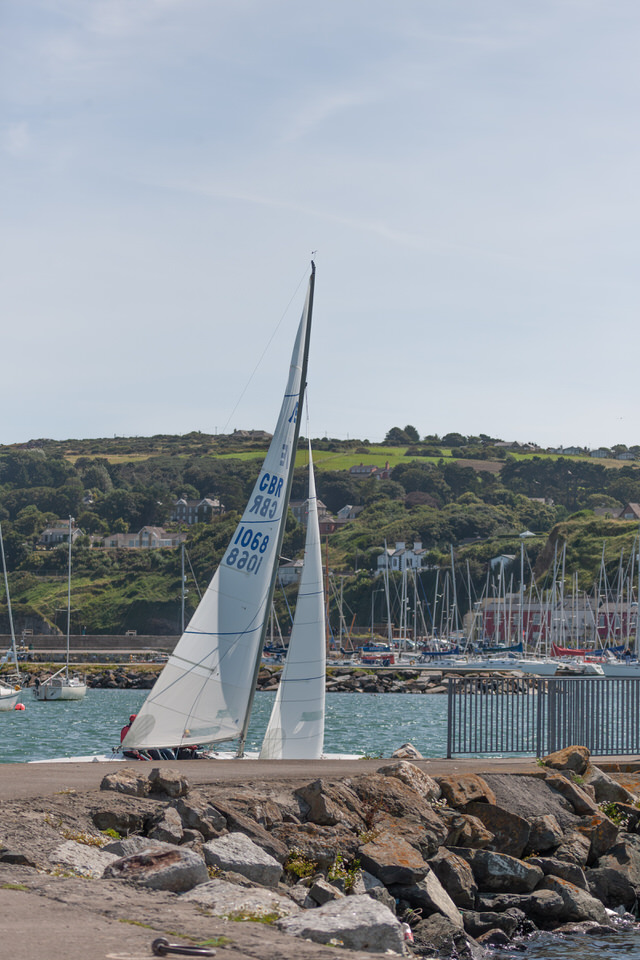
MY LEAST FAVOURITE CAMERA WAS WHAT I USED The National Botanic Gardens in Glasnevin, Dublin, remain one of Ireland’s premier botanical institutions and historic designed landscapes. Spanning nearly 20 hectares along the River Tolka, the gardens showcase historic Victorian glasshouses, extensive arboreta, formal borders, and crucial national research facilities including the National Herbarium. Core Highlights & Overview Research & Heritage: Houses the National Herbarium with over 600,000 dried plant specimens and serves as a focal point for plant conservation and education under the Office of Public Works (OPW). If you are comparing current views against photographs captured in 2009, the overall layout and core historic structures remain intact, but several specific architectural, horticultural, and infrastructural changes have taken place: Glasshouse & Lodge Conservation: Tolka Riverbank & Flood Management: Biodiversity & Naturalistic Management: Art Installations & Displays: Digitisation & Scientific Enhancements: The turtles found basking in the pond at the National Botanic Gardens (as well as sites like the Phoenix Park and The Lough in Cork) are pond sliders (Trachemys scripta, including red-eared and yellow-bellied sliders). These non-native terrapins were originally discarded pets dumped into public waterways when they outgrew domestic tanks. While Ireland's temperate climate prevents them from breeding successfully in the wild, adult terrapins are remarkably hardy and can survive in Irish ponds for decades. The Regulatory Context & Removal EU Invasive Alien Species (IAS) Regulation (1143/2014): All subspecies of pond sliders are formally designated as Invasive Species of Union Concern. Duty to Eradicate / Control: Under Article 17 of EU Regulation 1143/2014, EU member states are required to apply rapid detection and eradication or management measures. The National Parks and Wildlife Service (NPWS) issued Early Detection Notifications to bodies managing public water features—including the Office of Public Works (OPW) for the Botanic Gardens—mandating their capture and removal. Ecological Impact: Because adult terrapins are predatory and omnivorous, their presence in urban ponds disrupts native aquatic ecosystems. They compete with native waterfowl and aquatic life, prey on small fish, frogs, and waterbird chicks, disturb nesting sites by using them for basking, and carry potential pathogen risks. Trapping and removal protocols are deployed by wildlife authorities and rescue organisations to humanely remove and rehome surviving specimens to secure, biosecure enclosures. In practice, the situation is an ongoing operational challenge rather than a completed eradication. Active Trapping and Removals: The Office of Public Works (OPW), in conjunction with the National Parks and Wildlife Service (NPWS) and local authorities under the Local Biodiversity Action Fund, has carried out targeted trapping programmes to capture and remove reported terrapins from the pond. Captured specimens are transferred to secure sanctuaries or captive care rather than culled. Why They Still Occasionally Appear: Despite eradication mandates, complete clearance has proved difficult to maintain for two reasons: Evasion: Pond sliders are wary, agile swimmers that dive into deep silt and dense aquatic vegetation at the slightest disturbance, making standard netting or basking traps tricky to execute reliably. Re-introduction: The primary source is illegal domestic dumping. Even after existing individuals are trapped out, new unwanted pet turtles are occasionally released into the pond by members of the public. While substantial removal efforts have taken place and official policy requires their extraction upon identification, occasional individual sliders still crop up basking on logs or island edges on warm summer days. These photographs date from July 2009 when I was using my least favourite camera - that does not mean that was the worst, the problem was that I did not like it. I am working my way through my 2008 catalogue and to date I have located 14,567 and only 548 were capture using the LX2. 463 were captured the original Canon 5D which was my best camera. What really surprised me is that 12,480 were produced using the Canon 1Ds MkIII which proved to have an inbuilt auto-focus defect. Now that I am devoting time to my back-catalogue I am beginning to think about the future and it is complicated and very uncertain an potentially very expensive The enthusiast digital photography ecosystem has collided with a structural wall. What began in the 2000s as an era of rapid democratization has transitioned into a classic late-stage technology plateau, compounded by aggressive component inflation and diminishing returns in software engineering. Tracing this trajectory from the Hi-Fi boom of the late 1970s through early personal computing to modern 100MP medium-format sensors reveals clear patterns for where this industry is heading. Apple Silicon's High-Spec Trap: Apple’s unified memory architecture offers remarkable memory bandwidth, but soldered RAM and non-upgradable internal SSDs mean properly configured Mac Studio Ultras or MacBook Pros carry prohibitive upgrade premiums that scale exponentially for high-memory workflows. • Hi-Fi (1960s-1970s) Hi-Fi Audio (1960s–1980s): In the 1960s and 1970s, component Hi-Fi (discrete pre-amps, reel-to-reel, precision turntables) was an intellectual, accessible hobby for the middle class. By the time commodification set in around 1980, the market split into two distinct realities: cheap mass-market all-in-one shelf systems for the general public, and stratospherically expensive audiophile exotica for a tiny demographic. Personal Computing (1981–2000s): Early PC enthusiasts built, tuned, and maintained modular rigs. Eventually, computing matured into an invisible appliance: standard laptops, smartphones, and closed operating systems where tweaking yielded negligible real-world returns. Digital Photography (2004–2026): Photography underwent the same curve. The smartphone wiped out the entry-level consumer camera market, leaving camera manufacturers to survive exclusively on high-margin, ultra-high-resolution pro/enthusiast hardware. The collision of prohibitive storage economics, high-end camera hardware, and stagnating software will likely drive several shifts: The Curatorial Contraction (Return to Intentionality): The shoot-to-fill approach enabled by cheap storage is becoming economically unsustainable. Enthusiasts and small studios will shift back to aggressive on-import culling, shooting fewer frames, and archiving only final 16-bit master exports rather than retaining hundreds of gigabytes of raw bursts. Bifurcated Storage Architectures: The all-NVMe workflow will remain reserved for active client scratch disks. Photographers will increasingly move toward tiered cold storage: high-density enterprise spinning platters (HDDs), optical/LTO solutions, or strict offline archival tiers to bypass the NAND price spike. The "Good Enough" Hardware Freeze: Upgrading compute platforms every 2 to 3 years will grind to a halt. Machines like the M3 Ultra or M4-generation hardware will remain in active service for 6 to 8 years, as raw CPU/GPU gains now vastly exceed the incremental performance demands of still-image editing. The "Veblen Good" Transition: High-end photography gear (Leica, Hasselblad, high-tier Sony/Fuji medium format) will completely abandon pretence as mass-market hobbies. They will operate under the luxury mechanical watch paradigm—low-volume, handcrafted physical precision whose value lies in the shooting experience rather than software gimmicks. SAILING AND BOATING IN HOWTH
* In The Year 2008
* In The Year 2011
* In The Year 2017
* Henrietta Back In 2010
The Botanic Gardens 22 July 2009
Changes and Evolutions Since 2009
So What About The Turtles?
Reworking And Reprocessing My Catalogues
The Future Of Photography
• Personal Computing (1980s)
• Digital Photography (2004-Present)
THE LEGACY CATALOG
HIGH RESOLUTION PHOTOGRAPHS PLUS MAP
PANASONIC LUMIX DMC-LX2
LET MISTER SCREEN DIRECT YOU
GLOBAL INDEX OF PHOTO GALLERIES
HENRY MOORE SCULPTURE AT TRINITY
THE URBAN CARTOGRAPHER
LIMERICK 2018 PHOTO COLLECTIONS
The Botanic Gardens 22 July 2009 - Presented By The William Murphy - The Urban Cartographer