Stranmillis Embankment In A Storm December 2025
The Urban Cartographer
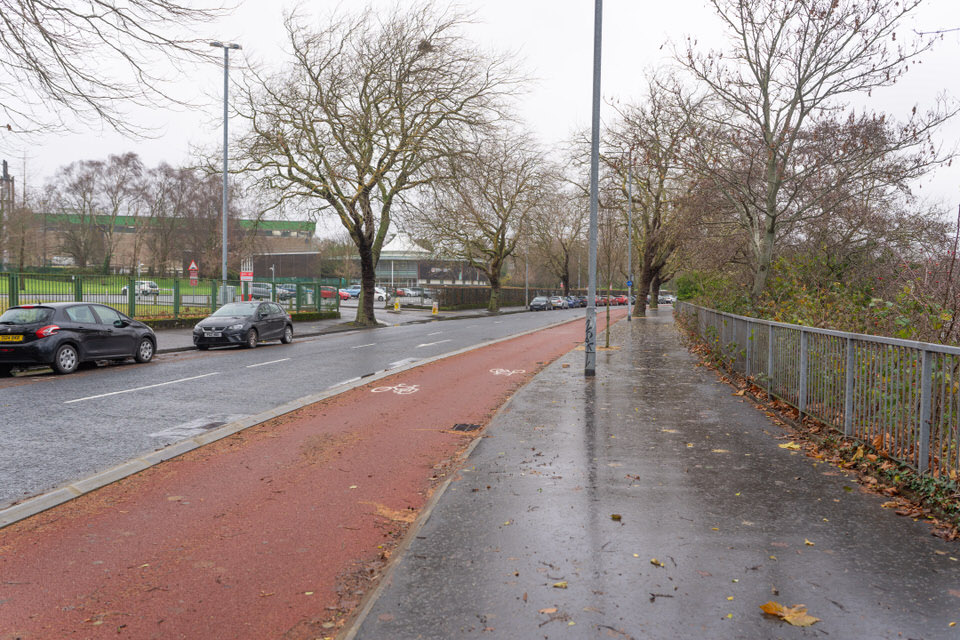
A stormy documentary walk along Belfast's Stranmillis Embankment during Storm Bram, capturing the dramatic transition from the cultural heights of the Lyric Theatre to the raw urban expression near Ormeau Bridge.
MOBILE FRIENDLY AND MUCH FASTER
GO THERE
EXAMPLES OF PUBLIC ART IN BELFAST
SONY A1 II
Presented By William Murphy - The Urban Cartographer - Sony A1 II WITH A SONY FE28-70MM GM LENS Photographed
Stranmillis Embankment In A Storm December 2025
Author: William Murphy - The Urban Cartographer
|
21. Jul 2026
I USED MY SONY A1 II * In The Year 2008
* In The Year 2011
* In The Year 2017
* Henrietta Back In 2010 The walk along the Stranmillis Embankment during a major gale like Storm Bram in December 2025 offered a remarkable, highly contrasting study in urban geography and atmospheric conditions. Carrying a heavy weather-sealed rig along that specific stretch of the River Lagan exposes m directly to the dramatic shifts in Belfast's built environment. Starting at King’s Bridge (where the River Lagan meets the Botanic Gardens precinct) and moving downstream toward Ormeau Bridge, the route follows the outer curve of the Lagan. The Upper Reach (Desirable / Suburban Civic): Near King's Bridge and the Lyric Theatre, the embankment feels deliberate, open, and integrated with affluent South Belfast (Stranmillis and Malone). You have manicured paths, high-end residential housing, mature trees, and the architectural weight of the university quarter directly adjacent. The Transition Point: As you push past the Lyric Theatre toward the broad bend before Ormeau Park, the architectural language rapidly shifts. The leafy buffer gives way to stark light-industrial leftovers, social housing estates, back-of-building service yards, and heavy infrastructure. The Lower Reach (Urban Expression & Decay): Approaching Ormeau Bridge, the environment shifts toward a raw, working-class aesthetic. Here, "urban depression"—visible in neglected concrete, lingering industrial boundary walls, and weather-worn infrastructure—meets "urban expression." This comes in the form of layered street art, tagged utility panels, political murals, and guerrilla interventions that reclaim the cold river walls. During a severe storm, the howling wind tunneling along the river valley amplifies this atmosphere, strip-lining the landscape down to its structural bone. The intense chocolate-brown coloration of the river during Storm Bram is driven by two combined hydrological mechanics: Upland Silt Runoff (Flushing Effect): Storm Bram brought torrential rainfall across the Lagan catchment. Upstream, the river drains vast agricultural land, peat bogs, and clay-rich soils around the Castlereagh and Antrim Hills. Heavy precipitation causes rapid soil erosion, washing massive amounts of suspended sediment, topsoil, and organic detritus down into the main channel. Tidal Hydrodynamics & Silt Stirring: The stretch between Stranmillis and Ormeau is estuarine, controlled by the Lagan Weir further downstream. During high-wind storm events, strong tidal surges and severe wind-shear on the water surface create significant turbulence. This churns up decades of fine riverbed silt and mud, suspending it in the column and turning the water opaque and brown. King’s Bridge Queen’s University Campus Quarter The Lyric Theatre Ormeau Bridge Shortlisted for the prestigious RIBA Stirling Prize in 2012, the structure is a masterclass in how to negotiate a complex, steeply sloping urban site while directly responding to the flow of the River Lagan. The Three Internal Volumes: The design splits the theatre into three primary functional blocks: The material palette was chosen to echo both the residential brick traditions of South Belfast and the organic, wooded riverbank environment. Hand-Fired Brickwork Iroko Timber & Glass Exposed Board-Marked Concrete The interior of the main 389-seat auditorium abandons traditional plaster or gilded decoration in favour of raw, acoustically tuned materials: Paved Brick Seating Rows: The seats sweep downward in a gentle, single-tier arc, ensuring intimacy where no audience member is further than 15 metres from the stage. Facetted Iroko Panelling: The walls are lined with heavy, faceted timber panels angled specifically to scatter sound evenly across the auditorium without causing echoes. Intimate Geometry: The room was modelled on the shape of a folded hand, creating a tight, unified atmosphere between the actors on stage and the audience. Funding Issues And Apparent Lack Of Maintenance My frequent observation about the building looking less than pristine prior to late 2025 hits on a very real, systemic issue. The Lyric Theatre has experienced significant and recurring funding crises. While it is an architectural flagship, it operates under a structural funding deficit that has directly impacted its maintenance, exterior presentation, and operations. The primary driver behind the Lyric's ongoing struggles is the broader, decades-long underfunding of the arts sector in Northern Ireland. The Regional Disparity: Per capita state investment in the arts in Northern Ireland has historically lagged far behind the rest of the UK and Ireland. By 2023–2024, state arts funding in Northern Ireland stood at approximately £5.07 per head, compared to £10.51 in Wales and £21.58 in the Republic of Ireland. Between 2009 and 2023, public grant-in-aid to the Arts Council of Northern Ireland plummeted by 66% in real terms. The "Box Office Reliance" Trap: Because core state subsidies are so low, the Lyric is forced to operate more like a commercial venue than a subsidised public institution, relying on ticket sales, venue rentals, and corporate sponsorship for roughly two-thirds of its revenue. When revenue dips, non-essential operational expenditure—specifically exterior capital maintenance, brick repointing, power-washing, and raw timber treatment—is often the first budget item cut to protect core staff and stage productions. The Initial Capital Gap (2008–2011) The COVID-19 Income Shock (2020–2022) Inflation & Energy Cost Crisis (2022–2025) In addition to cash flow problems, the specific choice of architectural materials makes the Lyric look more weathered than it actually is, especially during bleak winter months or severe storms: Untreated Iroko Hardwood: The exterior timber screens were designed not to be painted or varnished. They are meant to naturally weather into a silvery-grey/black patina. To a passerby, untreated, damp wood during a gloomy December can easily look like decaying or unmaintained timber. Hand-Fired Flemish Brickwork: The textured, irregular surface of the red bricks trap soot, algae, and river dampness from the Lagan. Without routine, expensive chemical cleaning or power-washing, the river-facing elevation accumulates dark streaks quickly. Exposed Concrete & Glass: Riverfront humidity creates water staining along the exposed concrete soffits and large glazed bays. What I observed before December 2025 was a combination of weather-worn material patina and deferred maintenance, direct casualties of the severe funding squeeze that Northern Ireland's flagship producing theatre has had to navigate. * Clontarf Railway Station
* Docklands Railway Station
* Malahide Railway Station
THE LEGACY CATALOG
RELATED PHOTO GALLERIES
A SELECTION OF HIGH RESOLUTION PHOTO GALLERIES
HIGH RESOLUTION PHOTOGRAPHS PLUS MAP
SONY A1 II
LET MISTER SCREEN DIRECT YOU
GLOBAL INDEX OF PHOTO GALLERIES
EXAMPLES OF BELFAST STREET ART
THE URBAN CARTOGRAPHER
EXAMPLES OF PUBLIC ART IN BELFAST
Stranmillis Embankment In A Storm December 2025 - Presented By The William Murphy - The Urban Cartographer