Bronze Sculpture Of Pope John Paul II By Imogen Stuart
The Urban Cartographer
Discover the history and artistry behind the iconic Pope John Paul II bronze statue at Maynooth College. Sculpted by the renowned German-Irish artist Imogen Stuart in 1987, this monument captures the tender relationship between the papacy and Irish youth, framed by the historic campus Heritage Wall.
MOBILE FRIENDLY AND MUCH FASTER
GO THERE
THE THREE FATES STATUES
I USED MY FUJIFILM GFX100RF
Presented By William Murphy - The Urban Cartographer - Fujifilm GFX100RF Photographed 29 June 2026
Bronze Sculpture Of Pope John Paul II By Imogen Stuart
Author: William Murphy - The Urban Cartographer
|
30. Jun 2026
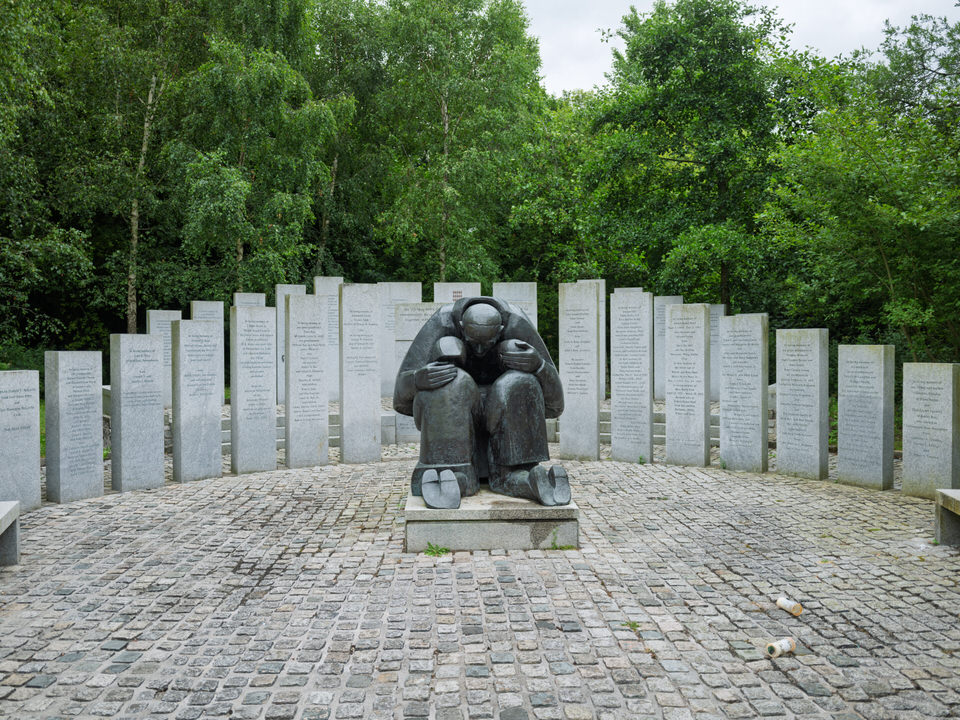
THERE SOME ABANDONED CANDLES HERE SO SOME MUST CONSIDER TO BE A SHRINE * In The Year 2008
* In The Year 2011
* In The Year 2017
* Henrietta Back In 2010 The bronze sculpture of Pope John Paul II with Irish youth stands on the South Campus of Maynooth College (St Patrick’s Pontifical University / Maynooth University), positioned directly outside the main entrance of the John Paul II Library. The Art: "The Pope with Irish Youth" The sculpture portrays a deeply human, tender moment rather than a rigid, institutional depiction of the papacy. Imogen Stuart based the work on a specific photograph taken during the 1979 papal visit. During one of the youth masses, a young boy and girl stepped forward to present gifts to the Pope. Instead of maintaining formal distance, John Paul II reached out and drew both children into a warm embrace. Composition: The bronze figures capture this dynamic of affectionate shelter. The Pope's large, enveloping vestments form a protective, almost architectural canopy over the two kneeling children, symbolising comfort, mentorship, and the passing of faith to the next generation. The Heritage Wall: Surrounding the sculpture is a curved "Heritage Wall" added in 1993. This stone backdrop serves a dual purpose: it frames the artwork texturally and records the names of benefactors of Irish descent whose generosity funded the development of the college library and campus. The Artist: Imogen Stuart (1927–2024) Early Life and Training Move to Ireland and Career Evolution In 1948, she moved to Ireland after marrying Irish sculptor Ian Stuart (grandson of Maud Gonne and W.B. Yeats). Settling in County Dublin, she fell in love with the landscape, history, and ancient iconography of her adopted home. Stuart became a leading figure in the mid-century renewal of Irish sacred art. Her unique aesthetic style seamlessly blended:
German Expressionism: Characterised by bold, simplified geometries and a focus on raw emotional or spiritual truth.
Gaelic and Romanesque Archetypes: Drawing heavily from early Christian Irish art, high crosses, and stone carvings. Over a career spanning more than seven decades, Stuart received major commissions across Ireland, including works at Christ Church Cathedral (Dublin), the University of Galway, and numerous churches nationwide. She was elected a member of Aosdána (the elite Irish association of artists) and served as Professor of Sculpture at the Royal Hibernian Academy (RHA). Her sculpture at Maynooth perfectly showcases her signature ability to ground profound spiritual themes in simple, deeply resonant human gestures. * Clontarf Railway Station
* Docklands Railway Station
* Malahide Railway Station
THE LEGACY CATALOG
A SELECTION OF HIGH RESOLUTION PHOTO GALLERIES
HIGH RESOLUTION PHOTOGRAPHS - LARGE BRONZE SCULPTURE
I USED MY FUJIFILM GFX100RF
LET MISTER SCREEN DIRECT YOU
GLOBAL INDEX OF PHOTO GALLERIES
DUBLIN SOUTHSIDE
THE URBAN CARTOGRAPHER
THE THREE FATES STATUES
Bronze Sculpture Of Pope John Paul II By Imogen Stuart - Presented By The William Murphy - The Urban Cartographer