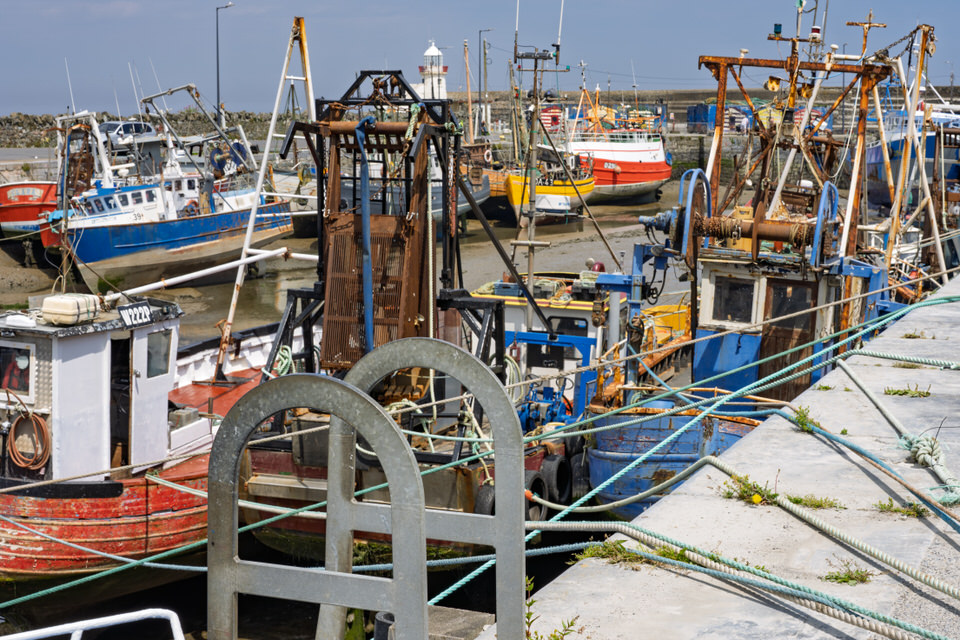
Balbriggan Is One Of The Drying Harbours Of North County Dublin
The Urban Cartographer
Explore the shifting landscape of Balbriggan Harbour, from its engineering as a traditional drying port to the removal of the iconic HMS Portisham. A reflection on maritime history, tidal infrastructure, and the ongoing - Our Balbriggan - rejuvenation project.
MOBILE FRIENDLY AND MUCH FASTER
GO THERE
THE BALBRIGGAN RUST BUCKETS
I USED A SONY A7RVI
Presented By William Murphy - The Urban Cartographer - Sony A7RVI With Sony 50-150mm Lens Photographed 23 June 2026
Balbriggan Is One Of The Drying Harbours Of North County Dublin
Author: William Murphy - The Urban Cartographer
|
24. Jun 2026
A VERY HOT DAY ... TOO HOT FOR ME * In The Year 2008
* In The Year 2011
* In The Year 2017
* Henrietta Back In 2010 Balbriggan Is One Of The Drying Harbours Of North County Dublin The Engineering of "Taking to the Hard" *In a drying harbour like Balbriggan, the harbour floor is essentially the resting place for the local fleet twice a day. As the tide recedes, the water level drops, leaving vessels to settle into the mud and sand. A Chapter Closed: The HMS Portisham For many years, the visual identity of Balbriggan was inextricably linked to the HMS Portisham. A former Ham-class inshore minesweeper, this 100-tonne vessel was, for its owner, a long-term project in maritime conversion. For the local council, it was a persistent planning and aesthetic challenge. I have followed this story for years—not just as a photographer, but as someone interested in the intersection of property law and maritime heritage. The case became a landmark legal saga, with the Supreme Court eventually ruling against Fingal County Council’s initial attempts to label the vessel a nuisance. During my recent visits to the area to document the ongoing "Our Balbriggan" rejuvenation works, it became clear that the harbour is entering a new phase. With the extensive redevelopment of the public realm, plazas, and tourist infrastructure, the space previously occupied by the Portisham has been reclaimed. The vessel is no longer a fixture of the quay, marking the end of a long, controversial chapter in the harbour’s industrial timeline. Current Location: Following the legal and maintenance issues in Balbriggan, the vessel was relocated further south and was towed into Arklow Harbour in late 2024. According to locals the owner ran into difficulties while relocating to Arklow and began to take on water. After being towed into the harbour the boat was seized and destroyed - apparently this is nothing more than a local legend, Balbriggan continues to evolve, shedding its more complex, static remnants in favour of a design-forward, accessible public waterfront. It is a transition worth documenting for anyone tracking the shifting landscape of Dublin’s northern coastline. * February 2026: High Resolution Images
* April 2026: High Resolution Images
* May 2026: High Resolution Images
Balbriggan Is One Of The Drying Harbours Of North County Dublin
THE LEGACY CATALOG
A SELECTION OF HIGH RESOLUTION PHOTO GALLERIES
HIGH RESOLUTION PHOTOGRAPHS - BALBRIGGAN HARBOUR
I USED A SONY A7RVI
LET MISTER SCREEN DIRECT YOU
GLOBAL INDEX OF PHOTO GALLERIES
DUBLIN NORTHSIDE
THE URBAN CARTOGRAPHER
THE BALBRIGGAN RUST BUCKETS
Balbriggan Is One Of The Drying Harbours Of North County Dublin - Presented By The William Murphy - The Urban Cartographer