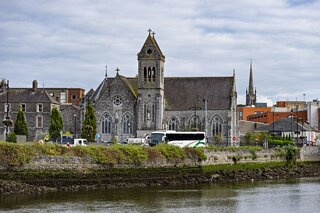
WHY ARE THERE SO MANY CHURCHES IN DROGHEDA
EVERYWHERE YOU LOOK IN DROGHEDA THERE IS A CHURCH TO BE SEEN [9 SEPTEMBER 2026]
Drogheda’s ecclesiastical density is striking even by Irish standards. Within a compact town centre straddling the River Boyne, visitors encounter over a dozen churches, convents, chapels, and monastic ruins—including St Peter’s Roman Catholic Church, St Peter’s Church of Ireland, the Augustinian Church, St Mary’s (both Catholic and Church of Ireland), and the remnants of medieval priories like Old Abbey Lane and Magdalene Tower.
Why the Churches Survived Until the Late 20th Century
The remarkable endurance of Drogheda’s dense ecclesiastical footprint well into the late 1900s stems from intertwined historical, geographical, and cultural pillars:
Dual-Borough Heritage: Drogheda historically developed as two distinct rival boroughs—Drogheda-in-Meath (south of the Boyne) and Drogheda-in-Uisneach/Louth (north of the Boyne)—until unified under a single charter in 1412. This duplication left two parallel networks of parishes, patron saints, and friaries that persisted across generations.
Primatial and Monastic Prominence: As the seat of the Catholic Primate of All Ireland (Archbishop of Armagh) who resided primarily in Drogheda during penal and post-penal times, the town held unique symbolic authority. Monastic orders like the Franciscans, Dominicans, and Augustinians operated for centuries, developing deep roots that survived Reformation suppressions and the Cromwellian siege of 1649.
19th-Century Devotional Revolution: Following Catholic Emancipation (1829), Drogheda’s burgeoning merchant class, textile mills, and brewing industries funded monumental Gothic Revival and Neo-Classical building projects. This made religious institutions central to civil pride, schooling, healthcare, and communal identity throughout the 19th and 20th centuries.
Social and Moral Hegemony: Up to the 1980s, mass attendance in the Republic frequently exceeded 85%. Parish organisations, confraternities, and convent schools acted as the bedrock of civic society.
Why Religion Declined Rapidly in Drogheda and Across Ireland
Ireland’s religious landscape shifted from near-universal observance to secularisation at unprecedented speed, with commuter hubs and industrial towns like Drogheda feeling the rupture acutely.
Exposure of Institutional Abuse: Beginning in the 1990s, widespread revelations of physical, emotional, and sexual abuse—compounded by hierarchical cover-ups and the scrutiny of mother-and-baby homes—shattered moral trust in the institutional Church.
The Celtic Tiger and Modernisation: The economic boom of the 1990s introduced rapid consumer wealth, higher educational attainment, and a cosmopolitan culture, eroding the Church's role as the primary arbiter of social life.
Rapid Urbanisation and Demographics: As Drogheda transformed into a primary commuter town for Dublin during the early 2000s, thousands of younger, secular residents arrived. This demographic churn displaced traditional parish networks far quicker than in rural communities.
Vocations Crisis: The median age of friars and priests climbed steeply. When communities like the Franciscans (2000) and Dominicans (2010s) withdrew, it was not merely due to dwindling pews, but because there were simply no new clergy to staff the houses.
Generational Reorientation: Constitutional referendums on divorce (1995), marriage equality (2015), and abortion (2018) solidified an independent, secular civic identity, rendering empty pews the norm rather than the exception.
The adaptive reuse of Drogheda’s redundant religious spaces demonstrates how a town steeped in monastic heritage responded to late-20th and 21st-century secularisation. Rather than allowing these historic structures to fall into ruin or undergo commercial redevelopment, municipal authorities and community bodies worked to transform sacred sites into hubs for the visual arts, civic heritage, and local engagement.
Highlanes Gallery
Highlanes Gallery is located on St Laurence Street within the former Franciscan Friary Church, representing the most prominent example of ecclesiastical conversion in Drogheda.
Architectural Transition: Following the departure of the Franciscan Order in 2000 after centuries of presence, the complex was gifted to the community and redeveloped under a design by architects O’Cofaigh & Associates, officially opening in 2006.
Preserved Interior Character: The adaptation retained the liturgical shell, including the lofty nave, timber barrel-vaulted ceiling, decorative plasterwork, and stained glass windows, creating a distinct backdrop for contemporary temporary exhibitions.
Civic and Artistic Role: It serves as a municipal gallery and permanent home for the Drogheda Municipal Art Collection—featuring significant 18th- to 20th-century works by artists such as Nathaniel Hone, Evie Hone, and Nano Reid—alongside an on-site café and community event space.
Droichead Arts Centre Stockwell Street
Droichead Arts Centre operates its multidisciplinary venue on Stockwell Street, integrating components of the town's historic religious and convent footprint into an active community arts facility.
Reconfigured Cultural Facilities: The building features a multi-purpose visual art gallery space, a dedicated studio theatre, and workshop rooms designed for community groups and performing arts.
Heritage Context: Situated within Drogheda's historic town core, the venue incorporates fabric from adjacent institutional properties to sustain creative programming and regional festivals.
Artistic Focus: It acts as a primary platform in County Louth for touring drama, independent cinema screenings, youth arts initiatives, and solo contemporary exhibitions.
Other Ecclesiastical Conversions and Interpretive Sites
Beyond these central institutions, several other ecclesiastical properties across Drogheda have shifted toward heritage and municipal functions:
St Peter's Church of Ireland (Heritage & Tourism): Perched at the top of Peter Street, the churchyard contains extensive historical funerary monuments, including an elaborate 16th-century cadaver tomb (the Sir Arthur Darcy monument), maintained as an open-air historical and archaeological attraction.
Millmount Complex & Barracks: Incorporating former ecclesiastical lands and strategic river defences overlooking the Boyne, Millmount now houses the Drogheda Museum, artisan craft workshops, and local archives documenting the town’s guild and religious records.
Magdalene Tower & Dominican Grounds: While the 18th- and 19th-century priory buildings saw successive redevelopments, the 14th-century belfry tower remains preserved as a free-standing municipal monument and civic focal point illustrating Drogheda's medieval friary network.
Drogheda’s ecclesiastical density is striking even by Irish standards. Within a compact town centre straddling the River Boyne, visitors encounter over a dozen churches, convents, chapels, and monastic ruins—including St Peter’s Roman Catholic Church, St Peter’s Church of Ireland, the Augustinian Church, St Mary’s (both Catholic and Church of Ireland), and the remnants of medieval priories like Old Abbey Lane and Magdalene Tower.
Why the Churches Survived Until the Late 20th Century
The remarkable endurance of Drogheda’s dense ecclesiastical footprint well into the late 1900s stems from intertwined historical, geographical, and cultural pillars:
Dual-Borough Heritage: Drogheda historically developed as two distinct rival boroughs—Drogheda-in-Meath (south of the Boyne) and Drogheda-in-Uisneach/Louth (north of the Boyne)—until unified under a single charter in 1412. This duplication left two parallel networks of parishes, patron saints, and friaries that persisted across generations.
Primatial and Monastic Prominence: As the seat of the Catholic Primate of All Ireland (Archbishop of Armagh) who resided primarily in Drogheda during penal and post-penal times, the town held unique symbolic authority. Monastic orders like the Franciscans, Dominicans, and Augustinians operated for centuries, developing deep roots that survived Reformation suppressions and the Cromwellian siege of 1649.
19th-Century Devotional Revolution: Following Catholic Emancipation (1829), Drogheda’s burgeoning merchant class, textile mills, and brewing industries funded monumental Gothic Revival and Neo-Classical building projects. This made religious institutions central to civil pride, schooling, healthcare, and communal identity throughout the 19th and 20th centuries.
Social and Moral Hegemony: Up to the 1980s, mass attendance in the Republic frequently exceeded 85%. Parish organisations, confraternities, and convent schools acted as the bedrock of civic society.
Why Religion Declined Rapidly in Drogheda and Across Ireland
Ireland’s religious landscape shifted from near-universal observance to secularisation at unprecedented speed, with commuter hubs and industrial towns like Drogheda feeling the rupture acutely.
Exposure of Institutional Abuse: Beginning in the 1990s, widespread revelations of physical, emotional, and sexual abuse—compounded by hierarchical cover-ups and the scrutiny of mother-and-baby homes—shattered moral trust in the institutional Church.
The Celtic Tiger and Modernisation: The economic boom of the 1990s introduced rapid consumer wealth, higher educational attainment, and a cosmopolitan culture, eroding the Church's role as the primary arbiter of social life.
Rapid Urbanisation and Demographics: As Drogheda transformed into a primary commuter town for Dublin during the early 2000s, thousands of younger, secular residents arrived. This demographic churn displaced traditional parish networks far quicker than in rural communities.
Vocations Crisis: The median age of friars and priests climbed steeply. When communities like the Franciscans (2000) and Dominicans (2010s) withdrew, it was not merely due to dwindling pews, but because there were simply no new clergy to staff the houses.
Generational Reorientation: Constitutional referendums on divorce (1995), marriage equality (2015), and abortion (2018) solidified an independent, secular civic identity, rendering empty pews the norm rather than the exception.
The adaptive reuse of Drogheda’s redundant religious spaces demonstrates how a town steeped in monastic heritage responded to late-20th and 21st-century secularisation. Rather than allowing these historic structures to fall into ruin or undergo commercial redevelopment, municipal authorities and community bodies worked to transform sacred sites into hubs for the visual arts, civic heritage, and local engagement.
Highlanes Gallery
Highlanes Gallery is located on St Laurence Street within the former Franciscan Friary Church, representing the most prominent example of ecclesiastical conversion in Drogheda.
Architectural Transition: Following the departure of the Franciscan Order in 2000 after centuries of presence, the complex was gifted to the community and redeveloped under a design by architects O’Cofaigh & Associates, officially opening in 2006.
Preserved Interior Character: The adaptation retained the liturgical shell, including the lofty nave, timber barrel-vaulted ceiling, decorative plasterwork, and stained glass windows, creating a distinct backdrop for contemporary temporary exhibitions.
Civic and Artistic Role: It serves as a municipal gallery and permanent home for the Drogheda Municipal Art Collection—featuring significant 18th- to 20th-century works by artists such as Nathaniel Hone, Evie Hone, and Nano Reid—alongside an on-site café and community event space.
Droichead Arts Centre Stockwell Street
Droichead Arts Centre operates its multidisciplinary venue on Stockwell Street, integrating components of the town's historic religious and convent footprint into an active community arts facility.
Reconfigured Cultural Facilities: The building features a multi-purpose visual art gallery space, a dedicated studio theatre, and workshop rooms designed for community groups and performing arts.
Heritage Context: Situated within Drogheda's historic town core, the venue incorporates fabric from adjacent institutional properties to sustain creative programming and regional festivals.
Artistic Focus: It acts as a primary platform in County Louth for touring drama, independent cinema screenings, youth arts initiatives, and solo contemporary exhibitions.
Other Ecclesiastical Conversions and Interpretive Sites
Beyond these central institutions, several other ecclesiastical properties across Drogheda have shifted toward heritage and municipal functions:
St Peter's Church of Ireland (Heritage & Tourism): Perched at the top of Peter Street, the churchyard contains extensive historical funerary monuments, including an elaborate 16th-century cadaver tomb (the Sir Arthur Darcy monument), maintained as an open-air historical and archaeological attraction.
Millmount Complex & Barracks: Incorporating former ecclesiastical lands and strategic river defences overlooking the Boyne, Millmount now houses the Drogheda Museum, artisan craft workshops, and local archives documenting the town’s guild and religious records.
Magdalene Tower & Dominican Grounds: While the 18th- and 19th-century priory buildings saw successive redevelopments, the 14th-century belfry tower remains preserved as a free-standing municipal monument and civic focal point illustrating Drogheda's medieval friary network.
WHY SO MANY SHURCHES