I USED A SONY A1 II AND A 16-35MM LENS
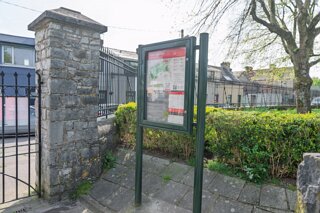
SHALOM PARK AS IT WAS IN APRIL 2026 [I USED A SONY A1 II WITH A 16-35MM LENS]
Shalom Park and "Jewtown"
Shalom Park is a beautifully landscaped public park located in Cork City, situated just off Albert Road and Gasworks Road, slightly east of the city centre. It occupies a resonant physical space immediately adjacent to the Hibernian Buildings—a grid of late nineteenth-century terraced artisan cottages constructed by the Cork Improved Dwellings Company.
For decades, this specific pocket of the city was known colloquially and affectionately by Corkonians as "Jewtown." From the 1880s through the mid-twentieth century, this compact neighborhood served as the vibrant heartbeat of Cork’s Jewish community. The area once hummed with the sounds of Yiddish, thrived with small kosher shops, housed a Hebrew school, and saw door-to-door pedlars (known locally as "weekly men") setting out every Monday morning to sell household goods across County Cork before returning by Friday afternoon for the Sabbath.
The Origins of Cork's Jewish Population
The belief that the neighborhood was populated by refugees fleeing the Limerick boycott (often called the Limerick pogrom) of 1904–1906 is a common historical misconception. In reality, the Jewish society in Cork was already well-established and had peaked in numbers before the events in Limerick occurred.
The two groups represented distinct, though related, threads of migration:
The Core Cork Population: The vast majority of Cork’s Jewish community arrived between 1881 and 1890. They were Lithuanian Jews (Litvaks) escaping harsh tsarist conscription laws and anti-Semitic tsarist decrees within the Pale of Settlement. Most specifically emigrated from the Kovno Gubernia province (modern-day Kaunas). A popular urban myth suggests they intended to sail to New York but misheard the ship’s captain calling "Cork" and disembarked early. In truth, they likely chose Cork because chain migration allowed early arrivals to pull family members and neighbors from the exact same Lithuanian shtetls.
The Limerick Connection: When the Redemptorist priest Father John Creagh instigated a bitter economic boycott and campaign of intimidation against Limerick's small Jewish population in 1904, several families did indeed flee Limerick for Cork. Some arrived with the intention of boarding transatlantic ships at Queenstown (now Cobh) but were welcomed so warmly by the existing Cork Jewish community that they decided to stay. Among these refugees was the Goldberg family. Marcus Goldberg had been attacked in Limerick; his son, Gerald Goldberg, grew up to become a prominent solicitor and eventually the first Jewish Lord Mayor of Cork in 1977.
Thus, while the Limerick refugees added prominent families to the fabric of Cork, they joined a pre-existing, highly organized community rather than establishing it.
The Decline of the Community
At its zenith in the early twentieth century, the Jewish population of Cork numbered around 450 to 500 individuals. However, the community faced a steady demographic decline as the decades progressed.
Unlike communities in larger European cities, the decline in Cork was not driven by local hostility, but rather by economic migration and assimilation. The early immigrants prioritised secular and higher education for their children. This educated second generation—becoming doctors, solicitors, academics, and corporate professionals—frequently left Cork for larger Jewish communities in Dublin, the United Kingdom, Israel, and the United States to find broader career prospects and marriage partners within their faith.
By the late twentieth century, the community could no longer secure a minyan (the quorum of ten Jewish men required to hold orthodox public worship). The Cork Hebrew Congregation’s synagogue on South Terrace, which had opened in 1892, finally closed its doors due to a lack of members in February 2016. Today, while a newer, diverse group of secular and tech-sector Jewish arrivals live across Munster, virtually no descendants of the original Litvak families remain in the immediate Jewtown terraces.
Establishment of Shalom Park
Shalom Park was officially opened in 1989.
Who established it?
The park was created through a collaborative effort spearheaded by the Cork Gas Company (now part of Bord Gáis) and Cork Corporation (now Cork City Council). The project was financed and executed utilizing a social employment scheme alongside support from FAS, the National Lottery, and the ESB.
Why was it established?
The site itself holds immense industrial heritage; it previously housed the massive, disused nineteenth-century gasometers belonging to the Cork Gas Company. Following the arrival of natural gas in Cork in 1980, the manufacturing plant became obsolete and was dismantled.
Rather than selling the vacant industrial plot for commercial redevelopment, the Chairman of the Cork Gas Company, P.J. Dineen, envisioned converting the idle land into a dedicated green space for the public. Cork Corporation selected the name "Shalom" (the Hebrew word for peace) for a dual purpose: it bypassed confusion with the city's existing Peace Park on the Grand Parade, and it served as a permanent, formal tribute to the historical Jewish community that had lived just across the road.
Today, the park stands as a quiet oasis of remembrance. It features a unique artistic lighting design comprising eight standard street lamps and a distinctive ninth lamp. Every winter, during the festival of Hanukkah, this ninth lamp is lit to replicate the Hanukkiyah (menorah), ensuring that the memory of the Litvak pedlars and families who shaped this corner of Cork continues to shine.
Shalom Park and "Jewtown"
Shalom Park is a beautifully landscaped public park located in Cork City, situated just off Albert Road and Gasworks Road, slightly east of the city centre. It occupies a resonant physical space immediately adjacent to the Hibernian Buildings—a grid of late nineteenth-century terraced artisan cottages constructed by the Cork Improved Dwellings Company.
For decades, this specific pocket of the city was known colloquially and affectionately by Corkonians as "Jewtown." From the 1880s through the mid-twentieth century, this compact neighborhood served as the vibrant heartbeat of Cork’s Jewish community. The area once hummed with the sounds of Yiddish, thrived with small kosher shops, housed a Hebrew school, and saw door-to-door pedlars (known locally as "weekly men") setting out every Monday morning to sell household goods across County Cork before returning by Friday afternoon for the Sabbath.
The Origins of Cork's Jewish Population
The belief that the neighborhood was populated by refugees fleeing the Limerick boycott (often called the Limerick pogrom) of 1904–1906 is a common historical misconception. In reality, the Jewish society in Cork was already well-established and had peaked in numbers before the events in Limerick occurred.
The two groups represented distinct, though related, threads of migration:
The Core Cork Population: The vast majority of Cork’s Jewish community arrived between 1881 and 1890. They were Lithuanian Jews (Litvaks) escaping harsh tsarist conscription laws and anti-Semitic tsarist decrees within the Pale of Settlement. Most specifically emigrated from the Kovno Gubernia province (modern-day Kaunas). A popular urban myth suggests they intended to sail to New York but misheard the ship’s captain calling "Cork" and disembarked early. In truth, they likely chose Cork because chain migration allowed early arrivals to pull family members and neighbors from the exact same Lithuanian shtetls.
The Limerick Connection: When the Redemptorist priest Father John Creagh instigated a bitter economic boycott and campaign of intimidation against Limerick's small Jewish population in 1904, several families did indeed flee Limerick for Cork. Some arrived with the intention of boarding transatlantic ships at Queenstown (now Cobh) but were welcomed so warmly by the existing Cork Jewish community that they decided to stay. Among these refugees was the Goldberg family. Marcus Goldberg had been attacked in Limerick; his son, Gerald Goldberg, grew up to become a prominent solicitor and eventually the first Jewish Lord Mayor of Cork in 1977.
Thus, while the Limerick refugees added prominent families to the fabric of Cork, they joined a pre-existing, highly organized community rather than establishing it.
The Decline of the Community
At its zenith in the early twentieth century, the Jewish population of Cork numbered around 450 to 500 individuals. However, the community faced a steady demographic decline as the decades progressed.
Unlike communities in larger European cities, the decline in Cork was not driven by local hostility, but rather by economic migration and assimilation. The early immigrants prioritised secular and higher education for their children. This educated second generation—becoming doctors, solicitors, academics, and corporate professionals—frequently left Cork for larger Jewish communities in Dublin, the United Kingdom, Israel, and the United States to find broader career prospects and marriage partners within their faith.
By the late twentieth century, the community could no longer secure a minyan (the quorum of ten Jewish men required to hold orthodox public worship). The Cork Hebrew Congregation’s synagogue on South Terrace, which had opened in 1892, finally closed its doors due to a lack of members in February 2016. Today, while a newer, diverse group of secular and tech-sector Jewish arrivals live across Munster, virtually no descendants of the original Litvak families remain in the immediate Jewtown terraces.
Establishment of Shalom Park
Shalom Park was officially opened in 1989.
Who established it?
The park was created through a collaborative effort spearheaded by the Cork Gas Company (now part of Bord Gáis) and Cork Corporation (now Cork City Council). The project was financed and executed utilizing a social employment scheme alongside support from FAS, the National Lottery, and the ESB.
Why was it established?
The site itself holds immense industrial heritage; it previously housed the massive, disused nineteenth-century gasometers belonging to the Cork Gas Company. Following the arrival of natural gas in Cork in 1980, the manufacturing plant became obsolete and was dismantled.
Rather than selling the vacant industrial plot for commercial redevelopment, the Chairman of the Cork Gas Company, P.J. Dineen, envisioned converting the idle land into a dedicated green space for the public. Cork Corporation selected the name "Shalom" (the Hebrew word for peace) for a dual purpose: it bypassed confusion with the city's existing Peace Park on the Grand Parade, and it served as a permanent, formal tribute to the historical Jewish community that had lived just across the road.
Today, the park stands as a quiet oasis of remembrance. It features a unique artistic lighting design comprising eight standard street lamps and a distinctive ninth lamp. Every winter, during the festival of Hanukkah, this ninth lamp is lit to replicate the Hanukkiyah (menorah), ensuring that the memory of the Litvak pedlars and families who shaped this corner of Cork continues to shine.


SHALOM PARK IN CORK