TODAY I USED A FUJIFILM X100VI
All Paths Lead to the Ha'penny Bridge: The Rebirth of Liffey Street
The architectural soul of Dublin often feels as though it converges at the Ha'penny Bridge. This elegant cast-iron span acts as the primary connective tissue between the historic Northside and the vibrant streets of Temple Bar. Recently, the surrounding cityscape has undergone a profound metamorphosis, transitioning from a cluttered transit route into a sophisticated, pedestrian-focused plaza.
The Transformation of Lower Liffey Street
The completion of the Liffey Street Public Realm Project marks a significant milestone in Dublin’s urban evolution. The once-crowded roadway of Lower Liffey Street has been reimagined as a high-quality granite boulevard. By removing the constant stream of private vehicles, the city has created a seamless flow for pedestrians moving between the Henry Street shopping district and the river.
The introduction of sustainable urban drainage systems, new seating, and semi-mature trees has softened the environment. This redevelopment ensures that the "Meeting Place" statue—famously known to locals as the "Hags with the Bags"—now sits within a calm, social space rather than amidst the exhaust fumes of idling traffic.
A New Perspective from the Liffey
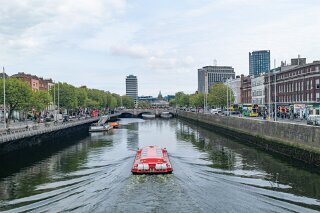
Observing the area from the water provides a unique vantage point on these terrestrial changes. The Dublin Discovered Boat Tours offer a distinctive vantage point, departing from the heart of the Docklands to glide past the city’s iconic landmarks.
As these tour boats pass beneath the low arches of the Ha'penny Bridge, passengers are regaled with tales of ancient and modern Dublin. This river-level perspective highlights the contrast between the 1816 ironwork of the bridge and the contemporary glass-fronted developments further downstream. The river, once the industrial lifeblood of the city, has been reclaimed as a site of historical storytelling and leisure.
Traffic Management and Urban Growth
This revitalisation is part of a broader strategy to discourage through-traffic within the city core. Recent traffic management measures have prioritised public transport and cycling, effectively handing the streets back to the citizens. While this shift has altered how the city moves, it has also paved the way for an unprecedented commercial boom.
The skyline around Lower Liffey Street is currently defined by the silhouette of construction cranes. A massive influx of hotel developments is reshaping the area’s density. Major international brands and boutique operators are rapidly expanding their footprint near Abbey Street and the Quays, catering to the growing demand for central accommodation. While this "hotelisation" is a subject of much civic debate, it undeniably cements the Liffey Street corridor as the primary gateway for visitors exploring the Irish capital.
The architectural soul of Dublin often feels as though it converges at the Ha'penny Bridge. This elegant cast-iron span acts as the primary connective tissue between the historic Northside and the vibrant streets of Temple Bar. Recently, the surrounding cityscape has undergone a profound metamorphosis, transitioning from a cluttered transit route into a sophisticated, pedestrian-focused plaza.
The Transformation of Lower Liffey Street
The completion of the Liffey Street Public Realm Project marks a significant milestone in Dublin’s urban evolution. The once-crowded roadway of Lower Liffey Street has been reimagined as a high-quality granite boulevard. By removing the constant stream of private vehicles, the city has created a seamless flow for pedestrians moving between the Henry Street shopping district and the river.
The introduction of sustainable urban drainage systems, new seating, and semi-mature trees has softened the environment. This redevelopment ensures that the "Meeting Place" statue—famously known to locals as the "Hags with the Bags"—now sits within a calm, social space rather than amidst the exhaust fumes of idling traffic.
A New Perspective from the Liffey
Observing the area from the water provides a unique vantage point on these terrestrial changes. The Dublin Discovered Boat Tours offer a distinctive vantage point, departing from the heart of the Docklands to glide past the city’s iconic landmarks.
As these tour boats pass beneath the low arches of the Ha'penny Bridge, passengers are regaled with tales of ancient and modern Dublin. This river-level perspective highlights the contrast between the 1816 ironwork of the bridge and the contemporary glass-fronted developments further downstream. The river, once the industrial lifeblood of the city, has been reclaimed as a site of historical storytelling and leisure.
Traffic Management and Urban Growth
This revitalisation is part of a broader strategy to discourage through-traffic within the city core. Recent traffic management measures have prioritised public transport and cycling, effectively handing the streets back to the citizens. While this shift has altered how the city moves, it has also paved the way for an unprecedented commercial boom.
The skyline around Lower Liffey Street is currently defined by the silhouette of construction cranes. A massive influx of hotel developments is reshaping the area’s density. Major international brands and boutique operators are rapidly expanding their footprint near Abbey Street and the Quays, catering to the growing demand for central accommodation. While this "hotelisation" is a subject of much civic debate, it undeniably cements the Liffey Street corridor as the primary gateway for visitors exploring the Irish capital.
LIFFEY STREET AREA