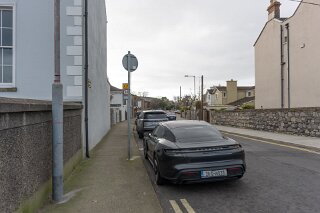
GILFORD ROAD IN SANDYMOUNT ST PATRICK'S DAY 2026
THIS WAS MY FIRST TIME TO VISIT GILFORD ROAD IN SANDYMOUNT [17 MARCH 2026]
Gilford Road, Sandymount: A Profile of Prestige and History
Gilford Road is one of the most prestigious and sought-after residential addresses in the leafy suburb of Sandymount, Dublin 4. Connecting the heart of Sandymount Village to the coast at Strand Road, it serves as a primary artery of the neighbourhood, characterised by its elegant mix of architectural styles and proximity to the Irish Sea.
Origin and History
The history of Gilford Road is closely tied to the broader development of the Pembroke Estate. Until the late 18th century, much of this area was largely unpopulated marshland known as "Brickfields." The transformation began in earnest after the construction of the sea wall around 1810 by Lord Fitzwilliam, which allowed for the development of suburban villas for wealthy Dubliners.
Naming: The road is named after the Earl of Gilford (a title held by the Clanwilliam family), following the tradition of naming local streets after the landed gentry and aristocratic connections of the Pembroke and Fitzwilliam estates.
Development: While the northern end (near the village) contains some early 19th-century villa-style houses, the bulk of the road's residential character was formed during the late Victorian and Edwardian periods, followed by substantial "pre-war" semi-detached development in the 1920s and 30s.
Notable Features and Points of Interest
Despite being primarily residential, Gilford Road contains several buildings of architectural and social significance:
Merton and Dunluce (No. 15a & 15b): Originally a grand five-bay single-storey-over-basement villa, this property is a Protected Structure. It remains a key example of the "villa" architecture that defined early Sandymount.
The Tram Shed (No. 17a): One of the most unique "non-residential" buildings on the road, this was originally a tram depot building dating back to 1901. Today, it has been repurposed into high-end office space, serving as a physical reminder of when Sandymount was a primary terminus for the Dublin United Tramways Company.
Literary Connections: The general environs of Gilford Road are immortalised in the "Proteus" and "Nausicaa" episodes of James Joyce’s Ulysses, as the road leads directly toward the strand where Stephen Dedalus and Leopold Bloom took their famous walks.
Schools and Education
Gilford Road is a hub for local education, hosting institutions that have served the community for generations:
Scoil Mhuire GNS: Located at the village end of the road, this is a long-standing Catholic primary school for girls. Its distinctive red-brick facade is a landmark of the street.
Gilford Montessori School: Situated at No. 15 Gilford Road, this well-established early-years centre is housed in one of the road’s historic period buildings.
Nearby Institutions: The road is also within walking distance of Star of the Sea BNS (Leahy’s Terrace), St. Matthew’s National School, and Sandymount Park ETSS.
Current Status
Today, Gilford Road remains one of the most expensive residential locations in Ireland. Its modern status is defined by:
High Property Values: Houses on the road frequently command prices between €1.5 million and over €3.5 million, depending on their size and level of restoration.
Infill Development: In recent years, there has been a trend of "backland" development and the conversion of older office spaces or garages into high-end modern apartments or mews houses.
Community Hub: The road recently underwent significant infrastructure upgrades to accommodate high volumes of local traffic and commuters heading to the Sandymount DART station.
Gilford Road, Sandymount: A Profile of Prestige and History
Gilford Road is one of the most prestigious and sought-after residential addresses in the leafy suburb of Sandymount, Dublin 4. Connecting the heart of Sandymount Village to the coast at Strand Road, it serves as a primary artery of the neighbourhood, characterised by its elegant mix of architectural styles and proximity to the Irish Sea.
Origin and History
The history of Gilford Road is closely tied to the broader development of the Pembroke Estate. Until the late 18th century, much of this area was largely unpopulated marshland known as "Brickfields." The transformation began in earnest after the construction of the sea wall around 1810 by Lord Fitzwilliam, which allowed for the development of suburban villas for wealthy Dubliners.
Naming: The road is named after the Earl of Gilford (a title held by the Clanwilliam family), following the tradition of naming local streets after the landed gentry and aristocratic connections of the Pembroke and Fitzwilliam estates.
Development: While the northern end (near the village) contains some early 19th-century villa-style houses, the bulk of the road's residential character was formed during the late Victorian and Edwardian periods, followed by substantial "pre-war" semi-detached development in the 1920s and 30s.
Notable Features and Points of Interest
Despite being primarily residential, Gilford Road contains several buildings of architectural and social significance:
Merton and Dunluce (No. 15a & 15b): Originally a grand five-bay single-storey-over-basement villa, this property is a Protected Structure. It remains a key example of the "villa" architecture that defined early Sandymount.
The Tram Shed (No. 17a): One of the most unique "non-residential" buildings on the road, this was originally a tram depot building dating back to 1901. Today, it has been repurposed into high-end office space, serving as a physical reminder of when Sandymount was a primary terminus for the Dublin United Tramways Company.
Literary Connections: The general environs of Gilford Road are immortalised in the "Proteus" and "Nausicaa" episodes of James Joyce’s Ulysses, as the road leads directly toward the strand where Stephen Dedalus and Leopold Bloom took their famous walks.
Schools and Education
Gilford Road is a hub for local education, hosting institutions that have served the community for generations:
Scoil Mhuire GNS: Located at the village end of the road, this is a long-standing Catholic primary school for girls. Its distinctive red-brick facade is a landmark of the street.
Gilford Montessori School: Situated at No. 15 Gilford Road, this well-established early-years centre is housed in one of the road’s historic period buildings.
Nearby Institutions: The road is also within walking distance of Star of the Sea BNS (Leahy’s Terrace), St. Matthew’s National School, and Sandymount Park ETSS.
Current Status
Today, Gilford Road remains one of the most expensive residential locations in Ireland. Its modern status is defined by:
High Property Values: Houses on the road frequently command prices between €1.5 million and over €3.5 million, depending on their size and level of restoration.
Infill Development: In recent years, there has been a trend of "backland" development and the conversion of older office spaces or garages into high-end modern apartments or mews houses.
Community Hub: The road recently underwent significant infrastructure upgrades to accommodate high volumes of local traffic and commuters heading to the Sandymount DART station.
GILFORD ROAD