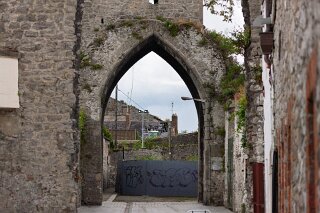
AS IT WAS IN 2009 - I COULD NOT GAIN ACCESS IN 2025
ST MARY'S PRIORY AS IT WAS IN 2009 [I COULD NOT GAIN ACCESS WHEN I VISITED IN 2025]
Sacred Ruins and Street Commerce: St Mary’s Priory, Drogheda
When I first photographed St Mary’s Priory in 2009, it was a site defined by a fascinating, albeit confusing, architectural collision. On one hand, you have a remarkable testament to Ireland’s medieval heritage—a former Augustinian monastery founded in the 12th century (c. 1206) by Ursus de Swemele. On the other, my lens captured the grit of 20th-century industry, with the iconic "Murdock & Sons" plumbing sign leaning directly against 800-year-old limestone.
A Layered History
Originally established as the Hospital of St Mary d’Urso, this site evolved into a thriving community dedicated to spiritual pursuits. Its history is a microcosm of Drogheda’s ecclesiastical past, surviving the Great Flood of the Boyne in 1330 and the eventual suppression of the monasteries. For centuries, the priory was a serene retreat, defined by its exquisite Gothic architecture and intricately carved stonework.
However, by the time of my 2009 visit, the "tranquil atmosphere" was shared with the hum of local trade. The ruins on Old Abbey Lane were not isolated behind manicured lawns; they were the literal back-walls of commercial enterprises. This "living ruin" aesthetic—where ancient lancet windows stood shoulder-to-shoulder with corrugated iron and trade vans—created a picturesque, if jarring, setting for photography.
The "Murdock & Sons" Connection
TOne of my images features a ghost sign that refers to Murdock & Sons, a well-known local plumbing and heating business. Their premises were located on Old Abbey Lane, essentially sharing a wall with the 13th-century ruins.In the mid-20th century, it was common for Irish urban ruins to be "repurposed" as back walls for warehouses, garages, or workshops. This created the jarring visual contrast:
The Sacred: Ancient lancet windows and massive limestone piers.
The Profane: Corrugated iron roofs, 1950s-era commercial signage, and parked transit vans.
The Current Status
If you visit Drogheda today, you will likely find your path barred. The site is currently restricted, with heavy fencing protecting the "at-risk" West Gable and the central tower. As of 2026, the transition from a functional commercial laneway to a protected heritage site has been stalled by structural safety concerns. The very proximity to businesses like Murdock & Sons, which once kept the lane active, now presents a conservation challenge as those old lean-to structures are cleared to prevent further damage to the medieval masonry.
While we can no longer wander freely through the beautiful, overgrown "gardens" that once complemented these ruins, my 2009 archive serves as a rare record of a time when the Priory was still woven into the daily graft of the town. Whether you are an architecture lover or a history buff, St Mary’s remains a captivating destination—even if, for now, we must appreciate its silent grandeur from a distance.
Sacred Ruins and Street Commerce: St Mary’s Priory, Drogheda
When I first photographed St Mary’s Priory in 2009, it was a site defined by a fascinating, albeit confusing, architectural collision. On one hand, you have a remarkable testament to Ireland’s medieval heritage—a former Augustinian monastery founded in the 12th century (c. 1206) by Ursus de Swemele. On the other, my lens captured the grit of 20th-century industry, with the iconic "Murdock & Sons" plumbing sign leaning directly against 800-year-old limestone.
A Layered History
Originally established as the Hospital of St Mary d’Urso, this site evolved into a thriving community dedicated to spiritual pursuits. Its history is a microcosm of Drogheda’s ecclesiastical past, surviving the Great Flood of the Boyne in 1330 and the eventual suppression of the monasteries. For centuries, the priory was a serene retreat, defined by its exquisite Gothic architecture and intricately carved stonework.
However, by the time of my 2009 visit, the "tranquil atmosphere" was shared with the hum of local trade. The ruins on Old Abbey Lane were not isolated behind manicured lawns; they were the literal back-walls of commercial enterprises. This "living ruin" aesthetic—where ancient lancet windows stood shoulder-to-shoulder with corrugated iron and trade vans—created a picturesque, if jarring, setting for photography.
The "Murdock & Sons" Connection
TOne of my images features a ghost sign that refers to Murdock & Sons, a well-known local plumbing and heating business. Their premises were located on Old Abbey Lane, essentially sharing a wall with the 13th-century ruins.In the mid-20th century, it was common for Irish urban ruins to be "repurposed" as back walls for warehouses, garages, or workshops. This created the jarring visual contrast:
The Sacred: Ancient lancet windows and massive limestone piers.
The Profane: Corrugated iron roofs, 1950s-era commercial signage, and parked transit vans.
The Current Status
If you visit Drogheda today, you will likely find your path barred. The site is currently restricted, with heavy fencing protecting the "at-risk" West Gable and the central tower. As of 2026, the transition from a functional commercial laneway to a protected heritage site has been stalled by structural safety concerns. The very proximity to businesses like Murdock & Sons, which once kept the lane active, now presents a conservation challenge as those old lean-to structures are cleared to prevent further damage to the medieval masonry.
While we can no longer wander freely through the beautiful, overgrown "gardens" that once complemented these ruins, my 2009 archive serves as a rare record of a time when the Priory was still woven into the daily graft of the town. Whether you are an architecture lover or a history buff, St Mary’s remains a captivating destination—even if, for now, we must appreciate its silent grandeur from a distance.
SAINT MARYS PRIORY