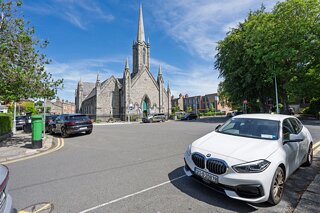
TODAY I USED MY NEW SONY A7RVI BUT THE GPS FAILED
From Upper Rathmines Road via Church Avenue to Beechwood Tram Stop
Rather than relying on the bus from Rathmines, I decided it would be a better idea to walk to the Beechwood stop and take the Luas to the city centre for a visit to Eatokyo on Aston Quay.
While the Dublin bus service has seen great improvements, it is often a victim of its own success—frequently running at full capacity, which can make for an unpleasant journey on the rare hot day we experience.
Today’s walk, however, provided a welcome change of pace, offering a chance to observe the architectural and social history of these enduring Victorian-era streets.
The Route: A Historical Perspective
The walk from Upper Rathmines Road via Church Avenue, Belgrave Road, Dunville Avenue, and finally to Beechwood Road is essentially a journey through the development of suburban Dublin in the mid-to-late 19th century.
Church Avenue and the Parish
The anchor of this route is the Church of the Holy Trinity in Rathmines. This historic church, dating back to the 1820s, is a significant landmark of the area. Its spire has defined the local skyline for nearly two centuries, serving as a focal point for a parish that grew rapidly as the city expanded southward.
Belgrave Road and Dunville Avenue
As you transition into Belgrave Road and move toward Dunville Avenue, you are walking through what was once the heart of affluent suburban living. These roads are noted for their well-preserved red-brick Victorian terraces.
Historically, this area was home to the professional and merchant classes who sought to escape the noise of the city centre. Several figures of note resided in these leafy environs over the years, contributing to the area’s literary and professional reputation. Notably, the writer George William Russell (Æ), the esteemed Irish poet and painter, had connections to the broader Rathmines area, and the vicinity has long been a quiet enclave for Dublin’s intelligentsia.
Infrastructure: The Luas vs. The Bus
Reaching the Beechwood stop, the reality of Dublin’s transport demands becomes apparent. The trams were packed today, and I suspect that the system has reached capacity well ahead of any significant upgrades to the service.
While there have been ongoing discussions regarding the "Luas Capacity Enhancement Programme"—which includes the introduction of longer 55-metre trams and platform extensions—the immediate relief felt by commuters is minimal. The frequency remains high, but the sheer volume of passengers moving between the suburbs and the city centre during peak times often outstrips the current supply.
When compared to the local bus network, the choice remains a toss-up. Buses are more numerous than they were a decade ago, but their reliability is often challenged by traffic, and they can become incredibly stifling during our increasingly warm summers. For now, the rail link at Beechwood remains the most efficient, albeit crowded, artery for those of us living in the Rathmines-Ranelagh corridor.
Rather than relying on the bus from Rathmines, I decided it would be a better idea to walk to the Beechwood stop and take the Luas to the city centre for a visit to Eatokyo on Aston Quay.
While the Dublin bus service has seen great improvements, it is often a victim of its own success—frequently running at full capacity, which can make for an unpleasant journey on the rare hot day we experience.
Today’s walk, however, provided a welcome change of pace, offering a chance to observe the architectural and social history of these enduring Victorian-era streets.
The Route: A Historical Perspective
The walk from Upper Rathmines Road via Church Avenue, Belgrave Road, Dunville Avenue, and finally to Beechwood Road is essentially a journey through the development of suburban Dublin in the mid-to-late 19th century.
Church Avenue and the Parish
The anchor of this route is the Church of the Holy Trinity in Rathmines. This historic church, dating back to the 1820s, is a significant landmark of the area. Its spire has defined the local skyline for nearly two centuries, serving as a focal point for a parish that grew rapidly as the city expanded southward.
Belgrave Road and Dunville Avenue
As you transition into Belgrave Road and move toward Dunville Avenue, you are walking through what was once the heart of affluent suburban living. These roads are noted for their well-preserved red-brick Victorian terraces.
Historically, this area was home to the professional and merchant classes who sought to escape the noise of the city centre. Several figures of note resided in these leafy environs over the years, contributing to the area’s literary and professional reputation. Notably, the writer George William Russell (Æ), the esteemed Irish poet and painter, had connections to the broader Rathmines area, and the vicinity has long been a quiet enclave for Dublin’s intelligentsia.
Infrastructure: The Luas vs. The Bus
Reaching the Beechwood stop, the reality of Dublin’s transport demands becomes apparent. The trams were packed today, and I suspect that the system has reached capacity well ahead of any significant upgrades to the service.
While there have been ongoing discussions regarding the "Luas Capacity Enhancement Programme"—which includes the introduction of longer 55-metre trams and platform extensions—the immediate relief felt by commuters is minimal. The frequency remains high, but the sheer volume of passengers moving between the suburbs and the city centre during peak times often outstrips the current supply.
When compared to the local bus network, the choice remains a toss-up. Buses are more numerous than they were a decade ago, but their reliability is often challenged by traffic, and they can become incredibly stifling during our increasingly warm summers. For now, the rail link at Beechwood remains the most efficient, albeit crowded, artery for those of us living in the Rathmines-Ranelagh corridor.
CHURCH AVENUE ON THE WAY TO BEECHWOOD TRAM STOP