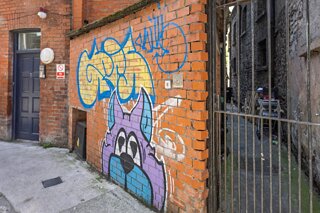
I USED A SONY A7RVI WITH A LOXIA 21MM F2.8 LENS FOR THIS SESSION
HENRIETTA PLACE CONNECTING NORTH KING STREET AND HENRIETTA STREET [12 JUNE 2026]
Street Photography Journal - Henrietta Place (12 June 2026)
Today’s shoot took me to Henrietta Place, the historic lane connecting North King Street and Henrietta Street. For this session, I paired the Sony A7RVI with the fully manual Zeiss Loxia 21mm F2.8 lens—a fantastic combination for capturing wide, sharp architectural details.
Getting out today was a relief, as I only just received the new batteries for the A7RVI yesterday. While my original plan for this week was to log some practice miles on foot ahead of my planned trip to Belfast, recent events have forced a change of plans. Due to the ongoing riots in Belfast, I have made the difficult decision to cancel my 2026 visit. I already had lingering reservations about being based right in the city centre during the week leading up to the 12th of July, and after receiving local advice that it might unsafe, the recent unrest confirmed it was best to stay put.
Instead, I’m focusing my lens closer to home, starting with the fascinating, layered history of Dublin's inner-city lanes.
The History of Henrietta Place
While Henrietta Street is famous for its grand Georgian mansions, Henrietta Place shared the same geographical footprint but experienced Dublin's history from the perspective of an essential utility lane.
18th-Century Utility: During the Georgian era, Henrietta Place housed the stables, coach houses, and modest dwellings for grooms and domestic staff. The architecture here was vernacular and strictly functional, built with durable brick or stone. It stood in sharp, modest contrast to the ashlar granite façades and classical proportions of the main street.
19th and 20th-Century Density: As Henrietta Street collapsed into the tenement system, Henrietta Place followed a similar trajectory. Former mews and workshops were partitioned into small tenements, industrial spaces, and informal housing. It evolved into a bustling, congested lane supporting small local trades, laundries, and marginalised communities who were priced out of the main thoroughfares.
Modern Redevelopment: By the late 20th and early 21st centuries, Henrietta Place became a focal point for urban regeneration and sensitive infill development. Today, parts of the lane have been transformed into contemporary apartments and modern office spaces, while other sections continue to support vital social services and community groups. It remains a perfect mirror of the complex architectural and social layers of the inner city.
Street Photography Journal - Henrietta Place (12 June 2026)
Today’s shoot took me to Henrietta Place, the historic lane connecting North King Street and Henrietta Street. For this session, I paired the Sony A7RVI with the fully manual Zeiss Loxia 21mm F2.8 lens—a fantastic combination for capturing wide, sharp architectural details.
Getting out today was a relief, as I only just received the new batteries for the A7RVI yesterday. While my original plan for this week was to log some practice miles on foot ahead of my planned trip to Belfast, recent events have forced a change of plans. Due to the ongoing riots in Belfast, I have made the difficult decision to cancel my 2026 visit. I already had lingering reservations about being based right in the city centre during the week leading up to the 12th of July, and after receiving local advice that it might unsafe, the recent unrest confirmed it was best to stay put.
Instead, I’m focusing my lens closer to home, starting with the fascinating, layered history of Dublin's inner-city lanes.
The History of Henrietta Place
While Henrietta Street is famous for its grand Georgian mansions, Henrietta Place shared the same geographical footprint but experienced Dublin's history from the perspective of an essential utility lane.
18th-Century Utility: During the Georgian era, Henrietta Place housed the stables, coach houses, and modest dwellings for grooms and domestic staff. The architecture here was vernacular and strictly functional, built with durable brick or stone. It stood in sharp, modest contrast to the ashlar granite façades and classical proportions of the main street.
19th and 20th-Century Density: As Henrietta Street collapsed into the tenement system, Henrietta Place followed a similar trajectory. Former mews and workshops were partitioned into small tenements, industrial spaces, and informal housing. It evolved into a bustling, congested lane supporting small local trades, laundries, and marginalised communities who were priced out of the main thoroughfares.
Modern Redevelopment: By the late 20th and early 21st centuries, Henrietta Place became a focal point for urban regeneration and sensitive infill development. Today, parts of the lane have been transformed into contemporary apartments and modern office spaces, while other sections continue to support vital social services and community groups. It remains a perfect mirror of the complex architectural and social layers of the inner city.
HENRIETTA PLACE