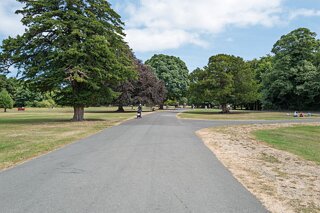
TODAY I USED THE LEICA Q3 TO PHOTOGRAPH THE POND AT ST ANNE'S PARK
THE POND AND ASSOCIATED FOLLIES PLUS UGLY GREEN ALGAE AT ST ANNE'S PARK [22 JULY 2026]
History and Overview of the Pond
The artificial Duck Pond (historically known as the Old Pond) at St Anne's Park is a core landscape feature dating back to the 19th century. It was built as part of the grand estate design developed by the Guinness family (specifically Sir Benjamin Lee Guinness and later Lord Ardilaun), who turned the grounds into an idyllic English-style parkland dotted with romantic Romantic/Arcadian follies.
Key Architectural Follies Surrounding the Pond:
The Temple of Isis: A neoclassical, Pompeian-style water temple constructed right on the banks of the pond.
St Ann's Holy Well: A historic site of pilgrimage over which the Guinnesses erected a stone hood. It provided an additional trickle to the pond into the 20th century, though it has long since run dry.
The Roman Tower (Observation Folly): A three-storey structure based on the Roman Tomb of the Julii at St Rémy in France. Originally situated on the roof of the main mansion, it was dismantled during home renovations in 1873 and rebuilt on the hill overlooking the duck pond.
Hydrology: The Naniken River and Dublin Bay
Water Source
The Naniken River is the main water source for the pond. The Naniken rises in Santry and flows through much of North Dublin—largely hidden in underground culverts—before emerging at Ballyhoy Bridge into St Anne's Park. As it meanders through the central valley of the park, an off-take (diversion channel) feeds water directly into the duck pond.
Path to Dublin Bay
After feeding the pond and continuing its course through the lower parkland:
The Naniken flows towards the coastal perimeter of the estate.
It passes beneath James Larkin Road (the Coast Road) via a culvert.
It empties directly into the mudflats and intertidal lagoon (historically called Crab Water or Raheny Lake) situated behind North Bull Island in Dublin Bay.
Current Status & Algae Bloom
The thick layer of green scum on the surface is a classic algal bloom (often composed of duckweed, filamentous green algae, or blue-green cyanobacteria).
Why birds cluster in small open areas: The blanket of algae blocks sunlight and drastically reduces dissolved oxygen levels (eutrophication). It also makes swimming and foraging difficult for waterfowl, forcing the remaining birds to crowd into small gaps of clear water or near incoming water flows.
Lack of dynamic flow / Fountain: Without an active fountain or mechanical aerator running, stagnant urban runoff laden with excess nitrates and phosphates (from urban gardens or bird feeding) triggers massive algal growth during warmer, sunny periods.
Does the algae need to be removed, or does it die naturally?
Natural Die-off: Algae does naturally die back in late autumn and winter as sunlight levels drop and water temperatures cool down.
The Necessity of Intervention: While it dies off seasonally, relying purely on natural die-off is harmful in stagnant artificial ponds. When the algae dies and sinks to the bottom, bacteria consume vast amounts of oxygen to decompose it. This causes a crash in oxygen levels (anoxia), leading to foul odours, fish kills, and toxic conditions for birdlife.
Best Management Practices: For long-term health, local authorities typically use mechanical skimming/harvesting, install temporary aeration systems, or rebalance the aquatic ecosystem using wetland plants to absorb excess nutrients before algae can take hold.
What Happened to the Nesting Areas?
Historically, the Guinness estate—and later Dublin City Council—maintained timber bird platforms, artificial nesting islands, and rustic shelters to encourage waterbirds. Over time, many of these wooden structures deteriorated or were removed during maintenance to avoid water contamination and structural hazards. Contemporary urban park management often shifts away from artificial wooden fixtures in favour of natural vegetated margins (reeds, sedges, and natural island habitat) to provide safer, low-maintenance nesting options for native wildlife.
History and Overview of the Pond
The artificial Duck Pond (historically known as the Old Pond) at St Anne's Park is a core landscape feature dating back to the 19th century. It was built as part of the grand estate design developed by the Guinness family (specifically Sir Benjamin Lee Guinness and later Lord Ardilaun), who turned the grounds into an idyllic English-style parkland dotted with romantic Romantic/Arcadian follies.
Key Architectural Follies Surrounding the Pond:
The Temple of Isis: A neoclassical, Pompeian-style water temple constructed right on the banks of the pond.
St Ann's Holy Well: A historic site of pilgrimage over which the Guinnesses erected a stone hood. It provided an additional trickle to the pond into the 20th century, though it has long since run dry.
The Roman Tower (Observation Folly): A three-storey structure based on the Roman Tomb of the Julii at St Rémy in France. Originally situated on the roof of the main mansion, it was dismantled during home renovations in 1873 and rebuilt on the hill overlooking the duck pond.
Hydrology: The Naniken River and Dublin Bay
Water Source
The Naniken River is the main water source for the pond. The Naniken rises in Santry and flows through much of North Dublin—largely hidden in underground culverts—before emerging at Ballyhoy Bridge into St Anne's Park. As it meanders through the central valley of the park, an off-take (diversion channel) feeds water directly into the duck pond.
Path to Dublin Bay
After feeding the pond and continuing its course through the lower parkland:
The Naniken flows towards the coastal perimeter of the estate.
It passes beneath James Larkin Road (the Coast Road) via a culvert.
It empties directly into the mudflats and intertidal lagoon (historically called Crab Water or Raheny Lake) situated behind North Bull Island in Dublin Bay.
Current Status & Algae Bloom
The thick layer of green scum on the surface is a classic algal bloom (often composed of duckweed, filamentous green algae, or blue-green cyanobacteria).
Why birds cluster in small open areas: The blanket of algae blocks sunlight and drastically reduces dissolved oxygen levels (eutrophication). It also makes swimming and foraging difficult for waterfowl, forcing the remaining birds to crowd into small gaps of clear water or near incoming water flows.
Lack of dynamic flow / Fountain: Without an active fountain or mechanical aerator running, stagnant urban runoff laden with excess nitrates and phosphates (from urban gardens or bird feeding) triggers massive algal growth during warmer, sunny periods.
Does the algae need to be removed, or does it die naturally?
Natural Die-off: Algae does naturally die back in late autumn and winter as sunlight levels drop and water temperatures cool down.
The Necessity of Intervention: While it dies off seasonally, relying purely on natural die-off is harmful in stagnant artificial ponds. When the algae dies and sinks to the bottom, bacteria consume vast amounts of oxygen to decompose it. This causes a crash in oxygen levels (anoxia), leading to foul odours, fish kills, and toxic conditions for birdlife.
Best Management Practices: For long-term health, local authorities typically use mechanical skimming/harvesting, install temporary aeration systems, or rebalance the aquatic ecosystem using wetland plants to absorb excess nutrients before algae can take hold.
What Happened to the Nesting Areas?
Historically, the Guinness estate—and later Dublin City Council—maintained timber bird platforms, artificial nesting islands, and rustic shelters to encourage waterbirds. Over time, many of these wooden structures deteriorated or were removed during maintenance to avoid water contamination and structural hazards. Contemporary urban park management often shifts away from artificial wooden fixtures in favour of natural vegetated margins (reeds, sedges, and natural island habitat) to provide safer, low-maintenance nesting options for native wildlife.
THE POND AND FOLLIES