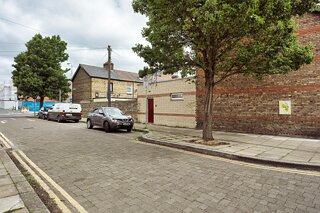
THE LOXIA IS A USEFUL AND VERY COMPACT LENS
RANDOM IMAGES PRODUCED BY A ZEISS LOXIA 21MM LENS [DUBLIN NORTH INNER CITY]
Mastering the Zeiss Loxia 21mm: Why the "Infinity Hard-Stop" Trips Up Modern Photographers
Street Photography Trials in Dublin's North Inner City
I needed to practice my technique before my trip to Belfast next week. My Sony A7RVI body is brand new, and several of my lenses only joined my kit bag this May, so field testing was essential.
With that in mind, I spent an afternoon wandering around Dublin's North Inner City, capturing random street scenes to get used to the new setup. Much to my surprise, the outing threw up a few unexpected hurdles. For start, I could not get geotagging to work with the new body, though after a lot of frustrating menu-diving and effort, I finally resolved the issue.
However, the real surprise came from the glass.
A few weeks ago, I picked up a new Zeiss Loxia 21mm f/2.8 at an excellent price. It is a fully manual lens, meaning you have to constantly adjust the focus ring. To save time while shooting landscapes and distant cityscapes, I tried twisting the lens all the way to its physical infinity stop.
The results? Many of my images were nowhere near the crisp standard I expected.
The Voigtländer vs. Zeiss Focus Peaking Conundrum
As someone who frequently uses Voigtländer manual lenses, I thought I had my technique down to a science. With my Voigtländer glass, relying on Sony's focus peaking (set to yellow) allowed me to nail focus quickly and accurately.
Yet, that learned technique completely failed me with the Zeiss Loxia.
To make matters more challenging, I noticed a distinct hardware difference: the focus peaking is simply not as definite or clear on my new Sony A7RVI as it was—and is—on my Sony A7RV. The peaking lines on the newer high-resolution body feel much subtler, making blind reliance on those little yellow highlights a risky strategy with this specific lens.
Why "Infinity" Isn't Actually Infinity
If you twist a Loxia lens until it hits the physical wall, your horizon will be blurry. As it turns out, this is completely normal—and is entirely by design.
What I was experiencing is commonly called "infinity hard-stop overshoot" (or being calibrated "past infinity"). On many modern manual focus lenses, including the entire Zeiss Loxia line, the focus ring is engineered to turn slightly past the point of true optical infinity.
Zeiss and other premium manufacturers engineer their lenses with this extra breathing room for three distinct reasons:
1. Thermal Expansion and Contraction
Lenses are constructed from precision metal and glass, both of which expand and contract as temperatures change. If a lens had a rigid, mechanically perfect hard stop at exactly 20°C, using it on a freezing winter morning or under a baking mid-day sun would cause the physical components to shift. If the metal contracted, the lens would be physically blocked from reaching true infinity. By letting the focus ring go slightly "beyond", Zeiss guarantees you can achieve crisp infinity focus in any climate, from −20°C to +40°C.
2. Sensor Glass Tolerances
The Zeiss Loxia line is designed natively for mirrorless mounts like the Sony E-mount. Mirrorless cameras feature a thin stack of protective glass and filters directly in front of the digital sensor. Minor variations in the thickness of this sensor glass between different camera models (and even between generations like the A7RV and A7RVI) can subtly shift the exact point where light focuses. Giving the lens tolerance past infinity ensures it remains razor-sharp across slightly different sensor configurations.
3. The Optical Reality of Ultra-Wides
At 21mm, you are dealing with an ultra-wide field of view where the depth of field deepens incredibly quickly as you narrow the aperture. However, when shooting wide open at f/2.8, the exact point of critical infinity focus is highly precise. Because modern, ultra-high-resolution sensors are completely unforgiving of minor focus errors, relying blindly on a mechanical hard stop simply isn't reliable. Visual confirmation is mandatory.
My New Manual Focus Workflow
Since you cannot just twist the ring until it hits the mechanical wall, I have had to adapt my muscle memory. If you are struggling with a Loxia lens on a high-res Sony body, this is the workflow I now recommend:
Ditch Blind Peaking, Use Focus Magnification: Because the A7RVI's peaking is less pronounced, punch in using your camera's digital magnifier on a distant object (like a building edge or horizon line) and dial it in visually.
Trust the EVF over the Hard Stop: Learn to find the sweet spot just a millimetre or two back from the physical hard stop. You will quickly get a tactile feel for exactly where true infinity sits on your specific camera body.
Utilise the Hyperfocal Distance: The Loxia 21mm features a beautiful, physical depth-of-field scale engraved on the barrel. If you stop down to f/5.6 or f/8, you can align the infinity marker (∞) with your corresponding aperture line. This ensures everything from a few feet away out to the horizon falls within acceptable sharpness, removing the need to perfectly nail the absolute edge of the focus throw.
Mastering the Zeiss Loxia 21mm: Why the "Infinity Hard-Stop" Trips Up Modern Photographers
Street Photography Trials in Dublin's North Inner City
I needed to practice my technique before my trip to Belfast next week. My Sony A7RVI body is brand new, and several of my lenses only joined my kit bag this May, so field testing was essential.
With that in mind, I spent an afternoon wandering around Dublin's North Inner City, capturing random street scenes to get used to the new setup. Much to my surprise, the outing threw up a few unexpected hurdles. For start, I could not get geotagging to work with the new body, though after a lot of frustrating menu-diving and effort, I finally resolved the issue.
However, the real surprise came from the glass.
A few weeks ago, I picked up a new Zeiss Loxia 21mm f/2.8 at an excellent price. It is a fully manual lens, meaning you have to constantly adjust the focus ring. To save time while shooting landscapes and distant cityscapes, I tried twisting the lens all the way to its physical infinity stop.
The results? Many of my images were nowhere near the crisp standard I expected.
The Voigtländer vs. Zeiss Focus Peaking Conundrum
As someone who frequently uses Voigtländer manual lenses, I thought I had my technique down to a science. With my Voigtländer glass, relying on Sony's focus peaking (set to yellow) allowed me to nail focus quickly and accurately.
Yet, that learned technique completely failed me with the Zeiss Loxia.
To make matters more challenging, I noticed a distinct hardware difference: the focus peaking is simply not as definite or clear on my new Sony A7RVI as it was—and is—on my Sony A7RV. The peaking lines on the newer high-resolution body feel much subtler, making blind reliance on those little yellow highlights a risky strategy with this specific lens.
Why "Infinity" Isn't Actually Infinity
If you twist a Loxia lens until it hits the physical wall, your horizon will be blurry. As it turns out, this is completely normal—and is entirely by design.
What I was experiencing is commonly called "infinity hard-stop overshoot" (or being calibrated "past infinity"). On many modern manual focus lenses, including the entire Zeiss Loxia line, the focus ring is engineered to turn slightly past the point of true optical infinity.
Zeiss and other premium manufacturers engineer their lenses with this extra breathing room for three distinct reasons:
1. Thermal Expansion and Contraction
Lenses are constructed from precision metal and glass, both of which expand and contract as temperatures change. If a lens had a rigid, mechanically perfect hard stop at exactly 20°C, using it on a freezing winter morning or under a baking mid-day sun would cause the physical components to shift. If the metal contracted, the lens would be physically blocked from reaching true infinity. By letting the focus ring go slightly "beyond", Zeiss guarantees you can achieve crisp infinity focus in any climate, from −20°C to +40°C.
2. Sensor Glass Tolerances
The Zeiss Loxia line is designed natively for mirrorless mounts like the Sony E-mount. Mirrorless cameras feature a thin stack of protective glass and filters directly in front of the digital sensor. Minor variations in the thickness of this sensor glass between different camera models (and even between generations like the A7RV and A7RVI) can subtly shift the exact point where light focuses. Giving the lens tolerance past infinity ensures it remains razor-sharp across slightly different sensor configurations.
3. The Optical Reality of Ultra-Wides
At 21mm, you are dealing with an ultra-wide field of view where the depth of field deepens incredibly quickly as you narrow the aperture. However, when shooting wide open at f/2.8, the exact point of critical infinity focus is highly precise. Because modern, ultra-high-resolution sensors are completely unforgiving of minor focus errors, relying blindly on a mechanical hard stop simply isn't reliable. Visual confirmation is mandatory.
My New Manual Focus Workflow
Since you cannot just twist the ring until it hits the mechanical wall, I have had to adapt my muscle memory. If you are struggling with a Loxia lens on a high-res Sony body, this is the workflow I now recommend:
Ditch Blind Peaking, Use Focus Magnification: Because the A7RVI's peaking is less pronounced, punch in using your camera's digital magnifier on a distant object (like a building edge or horizon line) and dial it in visually.
Trust the EVF over the Hard Stop: Learn to find the sweet spot just a millimetre or two back from the physical hard stop. You will quickly get a tactile feel for exactly where true infinity sits on your specific camera body.
Utilise the Hyperfocal Distance: The Loxia 21mm features a beautiful, physical depth-of-field scale engraved on the barrel. If you stop down to f/5.6 or f/8, you can align the infinity marker (∞) with your corresponding aperture line. This ensures everything from a few feet away out to the horizon falls within acceptable sharpness, removing the need to perfectly nail the absolute edge of the focus throw.
LOXIA 21MM LENS