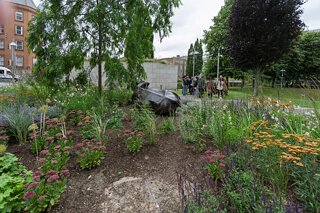
HOW NOW BROWN COW PHOTOGRAPHED 4 JULY 2026
THE HOW NOW BROWN COW MYSTERY [THE BRONZE COW HAS RETURNED TO WOOD QUAY]
How Now, Brown Cow? The Mystery of Ag Crú na Gréine Solved
In the world of urban mapping, some landmarks are fixed in stone, while others prove more elusive. Ag Crú na Gréine (Enjoying the Sun), the life-sized bronze cow by sculptor Jackie McKenna, has spent the last decade becoming a bit of a nomad in the Dublin cityscape.
For those of us tracking the city's artistic soul, the question "How now, brown cow?" has shifted from a classic elocution drill to a genuine inquiry into the statue's ultimate destination.
A Nomadic Timeline
Originally commissioned in 2003 by AXA Insurance for Wolfe Tone Park, this reclining figure was once a tactile landmark—a favourite for local children to climb and a quirky resting spot for weary shoppers. However, the urban cartography of this piece has required some serious tracking over the years:
2003: Installed in Wolfe Tone Park, bringing a rural, pastoral touch to the bustling North City centre.
2017: Uprooted during the initial stages of the park’s redevelopment and relocated to the Wood Quay Civic Offices.
2020–2025: While the park’s redesign was completed, the sculpture remained tucked away at Wood Quay, seemingly waiting in limbo.
2026: Following a brief period where it appeared she might have vanished from the civic offices entirely, she has reappeared in a permanent, purpose-built home on the grounds.
From Limbo to Landscape
The phrase "How now, brown cow?" was famously used to teach clear, rounded vowels. It felt ironic for a time that as Dublin "rounded off" its urban edges through redevelopment, we seemed to be losing the very objects that gave the city its grounding character.
The redevelopment of Wolfe Tone Park transformed the space into a structured urban plaza. While the upgrade introduced better lighting and a respectful acknowledgement of the site’s history as a graveyard, it did so with a certain clinical precision. The removal of mature trees and the decision not to return McKenna’s cow initially left a void, making the plaza feel designed for passing through rather than staying in.
However, the mystery of the missing cow has a surprisingly green ending. She hasn't been retired to a dark municipal depot, nor is she hidden away. Instead, Ag Crú na Gréine has been beautifully integrated into a well-defined, protected, and thoughtfully planted green triangle right at Wood Quay.
A New Chapter on the Map
Public art serves as an anchor for memory. Jackie McKenna—who also gave us the iconic "Hags with the Bags" on Liffey Street—designed this cow to be accessible, tactile, and human in scale.
While purists might still wish to see her return to the North City centre, her new surroundings tell a story of permanence. No longer an afterthought or a temporary guest, Dublin's favourite bronze cow has claimed her patch of grass. Ensconced in her protected green oasis at Wood Quay, she is finally doing exactly what her title promises: permanently enjoying the sun.
A Lost Anchor of the North Side
Public art serves as a vital landmark for collective and personal memory. Jackie McKenna—who also gave us the iconic "Hags with the Bags" on Liffey Street—designed this reclining figure to be accessible, tactile, and human (or bovine) in scale.
In Wolfe Tone Park, she wasn't just a statue; she was educational for city children who rarely encountered livestock, and a literal sanctuary. Years ago, I remember helping a frantic mother who had lost her five-year-old child in the nearby Jervis Shopping Centre. After a tense search, I eventually found the little one sitting calmly atop the bronze cow. For a lost child, the sculpture wasn't just art—it was a safe, recognisable anchor in a massive city.
While the new, protected green setting at Wood Quay might be superior from a practical landscaping perspective, it inevitably alters this relationship. By placing Ag Crú na Gréine within a well-defined, planted triangle, the city has kept her safe, but at a cost. She has transitioned from a tactile community playmate to a curated exhibit—beautifully framed, but just out of reach for the next generation of city children looking for a place to climb.
How Now, Brown Cow? The Mystery of Ag Crú na Gréine Solved
In the world of urban mapping, some landmarks are fixed in stone, while others prove more elusive. Ag Crú na Gréine (Enjoying the Sun), the life-sized bronze cow by sculptor Jackie McKenna, has spent the last decade becoming a bit of a nomad in the Dublin cityscape.
For those of us tracking the city's artistic soul, the question "How now, brown cow?" has shifted from a classic elocution drill to a genuine inquiry into the statue's ultimate destination.
A Nomadic Timeline
Originally commissioned in 2003 by AXA Insurance for Wolfe Tone Park, this reclining figure was once a tactile landmark—a favourite for local children to climb and a quirky resting spot for weary shoppers. However, the urban cartography of this piece has required some serious tracking over the years:
2003: Installed in Wolfe Tone Park, bringing a rural, pastoral touch to the bustling North City centre.
2017: Uprooted during the initial stages of the park’s redevelopment and relocated to the Wood Quay Civic Offices.
2020–2025: While the park’s redesign was completed, the sculpture remained tucked away at Wood Quay, seemingly waiting in limbo.
2026: Following a brief period where it appeared she might have vanished from the civic offices entirely, she has reappeared in a permanent, purpose-built home on the grounds.
From Limbo to Landscape
The phrase "How now, brown cow?" was famously used to teach clear, rounded vowels. It felt ironic for a time that as Dublin "rounded off" its urban edges through redevelopment, we seemed to be losing the very objects that gave the city its grounding character.
The redevelopment of Wolfe Tone Park transformed the space into a structured urban plaza. While the upgrade introduced better lighting and a respectful acknowledgement of the site’s history as a graveyard, it did so with a certain clinical precision. The removal of mature trees and the decision not to return McKenna’s cow initially left a void, making the plaza feel designed for passing through rather than staying in.
However, the mystery of the missing cow has a surprisingly green ending. She hasn't been retired to a dark municipal depot, nor is she hidden away. Instead, Ag Crú na Gréine has been beautifully integrated into a well-defined, protected, and thoughtfully planted green triangle right at Wood Quay.
A New Chapter on the Map
Public art serves as an anchor for memory. Jackie McKenna—who also gave us the iconic "Hags with the Bags" on Liffey Street—designed this cow to be accessible, tactile, and human in scale.
While purists might still wish to see her return to the North City centre, her new surroundings tell a story of permanence. No longer an afterthought or a temporary guest, Dublin's favourite bronze cow has claimed her patch of grass. Ensconced in her protected green oasis at Wood Quay, she is finally doing exactly what her title promises: permanently enjoying the sun.
A Lost Anchor of the North Side
Public art serves as a vital landmark for collective and personal memory. Jackie McKenna—who also gave us the iconic "Hags with the Bags" on Liffey Street—designed this reclining figure to be accessible, tactile, and human (or bovine) in scale.
In Wolfe Tone Park, she wasn't just a statue; she was educational for city children who rarely encountered livestock, and a literal sanctuary. Years ago, I remember helping a frantic mother who had lost her five-year-old child in the nearby Jervis Shopping Centre. After a tense search, I eventually found the little one sitting calmly atop the bronze cow. For a lost child, the sculpture wasn't just art—it was a safe, recognisable anchor in a massive city.
While the new, protected green setting at Wood Quay might be superior from a practical landscaping perspective, it inevitably alters this relationship. By placing Ag Crú na Gréine within a well-defined, planted triangle, the city has kept her safe, but at a cost. She has transitioned from a tactile community playmate to a curated exhibit—beautifully framed, but just out of reach for the next generation of city children looking for a place to climb.
HOW NOW BROWN COW