THE WATCHERS OF ABBEY STREET IN AUGUST 2009 [SCIENTOLOGY IN IRELAND]
THE WATCHERS OF ABBEY STREET IN AUGUST 2009 [SCIENTOLOGY IN IRELAND]
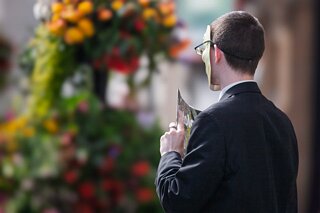
Protesters displaying placards on Abbey Street in 2009, showcasing the strong public opinions and financial criticisms levelled against the organisation during the weekend demonstrations. They also did invite me to photograph their protest.
The Watchers on Abbey Street: A History of Scientology and Resistance in Ireland
In 2009, anyone walking past the Church of Scientology’s mission on Middle Abbey Street in Dublin would have encountered a peculiar weekend ritual. Across the road, a dedicated group of protesters stood vigil. Week after week, month after month, they held up placards, distributed leaflets, and often hid their faces behind the iconic, monochrome grin of Guy Fawkes masks—the calling card of the hacktivist collective known as "Anonymous".
For those who captured these moments in photographs, it was a striking visual slice of Dublin life: a clash between one of the world's most secretive, modern organisations and a highly vocal, decentralised movement of local resistance. But why did a small storefront in the heart of Dublin become such a fierce battleground?
To understand the tension on Abbey Street, one has to look at how a uniquely American movement found its way to Irish shores, and why it ignited such fierce hostility both locally and across the globe.
From Sci-Fi to Spiritual Empire: A Brief Global History
The Church of Scientology was founded in 1954 by L. Ron Hubbard, a highly prolific American science-fiction writer. A few years prior, Hubbard had published Dianetics: The Modern Science of Mental Health, introducing a system of self-improvement aimed at clearing the mind of past traumas, which he called "engrams".
As the practice evolved into a formal religion, its core doctrines expanded. Scientology teaches that humans are immortal spiritual beings called "thetans" who have forgotten their true nature and become trapped in the physical universe. Through a highly structured, proprietary process called "auditing"—which utilises a bio-feedback device called an "E-Meter"—adherents pay to progress up a strict spiritual ladder known as "The Bridge to Total Freedom".
While the organisation expanded rapidly throughout the late 20th century, building a massive real estate portfolio and attracting high-profile Hollywood celebrities, it was shadowed by intense international scrutiny. Critics, governments, and journalists frequently accused the group of operating as a predatory commercial enterprise disguised as a faith, utilising aggressive legal tactics, psychological manipulation, and forced financial contributions to sustain its empire.
The Irish Connection: A History of Presence and Protest
Scientology's roots in Ireland actually date back to 1956, when L. Ron Hubbard lived briefly at 4 Merrion Square in Dublin, establishing a short-lived "American College of Personnel Efficiency". However, a permanent, sustained presence did not take hold until many decades later.
By the late 1990s and early 2000s, the organisation opened a prominent mission on Middle Abbey Street. Almost immediately, it became a focal point for controversy.
The 2009 protests that drew crowds and photographers every weekend were part of a coordinated global uprising called Project Chanology. Launched by the internet collective Anonymous after the Church attempted to censor a leaked promotional video of actor Tom Cruise, the movement quickly spilled from online forums onto physical streets worldwide. Dublin was no exception.
The protesters on Abbey Street were a mix of international internet activists and deeply concerned locals. Their goal was to warn passersby about the dangers of the organisation, focusing heavily on its financial demands, its aggressive rejection of mainstream psychiatry, and the alleged alienation of members from their families.
Why the Hostility? Local and International Friction
The fierce pushback Scientology faced on Abbey Street—and continues to face globally—stems from several distinct, deeply controversial practices:
The Financial Cost of Enlightenment: Unlike traditional religions where donations are voluntary, Scientology requires fixed, substantial fees for its courses and auditing sessions. Critics argue this targets vulnerable individuals, leading them into severe debt.
The Rejection of Modern Medicine: Scientology is vehemently opposed to psychiatry and psychiatric medication. In Ireland, a country that has historically struggled with mental health awareness, this stance drew sharp criticism from medical professionals and families who feared vulnerable people might be dissuaded from seeking professional clinical help.
Disconnection: One of the most emotionally charged criticisms of the group is its policy of "disconnection," which instructs members to sever all ties with friends or family members who are deemed critical of the organisation (classified as "Suppressive Persons").
Aggressive Litigation: Internationally, the Church gained notoriety for using aggressive lawsuits and private investigators to silence critics, journalists, and disaffected former members—a tactic that locals felt flew in the face of free speech.
Where Are They Now? The Current Status of Scientology in Ireland
The storefront on Abbey Street where those historic protests took place has long since closed, but the organisation did not vanish from Ireland. Instead, it shifted its strategy toward a much larger, highly visible expansion.
In October 2017, the Church opened a massive, state-of-the-art Church of Scientology and Community Centre in Firhouse, North Dublin. The €6 million facility features a 1,100-seat auditorium, a sports pitch, and a cafe. Additionally, the group restored Hubbard’s former home at 4 Merrion Square, reopening it as the National Affairs Office of Ireland.
Despite these grand architectural statements, the actual footprint of the religion in Ireland remains incredibly small. Government census data consistently shows that fewer than 100 people in the entire country officially identify as Scientologists.
The Firhouse hub frequently attempts to integrate into the local community by hosting free family fun days, winter wonderlands, and distributing literature for front groups like "The Truth About Drugs" and "The Way to Happiness". However, local suspicion remains high. Residents and secular groups still closely monitor their activities, echoing the very same concerns that brought passionate crowds out to the footpaths of Abbey Street all those years ago.
Protesters displaying placards on Abbey Street in 2009, showcasing the strong public opinions and financial criticisms levelled against the organisation during the weekend demonstrations. They also did invite me to photograph their protest.
The Watchers on Abbey Street: A History of Scientology and Resistance in Ireland
In 2009, anyone walking past the Church of Scientology’s mission on Middle Abbey Street in Dublin would have encountered a peculiar weekend ritual. Across the road, a dedicated group of protesters stood vigil. Week after week, month after month, they held up placards, distributed leaflets, and often hid their faces behind the iconic, monochrome grin of Guy Fawkes masks—the calling card of the hacktivist collective known as "Anonymous".
For those who captured these moments in photographs, it was a striking visual slice of Dublin life: a clash between one of the world's most secretive, modern organisations and a highly vocal, decentralised movement of local resistance. But why did a small storefront in the heart of Dublin become such a fierce battleground?
To understand the tension on Abbey Street, one has to look at how a uniquely American movement found its way to Irish shores, and why it ignited such fierce hostility both locally and across the globe.
From Sci-Fi to Spiritual Empire: A Brief Global History
The Church of Scientology was founded in 1954 by L. Ron Hubbard, a highly prolific American science-fiction writer. A few years prior, Hubbard had published Dianetics: The Modern Science of Mental Health, introducing a system of self-improvement aimed at clearing the mind of past traumas, which he called "engrams".
As the practice evolved into a formal religion, its core doctrines expanded. Scientology teaches that humans are immortal spiritual beings called "thetans" who have forgotten their true nature and become trapped in the physical universe. Through a highly structured, proprietary process called "auditing"—which utilises a bio-feedback device called an "E-Meter"—adherents pay to progress up a strict spiritual ladder known as "The Bridge to Total Freedom".
While the organisation expanded rapidly throughout the late 20th century, building a massive real estate portfolio and attracting high-profile Hollywood celebrities, it was shadowed by intense international scrutiny. Critics, governments, and journalists frequently accused the group of operating as a predatory commercial enterprise disguised as a faith, utilising aggressive legal tactics, psychological manipulation, and forced financial contributions to sustain its empire.
The Irish Connection: A History of Presence and Protest
Scientology's roots in Ireland actually date back to 1956, when L. Ron Hubbard lived briefly at 4 Merrion Square in Dublin, establishing a short-lived "American College of Personnel Efficiency". However, a permanent, sustained presence did not take hold until many decades later.
By the late 1990s and early 2000s, the organisation opened a prominent mission on Middle Abbey Street. Almost immediately, it became a focal point for controversy.
The 2009 protests that drew crowds and photographers every weekend were part of a coordinated global uprising called Project Chanology. Launched by the internet collective Anonymous after the Church attempted to censor a leaked promotional video of actor Tom Cruise, the movement quickly spilled from online forums onto physical streets worldwide. Dublin was no exception.
The protesters on Abbey Street were a mix of international internet activists and deeply concerned locals. Their goal was to warn passersby about the dangers of the organisation, focusing heavily on its financial demands, its aggressive rejection of mainstream psychiatry, and the alleged alienation of members from their families.
Why the Hostility? Local and International Friction
The fierce pushback Scientology faced on Abbey Street—and continues to face globally—stems from several distinct, deeply controversial practices:
The Financial Cost of Enlightenment: Unlike traditional religions where donations are voluntary, Scientology requires fixed, substantial fees for its courses and auditing sessions. Critics argue this targets vulnerable individuals, leading them into severe debt.
The Rejection of Modern Medicine: Scientology is vehemently opposed to psychiatry and psychiatric medication. In Ireland, a country that has historically struggled with mental health awareness, this stance drew sharp criticism from medical professionals and families who feared vulnerable people might be dissuaded from seeking professional clinical help.
Disconnection: One of the most emotionally charged criticisms of the group is its policy of "disconnection," which instructs members to sever all ties with friends or family members who are deemed critical of the organisation (classified as "Suppressive Persons").
Aggressive Litigation: Internationally, the Church gained notoriety for using aggressive lawsuits and private investigators to silence critics, journalists, and disaffected former members—a tactic that locals felt flew in the face of free speech.
Where Are They Now? The Current Status of Scientology in Ireland
The storefront on Abbey Street where those historic protests took place has long since closed, but the organisation did not vanish from Ireland. Instead, it shifted its strategy toward a much larger, highly visible expansion.
In October 2017, the Church opened a massive, state-of-the-art Church of Scientology and Community Centre in Firhouse, North Dublin. The €6 million facility features a 1,100-seat auditorium, a sports pitch, and a cafe. Additionally, the group restored Hubbard’s former home at 4 Merrion Square, reopening it as the National Affairs Office of Ireland.
Despite these grand architectural statements, the actual footprint of the religion in Ireland remains incredibly small. Government census data consistently shows that fewer than 100 people in the entire country officially identify as Scientologists.
The Firhouse hub frequently attempts to integrate into the local community by hosting free family fun days, winter wonderlands, and distributing literature for front groups like "The Truth About Drugs" and "The Way to Happiness". However, local suspicion remains high. Residents and secular groups still closely monitor their activities, echoing the very same concerns that brought passionate crowds out to the footpaths of Abbey Street all those years ago.
THE WATCHERS 2009