MY MARCH 2026 VISIT TO THE NEWMARKET AREA OF DUBLIN
THE CURRENT STATUS OF NEWMARKET SQUARE AND NEARBY [NOT FORGETTING THE GEM AND ARDEE HOUSE]
The regeneration of Newmarket in Dublin 8 has reached a pivotal milestone in early 2026. Once a grit-edged industrial pocket of the Liberties, the area has transitioned into a high-density residential and commercial hub, though not without the "growing pains" typical of major urban shifts.
The Status of Newmarket Square
Yes, the square’s refurbishment is now officially complete. After years of delays where the space functioned largely as a construction staging ground, Dublin City Council (DCC) finished the public realm works in February 2026.
The "makeover" includes:
Pedestrianisation: A significant reduction in traffic areas to create a dedicated civic space.
Landscaping: New high-quality paving, street furniture, and a contemporary planter scheme designed by Áit Urbanism + Landscapes.
Multi-use Space: The square is now equipped with power and water points specifically intended to support the return of outdoor market trading and community events.
Recent and Planned Developments
The skyline around the square has been entirely redefined by several major projects that have reached completion within the last 12–18 months:
Residential Milestones
18 Newmarket Square: This landmark "Build-to-Rent" (BTR) scheme was fully completed and sold to international investors in February 2026. It provides 134 high-specification apartments and serves as the "western gateway" to the square.
Newmarket Yards: Now fully operational, this massive Manhattan-style complex offers over 500 apartments, a gym, a cinema, and rooftop terraces.
Ardee Point: Completed in late 2025, this 300+ bed student accommodation block has brought a significant influx of younger residents to the northern edge of the district.
Commercial & Hospitality
The Premier Inn: The 151-bedroom hotel on the west side of the square is open, anchoring the hospitality sector alongside the established Aloft Hotel.
The Eight Building: While completed earlier, this Grade A office building remains a focal point. However, it has been the subject of local debate as the developer’s request to convert its "indoor market space" into a convenience store was recently refused by the Council to protect the area's market heritage.
Future "Marrowbone Lane" Project
The next major phase of local regeneration focuses on the Marrowbone Lane Depot. As of early 2026, DCC is moving forward with plans to reconfigure this massive site into a mix of:
Community Sports Pitches: A long-awaited facility for local GAA and soccer clubs.
Green Infrastructure: Improved cycling and walking links connecting Cork Street to Marrowbone Lane.
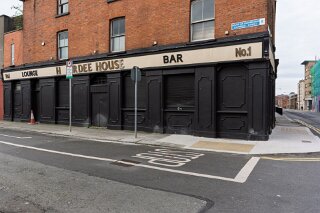
While the square itself has found its new identity, the presence of Ardee House and The GEM remains a stark reminder of the area's complex transition. Both buildings are significant "ghosts" of the Liberties' industrial and social past, currently caught in a web of heritage protection and shifting ownership.
Ardee House (1 Chamber Street)
Located on the prominent corner of Ardee Street and Chamber Street, this building is a fragment of the once-mighty Watkins’ Brewery (established in the early 18th century).
The Background: It originally served as the brewer’s house and later became a well-known local pub and lounge. It holds deep historical resonance as Watkins’ Brewery was one of the sites occupied by the Irish Volunteers (4th Battalion) during the 1916 Rising.
The "Ramming" Incident: Its dereliction was accelerated by a bizarre accident in October 2009, when a truck rammed into the front of the building, causing severe structural damage. It never truly recovered or reopened after that point.
Current Status: For several years, the building was reportedly owned by the Teeling Whiskey family, who have been instrumental in the area's revival. While there were initial hopes for a boutique restoration or a heritage-led extension, it remains boarded up. As of 2026, it is frequently cited on local "derelict watch" lists, though its status as a landmark makes demolition unlikely; any future use will require a painstaking (and expensive) conservation-led approach.
The GEM (Newmarket Street)
The "GEM" building (often identified by its faded signage) is a classic example of the mid-20th-century industrial vernacular that once defined Newmarket.
The Background: Unlike the grander 18th-century structures, the GEM represents the area’s later life as a hub for small-scale manufacturing, automotive repair, and wholesale trading. It was part of a "patchwork" of industrial units that housed everything from tanneries to rag merchants.
The Conflict: The building sits on a site with immense archaeological sensitivity. Excavations in the immediate vicinity have uncovered 17th-century "Dutch Billy" house foundations and medieval tanning pits.
Current Status: It has remained unoccupied primarily due to its position within a larger "Strategic Development Regeneration Area" (SDRA 15). Developers have faced a tug-of-war between high-density residential goals and Dublin City Council’s insistence on maintaining "active" ground-floor uses like markets or artist studios.
The 2026 Outlook: In early 2026, there is mounting pressure from the "War on Dereliction" (a government initiative using the new Derelict Property Tax) to force the owners to either develop or sell. There are persistent rumours that it may eventually be absorbed into a secondary phase of a neighbouring residential scheme, provided the façade or "industrial character" is preserved.
The regeneration of Newmarket in Dublin 8 has reached a pivotal milestone in early 2026. Once a grit-edged industrial pocket of the Liberties, the area has transitioned into a high-density residential and commercial hub, though not without the "growing pains" typical of major urban shifts.
The Status of Newmarket Square
Yes, the square’s refurbishment is now officially complete. After years of delays where the space functioned largely as a construction staging ground, Dublin City Council (DCC) finished the public realm works in February 2026.
The "makeover" includes:
Pedestrianisation: A significant reduction in traffic areas to create a dedicated civic space.
Landscaping: New high-quality paving, street furniture, and a contemporary planter scheme designed by Áit Urbanism + Landscapes.
Multi-use Space: The square is now equipped with power and water points specifically intended to support the return of outdoor market trading and community events.
Recent and Planned Developments
The skyline around the square has been entirely redefined by several major projects that have reached completion within the last 12–18 months:
Residential Milestones
18 Newmarket Square: This landmark "Build-to-Rent" (BTR) scheme was fully completed and sold to international investors in February 2026. It provides 134 high-specification apartments and serves as the "western gateway" to the square.
Newmarket Yards: Now fully operational, this massive Manhattan-style complex offers over 500 apartments, a gym, a cinema, and rooftop terraces.
Ardee Point: Completed in late 2025, this 300+ bed student accommodation block has brought a significant influx of younger residents to the northern edge of the district.
Commercial & Hospitality
The Premier Inn: The 151-bedroom hotel on the west side of the square is open, anchoring the hospitality sector alongside the established Aloft Hotel.
The Eight Building: While completed earlier, this Grade A office building remains a focal point. However, it has been the subject of local debate as the developer’s request to convert its "indoor market space" into a convenience store was recently refused by the Council to protect the area's market heritage.
Future "Marrowbone Lane" Project
The next major phase of local regeneration focuses on the Marrowbone Lane Depot. As of early 2026, DCC is moving forward with plans to reconfigure this massive site into a mix of:
Community Sports Pitches: A long-awaited facility for local GAA and soccer clubs.
Green Infrastructure: Improved cycling and walking links connecting Cork Street to Marrowbone Lane.
While the square itself has found its new identity, the presence of Ardee House and The GEM remains a stark reminder of the area's complex transition. Both buildings are significant "ghosts" of the Liberties' industrial and social past, currently caught in a web of heritage protection and shifting ownership.
Ardee House (1 Chamber Street)
Located on the prominent corner of Ardee Street and Chamber Street, this building is a fragment of the once-mighty Watkins’ Brewery (established in the early 18th century).
The Background: It originally served as the brewer’s house and later became a well-known local pub and lounge. It holds deep historical resonance as Watkins’ Brewery was one of the sites occupied by the Irish Volunteers (4th Battalion) during the 1916 Rising.
The "Ramming" Incident: Its dereliction was accelerated by a bizarre accident in October 2009, when a truck rammed into the front of the building, causing severe structural damage. It never truly recovered or reopened after that point.
Current Status: For several years, the building was reportedly owned by the Teeling Whiskey family, who have been instrumental in the area's revival. While there were initial hopes for a boutique restoration or a heritage-led extension, it remains boarded up. As of 2026, it is frequently cited on local "derelict watch" lists, though its status as a landmark makes demolition unlikely; any future use will require a painstaking (and expensive) conservation-led approach.
The GEM (Newmarket Street)
The "GEM" building (often identified by its faded signage) is a classic example of the mid-20th-century industrial vernacular that once defined Newmarket.
The Background: Unlike the grander 18th-century structures, the GEM represents the area’s later life as a hub for small-scale manufacturing, automotive repair, and wholesale trading. It was part of a "patchwork" of industrial units that housed everything from tanneries to rag merchants.
The Conflict: The building sits on a site with immense archaeological sensitivity. Excavations in the immediate vicinity have uncovered 17th-century "Dutch Billy" house foundations and medieval tanning pits.
Current Status: It has remained unoccupied primarily due to its position within a larger "Strategic Development Regeneration Area" (SDRA 15). Developers have faced a tug-of-war between high-density residential goals and Dublin City Council’s insistence on maintaining "active" ground-floor uses like markets or artist studios.
The 2026 Outlook: In early 2026, there is mounting pressure from the "War on Dereliction" (a government initiative using the new Derelict Property Tax) to force the owners to either develop or sell. There are persistent rumours that it may eventually be absorbed into a secondary phase of a neighbouring residential scheme, provided the façade or "industrial character" is preserved.
NEWMARKET AREA