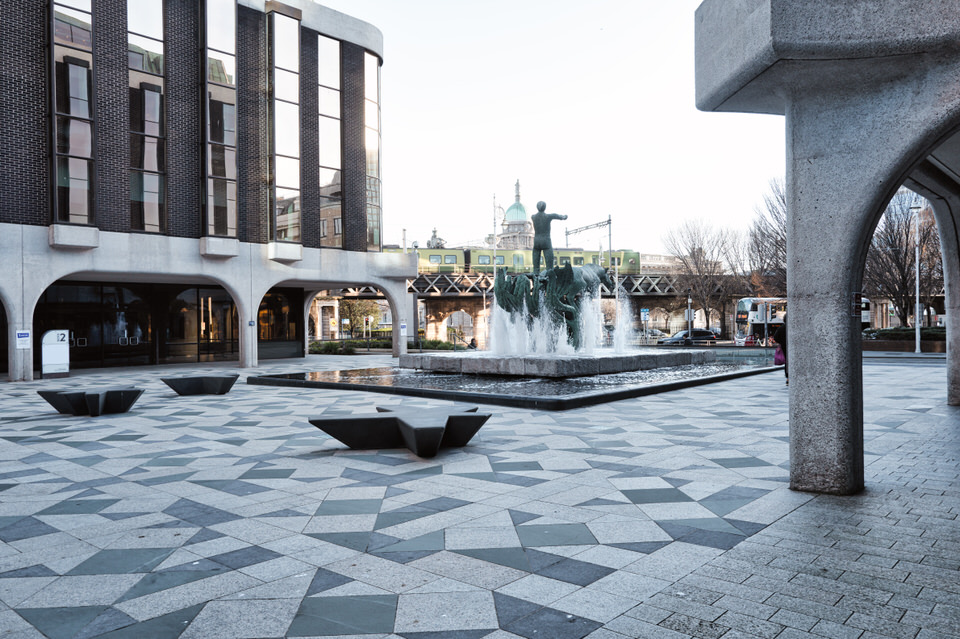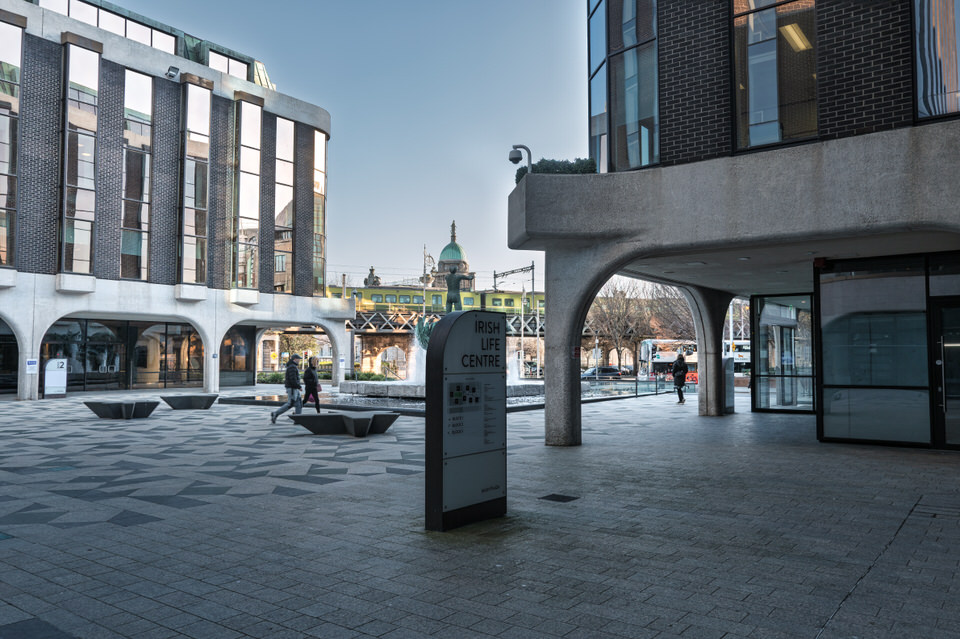
Investigating the disappearance of public art at the Irish Life Centre in Dublin. A photographic comparison reveals that Desmond Kinney's 1982 mosaic "The Harpy" has been removed, joining the lost "Sweeney Astray" mural. This article corrects previous misidentifications of the "Birdwoman" figure, documents the current state of the collection—including "The Mad Milkman" (Chariots of Life)—and critiques the silent erasure of Dublin's corporate art heritage and the restriction of public access to the complex.
Photographed By William Murphy
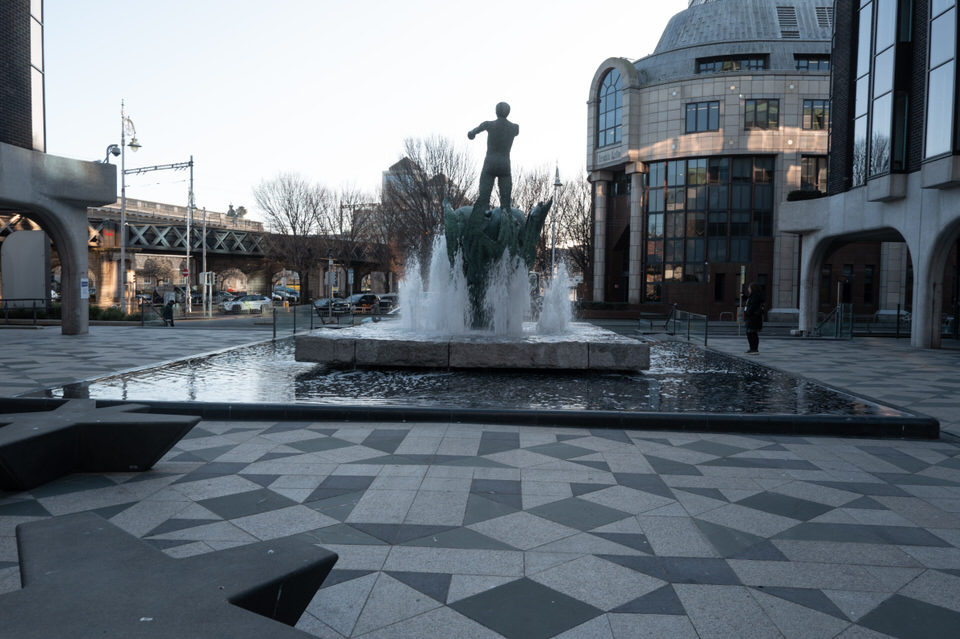
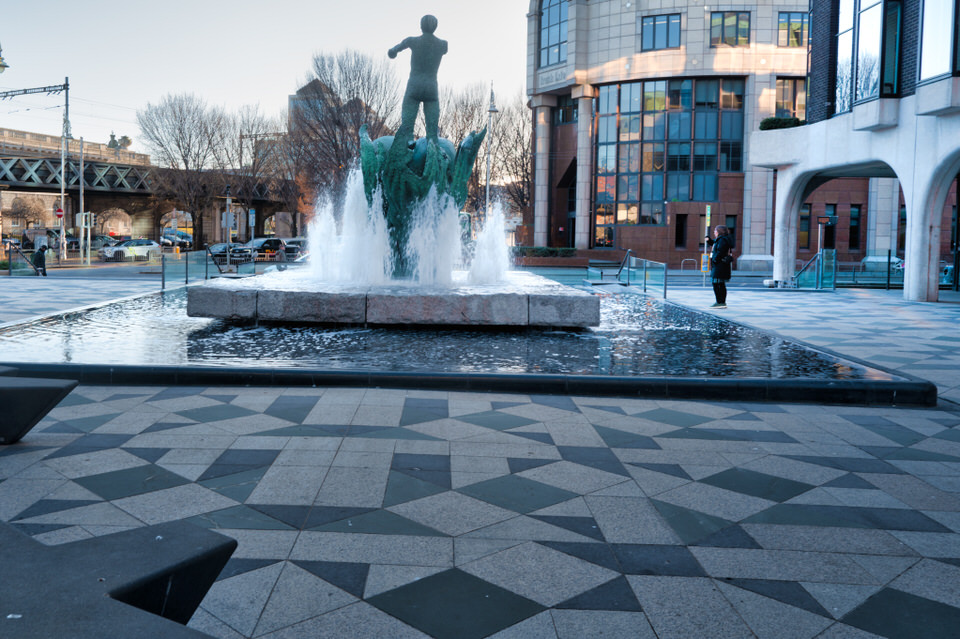
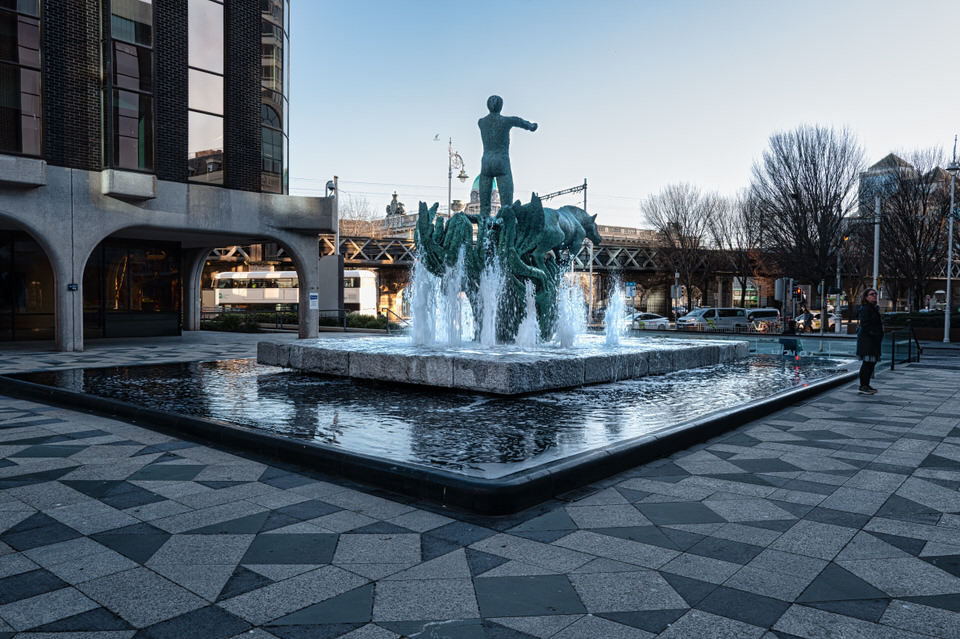
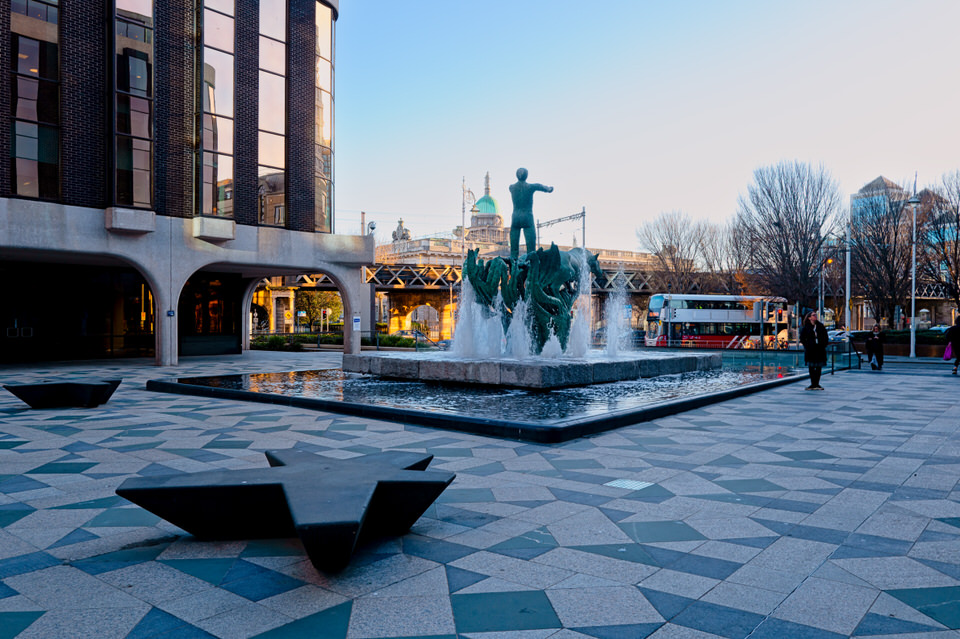
The Chariots Of Life
___
The Vanishing Art of the Irish Life Centre
___
The Vanishing Art of the Irish Life Centre: The Harpy, The Mad Milkman, and the Ghost on the Wall For years, I have documented the changing face of Dublin, often racing against time to photograph public art before it disappears. The Irish Life Centre on Abbey Street was once promoted as a "City within a City"—a cultural hub adorned with ambitious commissions by masters like Oisín Kelly, Alexandra Wejchert, and Desmond Kinney.
Back in the day, big corporations demonstrated their importance by promoting art and culture. They commissioned works not just for decoration, but as a statement of civic pride. But over the years, a different reality has set in. Today, I must close the file on one of the centre's lingering mysteries, and in doing so, highlight a prime example of how this corporate patronage has shifted to a strategy of "demolition by neglect."
The Mystery of the "Birdwoman"
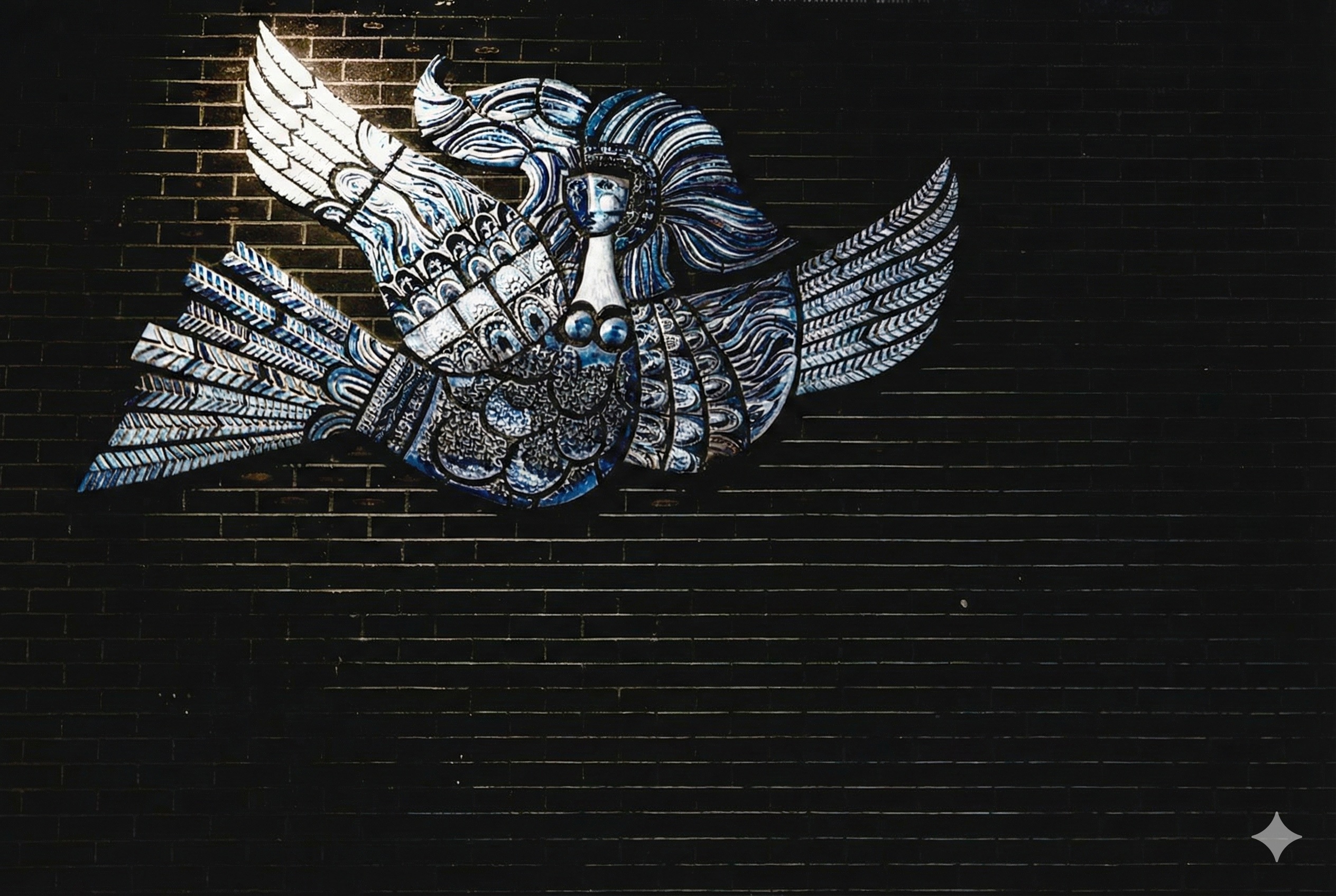
In September 2019, I captured a hurried photograph of a striking mosaic figure inside the Irish Life complex: a woman with the body of a blue and white bird. At the time, a security grille was descending, and I didn't have time to properly identify the work.
For a long time, we operated under a specific hypothesis. We knew that Desmond Kinney’s massive 12-panel mosaic, Sweeney Astray (1987), had been controversially removed and destroyed by management in 2013 due to "rot." However, upon reviewing my 2019 "Birdwoman" photo, the style—cool blues and whites—matched the Sweeney aesthetic perfectly, and clashed with the earthy browns of Kinney’s Táin Wall nearby.
I concluded that the official record was wrong: the main mural was gone, but a single fragment, this "Birdwoman," had miraculously survived on a pillar, hiding in plain sight for six years after the reported destruction.
Select Image To Visit The Photo Gallery: The Harpy Amd More
The Correction: Identifying "The Harpy"
I can now confirm that this conclusion, while logical, was incorrect. Recent archival research has brought to light a detailed account of the centre's original art collection, which identifies the figure not as a survivor of Sweeney Astray, but as a distinct, standalone work: "The Harpy" (1982) by Desmond Kinney.
Located on the back wall of the plaza, separate from the courtyard where Sweeney resided, The Harpy depicted a creature from Greek and Roman mythology—vultures with the heads of women, serving as instruments of divine judgement. This explains why it was still there in 2019; it was a completely different installation from the condemned Sweeney mosaic.
The Final Visit: A Ghost on the Wall
Armed with this new knowledge, I returned to the Irish Life Centre today to properly document The Harpy. I was too late.
The photograph above tells the story. The mosaic is gone.
Where the artwork once stood, there is now only a blank expanse of dark brick. However, the "ghost" of the artwork remains visible. If you look closely at the wall, a lighter patch of clean brick perfectly traces the silhouette of the creature—the curve of the wing and the fan of the tail feathers are clearly outlined, protected from years of grime by the ceramic that covered them. Like the Sweeney mural before it, The Harpy has likely been chipped off and "bagged."
The State of the Collection & The Shrinking Public Realm
This marks a sad chapter in the history of the Irish Life Centre’s collection. My archive holds photographs of the original collection in its prime. Today, it is a shadow of its former self:
The Harpy (Desmond Kinney): Removed. Only the outline remains on the brickwork.
Sweeney Astray (Desmond Kinney): Removed and destroyed in 2013.
The Golden Bird (Desmond Kinney): Reportedly visible only through the staff restaurant windows (inaccessible to the public).
Aluminum Sculptures (Alexandra Wejchert): Located in the reception area.
Chariots of Life (Oisín Kelly): Known affectionately to locals as "The Mad Milkman." This massive bronze sculpture survived, but its movement tells a deeper story.
Originally located directly in front of the HQ, the "Mad Milkman" was relocated in 2016 to the Abbey Street frontage. While the official line was that this made the work "more visible," I suspect the motive was more cynical: to constrain public access.
By pushing the sculpture out to the perimeter, the management effectively signaled the closing of the "City within a City." The plaza features dry moats and retractable walkways, and the once-open pass-through to what is now the Talbot Shopping Centre appears to have been removed or blocked. The artwork was moved not just to be seen, but to clear the interior space of the public it was originally built to welcome.
"Demolition by Neglect"
This sequence of events gives rise to an uncomfortable discussion. When these buildings were raised, companies used art to project stability and sophistication. But over the decades, the priority has shifted solely to profit. The maintenance of complex mosaics and sculptures moved from being a badge of honour to a line-item liability.
They are great at making PR announcements when they commission the work, or when they move a durable bronze like "The Mad Milkman" to the street. But the fragile, complex, or difficult pieces? Those are removed on the sly.
There were no press releases for The Harpy. No announcements were made about its "preservation." It was simply allowed to sit until it perhaps became a maintenance nuisance, and then it was erased, leaving only a shadow on the wall to prove it was ever there at all.