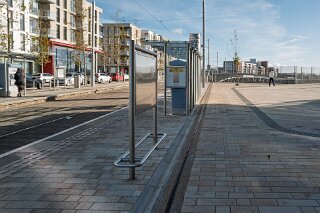
PUBLIC TRANSPORT
Public transport in the Greater Dublin Area (GDA) is a multi-modal system undergoing its most significant transformation in decades. While recent improvements have begun to modernise the network, the city's growth continues to outpace infrastructure, and a number of large-scale projects are still needed to create a truly comprehensive and efficient system.
The network is managed by Transport for Ireland (TFI) and primarily consists of:
Buses: Operated chiefly by Dublin Bus and Go-Ahead Ireland.
Trams (Luas): A two-line light rail system (Red and Green).
Rail: The DART (Dublin Area Rapid Transit) coastal train and Commuter Rail services operated by Iarnród Éireann.
📈 Recent Expansions and Improvements
In recent years, the focus has been on integration, network redesign, and fare simplification.
BusConnects Network Redesign: This is the most significant recent change to the bus network. It involves a phased rollout of a new system based on "Spines" (high-frequency routes running 24 hours on some corridors), new orbital routes to connect suburbs without forcing travel through the city centre, and new local services.
TFI 90-Minute Fare: A major improvement was the introduction of a simplified fare structure. The "TFI 90-Minute Fare" allows users with a Leap Card to transfer between buses, DART, and Luas services within 90 minutes for a single, capped fare.
Luas Cross City (2017): A pivotal project that finally connected the Luas Red and Green lines through the city centre. This turned two separate tram lines into an interconnected network, dramatically improving mobility across the city.
Fleet Modernisation: There has been a steady introduction of new hybrid and fully electric buses across the TFI network, helping to reduce emissions and improve the passenger experience.
🚧 The Major Plans Ahead
While the above improvements are significant, they are largely seen as preparatory work for several "megaprojects" intended to give Dublin a public transport system comparable to other European capitals.
MetroLink: This is the flagship project. After decades of planning, it was recently granted planning permission. It is a high-capacity, high-frequency, automated metro line planned to run from Swords (serving Dublin Airport) to the city centre. It will be a 'game-changer', providing a direct airport-to-city rail link and relieving pressure on the bus and Luas lines.
DART+ Programme: This is an ambitious plan to more than triple the DART network's length from 50km to 150km. It involves electrifying and upgrading existing commuter rail lines to provide DART-frequency services to:
DART+ West: Maynooth and M3 Parkway
DART+ South West: Hazelhatch and Celbridge
DART+ Coastal North: Drogheda
Luas Finglas: Planning permission has also been granted for an extension of the Green Line from Broombridge to Finglas, connecting another north-side suburb to the light rail network.
BusConnects Corridors: The second part of the BusConnects plan involves the construction of 12 Core Bus Corridors. These are large-scale civil works to create continuous bus lanes and improved cycle paths along the busiest routes into the city, designed to tackle congestion and make bus journey times reliable.
🛠️ Much Still Needs to Be Done
Despite this clear progress, significant challenges remain, and there is a widespread feeling that delivery is too slow.
Project Delays: The biggest criticism is the slow pace of progress. MetroLink has been in planning for over two decades, and even the relatively small Luas Finglas extension has taken many years to get through the planning process.
Service Gaps: The network still struggles with "last mile" connectivity and poor orbital connections. While BusConnects aims to fix this, many suburbs are still heavily car-dependent.
Night-Time Economy: Dublin's public transport has traditionally shut down too early. While the 24-hour Spine routes are a major step forward, the Luas and DART services still stop shortly after midnight, which is inadequate for a modern, vibrant capital city.
Congestion: Until the Core Bus Corridors are built, buses (the network's backbone) remain stuck in the same general traffic as cars, making journey times unpredictable and frustrating, which discourages people from using them.
The network is managed by Transport for Ireland (TFI) and primarily consists of:
Buses: Operated chiefly by Dublin Bus and Go-Ahead Ireland.
Trams (Luas): A two-line light rail system (Red and Green).
Rail: The DART (Dublin Area Rapid Transit) coastal train and Commuter Rail services operated by Iarnród Éireann.
📈 Recent Expansions and Improvements
In recent years, the focus has been on integration, network redesign, and fare simplification.
BusConnects Network Redesign: This is the most significant recent change to the bus network. It involves a phased rollout of a new system based on "Spines" (high-frequency routes running 24 hours on some corridors), new orbital routes to connect suburbs without forcing travel through the city centre, and new local services.
TFI 90-Minute Fare: A major improvement was the introduction of a simplified fare structure. The "TFI 90-Minute Fare" allows users with a Leap Card to transfer between buses, DART, and Luas services within 90 minutes for a single, capped fare.
Luas Cross City (2017): A pivotal project that finally connected the Luas Red and Green lines through the city centre. This turned two separate tram lines into an interconnected network, dramatically improving mobility across the city.
Fleet Modernisation: There has been a steady introduction of new hybrid and fully electric buses across the TFI network, helping to reduce emissions and improve the passenger experience.
🚧 The Major Plans Ahead
While the above improvements are significant, they are largely seen as preparatory work for several "megaprojects" intended to give Dublin a public transport system comparable to other European capitals.
MetroLink: This is the flagship project. After decades of planning, it was recently granted planning permission. It is a high-capacity, high-frequency, automated metro line planned to run from Swords (serving Dublin Airport) to the city centre. It will be a 'game-changer', providing a direct airport-to-city rail link and relieving pressure on the bus and Luas lines.
DART+ Programme: This is an ambitious plan to more than triple the DART network's length from 50km to 150km. It involves electrifying and upgrading existing commuter rail lines to provide DART-frequency services to:
DART+ West: Maynooth and M3 Parkway
DART+ South West: Hazelhatch and Celbridge
DART+ Coastal North: Drogheda
Luas Finglas: Planning permission has also been granted for an extension of the Green Line from Broombridge to Finglas, connecting another north-side suburb to the light rail network.
BusConnects Corridors: The second part of the BusConnects plan involves the construction of 12 Core Bus Corridors. These are large-scale civil works to create continuous bus lanes and improved cycle paths along the busiest routes into the city, designed to tackle congestion and make bus journey times reliable.
🛠️ Much Still Needs to Be Done
Despite this clear progress, significant challenges remain, and there is a widespread feeling that delivery is too slow.
Project Delays: The biggest criticism is the slow pace of progress. MetroLink has been in planning for over two decades, and even the relatively small Luas Finglas extension has taken many years to get through the planning process.
Service Gaps: The network still struggles with "last mile" connectivity and poor orbital connections. While BusConnects aims to fix this, many suburbs are still heavily car-dependent.
Night-Time Economy: Dublin's public transport has traditionally shut down too early. While the 24-hour Spine routes are a major step forward, the Luas and DART services still stop shortly after midnight, which is inadequate for a modern, vibrant capital city.
Congestion: Until the Core Bus Corridors are built, buses (the network's backbone) remain stuck in the same general traffic as cars, making journey times unpredictable and frustrating, which discourages people from using them.

PUBLIC TRANSPORT