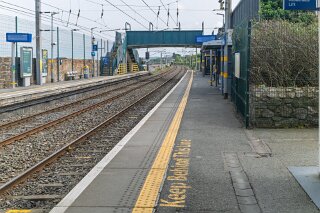
BOOTERSTOWN NATURE RESERVE AND THE ASSOCIATED TRAIN STATION - 8 MAY 2026
Booterstown Nature Reserve and DART Station
Situated on the edge of Dublin Bay, Booterstown Nature Reserve (often referred to locally as Booterstown Marsh) is a rare ecological jewel. It represents the last remaining saltmarsh on the south shore of the bay, providing a vital sanctuary for wildlife amidst a bustling urban landscape.
The Nature Reserve: An Ecological Haven
Managed by An Taisce, the reserve is a brackish water marsh covering approximately 4.3 hectares. Its unique position between the sea and freshwater streams creates a varied habitat that supports a diverse range of flora and fauna.
Avian Sanctuary: The marsh is a critical refuelling stop for migratory birds. Visitors can frequently spot species such as the Light-bellied Brent Goose, Grey Heron, Little Egret, and various waders including Redshanks and Godwits.
Rare Flora: It is home to the protected Borrer’s Saltmarsh-grass (Puccinellia fasciculata), a rare species that thrives in these specific saline conditions.
Conservation Status: As part of the UNESCO Dublin Bay Biosphere, the area is designated as a Special Protection Area (SPA), highlighting its international importance for bird conservation.
Booterstown DART Station: The Gateway
The reserve is inextricably linked to Booterstown DART Station, which effectively forms the eastern boundary of the marsh. The railway line itself, constructed in the 1830s, was actually responsible for creating the marsh by enclosing the area and separating it from the open sea.
Access and Viewing: The station provides one of the best vantage points for birdwatching. The pedestrian footbridge offers an elevated view across the marsh and out toward the Irish Sea.
Transport Links: Served by the Dublin Area Rapid Transit (DART), the station connects the area to Dublin City Centre (approx. 10–15 minutes) and coastal towns like Bray and Greystones.
Facilities: The station includes a car park (operated by APCOA), though spaces are limited. For those visiting the reserve, the "Rock Road" side of the station features a viewing area and information plaques detailing the marsh's history.
Situated on the edge of Dublin Bay, Booterstown Nature Reserve (often referred to locally as Booterstown Marsh) is a rare ecological jewel. It represents the last remaining saltmarsh on the south shore of the bay, providing a vital sanctuary for wildlife amidst a bustling urban landscape.
The Nature Reserve: An Ecological Haven
Managed by An Taisce, the reserve is a brackish water marsh covering approximately 4.3 hectares. Its unique position between the sea and freshwater streams creates a varied habitat that supports a diverse range of flora and fauna.
Avian Sanctuary: The marsh is a critical refuelling stop for migratory birds. Visitors can frequently spot species such as the Light-bellied Brent Goose, Grey Heron, Little Egret, and various waders including Redshanks and Godwits.
Rare Flora: It is home to the protected Borrer’s Saltmarsh-grass (Puccinellia fasciculata), a rare species that thrives in these specific saline conditions.
Conservation Status: As part of the UNESCO Dublin Bay Biosphere, the area is designated as a Special Protection Area (SPA), highlighting its international importance for bird conservation.
Booterstown DART Station: The Gateway
The reserve is inextricably linked to Booterstown DART Station, which effectively forms the eastern boundary of the marsh. The railway line itself, constructed in the 1830s, was actually responsible for creating the marsh by enclosing the area and separating it from the open sea.
Access and Viewing: The station provides one of the best vantage points for birdwatching. The pedestrian footbridge offers an elevated view across the marsh and out toward the Irish Sea.
Transport Links: Served by the Dublin Area Rapid Transit (DART), the station connects the area to Dublin City Centre (approx. 10–15 minutes) and coastal towns like Bray and Greystones.
Facilities: The station includes a car park (operated by APCOA), though spaces are limited. For those visiting the reserve, the "Rock Road" side of the station features a viewing area and information plaques detailing the marsh's history.

BOOTERSTOWN