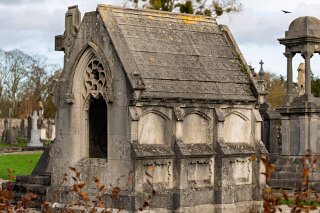
CIRCLE OF FAMILY VAULTS AT GLASNEVIN CEMETERY
THE SECONDARY CIRCLE OF VAULTS AT GLASNEVIN CEMETERY [PHOTOGRAPHED USING THE NEW SONY 100MM MACRO LENS]
Glasnevin Cemetery: Subterranean Vaults, Seals, and Heritage
Glasnevin Cemetery, a sprawling and historically significant necropolis in Dublin, was established in 1832. Among its most architecturally and historically profound features are two large circular areas containing underground vaults. While the O’Connell Circle is widely recognised, a secondary, less-documented circle of vaults lies near the wall of the National Botanic Gardens. These structures provide a fascinating insight into historical burial practices and the crucial distinction between subterranean (underground) and above-ground interment.
The Nature and Requirements of Subterranean Vaults
The vaults at Glasnevin are predominantly subterranean chambers constructed beneath the earth's surface. This is a critical point: burial within them was not considered "above ground."
Earth as a Barrier: Because the vaults are surrounded by the earth, this geological placement naturally provides a significant barrier.
Sealing Not Mandatory: Due to the surrounding earth barrier, the hermetic sealing of the coffin was not a mandatory public health requirement at the time of construction and initial use.
Choice for the Wealthy: While regulations didn't stipulate it, some affluent families still chose to use lead-lined coffins for reasons of status, a belief in better preservation, or simply following contemporary trends in funerary customs.
A rare glimpse inside one of these family vaults revealed multiple, remarkably well-preserved wooden coffins arranged on stone shelves. These vaults, acting as private and enduring spaces, reflect the deep importance of familial bonds and continuity of remembrance in Irish culture.
Public Health and the Requirement for Lead-Lined Coffins
The practices for Glasnevin’s subterranean vaults contrast sharply with the regulations required for above-ground mausolea or vaults located within chapels, such as those at Deansgrange Cemetery.
Why Lead Lining is Required Above Ground
Any interment within a vault located inside a chapel (like those at Deansgrange) or any other overground mausoleum legally requires the deceased to be placed in a lead-lined coffin.
Containment: This stipulation is based on fundamental principles of public health and safety.
Hermetic Seal: A lead-lined coffin is designed to be hermetically sealed (airtight and watertight).
Sanitation: Its primary purpose is to safely contain the natural products of decomposition (liquids and gases). In an enclosed, above-ground space, any escape would pose a serious sanitation and health hazard. The lead lining ensures this entire process is contained within the burial vessel.
This requirement is a standard and necessary regulation for all above-ground burials. The determining factor for a sealed coffin is the specific location of the interment—whether it is surrounded by earth (allowing for natural filtration/containment) or air (requiring an engineered seal).
Glasnevin's Living Heritage and Conservation
Glasnevin’s vast collection of historic vaults continues to be actively managed and preserved.
Preservation and Upkeep: The Dublin Cemeteries Trust is responsible for the structural integrity and general upkeep of the cemetery. Their work is supplemented by the Commonwealth War Graves Commission, which maintains the graves of service personnel.
Ongoing Life of the Vaults: The cemetery is not a static museum; it is a living heritage site. Some historic vaults are being resold, often to newer generations of Irish families, including those of Irish-Italian heritage, in a process overseen by cemetery authorities. This illustrates the ongoing life of the cemetery as new communities and families forge a connection with this historic ground.
Glasnevin’s vaults are a testament to Dublin’s rich history, from the cemetery’s non-denominational founding (a significant political and social statement in 1832) to its architectural grandeur. The specific nature of its subterranean design dictated distinct burial practices, setting it apart from other sites with above-ground structures. It remains both a significant architectural landmark and a place of quiet commemoration, embodying the enduring human need to honour the deceased.
Glasnevin Cemetery: Subterranean Vaults, Seals, and Heritage
Glasnevin Cemetery, a sprawling and historically significant necropolis in Dublin, was established in 1832. Among its most architecturally and historically profound features are two large circular areas containing underground vaults. While the O’Connell Circle is widely recognised, a secondary, less-documented circle of vaults lies near the wall of the National Botanic Gardens. These structures provide a fascinating insight into historical burial practices and the crucial distinction between subterranean (underground) and above-ground interment.
The Nature and Requirements of Subterranean Vaults
The vaults at Glasnevin are predominantly subterranean chambers constructed beneath the earth's surface. This is a critical point: burial within them was not considered "above ground."
Earth as a Barrier: Because the vaults are surrounded by the earth, this geological placement naturally provides a significant barrier.
Sealing Not Mandatory: Due to the surrounding earth barrier, the hermetic sealing of the coffin was not a mandatory public health requirement at the time of construction and initial use.
Choice for the Wealthy: While regulations didn't stipulate it, some affluent families still chose to use lead-lined coffins for reasons of status, a belief in better preservation, or simply following contemporary trends in funerary customs.
A rare glimpse inside one of these family vaults revealed multiple, remarkably well-preserved wooden coffins arranged on stone shelves. These vaults, acting as private and enduring spaces, reflect the deep importance of familial bonds and continuity of remembrance in Irish culture.
Public Health and the Requirement for Lead-Lined Coffins
The practices for Glasnevin’s subterranean vaults contrast sharply with the regulations required for above-ground mausolea or vaults located within chapels, such as those at Deansgrange Cemetery.
Why Lead Lining is Required Above Ground
Any interment within a vault located inside a chapel (like those at Deansgrange) or any other overground mausoleum legally requires the deceased to be placed in a lead-lined coffin.
Containment: This stipulation is based on fundamental principles of public health and safety.
Hermetic Seal: A lead-lined coffin is designed to be hermetically sealed (airtight and watertight).
Sanitation: Its primary purpose is to safely contain the natural products of decomposition (liquids and gases). In an enclosed, above-ground space, any escape would pose a serious sanitation and health hazard. The lead lining ensures this entire process is contained within the burial vessel.
This requirement is a standard and necessary regulation for all above-ground burials. The determining factor for a sealed coffin is the specific location of the interment—whether it is surrounded by earth (allowing for natural filtration/containment) or air (requiring an engineered seal).
Glasnevin's Living Heritage and Conservation
Glasnevin’s vast collection of historic vaults continues to be actively managed and preserved.
Preservation and Upkeep: The Dublin Cemeteries Trust is responsible for the structural integrity and general upkeep of the cemetery. Their work is supplemented by the Commonwealth War Graves Commission, which maintains the graves of service personnel.
Ongoing Life of the Vaults: The cemetery is not a static museum; it is a living heritage site. Some historic vaults are being resold, often to newer generations of Irish families, including those of Irish-Italian heritage, in a process overseen by cemetery authorities. This illustrates the ongoing life of the cemetery as new communities and families forge a connection with this historic ground.
Glasnevin’s vaults are a testament to Dublin’s rich history, from the cemetery’s non-denominational founding (a significant political and social statement in 1832) to its architectural grandeur. The specific nature of its subterranean design dictated distinct burial practices, setting it apart from other sites with above-ground structures. It remains both a significant architectural landmark and a place of quiet commemoration, embodying the enduring human need to honour the deceased.
BURIAL VAULTS