I FOUND THE VERNON ARCHWAY BY ACCIDENT
Stumbling Upon History: Finding the Vernon Archway in Clontarf
It is often the accidental detours that lead to the most intriguing historical finds. While setting out to locate St John the Baptist Cemetery on Castle Avenue, a slight navigational misdirection led to the discovery of one of Clontarf’s most striking local monuments: the Vernon Archway.
Navigating Clontarf & The 130 Bus Route
Getting around Dublin by bus is generally straightforward, and the 130 route (which operates from Abbey Street in Dublin city centre to Clontarf) runs directly along the coast and up Castle Avenue.
A Helpful Tip for Visitors: Dublin Bus drivers are renowned for being friendly and approachable. However, because routes can occasionally have varied terminal stops or route deviations, it is always wise to double-check with the driver when boarding by asking: "Does this bus go to [your destination]?"
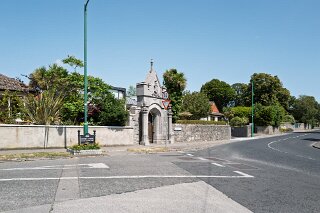
On this occasion, the 130 bus reached its final terminus at the roundabout on Castle Avenue—which, as it turns out, sits right near the entrance to St John the Baptist Cemetery. A brief navigational detour via Kincora Avenue brought into view an ornate, ivy-draped Victorian stone gateway standing embedded within the residential boundary wall.
What is the Vernon Archway?
Located at the intersection of Castle Avenue and Kincora Avenue in Clontarf, Dublin 3, this impressive stone structure is the historical former entrance gateway to the expansive Clontarf Castle Estate.
Architectural & Historical Highlights
Inscription & Crest: Carved directly into the stone above the pointed arch is the date 1885, alongside the motto Vernon Semper Viret ("Vernon Always Flourishes") displayed beneath the family crest.
The Vernon Legacy: The Vernon family held ownership of Clontarf Castle and its surrounding estate for nearly three centuries (from the mid-17th century until 1933). The archway was constructed under Edward Vernon in 1885 as an ornamental gateway during Victorian improvements to the estate perimeter.
Modern Context: mid-20th-century suburban housing developments gradually separated the gateway from the main castle grounds. Today, it remains a protected heritage element seamlessly integrated into the surrounding streetscape.
Visiting & Photographing Clontarf Castle Hotel
Just a short walk up Castle Avenue from the archway lies Clontarf Castle, an impressive historic landmark that now operates as a popular 4-star luxury hotel and event venue.
Can You Photograph Clontarf Castle?
Public Access & Photography: Yes, photography is permitted. As a commercial hotel, visitors are welcome to walk up the driveway and capture exterior photographs of the impressive 19th-century castellated architecture, the ivy-covered stone tower, and the surrounding grounds.
Etiquette: Courteous handheld photography for personal use, travel blogs, or social media is allowed. However, visitors should remain mindful of private events (such as weddings or conferences) and avoid intrusive filming inside guest areas or private dining rooms.
It is often the accidental detours that lead to the most intriguing historical finds. While setting out to locate St John the Baptist Cemetery on Castle Avenue, a slight navigational misdirection led to the discovery of one of Clontarf’s most striking local monuments: the Vernon Archway.
Navigating Clontarf & The 130 Bus Route
Getting around Dublin by bus is generally straightforward, and the 130 route (which operates from Abbey Street in Dublin city centre to Clontarf) runs directly along the coast and up Castle Avenue.
A Helpful Tip for Visitors: Dublin Bus drivers are renowned for being friendly and approachable. However, because routes can occasionally have varied terminal stops or route deviations, it is always wise to double-check with the driver when boarding by asking: "Does this bus go to [your destination]?"
On this occasion, the 130 bus reached its final terminus at the roundabout on Castle Avenue—which, as it turns out, sits right near the entrance to St John the Baptist Cemetery. A brief navigational detour via Kincora Avenue brought into view an ornate, ivy-draped Victorian stone gateway standing embedded within the residential boundary wall.
What is the Vernon Archway?
Located at the intersection of Castle Avenue and Kincora Avenue in Clontarf, Dublin 3, this impressive stone structure is the historical former entrance gateway to the expansive Clontarf Castle Estate.
Architectural & Historical Highlights
Inscription & Crest: Carved directly into the stone above the pointed arch is the date 1885, alongside the motto Vernon Semper Viret ("Vernon Always Flourishes") displayed beneath the family crest.
The Vernon Legacy: The Vernon family held ownership of Clontarf Castle and its surrounding estate for nearly three centuries (from the mid-17th century until 1933). The archway was constructed under Edward Vernon in 1885 as an ornamental gateway during Victorian improvements to the estate perimeter.
Modern Context: mid-20th-century suburban housing developments gradually separated the gateway from the main castle grounds. Today, it remains a protected heritage element seamlessly integrated into the surrounding streetscape.
Visiting & Photographing Clontarf Castle Hotel
Just a short walk up Castle Avenue from the archway lies Clontarf Castle, an impressive historic landmark that now operates as a popular 4-star luxury hotel and event venue.
Can You Photograph Clontarf Castle?
Public Access & Photography: Yes, photography is permitted. As a commercial hotel, visitors are welcome to walk up the driveway and capture exterior photographs of the impressive 19th-century castellated architecture, the ivy-covered stone tower, and the surrounding grounds.
Etiquette: Courteous handheld photography for personal use, travel blogs, or social media is allowed. However, visitors should remain mindful of private events (such as weddings or conferences) and avoid intrusive filming inside guest areas or private dining rooms.
THE VERNON ARCH