UNIVERSITY CAMPUS GRANGEGORMAN
REDEVELOPMENT AND COMMUNITY IMPACT [TU DUBLIN GRANGEGORMAN CAMPUS]
🏗️ Redevelopment and Community Impact: TU Dublin Grangegorman Campus
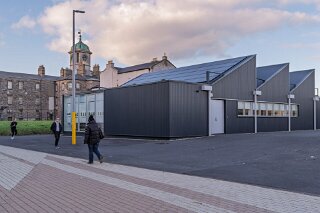
Today I walked from Broadstone through part of the Technological University (TU) Dublin Grangegorman Campus and then via Lower Grangegorman and Upper Grangegorman to arrive at the North Circular Road. Up until a few years ago, what would have taken about thirty minutes on foot now takes about ten minutes because the whole area has been transformed by the development of the University Campus, which is serviced by two Luas Tram Stops (Grangegorman and Broadstone-DIT).
Impact of Redevelopment
The establishment of the TU Dublin Grangegorman Campus represents a massive urban regeneration project, profoundly impacting the surrounding area. The development has replaced a largely inaccessible institutional site with an open, integrated campus, fundamentally altering the urban landscape and connectivity. The dramatic reduction in travel time, as experienced on the walk, highlights the improved pedestrian pathways and the strategic introduction of Luas transport infrastructure. This has not only enhanced access to the university but has also significantly reduced severance and improved the flow of movement for all local residents. The redevelopment has acted as a catalyst for further investment, leading to the upgrading of surrounding public spaces and injecting new life into local businesses, positively affecting the social and economic fabric of the Grangegorman neighbourhood.
Visitor and Community Friendliness
A key component of the campus's design ethos is its visitor-friendly and community-focused approach. The campus grounds and many of the new facilities are deliberately accessible to the local population. Unlike the former institutional barriers, the campus is designed as an open resource, encouraging residents to utilise its expansive green spaces, walkways, and public squares. This integration means the campus is not an isolated academic entity but rather a vibrant public amenity. Local people are welcome to use the outdoor sports pitches, public seating areas, and often the library and café facilities, fostering a strong sense of shared space and community integration between the university and the established neighbourhood.
🏗️ Redevelopment and Community Impact: TU Dublin Grangegorman Campus
Today I walked from Broadstone through part of the Technological University (TU) Dublin Grangegorman Campus and then via Lower Grangegorman and Upper Grangegorman to arrive at the North Circular Road. Up until a few years ago, what would have taken about thirty minutes on foot now takes about ten minutes because the whole area has been transformed by the development of the University Campus, which is serviced by two Luas Tram Stops (Grangegorman and Broadstone-DIT).
Impact of Redevelopment
The establishment of the TU Dublin Grangegorman Campus represents a massive urban regeneration project, profoundly impacting the surrounding area. The development has replaced a largely inaccessible institutional site with an open, integrated campus, fundamentally altering the urban landscape and connectivity. The dramatic reduction in travel time, as experienced on the walk, highlights the improved pedestrian pathways and the strategic introduction of Luas transport infrastructure. This has not only enhanced access to the university but has also significantly reduced severance and improved the flow of movement for all local residents. The redevelopment has acted as a catalyst for further investment, leading to the upgrading of surrounding public spaces and injecting new life into local businesses, positively affecting the social and economic fabric of the Grangegorman neighbourhood.
Visitor and Community Friendliness
A key component of the campus's design ethos is its visitor-friendly and community-focused approach. The campus grounds and many of the new facilities are deliberately accessible to the local population. Unlike the former institutional barriers, the campus is designed as an open resource, encouraging residents to utilise its expansive green spaces, walkways, and public squares. This integration means the campus is not an isolated academic entity but rather a vibrant public amenity. Local people are welcome to use the outdoor sports pitches, public seating areas, and often the library and café facilities, fostering a strong sense of shared space and community integration between the university and the established neighbourhood.
TU CAMPUS GRANGEGORMAN