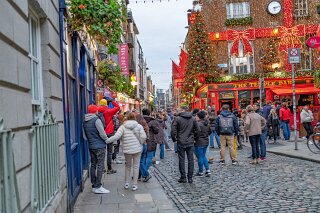
CHRISTMAS IS APPROACHING
DUBLIN CITY CENTRE AT NIGHT 16 NOVEMBER 2025 [WE ARE GETTING READY FOR CHRISTMAS]
This was my first time to use the Fujifilm X100 VI and I wanted to see how well it performed at night.
🔔 The Christmas Countdown: Why Ireland and Europe Close Down for Two Weeks
It's the day after Halloween, and the high-street lights are barely off the truck, yet the Christmas ads had begun. In Ireland and across much of Europe, the festive period is not just a holiday—it's a massive cultural and economic anchor that culminates in a highly anticipated, lengthy annual break.
🛍️ The Commercial Kick-Off: Christmas in Ireland
In Ireland, the Christmas season is the most significant retail event of the year. While Americans have Thanksgiving to bridge the gap, Irish shoppers are often well into their gift lists by mid-November, heavily influenced by global retail events like Black Friday and Cyber Monday.
For the Irish economy, this period is vital. Households significantly increase their spending, pouring billions into the retail sector. The major cities, particularly Dublin, Cork, and Galway, transform with their grand light switch-ons, marking the official start of the festive rush. It’s an economic behemoth that sustains countless businesses throughout the year.
👨👩👧👦 Culture and Faith: More Than Just Shopping
Beyond the sheer volume of spending, Christmas in Ireland is deeply rooted in family, hospitality, and faith.
The Candle in the Window: A powerful tradition is placing a large, lighted candle in the window on Christmas Eve, a centuries-old symbol of welcome for Mary and Joseph and a sign of safe harbour for any passing traveller.
St. Stephen's Day: December 26th is a bank holiday in Ireland (and the UK) known as St. Stephen's Day, or often Wren Day (Lá an Dreoilín), a tradition marked by the Wren Boys parading through towns. It’s a day for visiting relatives, watching the racing, or brave souls taking the traditional Christmas Swim in the freezing sea.
Women's Christmas (Nollaig na mBan): The season officially concludes on January 6th (Epiphany), traditionally marking a day when women take a well-deserved rest from the domestic duties of the season.
🗓️ The Great European Shut Down: Two Weeks of Bliss
You’ve hit upon one of the most distinctive aspects of the European Christmas experience: the extended holiday period. While the official public holidays are Christmas Day (25th) and St. Stephen's Day (26th), it is incredibly common for businesses and offices to effectively close down for up to two weeks.
How the Break Works
The magic lies in bridging the gap between the two clusters of public holidays:
Start Date: The break usually begins after lunch on December 23rd or 24th.
The Bridge: Employees strategically use just three or four days of their annual leave (vacation time) to link St. Stephen's Day to New Year's Day (January 1st, also a bank holiday).
The Result: This turns two bank holidays into a continuous break of 10 to 14 days, allowing staff to return refreshed in the first week of January.
A Continental Custom
This custom is echoed across the continent:
Many countries, including Germany, the Netherlands, and Scandinavia, recognise December 26th as a public holiday ("Second Day of Christmas").
In countries like Spain and Italy, January 6th (Epiphany) is also a major bank holiday, often serving as the true end of the celebrations and extending the low-activity period even further.
For most of Europe, the period from December 23rd to January 6th sees a significant slowdown, allowing families to focus on celebration, travel, and rest. It’s a shared social contract that prioritises the collective holiday season, making that two-week break a highly anticipated and essential annual tradition.
This was my first time to use the Fujifilm X100 VI and I wanted to see how well it performed at night.
🔔 The Christmas Countdown: Why Ireland and Europe Close Down for Two Weeks
It's the day after Halloween, and the high-street lights are barely off the truck, yet the Christmas ads had begun. In Ireland and across much of Europe, the festive period is not just a holiday—it's a massive cultural and economic anchor that culminates in a highly anticipated, lengthy annual break.
🛍️ The Commercial Kick-Off: Christmas in Ireland
In Ireland, the Christmas season is the most significant retail event of the year. While Americans have Thanksgiving to bridge the gap, Irish shoppers are often well into their gift lists by mid-November, heavily influenced by global retail events like Black Friday and Cyber Monday.
For the Irish economy, this period is vital. Households significantly increase their spending, pouring billions into the retail sector. The major cities, particularly Dublin, Cork, and Galway, transform with their grand light switch-ons, marking the official start of the festive rush. It’s an economic behemoth that sustains countless businesses throughout the year.
👨👩👧👦 Culture and Faith: More Than Just Shopping
Beyond the sheer volume of spending, Christmas in Ireland is deeply rooted in family, hospitality, and faith.
The Candle in the Window: A powerful tradition is placing a large, lighted candle in the window on Christmas Eve, a centuries-old symbol of welcome for Mary and Joseph and a sign of safe harbour for any passing traveller.
St. Stephen's Day: December 26th is a bank holiday in Ireland (and the UK) known as St. Stephen's Day, or often Wren Day (Lá an Dreoilín), a tradition marked by the Wren Boys parading through towns. It’s a day for visiting relatives, watching the racing, or brave souls taking the traditional Christmas Swim in the freezing sea.
Women's Christmas (Nollaig na mBan): The season officially concludes on January 6th (Epiphany), traditionally marking a day when women take a well-deserved rest from the domestic duties of the season.
🗓️ The Great European Shut Down: Two Weeks of Bliss
You’ve hit upon one of the most distinctive aspects of the European Christmas experience: the extended holiday period. While the official public holidays are Christmas Day (25th) and St. Stephen's Day (26th), it is incredibly common for businesses and offices to effectively close down for up to two weeks.
How the Break Works
The magic lies in bridging the gap between the two clusters of public holidays:
Start Date: The break usually begins after lunch on December 23rd or 24th.
The Bridge: Employees strategically use just three or four days of their annual leave (vacation time) to link St. Stephen's Day to New Year's Day (January 1st, also a bank holiday).
The Result: This turns two bank holidays into a continuous break of 10 to 14 days, allowing staff to return refreshed in the first week of January.
A Continental Custom
This custom is echoed across the continent:
Many countries, including Germany, the Netherlands, and Scandinavia, recognise December 26th as a public holiday ("Second Day of Christmas").
In countries like Spain and Italy, January 6th (Epiphany) is also a major bank holiday, often serving as the true end of the celebrations and extending the low-activity period even further.
For most of Europe, the period from December 23rd to January 6th sees a significant slowdown, allowing families to focus on celebration, travel, and rest. It’s a shared social contract that prioritises the collective holiday season, making that two-week break a highly anticipated and essential annual tradition.
CHRISTMAS IS APPROACHING