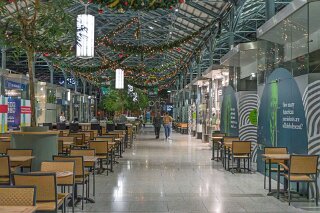
SOME OF THE IMAGES ARE A BIT WEIRD
THIS IS THE CHQ BUILDING WHICH HOUSES THE EPIC MUSEUM [[I USED A SONY SEL 30mm MACRO LENS AND AN FX30 BODY]
The photographs are a bit weird and in some cases what appears to be floor space is in fact table top,
The building housing the EPIC Museum, known as the CHQ Building, has a rich and varied history, marking a dramatic transformation from 19th-century industry to 21st-century culture and innovation.
🏭 Original Purpose: A Georgian Warehouse
Located in Dublin's Docklands on Custom House Quay, the building is a Grade One protected structure. It was designed by the renowned Scottish engineer John Rennie and completed around 1820.
Its original name was "Stack A," and it served as a vast bonded warehouse for storing valuable goods, primarily tobacco, along with tea and spirits. For this reason, it was often known to dockers as the "Tobacco Store." The building's impressive ironwork frame, designed to be fireproof, and its 200-year-old vaults are a testament to the ambitious engineering of the era.
🛍️ The Failed Shopping Centre
After falling into disuse, the building was purchased and extensively restored by the Dublin Docklands Development Authority (DDDA) in the early 2000s. The ambitious restoration, which cost between €45 and €50 million, was completed in 2005, and the building was relaunched as a high-end shopping centre.
Despite its stunning architecture and prime location in the International Financial Services Centre (IFSC), the retail venture failed to gain traction. It was described as "Ireland's most exclusive shopping centre" but struggled severely with low footfall and high vacancy rates. By 2013, it was reported to be the "retail equivalent of a ghost estate," with over 80% of its retail space unoccupied.
📈 Rebirth as a Successful Hub
In 2013, the building was sold at a knock-down price of just over €10 million—a fraction of its refurbishment cost. The new owner, Irish-born businessman and former Coca-Cola chairman Neville Isdell, envisioned a new future for the space.
This marked a significant turning point. Instead of focusing solely on retail, the building was reimagined as a vibrant, multi-purpose destination. Today, the CHQ Building is a major success story and houses:
EPIC The Irish Emigration Museum: The building's flagship attraction, located in the atmospheric vaults. It is a world-class, interactive museum that has been voted "Europe's Leading Tourist Attraction" at the World Travel Awards multiple times, beating landmarks like the Eiffel Tower and Buckingham Palace.
Dogpatch Labs: A major co-working hub for technology start-ups, fostering innovation and new businesses.
Event Spaces: The building's unique architecture makes it a highly sought-after venue for corporate events, banquets, and cultural happenings.
Food and Retail: A curated mix of cafés, bars, and casual dining options that serve the thousands of workers, tourists, and locals who visit daily.
From a near-empty shopping centre, the CHQ Building has been successfully transformed into a celebrated and bustling hub of culture, history, technology, and social life.
The photographs are a bit weird and in some cases what appears to be floor space is in fact table top,
The building housing the EPIC Museum, known as the CHQ Building, has a rich and varied history, marking a dramatic transformation from 19th-century industry to 21st-century culture and innovation.
🏭 Original Purpose: A Georgian Warehouse
Located in Dublin's Docklands on Custom House Quay, the building is a Grade One protected structure. It was designed by the renowned Scottish engineer John Rennie and completed around 1820.
Its original name was "Stack A," and it served as a vast bonded warehouse for storing valuable goods, primarily tobacco, along with tea and spirits. For this reason, it was often known to dockers as the "Tobacco Store." The building's impressive ironwork frame, designed to be fireproof, and its 200-year-old vaults are a testament to the ambitious engineering of the era.
🛍️ The Failed Shopping Centre
After falling into disuse, the building was purchased and extensively restored by the Dublin Docklands Development Authority (DDDA) in the early 2000s. The ambitious restoration, which cost between €45 and €50 million, was completed in 2005, and the building was relaunched as a high-end shopping centre.
Despite its stunning architecture and prime location in the International Financial Services Centre (IFSC), the retail venture failed to gain traction. It was described as "Ireland's most exclusive shopping centre" but struggled severely with low footfall and high vacancy rates. By 2013, it was reported to be the "retail equivalent of a ghost estate," with over 80% of its retail space unoccupied.
📈 Rebirth as a Successful Hub
In 2013, the building was sold at a knock-down price of just over €10 million—a fraction of its refurbishment cost. The new owner, Irish-born businessman and former Coca-Cola chairman Neville Isdell, envisioned a new future for the space.
This marked a significant turning point. Instead of focusing solely on retail, the building was reimagined as a vibrant, multi-purpose destination. Today, the CHQ Building is a major success story and houses:
EPIC The Irish Emigration Museum: The building's flagship attraction, located in the atmospheric vaults. It is a world-class, interactive museum that has been voted "Europe's Leading Tourist Attraction" at the World Travel Awards multiple times, beating landmarks like the Eiffel Tower and Buckingham Palace.
Dogpatch Labs: A major co-working hub for technology start-ups, fostering innovation and new businesses.
Event Spaces: The building's unique architecture makes it a highly sought-after venue for corporate events, banquets, and cultural happenings.
Food and Retail: A curated mix of cafés, bars, and casual dining options that serve the thousands of workers, tourists, and locals who visit daily.
From a near-empty shopping centre, the CHQ Building has been successfully transformed into a celebrated and bustling hub of culture, history, technology, and social life.
ABOUT THIS BUILDING