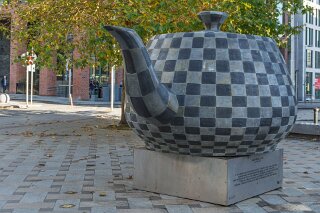
THE SMITHFIELD UTAH TEAPOT
THE SMITHFIELD UTAH TEAPOT [I USED A SONY SEL 30mm MACRO LENS AND AN FX30 BODY]
The 'Smithfield Utah' Teapot
The sculpture is a permanent public artwork located in Smithfield Square Lower, Dublin 7. It was unveiled in October 2021 as part of the Sculpture Dublin commissioning programme.
Key Details:
Artist: Alan Butler
Material: Bronze
Appearance: It is a large-scale replica of a teapot, distinguished by a striking chequered pattern on its surface.
Why a Teapot? The 'Utah' Connection
The most fascinating aspect of this sculpture is its name and origin. It is not just a random teapot; it is a direct, physical representation of one of the most famous objects in the history of computer graphics: the 'Utah Teapot'.
The Original 'Utah Teapot': In 1975, a British computer graphics researcher named Martin Newell, working at the University of Utah, needed a simple but interesting 3D model to test his rendering algorithms. He sketched and digitally modelled the family's household teapot.
A Digital Icon: This digital teapot model became a standard test object for 3D graphics. For decades, it has been used by programmers and animators (including at companies like Pixar) to test shading, texture, and light rendering. It is a foundational, iconic image in the world of digital design.
The Sculpture's Meaning
By creating a large, bronze, physical version of this famous virtual object, the artist Alan Butler creates a powerful link between two worlds.
Hospitality and History: The teapot is a universal symbol of warmth, hospitality, and community—all relevant to Smithfield's long history as a marketplace and gathering spot.
Technology and the Future: The sculpture connects this local history to Dublin's modern identity as a global centre for technology and innovation. It places a digital icon firmly in a physical, public square.
The artwork is widely recognised and has become a popular and curious landmark for both locals and tourists.
The 'Smithfield Utah' Teapot
The sculpture is a permanent public artwork located in Smithfield Square Lower, Dublin 7. It was unveiled in October 2021 as part of the Sculpture Dublin commissioning programme.
Key Details:
Artist: Alan Butler
Material: Bronze
Appearance: It is a large-scale replica of a teapot, distinguished by a striking chequered pattern on its surface.
Why a Teapot? The 'Utah' Connection
The most fascinating aspect of this sculpture is its name and origin. It is not just a random teapot; it is a direct, physical representation of one of the most famous objects in the history of computer graphics: the 'Utah Teapot'.
The Original 'Utah Teapot': In 1975, a British computer graphics researcher named Martin Newell, working at the University of Utah, needed a simple but interesting 3D model to test his rendering algorithms. He sketched and digitally modelled the family's household teapot.
A Digital Icon: This digital teapot model became a standard test object for 3D graphics. For decades, it has been used by programmers and animators (including at companies like Pixar) to test shading, texture, and light rendering. It is a foundational, iconic image in the world of digital design.
The Sculpture's Meaning
By creating a large, bronze, physical version of this famous virtual object, the artist Alan Butler creates a powerful link between two worlds.
Hospitality and History: The teapot is a universal symbol of warmth, hospitality, and community—all relevant to Smithfield's long history as a marketplace and gathering spot.
Technology and the Future: The sculpture connects this local history to Dublin's modern identity as a global centre for technology and innovation. It places a digital icon firmly in a physical, public square.
The artwork is widely recognised and has become a popular and curious landmark for both locals and tourists.
THE SMITHFIELD UTAH TEAPOT