LOCK SEVEN ON THE ROYAL CANAL
LOCK 7 ON THE ROYAL CANAL AN NEARBY [10 NOVEMBER 2025]
Historical Context and Construction
Dating Back to the 18th Century: Lock 7 was constructed in the early phase of the Royal Canal's development, dating from c. 1790 (between 1785 and 1795).
The Royal Canal: The entire Royal Canal project, which connects Dublin to the River Shannon, was built between 1790 and 1817. It was an ambitious, and costly, undertaking designed to be a rival to the Grand Canal, providing a route for freight and passenger transport across the country.
Engineering Heritage: The lock is a testament to the late eighteenth-century engineering skill, built with good quality masonry and a crucial component of the canal system that modernized Dublin's infrastructure.
Architectural Significance
The lock is officially recognised for its architectural, social, and technical value.
Construction Details: The structure comprises a lock chamber made of tooled limestone ashlar with solid limestone capstones at ground level. It originally featured two pairs of timber and steel breast gates, along with timber foot-boards and balance beams.
Juxtaposition with the Railway: One of the most interesting aspects of Lock 7 is its location immediately next to a mid-nineteenth-century railway line. A flat-deck railway bridge with steel girder supports carries the Dublin to Sligo railway line directly over the lock. This creates a compelling visual and historical contrast, showcasing the concurrent development of Ireland's infrastructure as the newer railway system began to supersede the older canal system.
Local and Modern Context
Liffey Junction: The area around Lock 7, particularly Liffey Junction, was historically a point of industrial and transportation activity. For example, records from the mid-19th century indicate that the Dublin Manure Company had its works located at the 7th Lock.
The Royal Canal Greenway: Today, Lock 7 is part of the popular Royal Canal Greenway, which is a key amenity for the local community and visitors. The canal and its towpath are heavily used by walkers, cyclists, and anglers. Waterways Ireland has also restored the canal for navigation, making the lock a functional part of the waterway again.
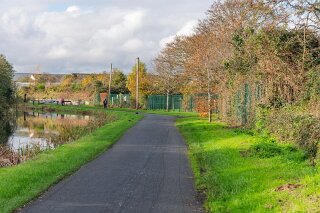
Amenity Improvement: In recent years, local efforts have been made to improve the surrounding area. For instance, the towpath section between Lock 7 and Lock 8 has been resurfaced, highlighting the lock's continued importance as a feature of the modern public amenity space.
Historical Context and Construction
Dating Back to the 18th Century: Lock 7 was constructed in the early phase of the Royal Canal's development, dating from c. 1790 (between 1785 and 1795).
The Royal Canal: The entire Royal Canal project, which connects Dublin to the River Shannon, was built between 1790 and 1817. It was an ambitious, and costly, undertaking designed to be a rival to the Grand Canal, providing a route for freight and passenger transport across the country.
Engineering Heritage: The lock is a testament to the late eighteenth-century engineering skill, built with good quality masonry and a crucial component of the canal system that modernized Dublin's infrastructure.
Architectural Significance
The lock is officially recognised for its architectural, social, and technical value.
Construction Details: The structure comprises a lock chamber made of tooled limestone ashlar with solid limestone capstones at ground level. It originally featured two pairs of timber and steel breast gates, along with timber foot-boards and balance beams.
Juxtaposition with the Railway: One of the most interesting aspects of Lock 7 is its location immediately next to a mid-nineteenth-century railway line. A flat-deck railway bridge with steel girder supports carries the Dublin to Sligo railway line directly over the lock. This creates a compelling visual and historical contrast, showcasing the concurrent development of Ireland's infrastructure as the newer railway system began to supersede the older canal system.
Local and Modern Context
Liffey Junction: The area around Lock 7, particularly Liffey Junction, was historically a point of industrial and transportation activity. For example, records from the mid-19th century indicate that the Dublin Manure Company had its works located at the 7th Lock.
The Royal Canal Greenway: Today, Lock 7 is part of the popular Royal Canal Greenway, which is a key amenity for the local community and visitors. The canal and its towpath are heavily used by walkers, cyclists, and anglers. Waterways Ireland has also restored the canal for navigation, making the lock a functional part of the waterway again.
Amenity Improvement: In recent years, local efforts have been made to improve the surrounding area. For instance, the towpath section between Lock 7 and Lock 8 has been resurfaced, highlighting the lock's continued importance as a feature of the modern public amenity space.
LOCK 7 ON TH ROYAL CANAL