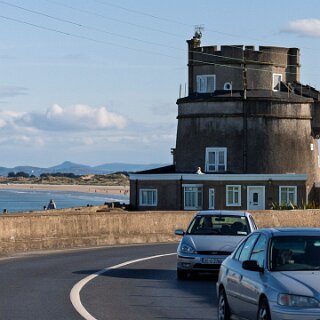
MARTELLO TOWER PORTMARNOCK
THE PORTMARNOCK OR CARRICKHILL MARTELLO TOWER [LEGACY IMAGES MAY 2018]
The Martello Tower in Portmarnock, known as the Carrickhill Martello Tower (North Tower No. 4), is one of a chain of twenty-six such towers built along the Dublin coast in the early 19th century.
Here is a discussion of its history, design, and subsequent use:
Historical Context and Purpose
Napoleonic Defence: The towers were constructed between 1804 and 1806 as part of a single defensive system across Great Britain and Ireland to guard against a possible invasion by Napoleon's French forces.
The Name: The name "Martello" is derived from a tower at Cape Mortella in Corsica, which famously withstood a heavy British naval attack in 1794. The British were so impressed by its resistance that they adopted and adapted the design. The Dublin towers, however, are architecturally based on earlier towers built by British forces in Minorca.
The Dublin Chain: The towers along the Dublin coast, of which twelve are in the area of Fingal, were built in line of sight of each other to provide mutual defense and communication, serving as a deterrent against attack.
Architecture and Design
Structure: Martello towers are typically cylindrical, two-storey masonry structures with a tapered profile and thick, solid walls—often around 8 feet (2.4 m) thick. This round shape and masonry made them highly resistant to cannon fire.
Entrance: A classic feature is the single doorway, usually about 5 metres (16 ft) off the ground, which was originally only accessible by a ladder that could be removed by the occupants for security.
Interior: Ground Floor: Served as the magazine and storerooms for ammunition, water, and provisions.
First Floor: Housed the garrison, which consisted of about 24 men and one officer, with separate rooms and fireplaces for heating and cooking.
Rooftop: The flat roof, or terreplein, was the gun platform, designed to hold a single heavy artillery piece (like a 24-pounder cannon) mounted on a traversing carriage, allowing it to fire a complete 360-degree arc.
The Portmarnock Tower (Carrickhill)
The Martello Tower in Portmarnock is specifically located at Carrickhill on the coast road, overlooking the Irish Sea and the famous "Velvet Strand" beach.
Later Ownership and Modifications: Like many of the other towers, the Portmarnock tower lost its military role after the threat of invasion passed around 1815. It eventually became privately owned:
In 1923, the US Ambassador, Mr. Simpson, purchased it as a holiday home and was responsible for adding the circular conservatory to the roof, which offers outstanding views.
It was later used to accommodate staff for a nearby hotel.
The tower remains a private dwelling today, with later architectural modifications including increased living room space and a c. 1970 projecting entrance porch and single-storey extension.
Connection to Aviation History
While the tower itself is a relic of the Napoleonic era, its location on Portmarnock Beach is also significant in aviation history:
The nearby "Velvet Strand" beach was the departure point for several history-making trans-Atlantic east-west flights in the 1930s, including Charles Kingsford-Smith's flight in the Southern Cross in 1930, and Jim Mollinson's flight in the Heart's Content in 1932. The tower would have been a landmark in the background of these historic take-offs.
The Martello Tower in Portmarnock, known as the Carrickhill Martello Tower (North Tower No. 4), is one of a chain of twenty-six such towers built along the Dublin coast in the early 19th century.
Here is a discussion of its history, design, and subsequent use:
Historical Context and Purpose
Napoleonic Defence: The towers were constructed between 1804 and 1806 as part of a single defensive system across Great Britain and Ireland to guard against a possible invasion by Napoleon's French forces.
The Name: The name "Martello" is derived from a tower at Cape Mortella in Corsica, which famously withstood a heavy British naval attack in 1794. The British were so impressed by its resistance that they adopted and adapted the design. The Dublin towers, however, are architecturally based on earlier towers built by British forces in Minorca.
The Dublin Chain: The towers along the Dublin coast, of which twelve are in the area of Fingal, were built in line of sight of each other to provide mutual defense and communication, serving as a deterrent against attack.
Architecture and Design
Structure: Martello towers are typically cylindrical, two-storey masonry structures with a tapered profile and thick, solid walls—often around 8 feet (2.4 m) thick. This round shape and masonry made them highly resistant to cannon fire.
Entrance: A classic feature is the single doorway, usually about 5 metres (16 ft) off the ground, which was originally only accessible by a ladder that could be removed by the occupants for security.
Interior: Ground Floor: Served as the magazine and storerooms for ammunition, water, and provisions.
First Floor: Housed the garrison, which consisted of about 24 men and one officer, with separate rooms and fireplaces for heating and cooking.
Rooftop: The flat roof, or terreplein, was the gun platform, designed to hold a single heavy artillery piece (like a 24-pounder cannon) mounted on a traversing carriage, allowing it to fire a complete 360-degree arc.
The Portmarnock Tower (Carrickhill)
The Martello Tower in Portmarnock is specifically located at Carrickhill on the coast road, overlooking the Irish Sea and the famous "Velvet Strand" beach.
Later Ownership and Modifications: Like many of the other towers, the Portmarnock tower lost its military role after the threat of invasion passed around 1815. It eventually became privately owned:
In 1923, the US Ambassador, Mr. Simpson, purchased it as a holiday home and was responsible for adding the circular conservatory to the roof, which offers outstanding views.
It was later used to accommodate staff for a nearby hotel.
The tower remains a private dwelling today, with later architectural modifications including increased living room space and a c. 1970 projecting entrance porch and single-storey extension.
Connection to Aviation History
While the tower itself is a relic of the Napoleonic era, its location on Portmarnock Beach is also significant in aviation history:
The nearby "Velvet Strand" beach was the departure point for several history-making trans-Atlantic east-west flights in the 1930s, including Charles Kingsford-Smith's flight in the Southern Cross in 1930, and Jim Mollinson's flight in the Heart's Content in 1932. The tower would have been a landmark in the background of these historic take-offs.
CARRICKHILL MARTELLO TOWER